

 5 min read
Tire technology and our understanding of inflation pressure have changed significantly over the past two decades. The tools used to add that air, however, have remained largely the same. Most cyclists have traditionally relied on a floor pump, mini pump, frame pump, or carbon dioxide cartridge. Then, seemingly all at once, compact electric inflators began appearing everywhere.
Electric inflators aren’t entirely new to me. I first encountered them during my cyclocross racing days, when they were considerably less compact. At the time, they appealed to racers who needed to inflate numerous tires quickly and repeatedly to very precise pressures.
Those early models resembled cordless drills, with a short inflation hose where the drill bit would normally sit. They were useful around the pits but far too large to carry comfortably during a ride.
The category looks completely different today. Riders can now choose from numerous rechargeable, pocket-sized inflators equipped with digital pressure gauges. After testing nearly a dozen models from 10 brands, the Cycplus AS2 Ultra emerged as the option I believe most cyclists should consider first.
Specifications and Testing
The most immediately noticeable thing about the AS2 Ultra is its size. It measures just 2.5 by 1.75 by 1 inch and weighs 107 grams with the included silicone sleeve.
In laboratory testing, it inflated a 28mm road tire from completely flat to 65 psi in 42 seconds. Filling a 45mm gravel tire to 30 psi required 47 seconds, while bringing a 2.3-inch mountain bike tire to 20 psi took 45 seconds.
Those times aren’t necessarily quicker than using a CO2 cartridge, but they’re comparable to what an enthusiastic rider could achieve with a quality floor pump.

Trevor Raab
Against the other electric inflators in our test, the AS2 Ultra ranked third, fifth, and fourth in inflation speed for the respective tire sizes. Raw speed, however, isn’t its greatest strength. Its digital gauge was the most accurate we tested, reading just 1 psi off the verified pressure.
Battery performance was also impressive considering the unit’s compact dimensions. The AS2 Ultra completed four tire inflations before running out of power during the fifth.
Its main weakness was operating temperature. The unit reached approximately 91 degrees Fahrenheit in our testing, about 10 degrees hotter than most competing inflators. Cycplus includes a silicone sleeve that helps address this issue by insulating your hands while also protecting the device if it’s dropped.

trevor raab
During normal use, such as topping up tires or making small pressure adjustments before a ride, the heat was never noticeable enough to concern me. The inflator became considerably warmer when filling a tire from flat, but it still didn’t feel unsafe.
Temperature deserves extra attention when using thermoplastic polyurethane tubes with plastic or other non-metal valve bodies. Heat transferred directly from an inflator can potentially deform or melt a plastic valve. Using the included extension hose reduces that risk, although it makes the overall setup less compact. Personally, I recommend avoiding tubes with non-metal valve stems whenever possible.
Living With the AS2 Ultra
I’ll admit that I wasn’t initially excited about electric inflators. They seemed like clever gadgets designed to solve a problem that didn’t really exist. After spending a year using several of them, however, I’m no longer eager to return to my old routine.
My opinion started changing while riding new bikes, wheels, and tires off-road. Finding the ideal pressure for an unfamiliar setup previously meant carrying both a mini pump and a separate digital gauge. A compact electric inflator made those experiments quicker and eliminated much of the guesswork.
 trevor raab
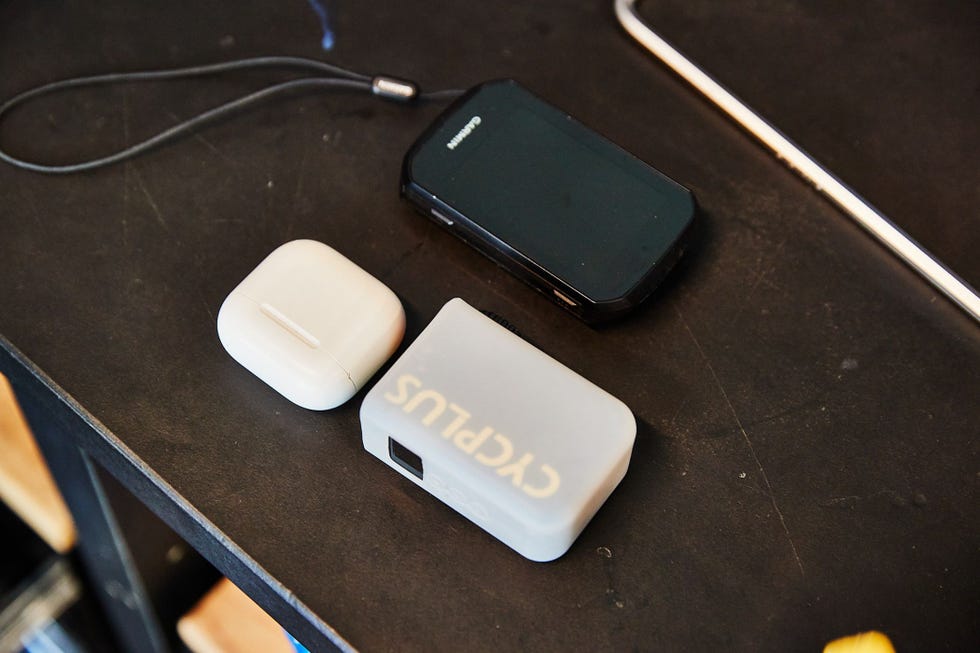
Garmin 850 and a “non-pro” AirPods case for scale.
Eventually, carrying multiple tools that performed overlapping jobs stopped making sense. I simplified each bike’s repair kit to a spare tube, tire lever, and multitool, then carried the electric inflator in a jersey pocket.
Size remained my biggest reservation. Most of the inflators I tested were compact enough for a travel toolbox, car trunk, or pre-ride setup. Even so, many still felt too bulky for a minimalist road-riding kit.
 trevor raab
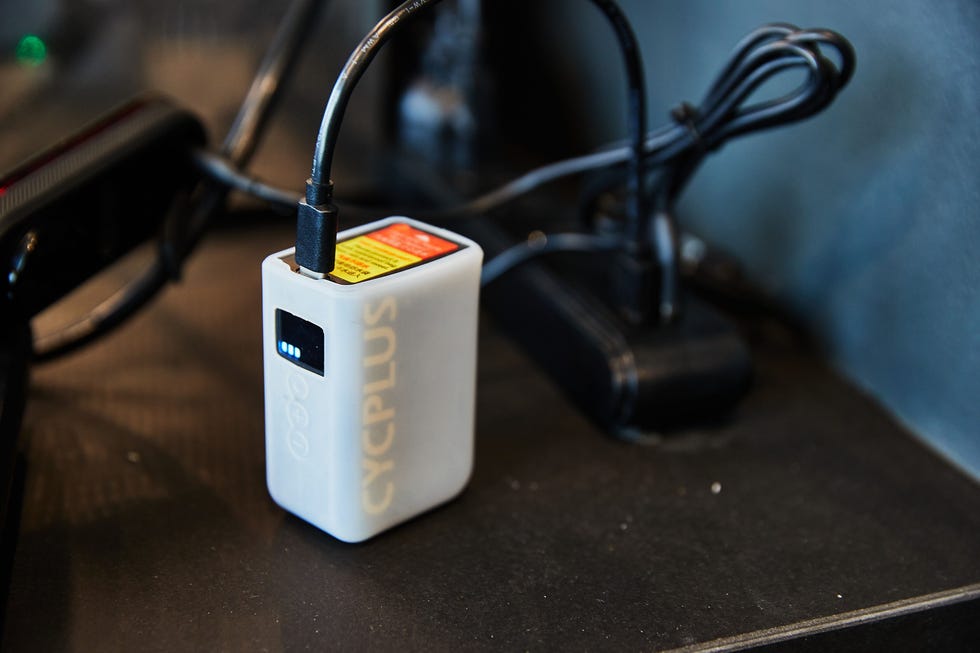
Charging is via USB-C and a full charge takes a claimed 25 minutes.
That’s where the AS2 Ultra distinguishes itself. It’s only slightly larger than an Apple AirPods Pro case and effectively disappears inside a jersey pocket. It also makes roadside flat repairs considerably less tedious.
I’ve used it to help with several flats during group rides. Other riders inevitably commented on the sound—the AS2 Ultra produces approximately 70 decibels and is undeniably noisy—but everyone was pleased to avoid hand-pumping a tire or sacrificing a CO2 cartridge.
Battery Life
Battery life was my final major concern. Adding another rechargeable device to my cycling equipment wasn’t particularly appealing. More importantly, an electric inflator is useless if you discover a dead battery when you’re stranded with a flat.
In practice, the AS2 Ultra could go several weeks while handling routine pressure adjustments and pre-ride top-ups. I also didn’t observe meaningful battery loss while it was stored.
My routine became simple: Whenever I used it to inflate a completely flat tire, I recharged it afterward. That was no more difficult than remembering to replace a spent CO2 cartridge in a repair kit.
After a year with the AS2 Ultra, I view it as a replacement for CO2 rather than for a manual mini pump. On any ride where I would previously have been comfortable carrying only cartridges, the AS2 Ultra is now my preferred option.
For remote backcountry routes or rough adventures where self-sufficiency is critical, I would still carry a manual pump. Electronics can fail, batteries can run out, and redundancy matters when help is far away.
Final Thoughts
The Cycplus AS2 Ultra isn’t the fastest electric inflator available. Instead, it succeeds by offering an excellent combination of portability, gauge accuracy, battery capacity, and everyday usability.
It is genuinely small enough for a jersey pocket, and its pressure readings were more accurate than those of every other model in our test. The battery can also manage several inflations before requiring a recharge. Together, those qualities make it more practical than competing inflators that may work slightly faster but occupy considerably more space.
More importantly, the AS2 Ultra makes checking and adjusting tire pressure convenient enough that you’re likely to do it more often. Whether you’re dialing in a new gravel setup, topping up your tires before leaving home, or repairing a roadside flat, pressing a button is substantially easier than pumping by hand.
That convenience changes the experience more than I expected. Inflation becomes a quick, repeatable task rather than another pre-ride chore.
After a year of regular use, the AS2 Ultra has effectively displaced CO2 cartridges in my repair kit. It’s the easier and more practical choice for most road and gravel rides. A traditional pump remains sensible for remote trips where backup equipment is important, but for everyday cycling, the AS2 Ultra is one of the few electric inflators that truly earns its place in a jersey pocket.

Test Editor Dan Chabanov got his start in cycling as a New York City bike messenger but quickly found his way into road and cyclocross racing, competing in professional cyclocross races from 2009 to 2019 and winning a Master’s National Championship title in 2018. Prior to joining Bicycling in 2021, Dan worked as part of the race organization for the Red Hook Crit, as a coach with EnduranceWERX, as well as a freelance writer and photographer.