

NEW DELHI (AP) — In an affluent neighborhood in Delhi, electric vehicle charging stations near a popular shopping area were busy with drivers powering up their scooters, trucks and cars.
India’s capital city is in dire need of more charging facilities, EV drivers say, to implement an ambitious plan to phase out gas vehicles in one of the world’s most polluted cities.
Click to Gallery

A person charges his electric scooter at a roadside charging station in New Delhi, India, Monday, July 13, 2026. (AP Photo/Manish Swarup)

An electric vehicle maneuvers down a road in New Delhi, India, Monday, July 13, 2026. (AP Photo/Manish Swarup)

Electric buses move through dense traffic alongside other vehicles and scooters in New Delhi, India, Tuesday, July 14, 2026. (AP Photo/Manish Swarup)

Two wheelers drive past an electric vehicle parked along a street in New Delhi, India, Monday, July 13, 2026. (AP Photo/Manish Swarup)

A person swaps their electric scooter battery at a battery-swapping station for electric vehicles in New Delhi, India, Monday, July 13, 2026. (AP Photo/Manish Swarup)

Delivery workers and drivers arrive at a battery-swapping station for electric vehicles in New Delhi, India, Monday, July 13, 2026. (AP Photo/Manish Swarup)
“Charging facilities are not up to the mark yet,” said Shyam Singh, a marketing executive who owns a two-wheel electric scooter, adding that it is hard for long-distance drivers to switch to EVs because the current battery range is not enough.
Delhi adopted a new policy on July 1 that aims to make the vast majority of newly registered vehicles electric by 2027. While existing gas-powered vehicles won’t be banned, their numbers are expected to dwindle in the coming years.
Energy experts say the plan is one of the country’s most ambitious electric-vehicle policies and a significant step toward improving the city’s air quality and reducing pollution.
The policy provides EV buyers with subsidies and waivers on registration fees and some road taxes, incentives to scrap gas vehicles, and it offers plans to expand the charging infrastructure. It also targets two- and three-wheelers that make up nearly 70% of vehicles in the city: Starting in 2027, any newly registered three-wheeled vehicles and small trucks must be electric, with two-wheelers the following year.
Currently, only about 5% of the 8.7 million vehicles registered in Delhi are electric. But EV registrations have been increasing, with over 100,000 in the past year, most of them two- and three-wheelers. Registrations for new gas-powered cars and bigger trucks will still be allowed for the time being.
The plan, which is expected to cost the local government 150 billion rupees ($1.5 billion), will offer cash amounts of up to 50,000 rupees ($522) for residents who purchase EVs and up to 100,000 rupees ($1,044) for those who scrap their old gasoline-powered vehicles.
“Delhi’s EV policy is one of the most ambitious policies that I have seen in India,” said Jaideep Saraswat, who leads work on clean power and electric mobility at the Vasudha Foundation. The deadlines, he added, send a signal to automakers and consumers that change is “inevitable.”
While states including Maharashtra, Karnataka, Telangana and Tamil Nadu have offered incentives for electric vehicle owners and manufacturers, cut taxes and pumped money into setting up charging stations, Delhi is the first to phase out gas-powered vehicles.
Severe air pollution in Delhi frequently forces school closures, construction bans and emergency public health measures, especially during the winter months. Vehicles cause about a quarter of air pollution in the National Capital Region surrounding Delhi, and two- and three-wheelers are responsible for nearly half of vehicular pollution in the city.
Ruchita Shah, an energy analyst for the global energy think tank Ember, said the city has long been a clean energy pioneer, including its earlier shift toward compressed natural gas vehicles to cut pollution. She said electric vehicles accounted for about 12.7% of Delhi’s new vehicle sales in the 2026 financial year, compared with 8.3% nationally.
The new policy’s most forward-looking feature, she said, is linking subsidies to tight deadlines after which some internal combustion engine vehicles can no longer be newly registered.
Sunil Dahiya, founder of environmental research organization Envirocatalyst, said cleaner vehicles could significantly reduce public exposure to roadside emissions. Still, he cautioned that the benefits will take time to fully materialize because existing gasoline, diesel, and CNG vehicles will continue to operate for years.
Some owners of gasoline-powered two-wheelers say this isn’t the right time to go electric.
Siddhant Jha, a 22-year-old software engineer and northern Delhi resident, is worried about the longevity of EVs compared with his traditional two-wheeler, and the annual street flooding damaging a vehicle’s electrical components.
“I’d like to wait for a few years for better models and the 150,000 rupees ($1,566) I’ll spend (on an EV) will make more sense then.”
Jha is also concerned about EV charging accessibility.
Shah, the energy analyst, said the policy’s success hinges on Delhi building sufficient charging infrastructure and sourcing more supplied power from renewable resources rather than fossil fuel plants. Most vehicle charging now happens at night, when solar power is unavailable, forcing the dependence on thermal power plants to meet demand.
Delhi must also upgrade its electricity grid — especially fast chargers needed by buses, cargo vehicles and cars — to meet the surge in demand and avoid grid failures, said Dahiya, the environmentalist.
Dahiya recommended installing battery storage at charging stations and adopting time-of-day pricing to incentivize charging when renewable power is more abundant.
Delhi’s next challenges will be coordinating with surrounding states to decarbonize the electricity grid and public transport electrification, said Saraswat of the Vasudha Foundation.
“As a resident of Delhi, I’m sure each and every one will be extremely thrilled to have this policy. To see that winter where there is no smog, no pollution.”
Arasu reported from Bengaluru, India, and can be followed on X at @sibi123. Reach him at sarasu@ap.org.
The Associated Press’ climate and environmental coverage receives financial support from multiple private foundations. AP is solely responsible for all content. Find AP’s standards for working with philanthropies, a list of supporters and funded coverage areas at AP.org.

A person charges his electric scooter at a roadside charging station in New Delhi, India, Monday, July 13, 2026. (AP Photo/Manish Swarup)

An electric vehicle maneuvers down a road in New Delhi, India, Monday, July 13, 2026. (AP Photo/Manish Swarup)

Electric buses move through dense traffic alongside other vehicles and scooters in New Delhi, India, Tuesday, July 14, 2026. (AP Photo/Manish Swarup)

Two wheelers drive past an electric vehicle parked along a street in New Delhi, India, Monday, July 13, 2026. (AP Photo/Manish Swarup)

A person swaps their electric scooter battery at a battery-swapping station for electric vehicles in New Delhi, India, Monday, July 13, 2026. (AP Photo/Manish Swarup)

Delivery workers and drivers arrive at a battery-swapping station for electric vehicles in New Delhi, India, Monday, July 13, 2026. (AP Photo/Manish Swarup)
MADISON, Wis. (AP) — Wisconsin voter Ian Anderson couldn’t have been happier to cast his ballot Tuesday for democratic socialist Francesca Hong in the swing state’s primary for governor.
“She’s exactly the burst of energy we need,” Anderson said after voting early in the liberal stronghold of Madison.
But 80 miles down the road in Milwaukee, Democratic voter Steve Wiesner said if Hong wins the Aug. 11 primary he will vote Republican for the first time in his life.
“I would never support her or any DSA candidate at this point,” Wiesner said, using the acronym for Democratic Socialists of America. He voted for longshot candidate Joel Brennan.
Their views demonstrate the dilemma for Democrats in Wisconsin as they hope to win the governor’s race against a Republican endorsed by President Donald Trump in a year that should favor Democrats.
But a chaotic primary, and the rise of Hong, has amplified angst among voters and party insiders that Democrats may be squandering their chances to retain control of the governor’s office and flip both chambers of the Legislature to earn full control of Wisconsin state government for the first time since 2010.
The insurgent Hong has garnered strong support among the most liberal wing of the party. Former Lt. Gov. Mandela Barnes, who narrowly lost a 2022 U.S. Senate race, is hoping that voters in his hometown of Milwaukee help him overcome Hong, whose base is in Madison. Those two cities hold the largest number of Democratic voters in Wisconsin.
Also in the race is Milwaukee County Executive David Crowley, who is running with the endorsement of Gov. Tony Evers. Crowley had dropped out of the race on July 8, but got back in on July 17, the day after Lt. Gov. Sara Rodriguez dropped out amid a campaign finance scandal.
Anderson, who was among voters who cast in-person early ballots on the first day Tuesday, said he was “very frustrated” by Evers’ late endorsement in the race.
“It’s the latest example of the Democratic Party meddling,” said Anderson, who works for the state Department of Natural Resources.
Nicole Santos, 45, said Hong was the only primary candidate with the “fortitude” to stand up to Trump.
“To get back on track we need to go a little further left,” she said.
Crowley voters on Tuesday said they backed him because they believed he had a better shot at beating Republican U.S. Rep. Tom Tiffany in November. Tiffany, who is running with the backing of Trump in a state Trump won in 2016 and 2024, faces only nominal opposition in the primary.
It would be “tough” for Hong to beat Tiffany, said retired attorney John Hawley, 68, of Madison.
“I’d like to think I’m wrong, but north of Madison and Milwaukee I don’t think she’ll come across that well,” he said in reference to more rural parts of the state.
Erica and Mario Johnson, a married couple who are both Black and from Milwaukee, both voted for Crowley, because they see him as best positioned to beat Tiffany. Crowley and Barnes are each seeking to become the state’s first Black governor. Hong is seeking to become Wisconsin’s first female governor and first Asian American governor.
Crowley has the “most executive experience,” said Mario Johnson, 63, who retired from a career in the federal government.
He worries that Hong won’t be able to defeat Tiffany, but if Hong wins the primary, “I’ll bite the bullet and vote for her.”
As of Tuesday, nearly 108,000 ballots had already been returned by mail ahead of the Aug. 11 election.
The Democratic candidates tried to differentiate themselves Tuesday night in the only debate before the primary, but abstained from going after Hong, who has led in polls.
Hong, who has run as an insurgent candidate, tried to cast herself as the one who could bring together Republicans, Democrats, independents and democratic socialists.
“This is a movement moment,” Hong said.
Hong also tried to distance herself from the national democratic socialist movement. Hong said she did not support the entire national DSA platform and backed off her earlier support for defunding the police.
“The governor cannot defund police and I’m not here to govern by slogan,” she said.
Crowley, who has the governor’s endorsement, and Barnes, who served as Evers’ lieutenant governor in his first term, also tried to portray themselves as outsiders.
“I’m not here to protect the establishment,” Crowley said.
And while Barnes said no other candidate had united Democrats like he did in his 2022 Senate race, “I have zero interest in being the establishment candidate.”
Mayes-Osterman is a corps member for The Associated Press/Report for America Statehouse News Initiative. Report for America is a nonprofit national service program that places journalists in local newsrooms to report on undercovered issues. She reported for this story from Milwaukee.

From left, Democratic gubernatorial candidates Mandela Barnes, Joel Brennan, David Crowley, Francesca Hong and Kelda Roys attend a primary debate in Milwaukee, Tuesday, July 28, 2026. (AP Photo/Nam Y. Huh)

A voter sits outside after a polling place in Milwaukee, Tuesday, July 28, 2026. (AP Photo/Nam Y. Huh)

A voter arrives at a polling place in Milwaukee, Tuesday, July 28, 2026. (AP Photo/Nam Y. Huh)

A voter arrives at a polling place in Milwaukee, Tuesday, July 28, 2026. (AP Photo/Nam Y. Huh)

A voter arrives to a polling place in Milwaukee, Tuesday, July 28, 2026. (AP Photo/Nam Y. Huh)
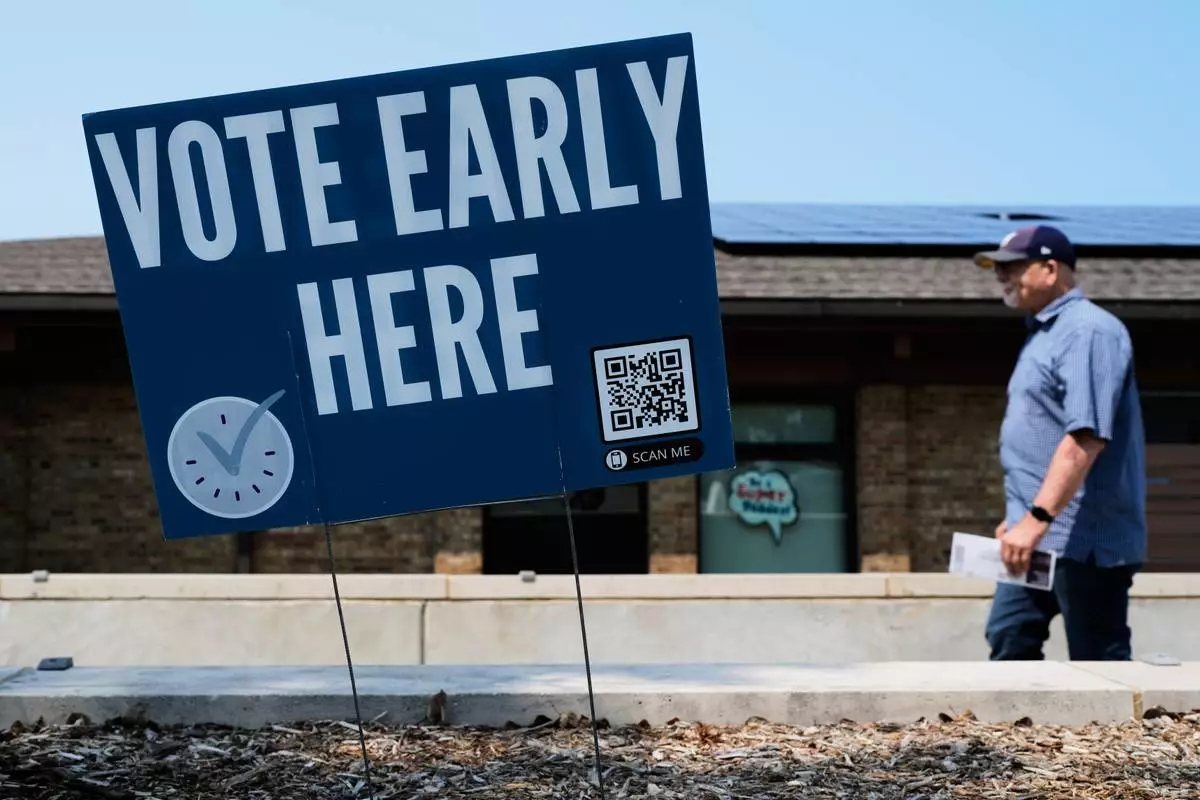
A voter walks to polling place in Milwaukee, Tuesday, July 28, 2026. (AP Photo/Nam Y. Huh)
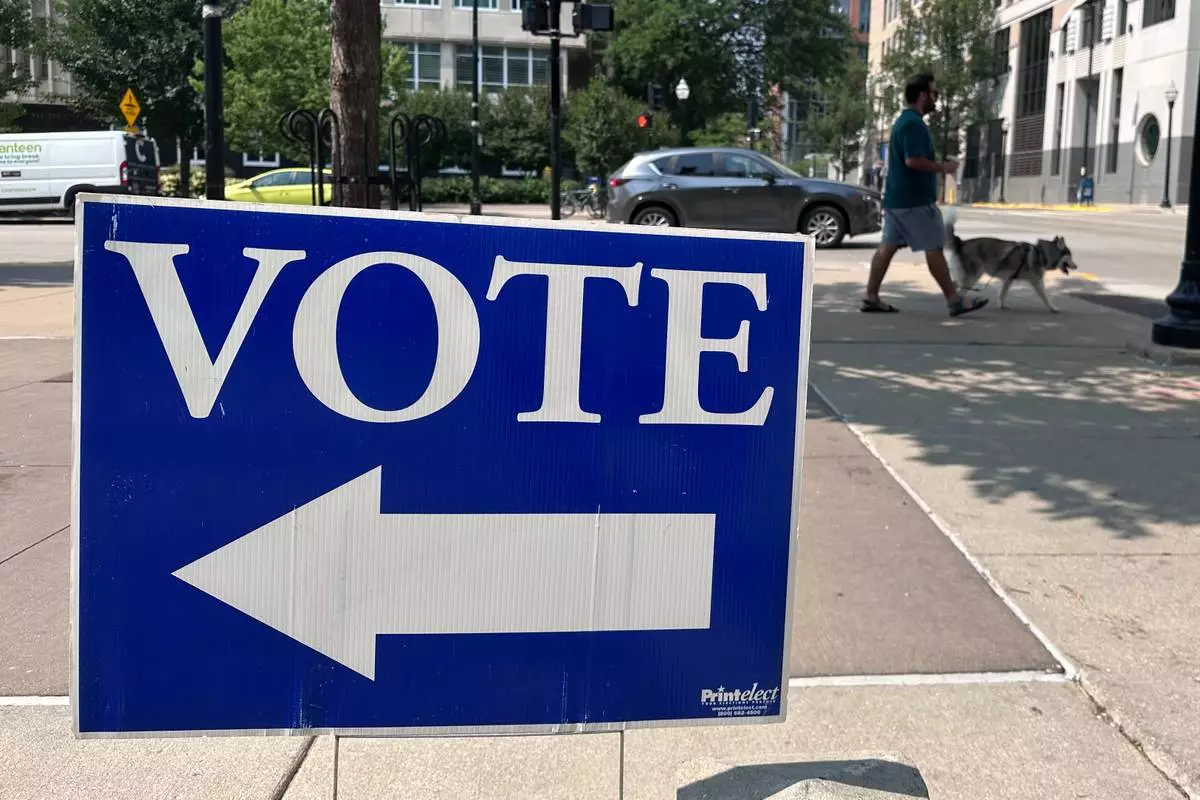
A person walks past a sign for a polling place on the first day of in-person absentee voting for Wisconsin’s chaotic Democratic primary for governor Tuesday, July 28, 2026, in Madison, Wis. (AP Photo/Scott Bauer)
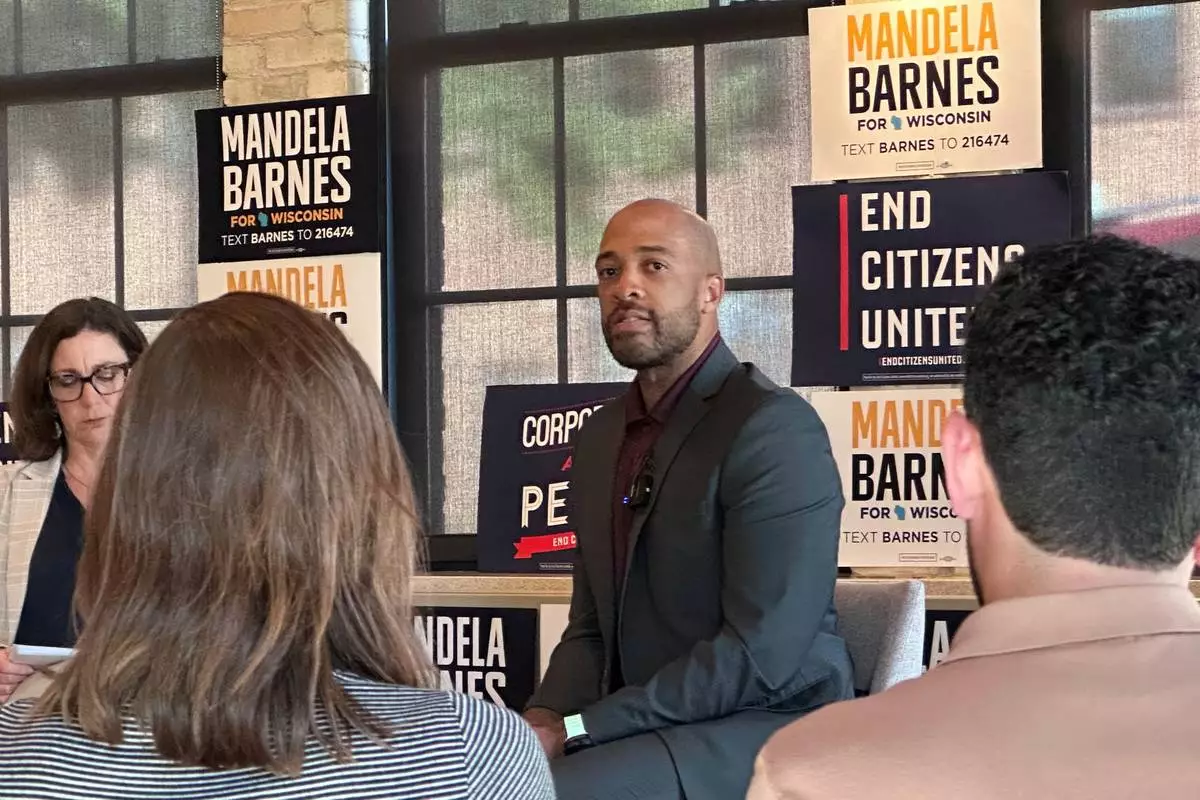
Wisconsin Democratic candidate for governor Mandela Barnes speaks at a campaign stop on Tuesday, July 14, 2026, in Madison, Wis. (AP Photo/Scott Bauer)

FILE – Milwaukee County Executive David Crowley addresses a crowd, March 29, 2025, in Milwaukee. (AP Photo/Andy Manis, File)

Democratic gubernatorial candidate Francesca Hong talks with a Milwaukee resident during “We Outside” Annual Community Event at Metcalfe Park Rising, Friday, July 24, 2026, in Milwaukee. (AP Photo/Nam Y. Huh)

FILE – Absentee ballots during a count at the Wisconsin Center, Nov. 8, 2022, in Milwaukee. (AP Photo/Morry Gash, File)