
Introduction: The Resurgence of the European Auto Market
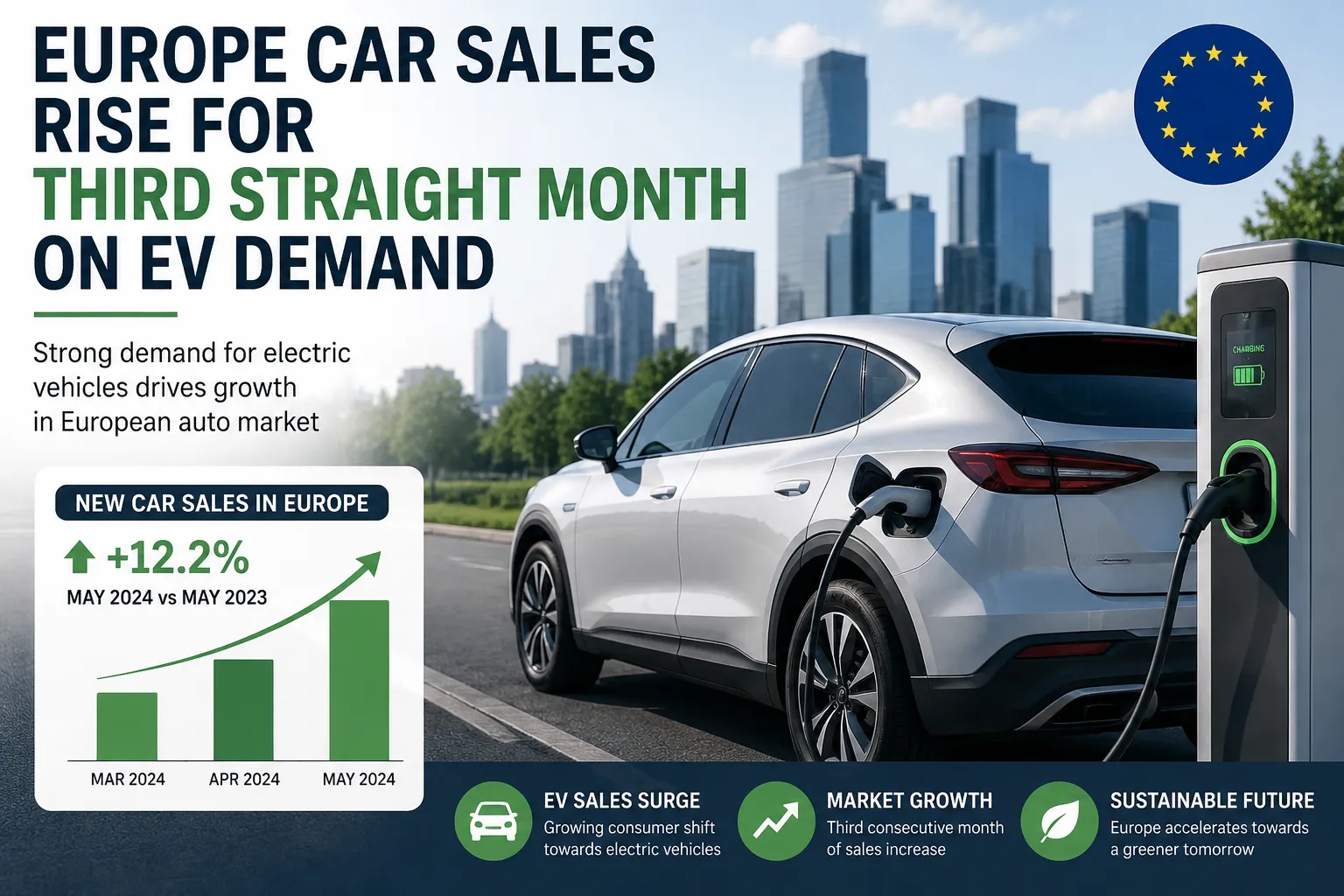
The European automotive sector is experiencing a significant revitalization, fundamentally driven by the accelerating transition towards sustainable mobility. For the third consecutive month, European car sales have demonstrated robust growth, defying broader macroeconomic headwinds and geopolitical uncertainties. This upward trajectory is not fueled by traditional internal combustion engine (ICE) vehicles; rather, it is the surging demand for Battery Electric Vehicles (BEVs) and Plug-in Hybrid Electric Vehicles (PHEVs) that is acting as the primary catalyst. As consumers increasingly prioritize environmental sustainability, benefit from governmental incentives, and gain access to a wider variety of affordable models, the electric vehicle market in Europe is solidifying its position as a global leader.
This sustained growth highlights a pivotal shift in consumer behavior and industry focus. Automakers are rapidly scaling their EV portfolios, transitioning away from legacy technologies, and investing heavily in next-generation electric powertrains. The continuous month-over-month sales increases indicate that the European market has moved past the early adopter phase and is now firmly in the era of mass-market EV acceptance.
The Numbers Behind the Growth: A Statistical Breakdown
Recent data from the European Automobile Manufacturers’ Association (ACEA) and industry consultancies paint a clear picture of this electric surge. New-vehicle registrations across the European Union, EFTA countries, and the United Kingdom have seen a consistent uptick. In recent months, total market registrations rose by roughly 7% year-on-year, pushing past the 1.15 million vehicle mark. While the overall market grew, the most striking figures emerged from the electrified segments.
Battery Electric Vehicles (BEVs): BEV registrations have routinely seen double-digit percentage jumps, at times surging nearly 40% year-on-year in specific months. This aggressive growth has pushed the BEV market share well past the 20% threshold in several key European nations.
Plug-in Hybrids (PHEVs): Serving as a transitional technology for range-anxious consumers, PHEVs have maintained steady growth, contributing significantly to the overall electrified vehicle market share.
Internal Combustion Engine (ICE) Decline: In stark contrast, petrol and diesel registrations have faced steep declines, frequently dropping by 19% or more year-on-year, illustrating the rapid cannibalization of traditional auto sales by electric alternatives.
Vehicle Powertrain
Recent Market Trend
Estimated Market Share Growth
Battery Electric (BEV)
Strong Growth (+30% to 40% YoY)
Accelerating rapidly
Plug-in Hybrid (PHEV)
Moderate Growth (+10% to 15% YoY)
Stable transition segment
Petrol / Diesel (ICE)
Significant Decline (-15% to 20% YoY)
Losing ground monthly
The Driving Forces of European EV Adoption
The remarkable performance of the European EV market is not coincidental; it is the result of a meticulously crafted ecosystem designed to foster electrification. Several converging factors are driving consumers toward the electric switch.

1. Aggressive Legislative Mandates
The European Union’s steadfast commitment to achieving climate neutrality by 2050 is a major driver. The impending 2035 ban on the sale of new petrol and diesel cars acts as a powerful legislative stick, forcing both automakers and consumers to adapt. Automakers are heavily discounting BEVs to stay compliant with stringent fleet emission targets and avoid massive financial penalties.
2. Expanding Variety and Price Parity
Historically, EVs were viewed as luxury items. Today, the landscape is vastly different. The introduction of affordable, mass-market electric vehicles has democratized access to sustainable transport. With the continuous drop in battery pack prices, EVs are rapidly approaching sticker-price parity with their ICE counterparts, making the financial case for switching much stronger.
The Global Perspective: Europe Offsetting China and US Weakness
While Europe enjoys record-breaking EV sales, the global picture is more nuanced. Europe’s strong performance is currently acting as the primary engine for global EV growth, effectively offsetting stagnation and weakness in other major markets.
In North America, the EV market has experienced a cooling period. Registrations recently dropped by double digits following the restructuring of federal EV tax credits, alongside persistent consumer anxiety regarding range and public charging reliability. Meanwhile, in China—the world’s largest EV market—domestic demand has shown signs of saturation and economic slowdown, leading to a temporary dip in registrations. Consequently, Chinese automakers are aggressively expanding their export strategies, targeting Europe with high-quality, cost-competitive electric models to compensate for softer domestic sales.
Automaker Showdown: Who is Winning the European Market?
The European market has become a fierce battleground for both legacy automakers and disruptive new entrants.
Tesla: The American EV pioneer continues to command a massive presence. Driven by high volume deliveries of the Model Y and the refreshed Model 3, Tesla frequently captures top spots in overall vehicle sales across the continent, not just within the EV category.
European Incumbents: Giants like the Volkswagen Group, Stellantis, and BMW are leveraging their massive manufacturing footprints and deep brand loyalty. They are rolling out extensive electric line-ups to defend their home turf, offering everything from compact city cars to premium electric SUVs.
The Chinese Advance: Brands such as BYD, Chery, and MG (owned by SAIC) are making unprecedented inroads. Offering high specifications at lower price points, these brands are seeing triple-digit percentage growth in registrations, fundamentally disrupting the established market hierarchy.
Ripple Effects: Battery Manufacturing and Supply Chain Dynamics
The surge in European EV sales is sending massive demand signals upstream, fundamentally reshaping global supply chains. The localized production of lithium-ion cells is becoming a matter of economic security and industrial policy.
Europe is witnessing a boom in “gigafactory” construction, aiming to reduce reliance on Asian battery suppliers. This localized manufacturing push demands a robust supply of raw materials—such as lithium, nickel, and cobalt—prompting extensive investments in refining and recycling infrastructure. The advancement of battery technology, including the push toward higher energy density and the commercialization of solid-state batteries, is directly funded and accelerated by this sustained European consumer demand.
The Critical Role of Charging Infrastructure
No electric vehicle market can thrive without a reliable, widespread, and fast-charging network. Europe’s sales success is inextricably linked to its aggressive deployment of public charging points. The EU’s Alternative Fuels Infrastructure Regulation (AFIR) mandates strict distance-based targets for fast-charging stations along major highway networks, alleviating range anxiety and facilitating seamless cross-border electric travel.
Blueprints for Emerging Markets: The Indian EV Industry
Europe’s aggressive rollout of fast-charging networks and localized production offers a valuable blueprint for emerging markets globally. The Electric Vehicle (EV) industry in India, for example, is currently undergoing a massive transformation. There is a strong, strategic focus on expanding domestic battery manufacturing and scaling up nationwide charging infrastructure to meet ambitious national electrification targets. As global automakers look to diversify their supply chains, the lessons learned in the European market regarding localized battery production, supportive government subsidies, and seamless charging grid integration are becoming foundational strategies for accelerating the Indian EV ecosystem.

Challenges on the Horizon
Despite the optimistic sales figures, the European EV market faces several ongoing challenges that must be navigated to ensure long-term stability:
Grid Capacity: As millions of EVs plug into the grid simultaneously, energy providers must upgrade infrastructure to handle the increased load, heavily investing in smart charging technologies and renewable energy integration.
Trade Tensions: The influx of aggressively priced Chinese EVs has sparked debates over fair competition, leading to investigations into state subsidies and the potential implementation of protective tariffs, which could alter market dynamics.
Removal of Subsidies: As EVs reach mass adoption, several European governments are beginning to phase out direct consumer purchase subsidies. The industry must prove it can sustain organic growth without these financial crutches.
The Economic and Environmental Impact
The shift toward electric mobility is fundamentally re-engineering the European economy. While traditional auto-manufacturing jobs focused on internal combustion engines are phasing out, new sectors in software development, battery chemistry, and electrical engineering are booming.
Environmentally, the displacement of thousands of petrol and diesel vehicles is beginning to yield measurable improvements in urban air quality and a reduction in transport-related greenhouse gas emissions, aligning with the continent’s stringent environmental protocols.
Conclusion
The third consecutive month of rising car sales in Europe, propelled almost entirely by EV demand, is a watershed moment for the global automotive industry. It proves that with the right combination of regulatory pressure, infrastructure investment, and compelling vehicle offerings, consumers will embrace the transition to sustainable mobility. As Europe continues to lead the charge, offsetting weaknesses in other global markets, it sets a definitive standard for the future of transportation—a future that is undeniably electric.
Frequently Asked Questions (FAQ)
Q1: Why are European car sales rising right now?
A: The overall growth in European auto sales is primarily driven by a surge in demand for Battery Electric Vehicles (BEVs) and Plug-in Hybrid Electric Vehicles (PHEVs). Consumers are adopting EVs at record rates due to expanding charging infrastructure, favorable government policies, and a wider availability of affordable models.

Q2: How is the EV market in Europe performing compared to the US and China?
A: Currently, Europe is the main engine of global EV growth. While the US market has seen a temporary slowdown due to changes in tax credits and the Chinese market faces domestic saturation alongside economic headwinds, Europe’s EV registrations have hit record highs, effectively offsetting the weakness in these other regions.
Q3: Which car brands are leading the EV sales in Europe?
A: Tesla remains a dominant force with its Model Y and Model 3. However, European domestic legacy brands like Volkswagen, BMW, and Stellantis hold significant market share. Notably, Chinese automakers like BYD and Chery are experiencing massive, triple-digit growth as they expand their footprint across the continent.
Q4: Will Europe ban gas-powered cars completely?
A: Yes, the European Union has passed legislation that effectively bans the sale of new petrol and diesel cars (Internal Combustion Engine vehicles) starting in 2035. This mandate acts as a major catalyst for the current boom in EV sales as automakers align their production fleets.
Q5: How does European EV growth affect battery manufacturing?
A: The high demand for EVs in Europe is driving a massive expansion in localized battery manufacturing. To reduce reliance on overseas supply chains, billions are being invested in European “gigafactories” to produce lithium-ion cells and develop next-generation battery technologies locally.