
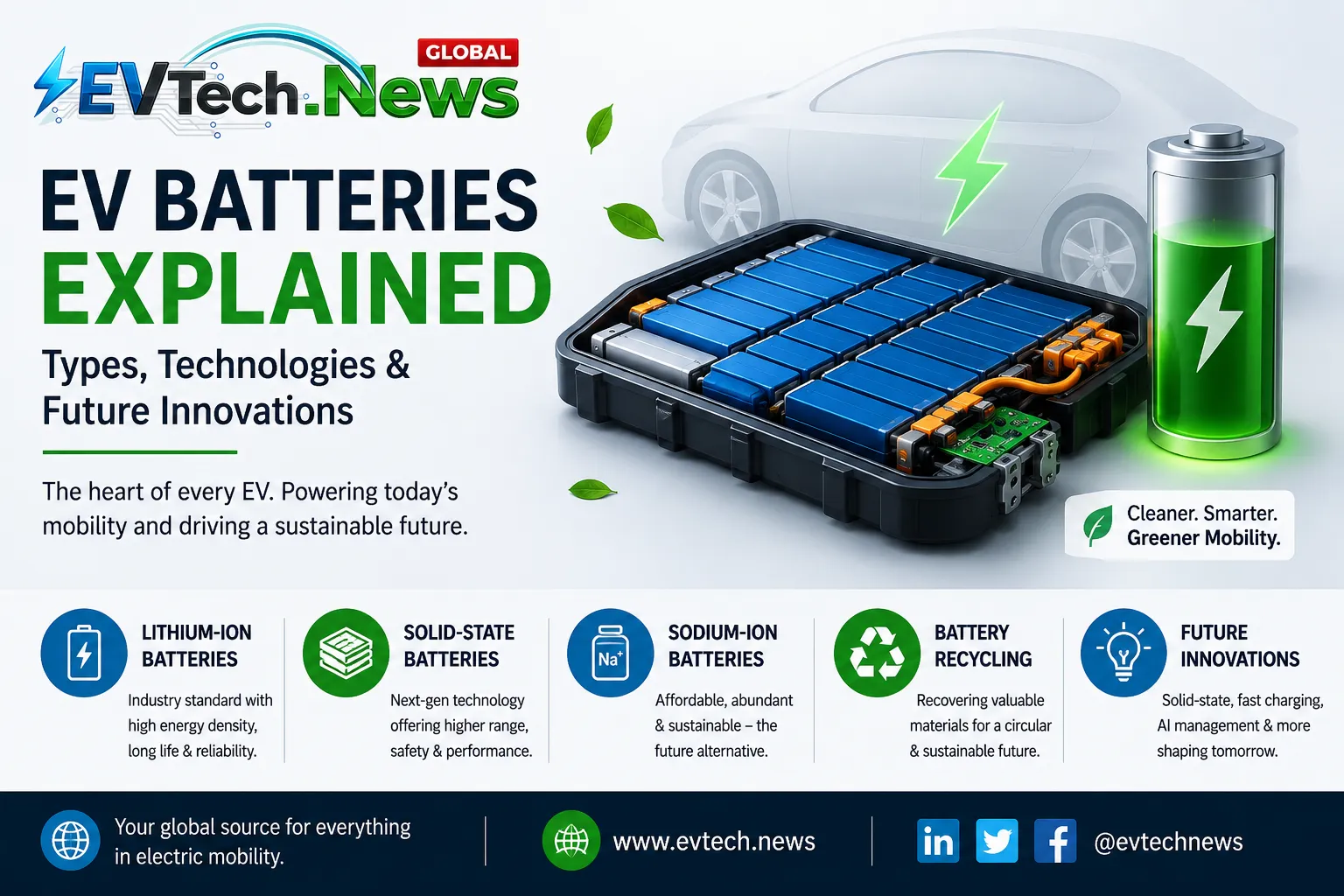
Electric vehicles have transformed the automotive industry, and at the center of this revolution lies one critical component: the battery. EV batteries determine how far a vehicle can travel, how quickly it can charge, how long it lasts, and ultimately how practical electric mobility becomes for millions of consumers worldwide.
Over the past decade, battery technology has evolved rapidly. Costs have fallen dramatically, energy density has increased, charging speeds have improved, and manufacturers are now developing next-generation battery chemistries that promise even greater performance.
Understanding EV batteries is essential for consumers, investors, automakers, policymakers, and anyone interested in the future of transportation.
What Is an EV Battery?
An electric vehicle battery is a rechargeable energy storage system that powers an electric motor instead of an internal combustion engine.
Unlike traditional car batteries that primarily start an engine, EV batteries serve as the vehicle’s main power source.
A battery pack consists of:
Battery cells
Battery modules
Battery Management System (BMS)
Cooling systems
Safety components
Power electronics
Together, these systems store and manage energy efficiently while ensuring safety and performance.

How EV Batteries Work
EV batteries store electrical energy chemically and release it when needed.
When a driver accelerates, electricity flows from the battery to the motor.
During charging, the process is reversed as electricity is stored back inside the battery cells.
Modern EV batteries are designed to handle thousands of charging cycles while maintaining performance and safety.
Lithium-Ion Batteries: The Industry Standard
Lithium-ion batteries currently dominate the electric vehicle market.
They offer an excellent balance of:
High energy density
Long lifespan
Fast charging capability
Good efficiency
Relatively low self-discharge
Most electric vehicles sold today use lithium-ion technology.
Advantages of Lithium-Ion Batteries
Long driving range
High efficiency
Proven reliability
Rapid charging capability
Global manufacturing ecosystem
Challenges of Lithium-Ion Batteries
Dependence on critical minerals
Supply chain complexity
Higher production costs
Thermal runaway risks
Environmental concerns related to mining
LFP Batteries: The Fastest Growing EV Battery Chemistry
Lithium Iron Phosphate (LFP) batteries have become increasingly popular in recent years.
Manufacturers including Tesla, BYD, and numerous Chinese automakers use LFP batteries extensively.
LFP batteries provide:
Improved safety
Longer cycle life
Lower costs
Reduced dependence on nickel and cobalt
Although LFP batteries have lower energy density than some alternatives, their affordability makes them highly attractive.
NMC Batteries: High Performance and Long Range
Nickel Manganese Cobalt (NMC) batteries remain popular among premium EV manufacturers.
NMC chemistry delivers:
Higher energy density
Long driving ranges
Strong performance characteristics
Premium vehicle applications
Many long-range electric vehicles rely on NMC battery packs to maximize efficiency and range.
Solid-State Batteries: The Next Big Breakthrough
Solid-state batteries are widely viewed as the future of electric vehicle energy storage.
Unlike conventional lithium-ion batteries, solid-state designs use solid electrolytes instead of liquid electrolytes.
This innovation provides several potential benefits.
Advantages of Solid-State Batteries
Higher energy density
Longer driving range
Faster charging
Improved safety
Reduced fire risk
Longer battery lifespan
Several manufacturers are investing heavily in solid-state battery development.
Companies pursuing commercial solid-state batteries include:
Toyota
Nissan
Samsung
CATL
BMW
Mercedes-Benz
Many experts expect commercial deployment to accelerate between 2027 and 2030.
Sodium-Ion Batteries: The Affordable Alternative
Sodium-ion batteries have emerged as one of the most promising battery technologies of 2026.
Unlike lithium-based batteries, sodium-ion systems use sodium, one of the most abundant elements on Earth.
Advantages of Sodium-Ion Batteries
Lower production costs
Abundant raw materials
Improved cold-weather performance
Reduced supply chain risk
Enhanced sustainability
Companies including CATL are already commercializing sodium-ion technology for electric vehicles and energy storage systems.

China’s Changan Nevo A06 is expected to become one of the first mass-produced sodium-ion electric vehicles.
Battery Management Systems (BMS)
The Battery Management System acts as the brain of an EV battery pack.
The BMS continuously monitors:
Cell voltage
Temperature
Charging rates
Battery health
Safety conditions
Without sophisticated battery management systems, modern EV batteries would not operate safely or efficiently.
Battery Charging Technologies
Charging speed remains one of the most important factors influencing EV adoption.
Recent innovations include:
800V architectures
1000V charging systems
Megawatt charging platforms
AI-based charging optimization
Battery preconditioning
Ultra-fast charging technologies are reducing charging times from hours to minutes.
Battery Recycling: A Growing Industry
As EV adoption increases, battery recycling is becoming increasingly important.
Used EV batteries contain valuable materials including:
Lithium
Nickel
Cobalt
Copper
Manganese
Graphite
Recycling allows these materials to be recovered and reused in new batteries.
Benefits of Battery Recycling
Reduced mining demand
Lower environmental impact
Resource conservation
Supply chain security
Cost reduction opportunities
Second-Life Battery Applications
Even after batteries are no longer suitable for vehicle use, they often retain significant capacity.
Second-life applications include:
Residential energy storage
Commercial backup systems
Renewable energy storage
Grid stabilization projects
These applications extend battery usefulness and improve sustainability.
Battery Safety Improvements
Modern EV batteries are safer than ever before.
Safety technologies include:
Thermal management systems
Advanced battery monitoring
Fire-resistant materials
Cell isolation systems
Crash protection structures
Future battery technologies are expected to further reduce safety risks.
The Future of EV Batteries
The next decade will likely bring major breakthroughs in battery technology.
Emerging innovations include:

Solid-state batteries
Sodium-ion batteries
Lithium-sulfur batteries
Silicon-anode batteries
Wireless charging integration
AI-powered battery optimization
These technologies could dramatically improve driving range while reducing costs.
Impact on the EV Industry
Battery innovation remains the single most important factor shaping the future of electric vehicles.
Advancements in battery technology will influence:
Vehicle affordability
Driving range
Charging speed
Consumer adoption
Manufacturing economics
Global EV growth
Companies that lead battery innovation are likely to become major winners in the EV industry.
EVTech.News Expert Analysis
Battery technology is evolving faster than any other component of the electric vehicle ecosystem. While lithium-ion batteries remain dominant today, the industry is already preparing for the next generation of energy storage solutions.
Solid-state batteries promise unprecedented performance, while sodium-ion batteries could democratize EV adoption through lower costs. Combined with advanced recycling systems and second-life applications, the future of EV batteries looks increasingly sustainable and efficient.
Conclusion
EV batteries are the foundation of modern electric mobility. From lithium-ion and LFP technologies powering today’s vehicles to solid-state and sodium-ion batteries shaping tomorrow’s transportation systems, battery innovation continues driving the EV revolution forward.
As costs decline, charging speeds improve, and sustainability increases, batteries will play an even greater role in accelerating global EV adoption.
Stay updated with the latest battery technology breakthroughs, EV innovations, charging advancements, and electric mobility news only on EVTech.News.
ev batteries, electric vehicle batteries, lithium ion batteries, solid state batteries, sodium ion batteries, EV battery technology, EV battery types, electric car batteries explained, battery recycling, EV battery innovations, future of EV batteries, LFP batteries, NMC batteries, battery management system, EV charging technology, battery energy density, EV battery lifespan, battery safety, EV battery recycling, EVTech.News battery guideFrequently Asked Questions (FAQs)
What type of battery do most EVs use?
Most electric vehicles currently use lithium-ion batteries due to their high energy density, efficiency, and long lifespan.
What is the difference between LFP and NMC batteries?
LFP batteries are safer and more affordable, while NMC batteries offer higher energy density and longer driving range.
What are solid-state batteries?
Solid-state batteries use solid electrolytes instead of liquid electrolytes, providing improved safety, faster charging, and higher energy density.
Why are sodium-ion batteries important?
Sodium-ion batteries use abundant materials, reduce costs, improve cold-weather performance, and reduce dependence on lithium supply chains.
Can EV batteries be recycled?
Yes. Valuable materials such as lithium, nickel, cobalt, and copper can be recovered and reused through battery recycling processes.
How long do EV batteries last?
Most EV batteries are designed to last 8–15 years or more, depending on usage patterns, charging habits, and environmental conditions.