
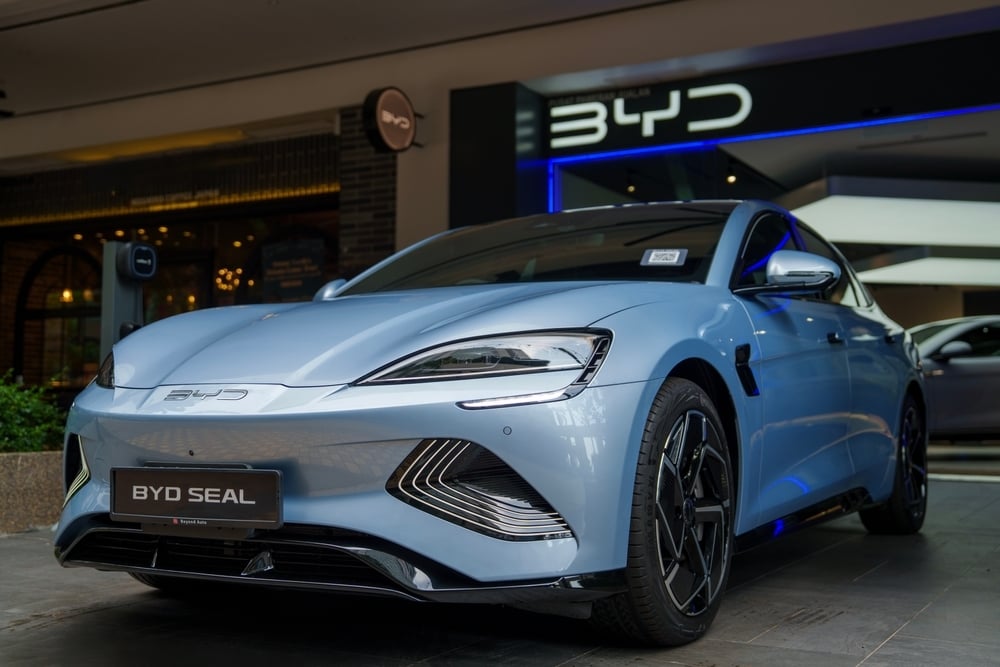
Canadian electric vehicle drivers may be one step closer to a charging stop that feels more like grabbing a coffee than planning an entire road trip.
A new sign of that possibility is BYD’s reported interest in Canada, where the company says its ultrafast chargers can deliver several hundred miles of driving range in roughly five minutes.
What happened?
According to AOL, a LinkedIn listing from BYD North America for a “Flash Charging Business Development Manager” based on Toronto hints at a Canadian Flash Charging buildout.
The listing says this role would be “responsible for supporting the development, optimize action [sic], and performance” of that network and would “play a critical part in executing BYD’s flash charging network expansion strategy and business growth across Canada.
The market has become more accessible for automakers such as BYD, Geely, and Chery, with Canada now set to admit 49,000 Chinese EVs annually at a 6.1% tariff.
BYD’s Flash Charging system can reportedly hit 1,500 kilowatts. That means charging from 10% to 70% in about five minutes, a rate well above the approximately 350-kilowatt maximum offered by the quickest public chargers in North America.
Why does it matter?
If BYD can deliver those speeds in Canada, owning an EV could become much simpler for everyday drivers, especially those who rely on quick charging sessions during errands, road trips, or long commutes.
In BYD’s estimates, five minutes on the charger is enough to add around 250 miles of range, which could sharply cut wait times and make public charging feel far more comparable to a gas stop.
In China, BYD says it has already installed 4,239 Flash Charging stations, and it aims to reach 20,000 by the end of 2026, ahead of a wider international expansion.
BYD says the setup pairs the chargers with large battery-storage systems that function like oversized power banks. Using that kind of buffer could make it easier for cities and businesses to install ultrafast charging while easing pressure on local grids and reducing the need to wait for expensive power upgrades.
That could matter even more in the severe Canadian cold. During a BYD internal test on a Denza Z9 GT with the second-generation Blade battery, the battery was frozen to minus-22 degrees Fahrenheit (or minus-30 Celsius) and charged from 20% to 97% in 12 minutes.
Get TCD’s free newsletters for easy tips, smart advice, and a chance to earn $5,000 toward home upgrades. To see more stories like this one, change your Google preferences here.
