

BMW‘s electric M3 is deep into development, and the numbers are starting to back that up. The prototype has now accumulated 5,000 miles of testing at the Nürburgring—the Green Hell—ahead of the car’s scheduled 2027 launch. That milestone, confirmed this week, signals the program has moved well past early validation and into the kind of sustained, high-intensity calibration that shapes how an M car actually behaves at the limit.
For M-division loyalists, the number matters. Five thousand miles at the Ring isn’t a PR lap or a photo op — it’s the engineering equivalent of a prolonged stress test, where suspension tuning, brake thermal behavior, and powertrain response all get wrung out under conditions that no flat road course can replicate. BMW is clearly betting that the same development rigor that made the S58-powered G80 M3 one of the most capable sports sedans of its generation can translate to an electric platform.
What 5,000 Nürburgring Miles Actually Mean For An EV

BMW
The Nürburgring’s 12.9-mile Nordschleife is a particularly punishing environment for electric vehicles. The combination of high-speed sections, sustained braking zones, and rapid elevation changes creates thermal loads that flat-road testing simply can’t replicate. For an EV M3, that means engineers are working through challenges that go beyond what any gas-powered M3 ever had to solve.
Brake thermal management is one of the most critical. Under repeated hard braking from high speed—the kind the Ring demands—regenerative braking systems can saturate, forcing the friction brakes to absorb more energy than they would in normal driving. Getting that handoff between regen and mechanical braking to feel seamless, and keeping rotor and caliper temperatures in check over a full lap, requires exactly the kind of accumulated mileage BMW is putting in. Suspension and damping calibration is the other major thread. The electric M3 will carry more weight than the S58 car—battery mass is unavoidable—and tuning the adaptive dampers to mask that while maintaining the sharp turn-in M buyers expect is a process that can’t be rushed. High-speed stability through the Ring’s compression zones and blind crests is where those calibration hours show up most clearly.
The Sound Question And What BMW Is Signaling
BMW
BMW has also teased what it’s calling a “new sound experience” for the electric M3, described as inherited from the brand’s gas engine lineage. That’s a loaded phrase for M-division purists, who have long associated the S58’s rasp and the S65’s V8 howl with the emotional core of what an M car is. Whether BMW’s synthesized or acoustically engineered alternative can carry that same weight is genuinely unresolved—but the fact that the company is treating sound as a tunable engineering element, rather than an afterthought, suggests they understand what’s at stake.
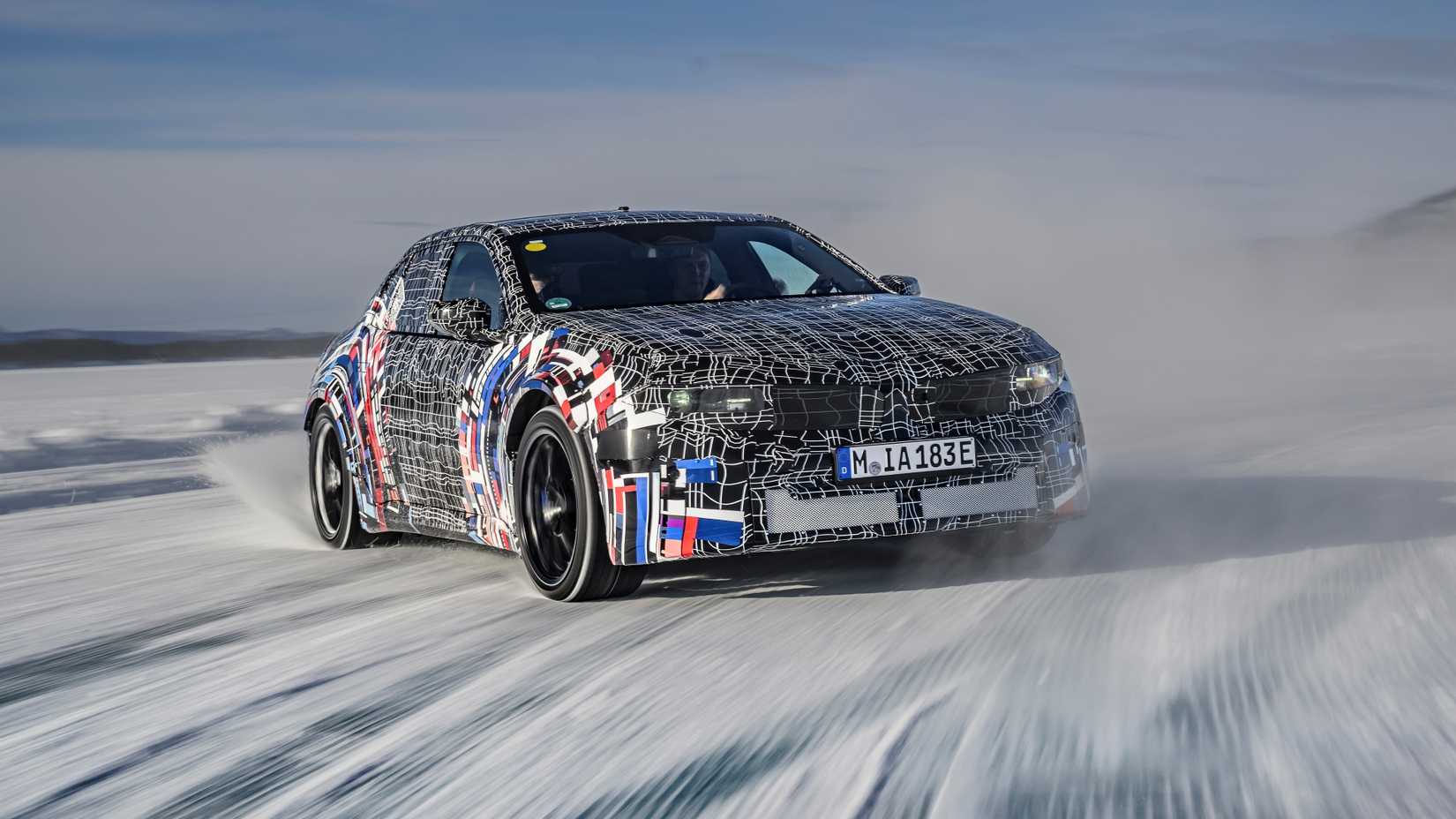
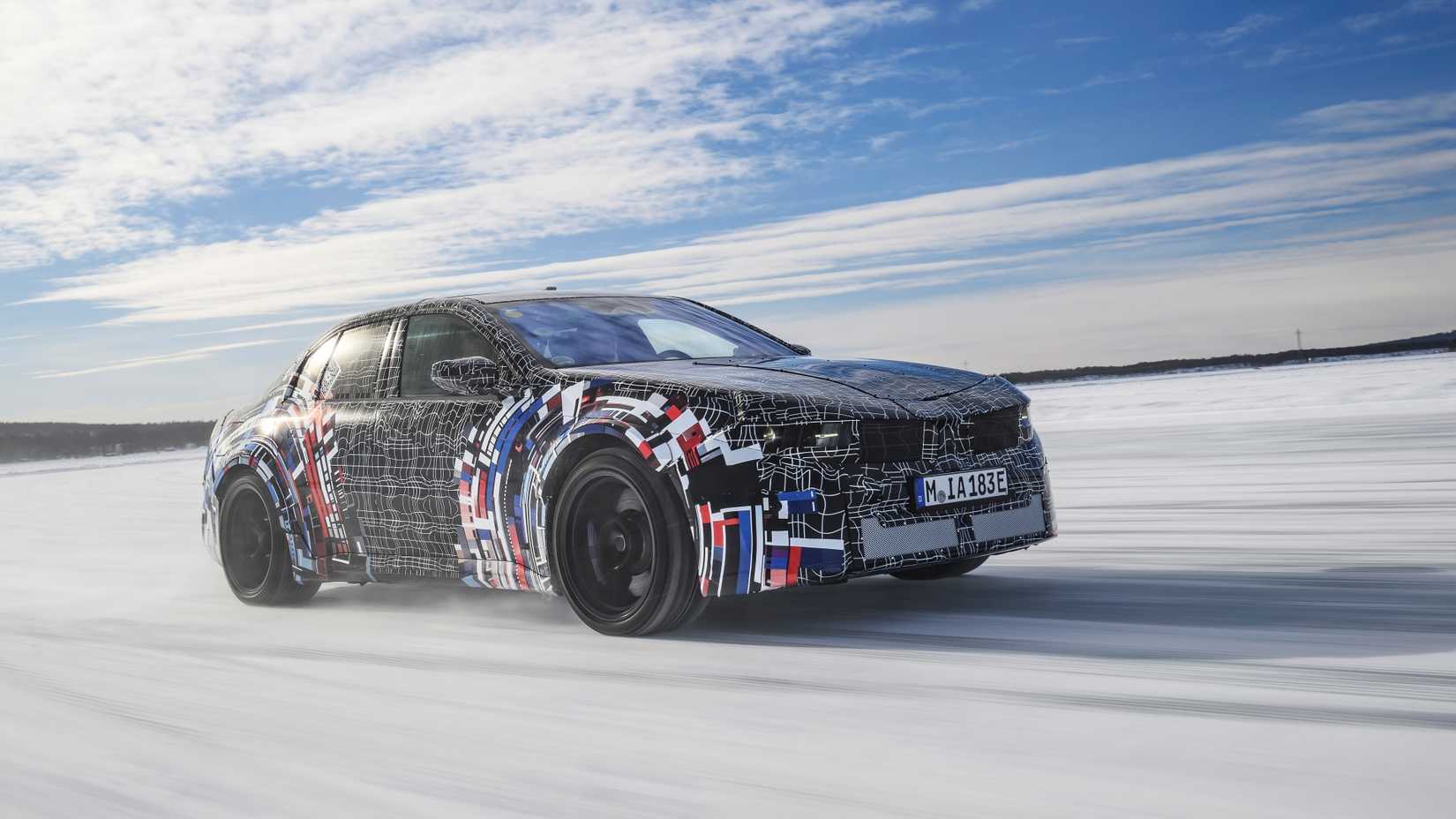
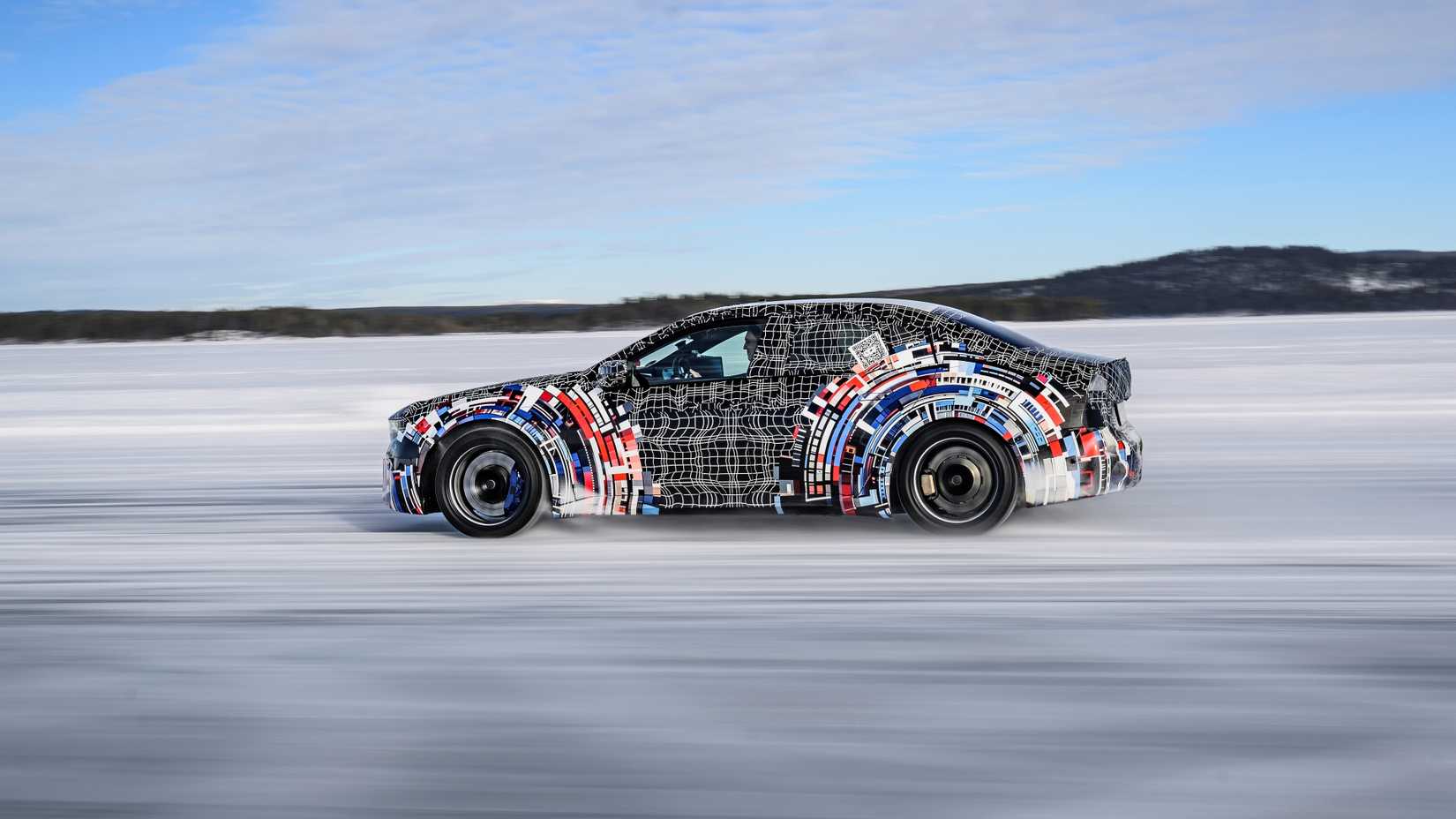
Spied testing footage from the Nürburgring, captured alongside a camouflaged M5 prototype, shows the electric M3 running at pace with what appears to be a serious development program rather than early mule testing. The car’s proportions track closely to the current G80 generation, which aligns with reports that the electric M3 will share visual DNA with its combustion predecessor.
Does A Ring-Tested Badge Still Mean Something On An EV?
BMW
The skepticism is legitimate. The Nürburgring’s credibility as a development benchmark was built on decades of combustion-era testing, where lap times and sustained-pace durability translated directly to road-car behavior. An EV changes some of those variables — regenerative braking alters how a car slows, instant torque delivery changes how it accelerates out of corners, and battery weight distribution affects chassis balance in ways that require different solutions than a front-engine, rear-drive ICE platform.
But the Ring still tests the things that matter most: structural rigidity under load, thermal management under sustained stress, and whether a car’s dynamic tuning holds together when pushed hard for an extended period. BMW has committed to keeping the electric M3 “true to BMW M DNA”—a phrase that carries real engineering intent here, not just marketing language. The 5,000-mile milestone suggests the program is serious about earning that claim rather than simply asserting it. By comparison, the current G80 M3 CS—the most focused version of the combustion car, featuring lightweight construction, sport tuning, and a manual transmission option—represents the high-water mark the electric successor will need to at least reference, if not match.
What To Watch For When Production Specs Drop
BMW
The electric M3 is expected to arrive in 2027, with the current G80 generation reportedly wrapping its run after the 2027 model year—leaving a gap that BMW plans to partially bridge with a high-performance electric i3 sedan in the interim. When the production spec for the M3 EV eventually lands, a few numbers will tell the real story.
Power output is the headline figure. Reports have pointed toward outputs in the range of 1,000 horsepower—a figure that would dwarf the S58’s 543 hp in Competition trim—though BMW has not confirmed a final number. Weight will be the counterbalancing concern: how much of that power advantage is offset by battery mass, and whether the chassis tuning developed at the Ring can make the car feel lighter than it is. The 0–60 time will follow from both. And then there’s the transmission question—whether BMW commits to any form of driver-engaged shifting or goes full single-speed automatic as most performance EVs do. Given that the outgoing M3 CS still offers a manual, that decision will say a great deal about how far BMW is willing to push the EV M3’s enthusiast credentials.
TopSpeed’s Take

BMW
BMW’s electric M3 has to prove more than speed. A 1,000-horsepower EV sedan would be headline-grabbing, but the real test is whether it can deliver the precision, stamina, and feedback that made the M3 badge matter in the first place.
The 5,000 Nürburgring miles are a strong signal that BMW is taking that challenge seriously. If the final car can manage its weight, brakes, battery temperatures, and driver engagement under real pressure, the electric M3 could be less of a break from M history and more of its most difficult evolution yet.
Sources: BMWBLOG, Carbuzz