

Listen to this article
Estimated 3 minutes
The audio version of this article is generated by AI-based technology. Mispronunciations can occur. We are working with our partners to continually review and improve the results.
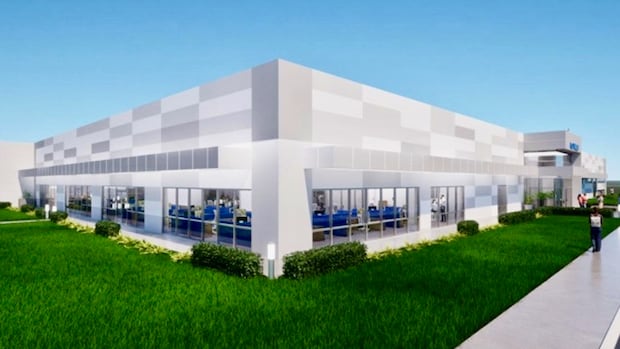
Work on the $1.56-billion Asahi Kasei battery separator plant in Port Colborne, Ont., is proceeding despite Honda Canada’s announcement it has indefinitely suspended its $15-billion electric vehicle (EV) investment plans.
Honda cited changing business conditions for the suspension, which includes stalling plans for an EV plant and a stand-alone EV battery plant in Alliston, Ont.
Two years ago, Asahi Kasei and Honda jointly announced they’d agreed to form a joint venture out of an existing Asahi Kasei subsidiary in Canada, with Honda committing about $240 million for a 25 per cent stake in the Port Colborne plant.
The companies had said the target for commercial startup for the factory was 2027.
Asahi Kasei remains ‘fully committed’
Asahi Kasei confirmed in a statement to CBC News on Friday that the Port Colborne plant will proceed regardless of Honda’s latest announcement to definitively suspend its plans for an EV complex.
“Asahi Kasei remains fully committed to the Port Colborne project and to the local Niagara community,” said Christian OKeefe, external marketing and corporate communications specialist with Asahi Kasei America.
“Construction and equipment installation remain on schedule, and commercial production is currently targeted for the first half of 2029 to align with evolving market conditions.”
Asahi Kasei broke ground on the Port Colborne plant in November 2024.
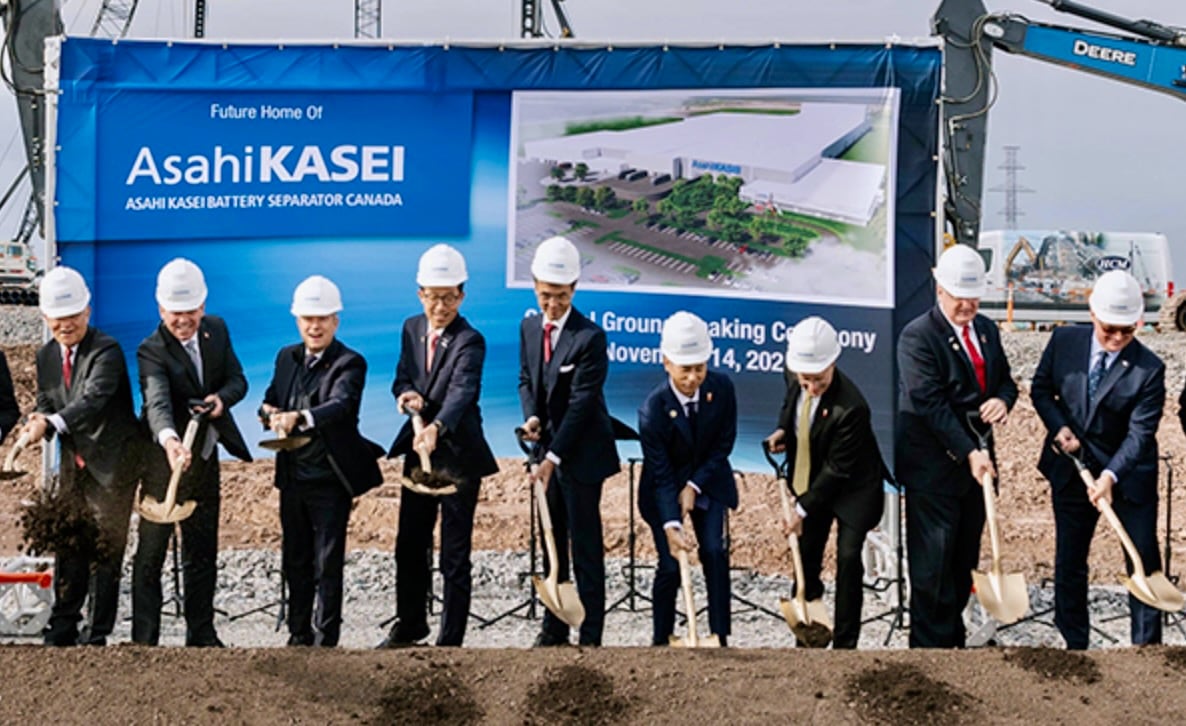 In 2024, dignitaries took part in the ground-breaking ceremony for the $1.5-billion Asahi Kasei battery separator plant in Port Colborne, Ont. (Asahi Kasei photo)
Honda said in May 2025 that it had paused development of the EV projects, with plans to review where the EV market was in two years.
The indefinite suspension was announced Thursday after Honda posted its first-ever full-year loss at 423.9 billion yen ($3.68 billion Cdn).
It won’t affect Honda’s current jobs or production of Honda Civic and CR-V models at its existing Alliston plant, the company said. The EV expansion was expected to create 1,000 incremental manufacturing jobs at the facility in Ontario’s Simcoe County.
WATCH | What’s behind Honda indefinitely suspending its EV plant plans:
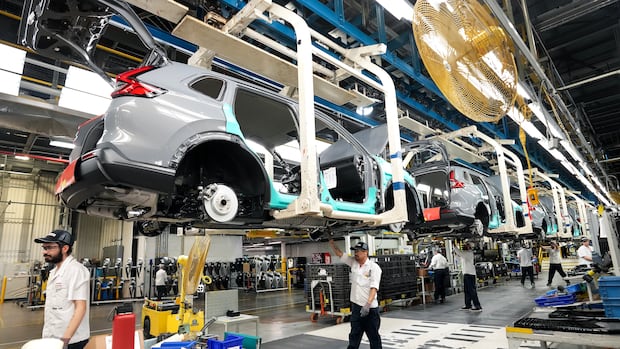
Honda pauses $15B investment in Canadian EV plants
Japanese automaker Honda says it’s pausing a $15-billion investment plan that would have seen four new electric vehicle factories built in Ontario. Honda says it’s because of slow market growth in the EV sector due to Trump’s trade war.
Port Colborne Mayor Bill Steele said he and city officials have had regular meetings with Asahi Kasei officials, including one on Friday, addressing issues such as water and wastewater needs, and hydro needs.
“They’re fully committed to Port Colborne,” Steele said. “They continue to be a great partner with the city.
The fact the planned opening date has been pushed back two years isn’t surprising given the scope of the project and how many trades are involved, said Steele.
“We have 925 people a day working on it.”
Plant to serve broader market demand
O’Keefe said that while Honda is an important partner, “our long‑term strategy is focused on serving multiple customers and applications, and we continue to prepare our Canadian facility to support broader market demand as it develops.”
CBC News has reached out to Asahi Kasei to clarify why the target commercial startup date of the plant is now 2029.
Asahi Kasei said the Port Colborne plant will be Canada’s first large-scale, wet-process separator facility.
Battery separators play a critical role in lithium-ion batteries, enabling higher energy density and long-term durability, essential for EVs and other energy storage applications, the company said.