
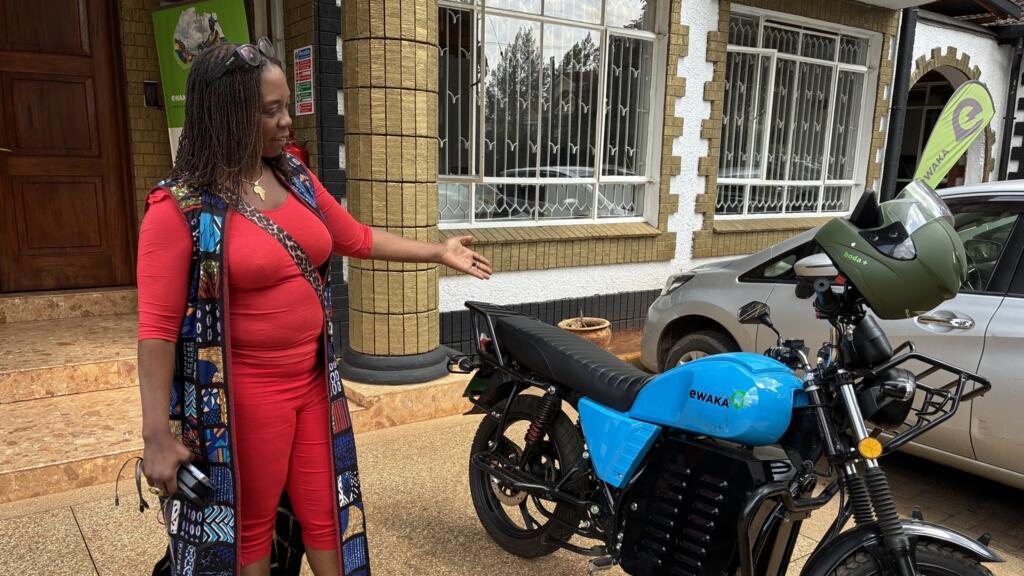
For those familiar with the traffic conditions in Kenya’s capital, Nairobi, the daily gridlock can leave people stranded for hours amid cars, trucks and other vehicles. Those who can’t afford to drive rely on either matatus, the local minibuses, or motorbikes, known as boda boda.
The result of this is not just traffic jams but high levels of pollution – something Kenya is aiming to change with a budding renewable energy drive.
Several innovative companies such as eWaka and Roam Electric illustrate the boom in electric vehicle (EV) production.
With Kenya’s electricity coming mostly from geothermal or hydro-electric power and from renewable energy (wind and solar), these companies hope to promote the end of oil dependency.
There is also a focus on local manufacturing, which will create employment for young people.
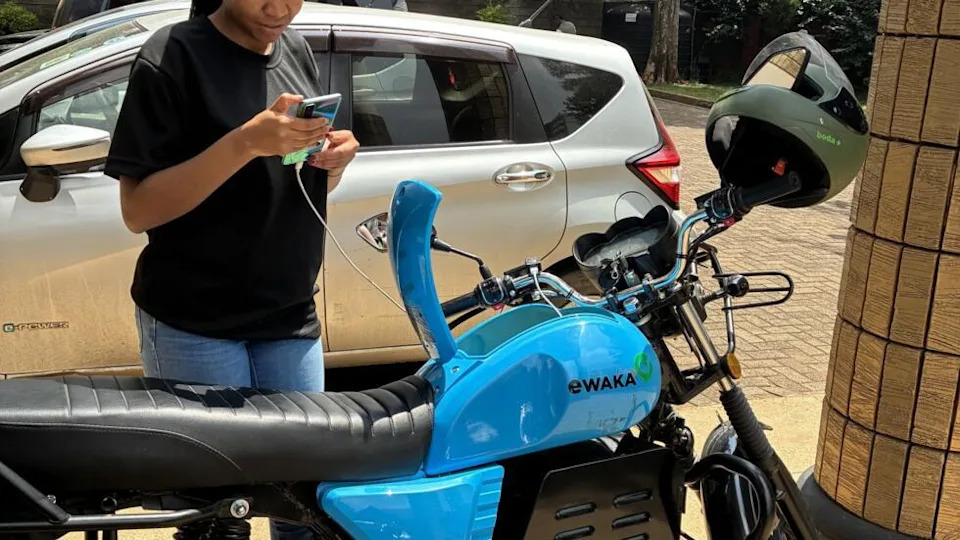
One of eWaka’s latest electric motorbike models, in Nairobi, Kenya, 7 May, 2026.
Co-founded in 2021 by Celeste Tchetgen Vogel and Jimmy Tune, eWaka Mobility Limited sells e-bikes, and markets fleets of these and the accompanying software to companies.
They also provide training to drivers on how to make the switch to electric bicycles and e-motorbikes.
“We started with electric cargo bicycles, and at the time there was a lot of scepticism in Africa. People told us it’s the poor man’s motorcycles,” Celeste Tchetgen Vogel, co-founder and CEO of eWaka, told RFI.
“But when people test our bicycles, they can feel the difference. We also produce motorcycles, because the reality of our road infrastructure is that there are certain parts of cities where you can’t go with a car, since there’s a lot of traffic.”
She says the company is hoping to add other types of vehicles to their fleet in the near future: three-wheelers, small cars and small trucks – “Eventually, any vehicle that enables last mile logistics or transportation of goods or even of people”.
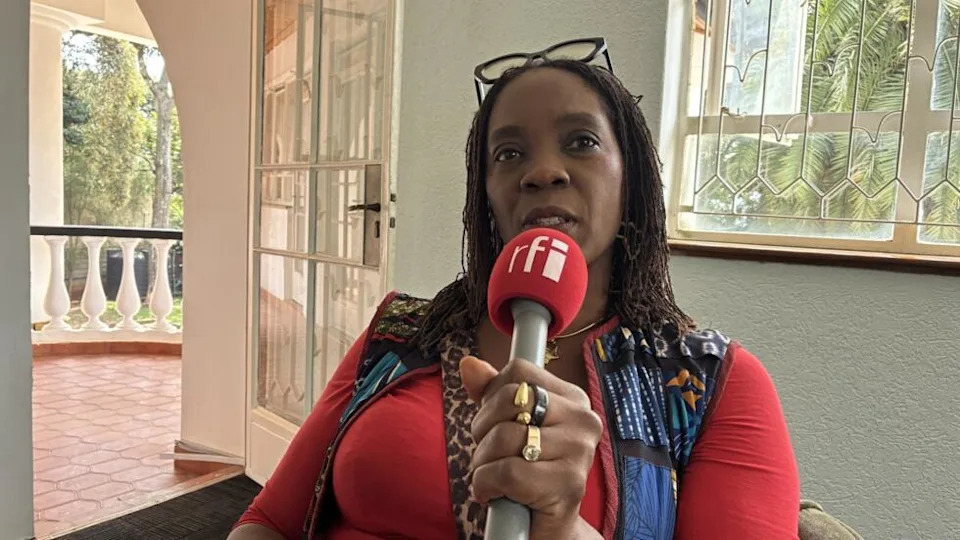
Celeste Tchetgen Vogel is the co-founder & CEO of eWaka, a company focused on electric vehicles and e-mobility in Nairobi, here photographed on 7 May 2023.
Electric pioneers
Roam Electric was a pioneer in this sector, designing and developing electric motorcycles, electric buses and solar systems for emerging markets in Kenya and beyond.
“Roam started in 2017 and in the beginning we were just experimenting to shift vehicles from fuel to electric engines,” Ivy Magara, the lead R&D battery engineer at Roam, told RFI from the company’s large warehouse in Nairobi, near the National Park.
AI is fuelling the ‘digital colonisation’ of Africa, warns UN scientist
“Initially we started by converting safari vehicles from fuel to electric, then a few buses were converted from fuel to electric. Eventually we realised that the main market to make an impact was motorbikes because there’s a lot of them in Nairobi. And from there we started to prototype, then over time worked on a room design.”
The group has now moved ahead and has produced the first fast-charging battery in Africa.
“It is the new generation design,” Magara continues. “With this, you can now charge from 0 to 100 at our Roam points in one hour and 20 minutes, down from the four hours in our hubs. You can do it in two hours, but at home, you still charge in four hours. So it is our greatest achievement, I would say, that fast-charging new battery.”
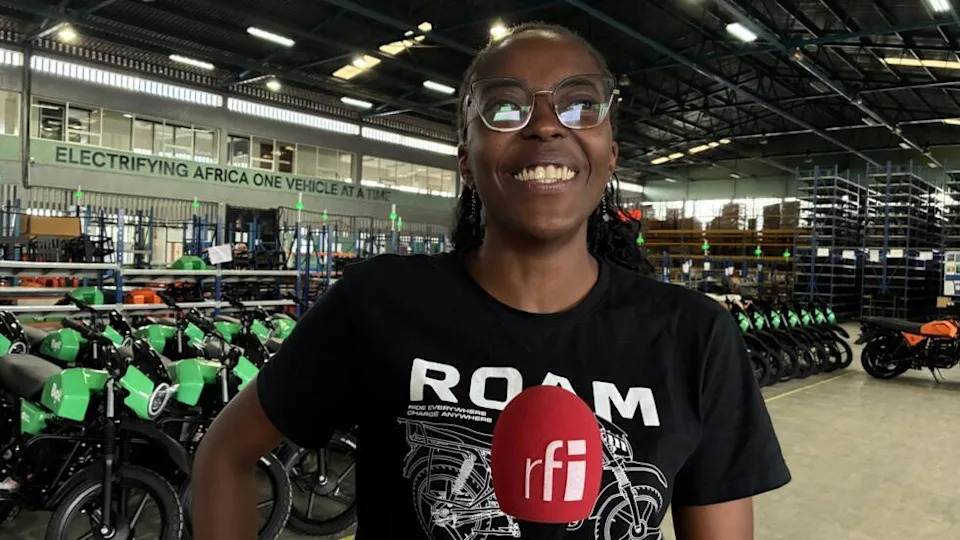
Ivy Magara is the lead battery engineer for research and development at Roam Electric, in Nairobi, Kenya, here at their main warehouse on 7 May 2026.
Trans-continental discussion
Clean energy, electric transport and local African production are being highlighted at the Africa Forward 2026 summit, organised in Nairobi by France and Kenya, on 11 and 12 May.
Vogel will be present to see what France has to offer in comparison with China, which has already invested a lot in Kenya, including in EVs.
“We see everyone is flocking to Africa,” she told RFI. “It’s the last frontier. But it is also a market that deserves sound investments and attention. And more so than the market itself, I think the solutions and who brings the solutions is something that also needs to be looked at.”
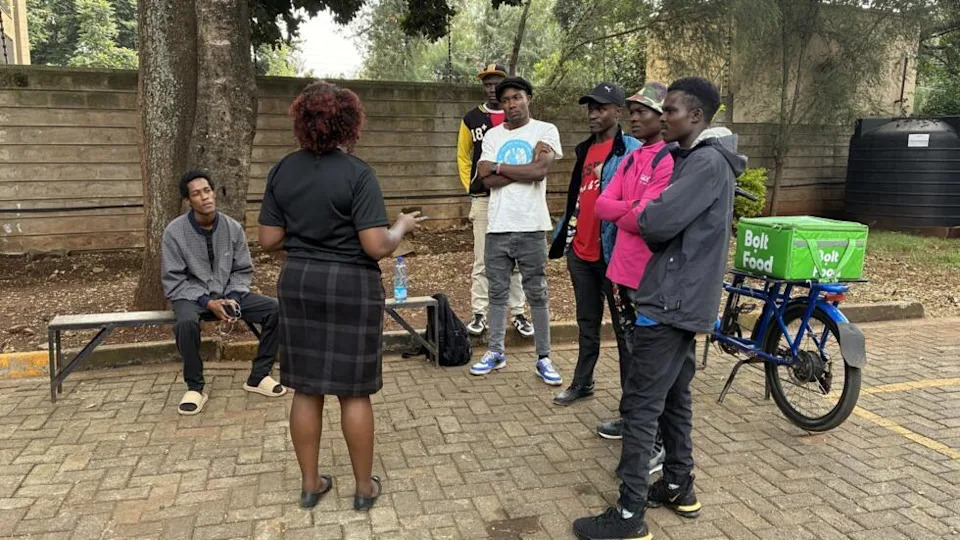
Electric bicycles and motorbikes have been produced by eWaka Mobility since 2021 in Nairobi, with the company also providing training and jobs for the bike rides.
“When it comes to e-mobility, is that China is the manufacturer of the world,” she says. “Even French EVs are made in China,” she adds. “So, I think what we need to really think about is: to what extent can private capital flow into this space?”
As a multi-lingual businesswoman born in Ghana, raised in Cameroon and trained in Europe, Vogel expects French investors coming to Nairobi for the summit to make clear commitments that suit Kenya, and more broadly all Africans.
Switched on: Malawian innovators get a helping hand from science university
“I hope we’re not trying to replicate what in West Africa we have called ‘Françafrique’,” she said, referring to the legacy of France’s colonial presence.
“I think what we are really looking at now is: can we have fair private investment discussions from equal to equal? We are offering a sound investment opportunity, is there capital available for that? Then, what the presidents agree could be a framework for this money to be able to flow.”