
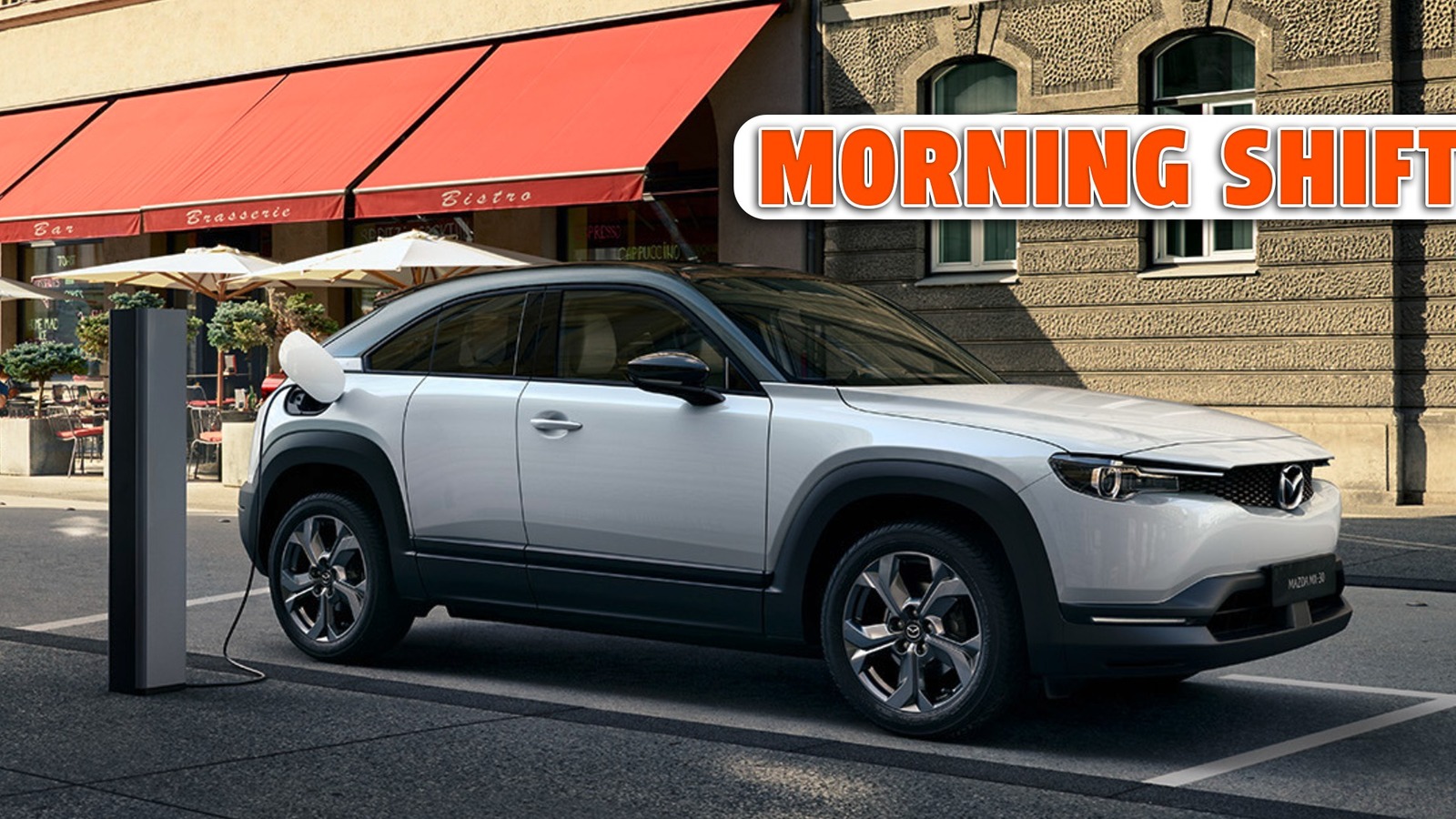
You can now add Mazda to a growing list of automakers that have all but given up on their hopes and dreams of electrification. The Japanese automaker has announced it will delay its first dedicated electric vehicle by two years to 2029, slash EV investments by nearly 50%, and — you guessed it — pivot to hybrids and Chinese-sourced electrified products as regulation changes in the U.S. and Europe have automakers around the globe rethinking their EV strategies.
In a big win for Mazda, it will forego the billions in financial writedowns just about every other automaker suffered in similar moves, according to CEO Masahiro Moro. It managed to do this by being so late to EVs in the first place, meaning it could change course, as funding was fully locked down. It’s a real “task failed successfully moment.” From Automotive News:
Mazda Motor Corp., a self-described “intentional follower” on EVs, trailed global rivals in developing the technology, partly because of its limited R&D budget and partly out of prudence. But being late allows Mazda to sidestep the billions of dollars in wasted investment claimed by such rivals as Honda Motor Co., General Motors, Ford Motor Co. and Stellantis.
Mazda now plans to launch three new hybrids in the 2028-30 time frame, in addition to the hybrid version of the redesigned CX-5 expected next year. Those hybrids will have the Mazda-developed setup using a super-lean Skyactiv-Z four-cylinder engine, not the Toyota-borrowed gasoline-electric technology used in the U.S.-assembled CX-50 crossover.
“Regarding internal man-hours, we are shifting resources back from electric vehicle-related work to internal combustion engines and hybrid vehicles,” Moro said.
[…]
In the meantime, to satisfy EV demand in select markets, Mazda will lean on product developed in China with its local partner Changan Automobile Co. Mazda will export those China-built EVs to markets such as Europe, Australia and Southeast Asia, as part of its “lean-asset” strategy.
Mazda has already positioned its China operations as a global EV exporting hub, shipping out such nameplates as the EZ-60 crossover and EZ-6 sedan to Europe.
Mazda had planned to introduce its first dedicated EV in 2027. Now, the Hiroshima-based automaker will start production of its first dedicated EV in 2029 at the earliest. Moro cited looser fuel economy standards, U.S. tariffs, cutbacks in global EV incentives and waffling demand.
Because of all this, Mazda will cut its EV investment plan to $7.52 billion through 2030. That’s down from an earlier budget of roughly $12.53 billion, according to Moro. The plurality of that scale back will come from the amount of batteries the automaker will need to match demand.
Mazda plans to have the capacity to produce 200,000 to 250,000 EVs by that year, accounting for about 15% of the company’s global volume. Initially, Mazda expected 25% to 40% of its global sales to be EVs in 2030.