
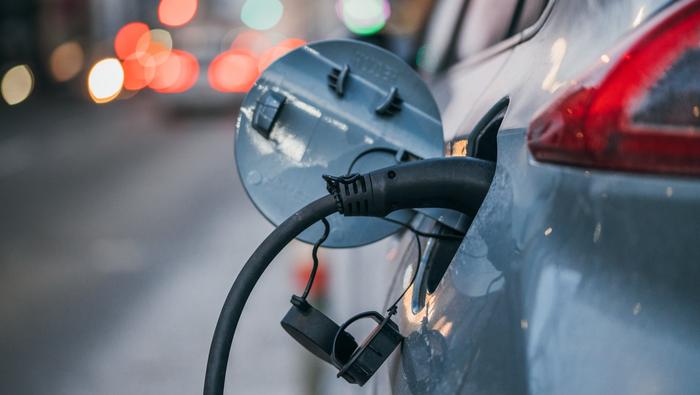
Every Uber driver who has sat at a rapid charger watching the percentage tick up knows the quiet arithmetic of the situation. Fast charging works. It also, bit by bit, destroys the battery. That trade-off has been treated as basically unavoidable for as long as electric vehicles have existed, a physical constraint baked into the chemistry of lithium-ion cells. A study from Chalmers University of Technology in Sweden now suggests otherwise. Using a reinforcement learning algorithm trained to understand how a battery ages, researchers have found a way to charge electric vehicle batteries at roughly the same speed as today while extending their useful life by almost 23 per cent. No new hardware. Just a software update.
The problem with lithium plating
When a battery charges quickly, large currents push lithium ions into the anode faster than they can be neatly intercalated into the graphite structure. Some of that lithium precipitates out instead, depositing as metallic lithium on the electrode surface. This is called lithium plating, and it is generally bad news. It reduces capacity, and in a worst-case scenario, the irregular metallic deposits can cause a short circuit. The older a battery gets, the more vulnerable its electrodes become to this process, which is perhaps the central irony of current charging practice: batteries that have been fast-charged repeatedly are already weakened, yet they continue to receive exactly the same current profiles as a fresh cell on day one.
“The risk of lithium plating increases with the age of the battery,” says Meng Yuan, assistant professor at Victoria University of Wellington, New Zealand, and a co-author of the study. “However, the standard methods of charging today use the same current and voltage regardless of whether the battery is new or has been used for years.”
That rigidity is the target. What Yuan and his Chalmers colleague Changfu Zou wanted to build was a charging controller that could read the battery’s current state of health and adjust accordingly, in real time, across the full lifespan of the cell. Not just for a single charge cycle, but continuously, as the battery aged through hundreds of equivalent full cycles.
Teaching an AI to think about tomorrow
The approach they settled on belongs to a branch of machine learning called reinforcement learning, in which an algorithm learns by trial and error, receiving rewards for actions that serve a defined goal and penalties for those that don’t. Training an RL agent for battery charging is not, in itself, new. What is different here is the framing. Previous efforts tended to reset the battery model to a fresh state at the start of each training episode, as if the cell had no history. Yuan and Zou let the battery age continuously during training instead. The agent learned what it meant to charge a young cell differently from an old one, because it had, in simulation at least, lived through that process from start to finish.
The result was a strategy the researchers call health-aware fast charging. The algorithm, a variant of deep reinforcement learning known as twin delayed deep deterministic policy gradient, learned to map the battery’s state of health to a dynamic voltage ceiling. As the cell aged and its electrochemical tolerance shifted, the algorithm adjusted its charging current accordingly. Training took around 22 hours on a consumer-grade desktop. Not a supercomputer.
Tested in high-fidelity simulation against the standard constant-current, constant-voltage method that dominates current practice, the trained algorithm extended battery life from 572 to 703 equivalent full cycles before the battery hit 80 per cent of its original capacity, the conventional end-of-life threshold for electric vehicles. Average charging time moved from 24.15 minutes to 24.12 minutes. Three hundredths of a second, more or less. “We show that it is possible to charge more or less as fast as today, but with significantly less long-term degradation of the battery,” says Yuan.
From simulation to road
There are caveats. The simulations were conducted at a fixed 25 degrees Celsius using parameters from a single cell type, the LG M50. Real-world temperature variation would complicate the voltage-to-health mapping the system relies on, and the method would need calibrating for each battery chemistry. Fast charging, it’s worth noting, accounts for somewhere between 10 and 12 per cent of all EV charging; most drivers still plug in at home overnight. The populations who’d benefit most are long-distance commuters, fleet operators, and drivers in regions without easy access to home charging.
Deployment at least looks plausible. Battery management systems in modern electric vehicles already measure cell voltage, pack current, and temperature as standard. The controller doesn’t need additional sensors. “Our study shows that smart adaptation of the current during charging, taking into account the changing electrochemical state of the battery, can maximise both the performance and the life of the battery,” says Zou. The next step is testing on physical cells, and using transfer learning to adapt the model to new battery chemistries. “There are not so many different battery types today, but the method needs to be calibrated for it to be used by everyone. Using transfer learning, we can take advantage of what our AI model has already learned, and thus adapt the AI model to new batteries more quickly,” he adds.
The industry implications are not trivial. Battery warranties are among the bigger liabilities on automotive balance sheets; a near-23 per cent improvement in longevity, if it holds at scale, translates into real savings, better residual values, and more efficient use of the lithium, cobalt, and nickel that went into building the pack in the first place. Those materials are finite, and the supply chains that extract them are contested. Stretching battery life without slowing down charging is, from that angle, as much a resource efficiency story as a convenience one.
What remains to be seen is whether the algorithm’s performance survives contact with the messiness of real chemistry, real temperatures, and the kind of charging behaviour that actual drivers produce rather than simulation protocols. But the core insight seems sound: a battery is not the same object it was two years ago, and treating it as if it were is leaving life on the table.
https://doi.org/10.1109/TTE.2025.3625421
Frequently Asked Questions
Does fast charging really damage EV batteries that much?
It does add measurable wear over time, mainly through a process called lithium plating, where metallic lithium deposits on the electrode surface instead of slotting neatly into the battery’s structure. The damage compounds as the battery ages, because older cells are more susceptible to the same current levels that a newer cell handles fine. Fast charging currently accounts for roughly 10 to 12 per cent of all EV charging, so the effect is real but not catastrophic for most drivers who mainly top up at home.
How does the AI actually know when to ease off during charging?
The algorithm keeps track of the battery’s state of health throughout its life and uses that figure to set a dynamic voltage ceiling for each charge session. When the battery is young and robust, it can tolerate higher voltages; as it ages, the ceiling lowers to keep harmful side reactions in check. That continuous adjustment is what separates this approach from standard charging, which applies the same current and voltage profile regardless of how old or degraded the battery has become.
Could this work on existing electric vehicles, or would it need new hardware?
In principle, it could be delivered as a software update to existing battery management systems, since the controller relies only on voltage and current readings that modern EVs already collect. The main hurdle is calibration: the algorithm needs to be tuned for each battery chemistry, which requires either laboratory testing or the use of transfer learning to adapt the model without starting training from scratch.
Is a 23 per cent longer battery life a big deal in practice?
Given that EV batteries typically last eight to fifteen years depending on use, a roughly 23 per cent extension could add two or more years of usable life before the pack degrades to 80 per cent of its original capacity, the standard point at which range and power become noticeably reduced. For fleet operators or long-distance drivers who rely heavily on fast charging, the cumulative difference would be more pronounced than for the average commuter who rarely uses rapid chargers.
Quick Note Before You Read On.
ScienceBlog.com has no paywalls, no sponsored content, and no agenda beyond getting the science right. Every story here is written to inform, not to impress an advertiser or push a point of view.
Good science journalism takes time — reading the papers, checking the claims, finding researchers who can put findings in context. We do that work because we think it matters.
If you find this site useful, consider supporting it with a donation. Even a few dollars a month helps keep the coverage independent and free for everyone.
Related