

With Canada gone and TikTok building demand, the US remains the last stronghold Chinese automakers remain entirely locked out of. By Stewart Burnett
US lawmakers from both parties have introduced legislation to codify the Biden-era ban on Chinese vehicles just days before President Donald Trump is due to meet Chinese President Xi Jinping in Beijing. The bill is the latest and most pointed expression ov a mounting campaign by industry and politicians to prevent Trump from offering China any foothold in the US car market.
The Connected Vehicle Security Act, introduced in the Senate by Republican Bernie Moreno and Democrat Elissa Slotkin, would enshrine data-security rules that currently block Chinese automakers from the US market completely, making any future reversal significantly harder. A companion House bill, sponsored by Michigan representatives Debbie Dingell and John Moolenaar, goes substantially further, banning industry partnerships with Chinese companies; congressional aides told Reuters that the legislation could pass this year, potentially attached to a transportation spending bill.
The block on Chinese-origin connected car hardware and software has been criticised by some in the auto industry as difficult to implement. At the time of writing, China is a central player in the supply chain, whether it be on connectivity features, AI, perception system sensors, or driver-assistance technologies.
The phased ban, finalised in the closing days of the Biden administration, begins with software in 2027 and extends to hardware by 2030. US Trade Representative Jamieson Greer and Commerce Secretary Howard Lutnick have both said the rule is not under review, but Scott Paul of the Alliance for American Manufacturing warned that President Trump “has left wiggle room in dealing with the auto sector”.
The latest push reflects an unusual degree of industry unity. Five US trade groups representing the Detroit Three, parts manufacturers, dealers and virtually every global player currently operating in the US, wrote jointly to the administration in March, arguing that China’s efforts to dominate global automotive production posed “a direct threat to America’s global competitiveness, national security and automotive industrial base”. Steel industry groups and the Information Technology and Innovation Foundation, which has previously criticised Trump’s tariffs on Chinese imports, have since added their voices.
The urgency behind the campaign stems directly from a series of remarks made by President Trump both during his 2024 election campaign and then subsequently in his return to office. At the Detroit Economic Club in January, he said: “If they want to come in and build a plant and hire you and hire your friends and your neighbors, that’s great, I love that. Let China come in, let Japan come in.” It was during President Trump’s first term in office that the explicit ‘trade war’ between the two countries was first initiated.
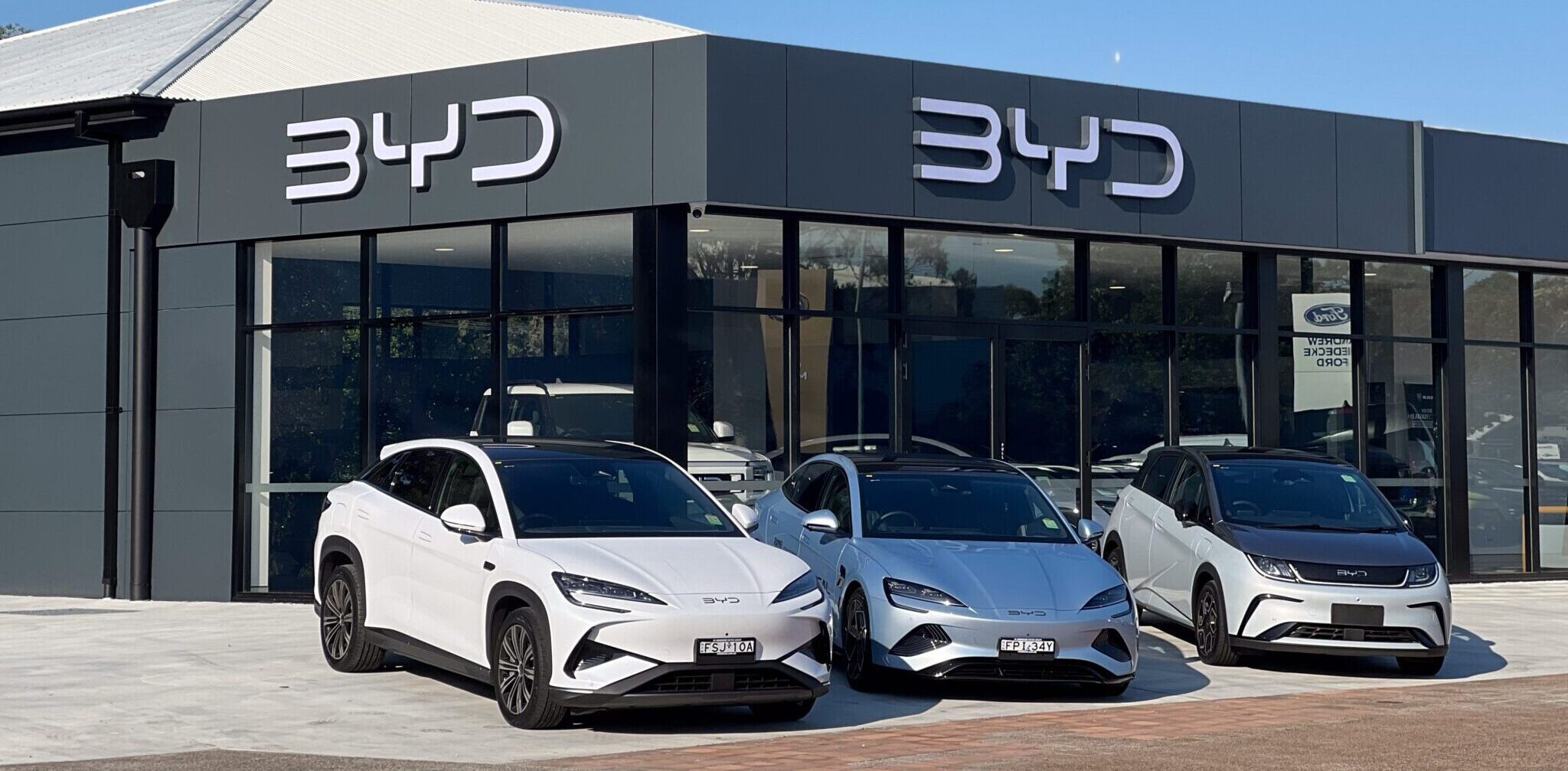 BYD has wasted little time moving to establish Canadian dealership presence
As a result of the sparring, the US remains the one major market that Chinese automakers have been entirely unable to penetrate. This status was first built on a 100% tariff on Chinese-made electric vehicles (EVs), then compounded by the Biden administration’s connectivity ban. Meanwhile, the financial incentive for consumers is considerable: average new vehicle list prices in the US now exceed US$50,000, while comparable models in China sell for between a quarter and a third of that figure.
This reality is not lost on Chinese automakers, and what the tariff wall cannot block is their extensive campaigning on social media. A 2026 AlixPartners survey of 9,000 potential EV buyers found that 58% had encountered Chinese EVs on TikTok, and 69% of Gen Z car shoppers said they were at least somewhat likely to consider buying one. A fairly straightforward attempt is being made to create a ‘forbidden fruit’ aura around Chinese EVs, and surging sticker prices—and gasoline prices due to the US-Israel war in Iran—have arguably only increased their desirability.
The virality of such social media campaigns is not entirely organic: DCar Studio, the US operation that supplies Chinese EVs to American influencers for test drives in Los Angeles, is owned by ByteDance— the same parent company as TikTok. ByteDance notably raised US$600m for its Chinese automotive platform Dongchedi at a US$3bn valuation in 2024.
Canada, previously the other major China holdout, softened its position in January when Prime Minister Mark Carney agreed a quota arrangement during a state visit to Beijing. Up to 49,000 Chinese-made EVs may now enter Canada annually at a 6.1% tariff, sharply down from the 100% surtax imposed in 2024. An initial 24,500 permits are available on a first-come, first-served basis. While the immediate beneficiaries are likely to be Tesla and Geely-owned Honda Cars—companies already very familiar to Canadian consumers—BYD is reportedly using the opportunity to launch 20-plus dealerships in the country over the coming year.
Against that backdrop, reports have circulated that Ford Chief Executive Jim Farley separately floated a framework that would allow Chinese automakers to produce vehicles in the US through joint ventures with American companies holding a controlling stake—more or less a direct inversion of the arrangement China once imposed on Western automakers entering its own market. Trump officials received the concept coolly, though some viewed it as a plausible outcome of the Beijing summit. Around the same time, Ford was connected to talks with Xiaomi to establish a joint venture for US vehicle production; both parties vehemently denied the reporting.
Trump is due to meet Xi in Beijing later this week, with administration officials insisting that automotive trade is not on the agenda. The industry, having spent months lobbying to ensure it stays that way, will be watching closely to find out whether that assurance holds.