
Rising gas prices have pushed many drivers to rethink what it actually costs to commute, road trip, and simply live with a vehicle every day. While electric vehicles are still heavily debated online, stories from owners putting serious mileage on them often reveal a much more practical side of EV ownership that rarely gets discussed outside enthusiast groups.
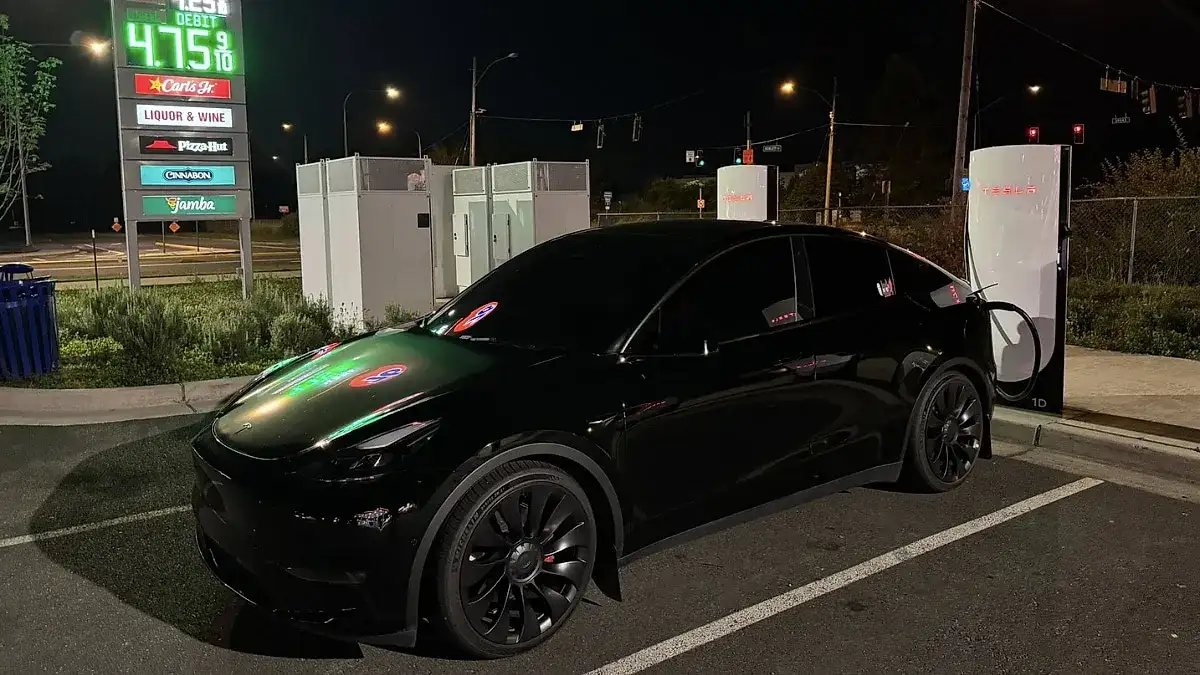
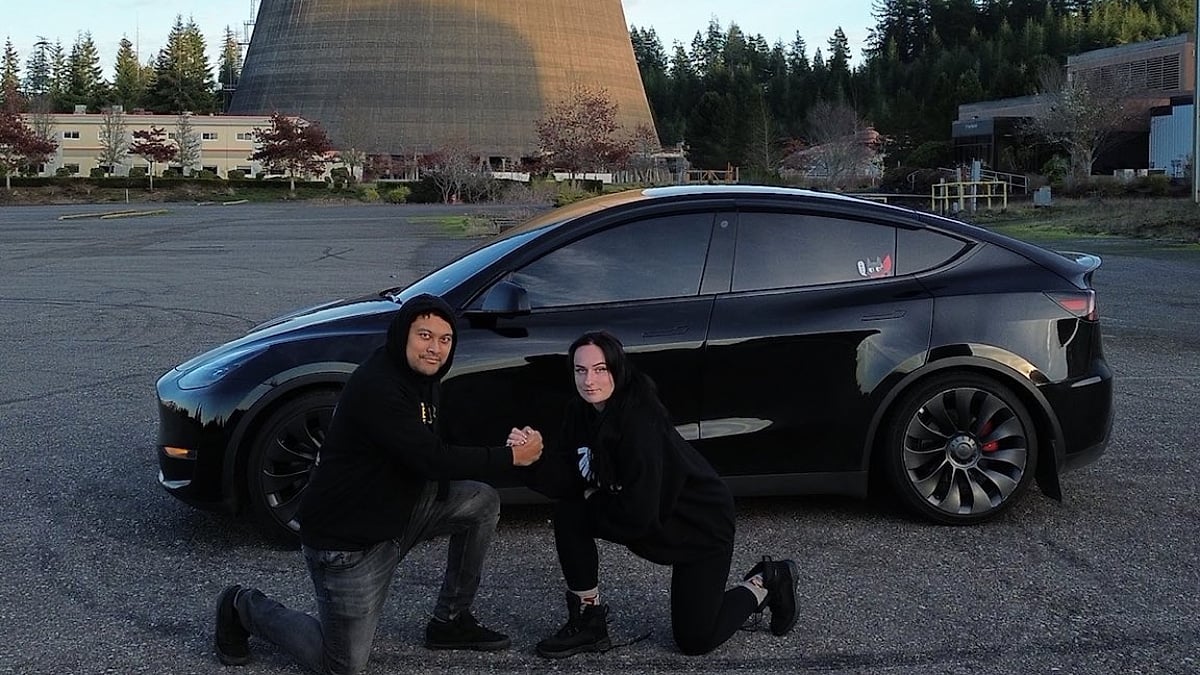
I recently came across a post from Tesla owner Eddi Hughes who shared how he and his partner managed to put 23,000 miles on their Tesla Model Y Performance in just eight months while traveling across Washington, Oregon, and British Columbia for work projects. According to Eddi, their charging costs totaled only about $916 during that time, and he believes access to reliable 240V home charging is the single biggest reason the ownership experience has worked so well financially.
Here is how Eddi described it: “In 8 months, Suzie and I put 23,000 miles on this MYP. She’s been working on projects all over Washington/Oregon/British Columbia putting on mileage!
We’ve saved roughly $8,674 in gas these past 8 months. For electricity, we’ve spent $916 in Supercharging/home charging. If you can charge at home off of 240V it’s absolutely worth it.
When WA jacked up gas taxes in Q1 2025, I took that as a sign. Suzie and I pooled a down payment by June and took the leap of faith. The car payment is $434 a month, $250 a year for registration, and $1,400 for a 6-month premium insurance for both of us, Dodge RAM, 240s, etc.
We never really posted about the Model Y when we bought it because at the time, people were firebombing and vandalizing these cars. In WA, the used market flooded with these because, well, orange man bad. We even drove through the heart of Seattle during the No Kings protests thinking we were going to be chastised. We definitely got mean mugged.
If you don’t have access to 240V at 20-50amps, I’d recommend a Honda Fit or a classic Civic. Road trip Supercharging can be equivalent to a Prius/CT500 Hybrid. It’s slightly cheaper if you have that home charger. For example, charging at home 260 miles is roughly $5-6. Heading from Vancouver, WA to Renton, WA is 172 miles. When we head back home, we stop in Tacoma or Rochester, WA. If we charge just to get home, it would be $8-10. If we charge all the way to 80%, then maybe $15-25. If we’re running around Seattle/Everett/Renton doing projects, it could be close to $30-40 in Supercharging but that’s closer to 450 miles driving around the metropolitan area plus heading home to Vancouver, WA. We often spend $20-30 driving between Vancouver, WA and Seattle/Renton WA.
For daily driving, Suzie averages 60 miles a day when she works in Portland/Vancouver. That’s roughly $1-2 a day charging at home, so maybe $10 a week. If anyone has questions about these clanker cars, I’m all ears.”

The Real Difference Between Home Charging and Supercharging
One thing I found especially interesting about Eddi’s post is that he did not present EV ownership as universally cheaper under every circumstance. He repeatedly emphasized that home charging is what makes the math work.
That distinction matters because many first-time EV shoppers assume charging costs are always dramatically lower than gasoline no matter how the vehicle is used. In reality, the economics can vary significantly depending on whether the owner primarily charges at home, relies on public DC fast charging, or spends most of their time on long highway trips.
Eddi’s numbers actually line up with what many long-term Tesla owners have been reporting. Charging overnight from a residential 240V outlet is often where the largest savings appear. Meanwhile, repeated Supercharging sessions during heavy road trip use can narrow the gap between an EV and an efficient hybrid. But still, having 36% Supercharge use and being below $1,000 is pretty impressive.
That’s why I think his comparison to vehicles like the Honda Fit and Honda Civic was surprisingly honest. Instead of pretending EVs are automatically the perfect solution for everyone, he acknowledged that efficient gasoline cars can still make more financial sense for drivers without reliable home charging access.
That perspective also mirrors trends I have personally noticed while covering a Tesla Cybertruck owner broke down his yearly charging costs and still managed to save thousands compared to gasoline trucks, reaching a very similar conclusion regarding home charging convenience and long-term operating expenses.
23,000 Miles in Eight Months?
Many EV ownership stories online focus on short commutes or weekend driving, but Eddi’s situation involved genuine heavy use. Driving 23,000 miles in eight months means the vehicle averaged nearly 2,900 miles every month. That’s a substantial amount of driving even for traditional gasoline vehicles.
The routes Eddi mentioned also paint a clearer picture of how the car was being used in the real world. Driving between Vancouver, Washington, Seattle, Everett, Renton, Tacoma, and even British Columbia means this was not simply a city commuter parked in a garage most of the time. The Model Y Performance was functioning as a regional work vehicle.
That’s important because many critics often argue that EVs only work well for light commuting, yet stories like this show that modern EVs, especially vehicles like the Tesla Model Y, are increasingly being used as high-mileage transportation tools rather than niche second cars. Tesla’s charging network still plays a major role here as well. While Supercharging costs are no longer as cheap as they once were, the convenience factor remains difficult for many competitors to fully match.
At the same time, some buyers are also beginning to compare Tesla ownership costs against luxury performance sedans rather than just economy cars. I have covered how a BMW M3 owner seriously considered trading the car for a Tesla Model 3 after realizing how dramatically lower charging costs could be. That shift in thinking says a lot about how EV ownership discussions are evolving.
Advertising
The Surprising Benefit of One-Pedal Driving
Another part of the discussion that stood out came from commenter Brandon Shally. He wrote: “I just love zero maintenance. Our old ‘22 Model Y had 106k miles with great brake pads that were never changed.”
That comment opens the door to one of the most underrated benefits of EV ownership. For readers unfamiliar with the concept, regenerative braking allows the electric motors to slow the vehicle while simultaneously recovering energy back into the battery. In many situations, drivers barely need to touch the physical brake pedal at all.
When a traditional gasoline vehicle slows down, the brake pads clamp onto the rotors and converts the vehicle’s motion into heat. That heat is essentially wasted energy. Regenerative braking works differently because the electric motor temporarily reverses roles and acts like a generator.
As the wheels continue spinning during deceleration, the motor generates electricity and sends that recovered energy back into the battery pack while simultaneously creating resistance that slows the vehicle down. The car is partially using electromagnetism to slow itself instead of relying entirely on friction brakes.
It’s similar to the way a Toyota Prius hybrid recovers energy during braking to recharge its battery. However, EVs like the Tesla Model Y use the system much more aggressively because they have larger battery packs and more powerful electric motors designed around full-time electric driving.
That’s why Teslas can often be driven almost entirely using one pedal in normal traffic. The regenerative braking force is strong enough that simply lifting off the accelerator slows the vehicle substantially before the physical brake pads even need to engage.
The result is dramatically reduced brake wear. This is one reason many Tesla owners report unusually long brake pad life compared to traditional gasoline vehicles. It’s not uncommon to hear of EVs surpassing 100,000 miles on original brake components.
But, of course, EVs are not maintenance-free. Tires can wear faster because of the extra weight and instant torque, suspension components still age, and cabin air filters still need replacement. Though if you compare it to some cars requiring regular oil changes, transmission servicing, spark plugs, belts, and engine maintenance, the ownership experience can feel substantially simpler. That simplicity is one reason many drivers who initially bought EVs for fuel savings eventually end up appreciating the reduced maintenance burden just as much.
Drivers Are Beginning to See EV Ownership Differently
Some of the comments under Eddi’s post also reflected how many drivers are still in the middle of evaluating whether an EV actually makes sense for their lives.
Joseph Smith commented: “Me and my wife are looking at them now since hybrid was nice, but full electric might be the move now.”
That comment feels especially relevant today because many households are gradually transitioning from traditional gasoline vehicles to hybrids before eventually considering fully electric models.
Hybrids still offer a sense of familiarity since drivers can fill up at gas stations while gaining improved fuel economy. But once people begin seeing real-world charging cost examples like Eddi’s, the math starts becoming much harder to ignore.
I still like how Eddi acknowledges the limitations too, though. Without a reliable home charging setup, many EV ownership advantages become less dramatic. Public charging alone can sometimes frustrate owners due to pricing fluctuations, charging station availability, waiting times, or slower charging speeds during road trips.
That balanced perspective is probably one reason the post resonated with so many.
Not Every Tesla Story Is About Technology
Interestingly, Eddi also briefly touched on the social perception surrounding Tesla that many owners have quietly discussed over the past couple of years. Whether people agree with Tesla’s leadership, politics, or public image, the reality is that the vehicles themselves have increasingly become cultural symbols in certain regions.
Eddi mentioned feeling hesitant to publicly post about buying the Model Y due to vandalism concerns and tense reactions during protests in Seattle. Regardless of political opinions, this highlights an unusual challenge Tesla owners faced compared to buyers of most other car brands.
At the same time, those social tensions have also created unusual opportunities in the used market. In some areas, Tesla resale values softened enough that buyers who were previously priced out suddenly found affordable entry points into EV ownership. That dynamic partly explains why some shoppers are now reconsidering Tesla vehicles despite previously dismissing them.
Advertising
Tesla’s Software Ecosystem Is Becoming Part of the Ownership Experience
One thing that separates Tesla from many traditional automakers is how heavily the ownership experience revolves around software too. For many owners, features like over-the-air updates, route planning, charging integration, and Full Self-Driving are becoming just as important as horsepower or styling.
Whether people fully trust autonomous technology or not, Tesla’s software ecosystem continues changing the way many drivers interact with their vehicles on a daily basis. I discussed how a 2026 Tesla Model Y continued navigating after the driver suffered a severe heart attack while using Full Self-Driving, fueling conversations around Tesla technology, driver assistance systems, and whether software is becoming one of the company’s biggest long-term advantages.
For high-mileage owners like Eddi, that growing software ecosystem is part of what keeps many drivers inside the Tesla platform once they become familiar with it.
Some Owners Still Miss Traditional Cars
Not everyone commenting under Eddi’s post sounded completely ready to abandon gasoline performance cars either.
Kyle Flammang wrote: “I’ve saved thousands in comparison. I miss slamming gears, but I can have that again when I pick up another project car. Zero maintenance, aside from tires and windshield washer fluid is dope.”
I actually believe Kyle’s comment captures where many enthusiasts currently stand. A growing number of drivers appreciate EVs for daily commuting because of the low operating costs and reduced maintenance. At the same time, many still miss the mechanical engagement and emotional feel of traditional performance cars.
That’s why we are increasingly seeing households use EVs as practical daily transportation while keeping older enthusiast cars strictly for weekend enjoyment. For many buyers, the future may not necessarily be EV versus gasoline. Instead, it may become a combination of both.
When the EV Debate Starts Looking More Realistic
As someone who spends a huge amount of time reading ownership stories and talking with owners every week, I feel stories like Eddi’s are important because they move the EV conversation away from marketing claims and into actual day-to-day reality.
What stood out to me most was not simply the $916 charging figure, but how detailed and realistic his explanation was regarding when EV ownership works well and when it might not. There’s a tendency online for people to frame EVs as either perfect or terrible with very little middle ground, but ownership experiences like this usually reveal something much more nuanced.
For drivers with reliable home charging, high fuel costs, and heavy commuting mileage, vehicles like the Tesla Model Y can genuinely reduce operating expenses in a meaningful way. On the other hand, drivers without charging access or with different lifestyles may still find hybrids or efficient gasoline vehicles more practical. That honesty is what makes stories like this resonate.
Key Takeaways From Eddi’s 23,000-Mile Tesla Experience
Home charging changes the equation: Eddi repeatedly emphasized that access to 240V charging is what made the ownership costs truly worthwhile.
Heavy mileage amplifies savings: Driving 23,000 miles in eight months gave the couple enough seat time to see major fuel savings compared to a gasoline vehicle.
Supercharging is convenient but not always ultra-cheap: Long-distance travel and repeated fast charging sessions can narrow the savings gap compared to efficient hybrids.
Regenerative braking can reduce maintenance: Many EV owners report extremely long brake life because one-pedal driving reduces wear on physical brake components.
EV ownership is becoming more lifestyle-dependent: Charging access, commute distance, climate, and driving habits matter more than many buyers initially realize.
What Do You Think?
Do you think stories like Eddi’s are changing the way people view EV ownership, especially as gas prices and commuting costs continue rising?
And if you currently own an EV, how much are you really spending each month on charging compared to what you used to spend on gasoline?
Let us know your thoughts and experiences in the comments below.
About The Author
Aram Krajekian is a young automotive journalist bringing a fresh and analytical perspective to the evolving automotive landscape by reporting on real-world ownership experiences and providing industry analysis. Based in North Carolina, he covers electric vehicles, trucks, and broader automotive trends with a focus on contributing a balanced evaluation. His reporting cuts through brand bias to provide readers with grounded insight into how vehicles perform for everyday drivers beyond marketing narratives.
Aram can be reached on X and LinkedIn for ongoing automotive coverage.
Image Credits
Eddi Hughes’ Facebook post.
Follow us today…


