
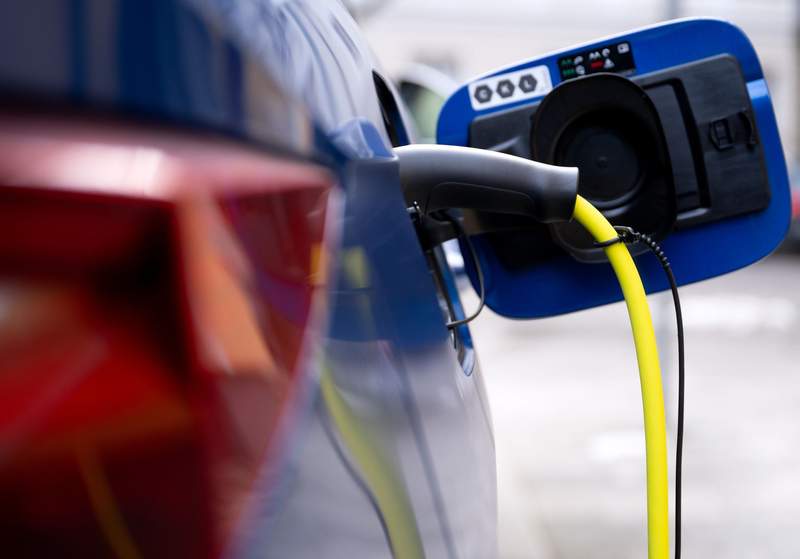
The booming electric car industry has been further boosted by the US-Israeli war with Iran and the ensuing spike in petrol and diesel prices that has made running a combustion engine more expensive.
But the increasing popularity of electric vehicles (EVs) has in turn led to surging demand for nickel, a key component in batteries and stainless steel.
And that demand is set to keep on rising over the coming decades due to nickel’s fulcrum role in so-called clean energy technology and efforts to move the car industry away from fossil fuels.
But according to Australia-based researchers writing in the journal Nature Ecology & Evolution, meeting projected mid-century nickel requirements will mean mining in “areas ranked in the top 10% globally for their importance to biodiversity conservation.”
In other words, sourcing enough nickel for electric cars could see mining companies clearing rainforests to access deposits.
Digging up enough nickel for a worldwide clean energy transition will “require tough decisions with potential environmental trade-offs,” according to the researchers, who warned that prioritizing conservation over mining “could lead to global shortages.”
“Excluding the top 10% of environmentally sensitive areas would significantly reduce risks to biodiversity but could lead to nickel shortfalls of up to 18% of demand by 2050,” the team claimed.
“Nickel is in everything from steel in infrastructure to the pots and pans in our kitchens, and demand is surging for clean energy especially to make batteries for electric vehicles,” said Jayden Hyman of the University of Queensland.
“Up to 83% of nickel supply could come from laterite deposits typically beneath tropical rainforests but accessing them requires large-scale clearing,” said Hyman. The process is “accelerating” in Indonesia, the world’s main nickel supplier and the biggest producer of palm oil, which is usually grown on land cleared of jungle.
Nickel mining in some areas of the sprawling Southeast Asian archipelago also “risks polluting nearby waters” such as the Coral Triangle north of Australia, the researchers said, warning that up to 60% of future global needs may be extracted from coastal regions.
“Several major terrestrial nickel laterite deposits also occur near areas of high conservation importance for marine biodiversity, including on the Indonesian islands of Sulawesi, Maluku and Raja Ampat in the Coral Triangle,” the team pointed out.