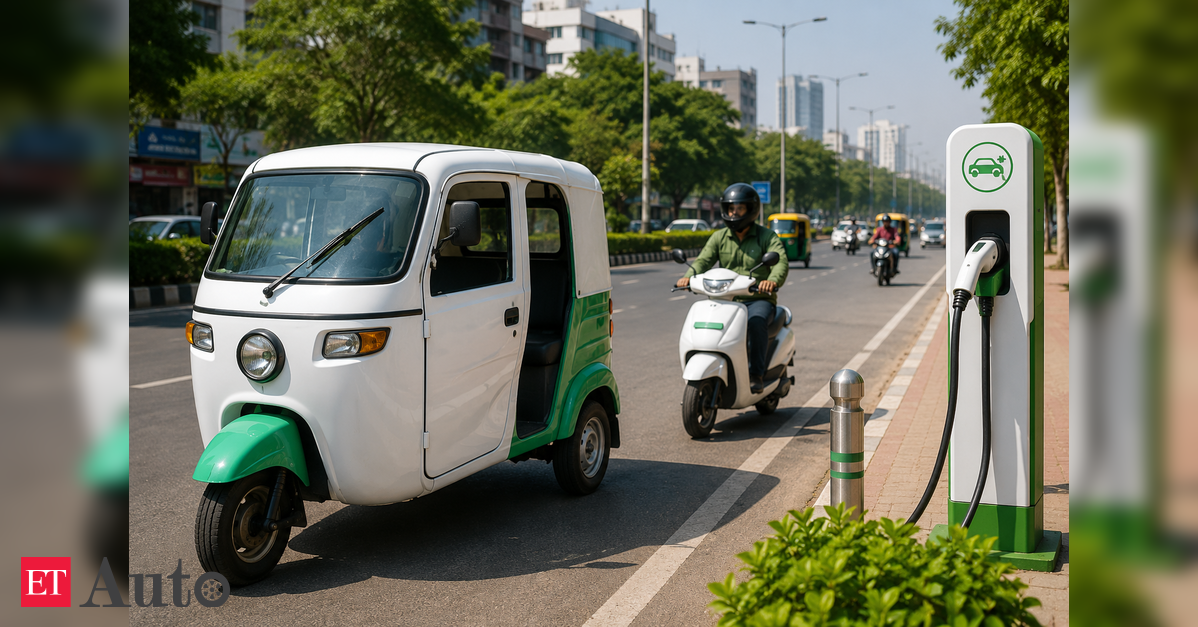
 Delhi’s draft EV Policy 2026 proposes strict electric-only mandates for key vehicle segments, drawing mixed reactions from automakers and industry experts.
Delhi has proposed strict electrification mandates for two-wheelers and commercial three-wheelers besides some other vehicle categories in its quest for rapid electrification.
The intent is good, but the implementation of a mandate-driven Delhi Electric Vehicle (EV) policy 2026 may not be easy. Many OEMs are upset about the mandatory switch to EVs, while some have questioned the inclusion of strong hybrids in the subsidy scheme saying these vehicles do not conform to zero tailpipe emission requirements.
Others have pointed out the near absence of electric motorcycle models in their portfolios to show the difficulties in sticking to the mandate for only registering electric two-wheelers from 2028.
Industry experts say a dilution of the strict mandates is likely in the final Delhi EV policy document, which was open for public consultations and suggestions for a month since April 11.
In any case, nothing stops Delhiites from circumventing some of these mandates, going to vehicle dealerships in neighbouring Haryana or Uttar Pradesh to buy ICE vehicles. There is no mandate yet in either state against registration of new ICE vehicles, thus defeating the very purpose of a mandat- driven electrification policy.
Unless the mandate-driven policy outline is adopted by the entire NCR, the mandates may see limited success.
The Delhi EV policy has proposed no mandates for electrification of passenger vehicles (including private cars) but has outlined purchase subsidies for different vehicle categories with a sunset clause.
Policy mandates
The Delhi EV policy draft proposes a mandate for electric-only vehicle registrations, effectively phasing out internal combustion engine (ICE) vehicles in high-volume segments: Electric three-wheelers (L5) from January 1, 2027, electric two-wheelers from April 1, 2028. Also, no ICE vehicles (diesel or petrol) can be inducted into existing fleets of four-wheeler LCVs, LGVs (up to 3.5 tonnes) and two-wheelers from January 1, 2026 (with a limited exception for BS-VI two-wheelers until the end of 2026). All hired or leased vehicles for the government must be only electric from the date the policy is notified. Furthermore, all new intra-state buses and N1 trucks purchased or leased by government bodies must be electric. And the school bus fleet (owned or hired) must reach 30 per cent electrification by March 31, 2030, with specific interim targets.
Two-wheelers which were bought before the BS IV regulations account for 99.5 per cent of two-wheeler PM emissionsSIAM
Incentives
The policy also proposes purchase subsidies: Two-wheelers receive up to ₹30,000 in year one while electric auto-rickshaws and N1 goods vehicles receive ₹50,000 and ₹100,000, respectively, in the first year. Additional incentives are available for scrapping old Delhi-registered BS-IV and below vehicles, including ₹10,000 for two-wheelers and ₹100,000 for cars (limited to the first one lakh applicants).
Additionally, most EVs can avail of 100 per cent exemption from road tax and registration fees until March 2030, though cars priced above ₹30 lakh are excluded from this benefit
SIAM objects
The Society of Indian Automobile Manufacturers (SIAM) has said that two-wheelers which were bought before the BS IV regulations account for 99.5 per cent of two-wheeler PM (particulate matter) emissions and instead of banning registration of new ICE two-wheelers, these older existing vehicles should be removed from the roads of Delhi.
SIAM’s contention is that vehicles which are BS VI compliant have “close to zero” PM emission and imposing an electric-only mandate wouldn’t improve Delhi’s pollution levels in any significant manner.
Of course, the industry body has also spoken about the lack of viable electric motorcycles in the portfolios of OEMs. Nearly two in three two-wheeled vehicles sold in Delhi are motorcycles and SIAM said “EV technologies have not yet matured enough in terms of cost point and performance to provide a suitable EV alternative to ICE motorcycles, unlike in the case of scooters”.
And supply chain woes have also been highlighted, since Chinese dominance in magnets and some other essential components needed to manufacture EV two-wheelers makes the entire ecosystem vulnerable to pricing and supply shocks.
Providing incentives for strong hybrid vehicles is a pragmatic and forward-looking policy aimed at accelerating the shift away from conventional ICE vehiclesPuneet Gupta, Director at S&P Global
No mandates for passenger cars
Some industry executives had earlier heaved a sigh of relief at no proposed mandates for the electric car segment and on the proposed scrappage incentives. Also, there is a proposal for a 50 per cent concession in road tax and registration fees for strong hybrid vehicles, which Puneet Gupta, Director at S&P Global had termed as “pragmatic”.
“Providing incentives for strong hybrid vehicles is a pragmatic and forward-looking policy aimed at accelerating the shift away from conventional ICE vehicles. Strong hybrids serve as a natural transition technology, delivering immediate benefits in terms of improved fuel efficiency and reduced emissions,” Gupta said.
“In the context of Delhi, one of the most polluted and densely populated cities globally, this is not just an option, but an urgent need to promote cleaner mobility solutions. This initiative by the Delhi government is a commendable step in the right direction, and it is likely to set a precedent for around at least 30 highly polluted urban cities across India,” he added.
But some OEMs which do not currently sell hybrids, have opposed the concessions for hybrid vehicles, saying this technology does not guarantee zero tailpipe emissions.
Mandates without much precedent
There are not many precedents of state policies with mandates similar to Delhi’s. Chandigarh is one, though, which operationalised a graduated ICE two-wheeler cap from 2022 — reducing permissible registrations by 35 per cent, subsequently 70 per cent and leading to zero by 2024-25.
Chandigarh survived a High Court challenge and enforced the cap through Vahan portal cutoffs. Delhi has mandated a single date-based cliff rather than a gradual reduction with no conditionality around charging infrastructure readiness and it is the inadequacy of charging infrastructure which could become a huge bottleneck.
Besides questioning the transition to electric-only vehicle registrations in some categories, OEMs have also suggested ways to plug subsidy leaks. One suggestion is that the government could add a 50 per cent mandatory localisation clause for eligibility to claim two wheeler subsidy. This is to prevent a situation seen under the Centre’s FAME subsidy scheme, where cheap Chinese imports were being sold in India to avail the subsidy without enhancing either localisation or local manufacturing capabilities.
Published On May 11, 2026 at 12:20 PM IST
Join the community of 2M+ industry professionals.
Subscribe to Newsletter to get latest insights & analysis in your inbox.
All about ETAuto industry right on your smartphone!