
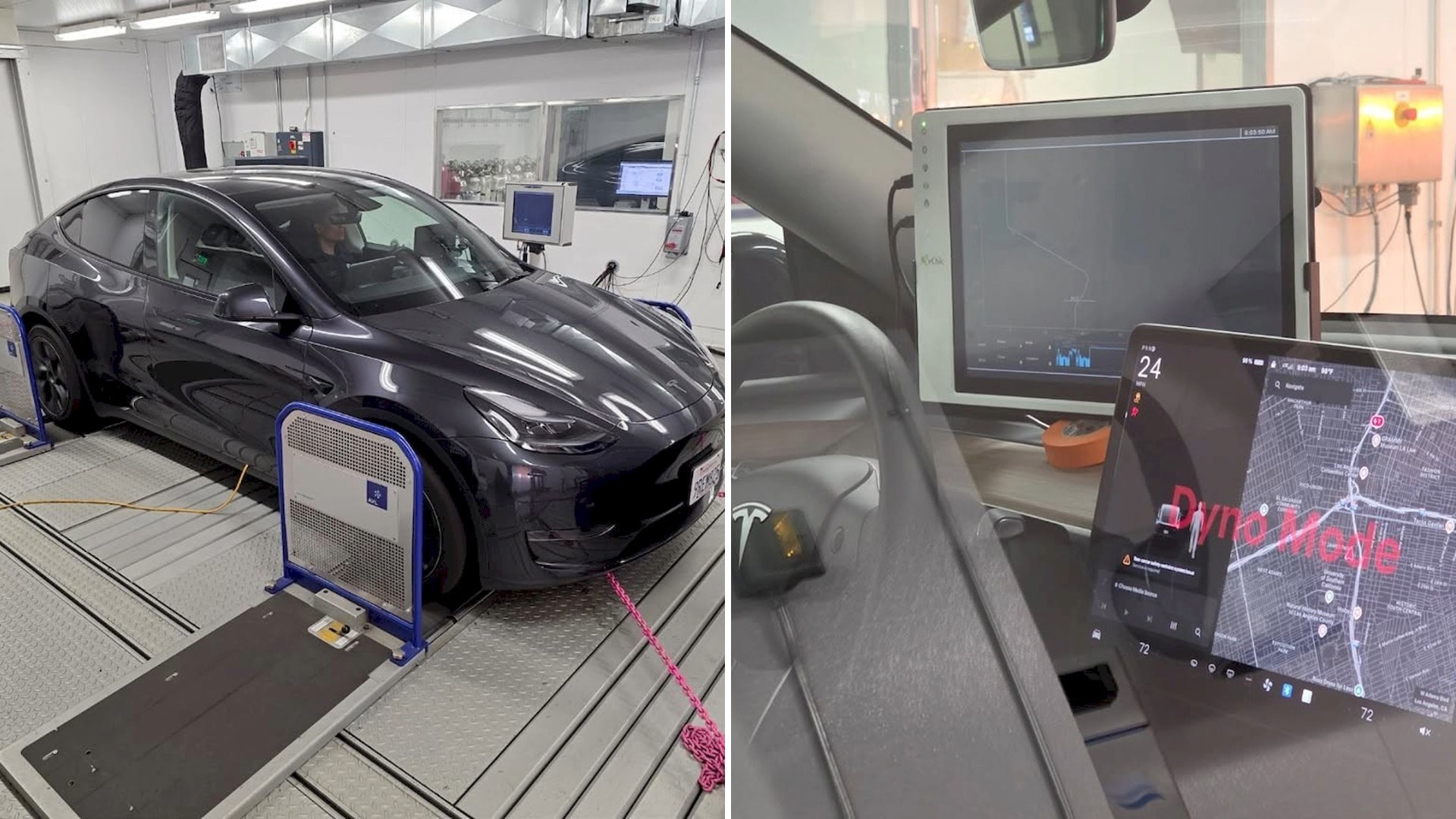
A new study from AAA confirmed what we already knew: both hybrids and EVs lose range when operated at extreme temperatures, whether in winter or summer. However, the results are worth mentioning, not least because they surprised even the AAA engineers. Specifically, while EVs appear more affected by cold, hybrids struggle more in hot summer days.
Electric cars are still not very popular in the US, despite becoming dominant in other global markets. The reason is that American people still believe anti-EV propaganda, including FUD alleging EVs don’t go very far, take forever to charge, and catch fire all the time. Combine this with higher prices for electric vehicles compared to their gas-powered equivalents, and you’ll understand why people are reluctant to buy an EV.
It’s worth mentioning that Big Oil lobby and legacy carmakers are largely responsible for spreading and sponsoring anti-EV positions. This is even more surprising, given that US carmakers wrote off over $20 billion last year from their failed EV projects that they lobbied against. It’s like shooting yourself in the foot and ending up with a billion-dollar hospital bill.
I suspect a recent AAA study is such an example of quasi-scientific data presented in a manner that casts a shadow on EVs. My suspicions stem from the fact that the study ends with a survey with two key metrics: “Likelihood to buy a Hybrid Vehicle,” and “Primary Reasons for Interest in Hybrid Instead of Electric Vehicles.” Note, there is no “Primary reason for interest in EVs instead of hybrids,” as if nobody could have such a crazy idea.
The AAA study still shows that some people indicated they are interested in buying electric vehicles. However, they don’t say how many as they do for those interested in hybrids. The study only mentions that those who expressed interest in EVs cited benefits such as lower fuel costs, reduced environmental impact, and lower maintenance expenses.

Photo: AAA
The study compares three hybrid cars (Honda CR-V, Toyota Prius, and Hyundai Tucson) and three electric vehicles (Chevrolet Equinox EV, Ford Mustang Mach-E, and Tesla Model Y) in three scenarios: a cold winter day (20F/-7C), an average day (75F/24C), and a hot summer day (95F/35C). The test involved a dyno run under controlled conditions to assess how each of these cars is affected by cold and hot temperatures.
The main takeaway from the study is that electric vehicles lose much more efficiency than hybrids in cold temperatures, something that is hardly news even to EV fans. Specifically, EVs lose about 39% range in the cold, with a 35.6% drop in MPGe. At the same time, hybrids lose less than 23% in fuel economy.
The study converts these losses into monetary terms, finding that fuel costs increase by $28.44 per 1,000 miles for hybrids. Meanwhile, costs increase $32.11 per 1,000 miles for EVs when charged at home electricity rates and $76.93 per 1,000 miles when using public charging. That seems awful, but only if you check the prices: the study considers end-of-March prices, with $3.978 per gallon, $0.1745/kWh residential, and $0.418/kWh commercial, respectively.

Photo: AAA
While electricity rates have remained largely flat, fuel is now $4.53 on average, with parts of California reaching over $6 per gallon. At such rates, except for a few days in winter when it’s really cold, EVs still make more economic sense. And this doesn’t even take into account other savings, such as not having to change the oil every year.
There’s more bias in this study than cost, though, and it affects EV efficiency in cold temperatures: the presence (or lack) of a heat pump, and what type of battery an EV has. The authors mention a heat pump for the Ford Mustang Mach-E, but not for the Chevrolet Equinox EV. This explains why the Chevy loses much more range in cold weather than the electric Mustang.
However, Tesla’s results are surprising. We know that the Model Y is equipped standard with a heat pump, but the Tesla still loses more range than the Equinox EV. Although AAA lists the car as a 2025 Model Y RWD, pictures show it was actually a pre-Juniper car, which is likely equipped with an LFP battery.
Lithium Iron Phosphate (LFP) cells are very sensitive to cold temperatures, although this can be mitigated with proper planning. Tesla significantly improved efficiency and cold-weather performance with the refreshed Model Y. Range loss in winter is real, but it rarely exceeds 30%. The 47% range loss in the AAA study seems a little too much.

Photo: AAA
That said, there are scenarios with such a high range drop, and that is when you run the car on short trips and have to warm the cabin and the battery each time you depart. In that case, a larger share of the battery’s energy is used for heating and preconditioning than for driving, which explains the high perceived range loss.
The study does have an interesting result, though, and it’s in the hot-weather tests. It appears that hot temperatures affect hybrids more than EVs, who would’ve guessed? The hybrid vehicles tested experienced a 12% decrease in fuel efficiency at 95F/35C on average, compared to a 10.4%reduction in efficiency (MPGe) for EVs. However, this translates to a range loss of only 8.5%, which you can easily ignore.
The result surprised even the AAA. “EVs are efficient in moderate temperatures but lose significant range in the cold,” said Greg Brannon, director of automotive engineering and research at AAA. “We expected this from our previous research, but were surprised by the 23% reduction in fuel economy for the hybrids in cold temperatures.”