
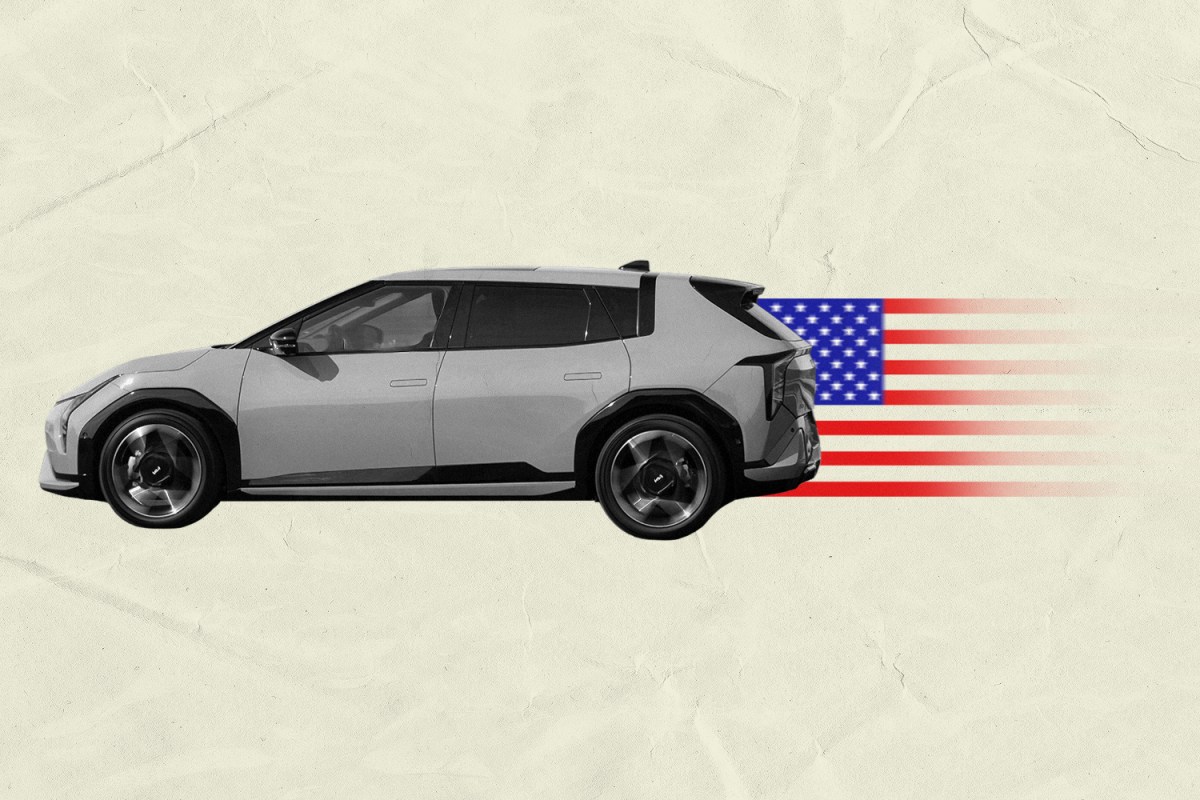
The American car market has reached a turning point. As the rest of the world continues to embrace electrification — global sales of internal-combustion vehicles peaked all the way back in 2018 — the current regime in the United States is working to undermine the adoption of electric vehicles at seemingly every turn.
The effort to slow EV adoption has been swift and sweeping. Tax incentives were rescinded, fuel-economy regulations were slashed and stiff tariffs were imposed on every car-making country, most significantly China, which has become an EV powerhouse. Those same tariffs that work to keep foreign-built EVs out of American dealerships have had the knock-on effect of spiking prices on the components and materials needed to build electric vehicles here at home.
The saddest aspect of this onslaught? Outside the U.S., electric vehicles have finally seen their price tags fall to the point where they’ve become affordable for a much wider range of drivers, with scores of cheap-to-buy, cheap-to-operate and well-designed models flooding showrooms in Europe, Asia and even the rest of North America.
Here in Canada where I live, the first wave of these electrified loss leaders has arrived. The Kia EV4, originally slated for duty across the entire continent, was pulled from U.S. dealerships just prior to its official launch due to the crippling tariffs imposed on vehicles built outside of its borders. Intended as a follow-up to the larger EV6, the EV4 is more modest in terms of performance and price, but it continues to deliver the same bold styling and solid electric range that Kia, and parent company Hyundai, have become known for.
Then there’s the best part: it starts at $41,000 CAD, including delivery fees (which comes out to about $30,000 USD). That amounts to a steal in Canada, where the average new-car price is just over $63,000 CAD; and makes the EV4 the cheapest battery-operated auto on the market.
As a daily driver, this new electric sedan is fantastic. As a sign of things to come, it paints a sad picture of what Americans will be missing out on.
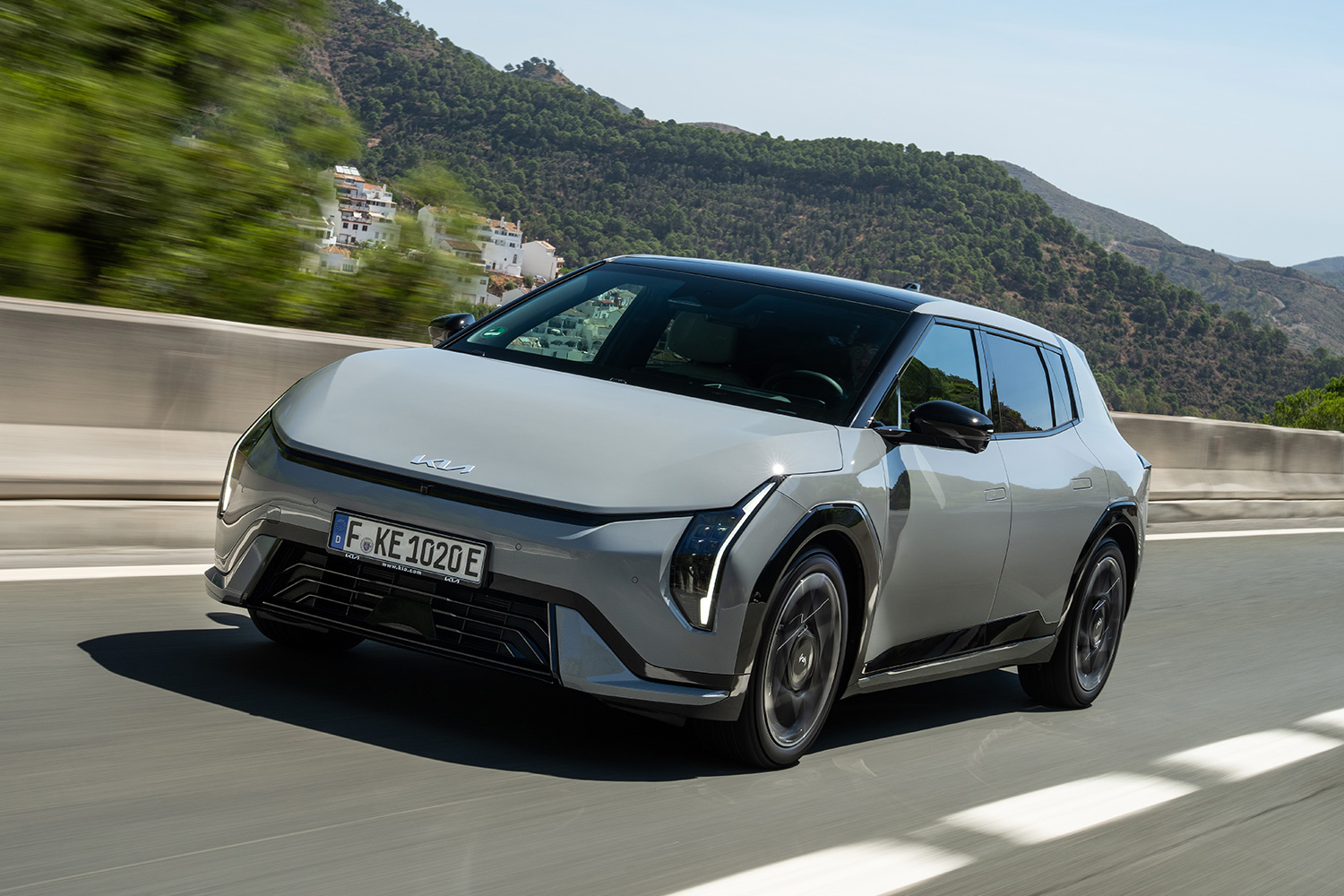
The EV4 starts at $41,000 CAD, or about $30,000 USD.
Kia
More Isn’t Always More
We’ve grown so used to being dazzled by the massive torque and instant pedal response offered by expensive electric drivetrains that it’s easy to forget there’s a lot to like about the entry-level aspects of electrification, too. When you’re not aiming for blistering acceleration or hauling around a battery the size of an Olympic swimming pool, it’s possible to optimize for efficiency and deliver some impressive results in the range department.
The Kia EV4 is an excellent example of how adept automakers have become at balancing between budget realities and real-world expectations. There are two versions of the EV4’s drivetrain available, both of which send 201 horsepower to the front wheels. That’s about the same as what you’d get from the massively popular Honda Civic Hybrid, and with 209 lb-ft of torque available, the Kia acquits itself well in the acceleration department, too.
Meanwhile, the key difference between EV4 trims is that the base model features a 58.3-kWh battery while every other model jumps to an 81.4-kWh power pack that costs only a few thousand more to snag. Officially, you can expect 240 or so miles of driving from the small-battery “Light” trim (perfectly usable for most drivers) while the bigger setup delivers up to another 100 miles of range (an outstanding figure for a cheap car).
I drove the GT-Line trim, whose 19-inch rims sliced 40 miles or so off the EV4’s loftiest range rating. Even so, on a long road trip with the cruise stuck at 75 mph and the AC blasting, I couldn’t push the Kia below the 3.6-miles-per-kWh mark, which is nearly 90% of its advertised efficiency. That’s impressive for any EV, let alone one with such a modest window sticker.
The one trade-off for all these perks? Unlike other Kia EVs, this model makes use of a 400-volt architecture that caps charging speeds at 125-kW, which is about a third of the theoretical max of the larger EV6 and EV9 models. In the real world, this matters less than you’d think, because the chances of finding a charger capable of moving past 125-kW with the sorry state of America’s plug infrastructure is fairly low. Like most EV owners, the vast majority of my charging of the EV4 was done at home.
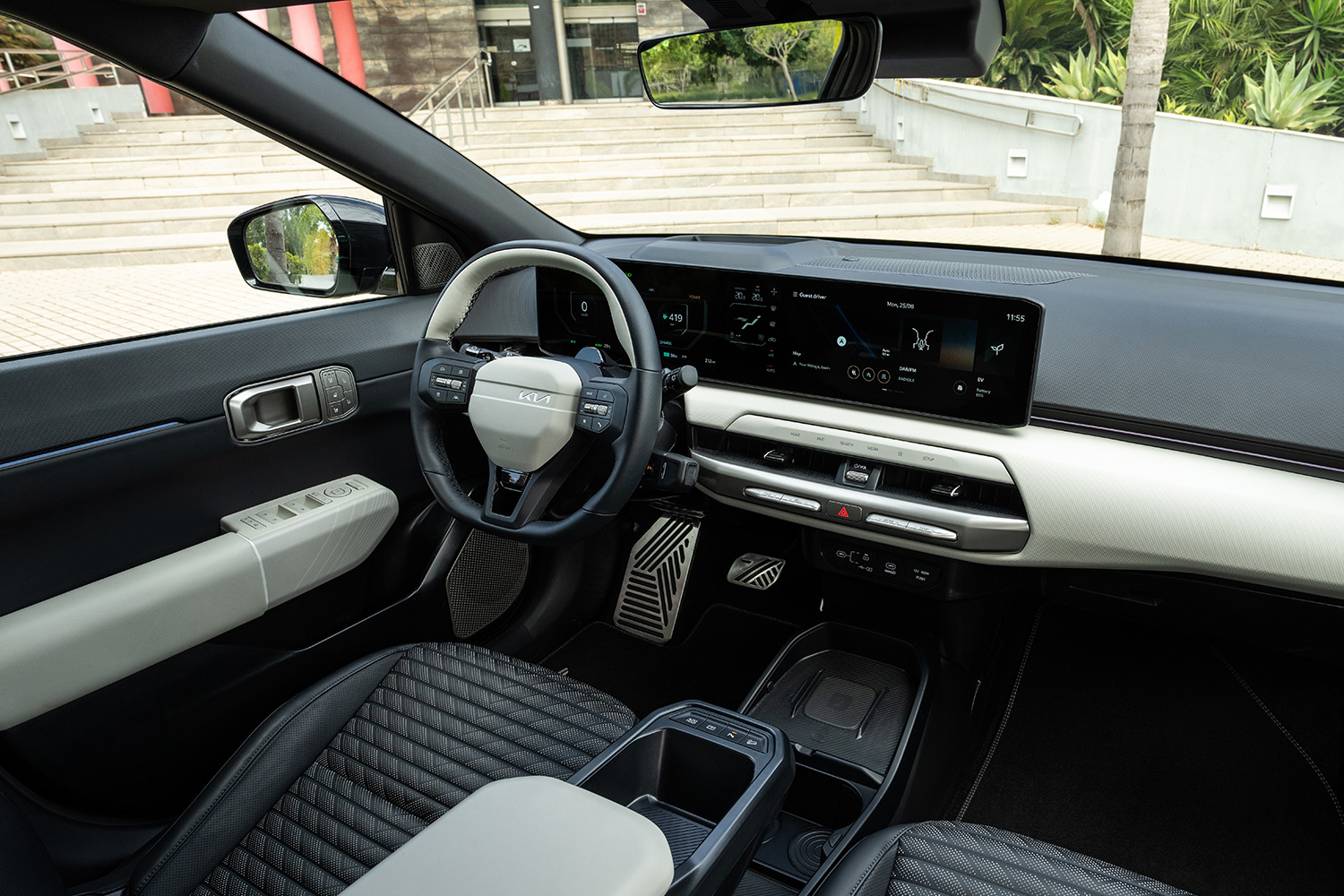
Despite its modest price, the electric sedan doesn’t feel like an entry-level model.
Kia
The Complete (Yet Still Cheap) Package
If all the EV4 had going for it were a great driving experience and range that exceeds expectations, that would be enough. As it turns out, the rest of the compact Kia’s package is enticing, too.
The cabin in no way suggests its economical price point, and I happen to like the risks taken with its unusual Kammback shape, a design that extends the sedan’s silhouette to help improve aerodynamics while also differentiating it from other small cars. Some might quibble at the smaller size of its trunk opening, but I was able to fit three checked bags inside the car during an airport run without needing to fold down the rear seat.
The GT-Line model I drove is also fairly glitzy, with heated and ventilated seats (even rear riders get their buns toasted), easy-to-use infotainment displays and controls, and a vehicle-to-load capability that lets you siphon off some of the big battery’s power to run various devices. There’s also a highway driving assist feature that will steer the EV4 within its lane and keep a safe distance from traffic around it.
No Ifs, Ands or Buts
Admittedly, there’s nothing about the Kia EV4 that comes across as a revelation in the EV market — until you factor in its price. Costing roughly the same as a Chevy Bolt, but larger and with considerably better available range, the sedan is one of the first electric vehicles in North America to demonstrate the benefits of trickle-down tech and the downward cost/capability spiral finally making its presence known among the battery set.
After testing it out myself, the EV4 isn’t just a car I’d wholeheartedly recommend to anyone looking for a bargain electric, it’s a vehicle I’d suggest to anyone looking for an affordable new car, period. There aren’t any gotchas to be found here. No “for an EV” qualifiers that need to be tacked on. This is the future of electric automobiles, a future which has arrived nearly everywhere else outside the U.S., where they no longer serve as an alternative to internal-combustion cars but instead as a direct replacement.
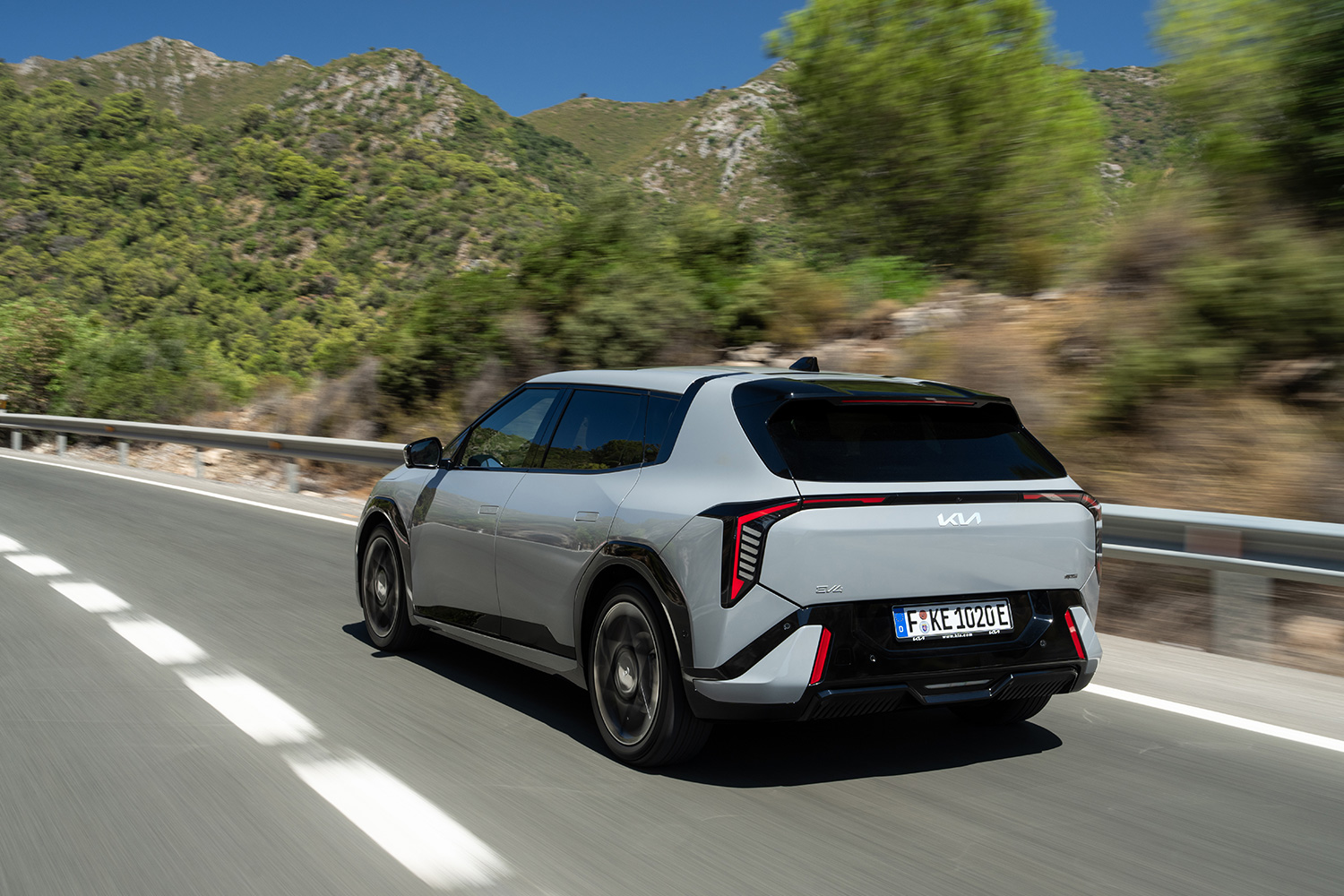
Consider us fans of the quirky Kammback shape.
Kia
Island America
Back to that turning point. Effectively, the U.S. is setting itself up as an internal-combustion island surrounded by a sea of nations whose EV transition continues unabated. Sandwiched by Mexico (with no restrictions on which automakers can operate there) and Canada (which recently opened up trade with China on the electric vehicle front), it remains the only part of North America where citizens are denied access to the advanced mobility tech that’s increasingly commonplace elsewhere.
What’s the end game of this type of strategy? If American car companies are encouraged by lax environmental laws and steep trade barriers to continue down the internal-combustion path, it won’t be long before those automakers are no longer competitive on the global market. At the same time, drivers in the U.S. will be on the outside looking in at excellent electric transportation at every price point.
Once the worldwide economy has moved on entirely from gas-powered vehicles, it’s unlikely that Detroit will be able to sprint fast enough to catch up. The EV race is already well underway, and sitting out more than a few laps feels like a recipe for future disaster.
Meet your guide

Benjamin Hunting
Benjamin Hunting writes about cars and car culture. He’s also a freelance writer and a regular contributor at MotorTrend, Car and Driver, Driving Line and Hagerty, as well as one of the hosts of the Unnamed Automotive Podcast.
More Like This
This article appeared in an InsideHook newsletter. Sign up for free to get more on travel, wellness, style, drinking, and culture..