
Read time: 8 minutes
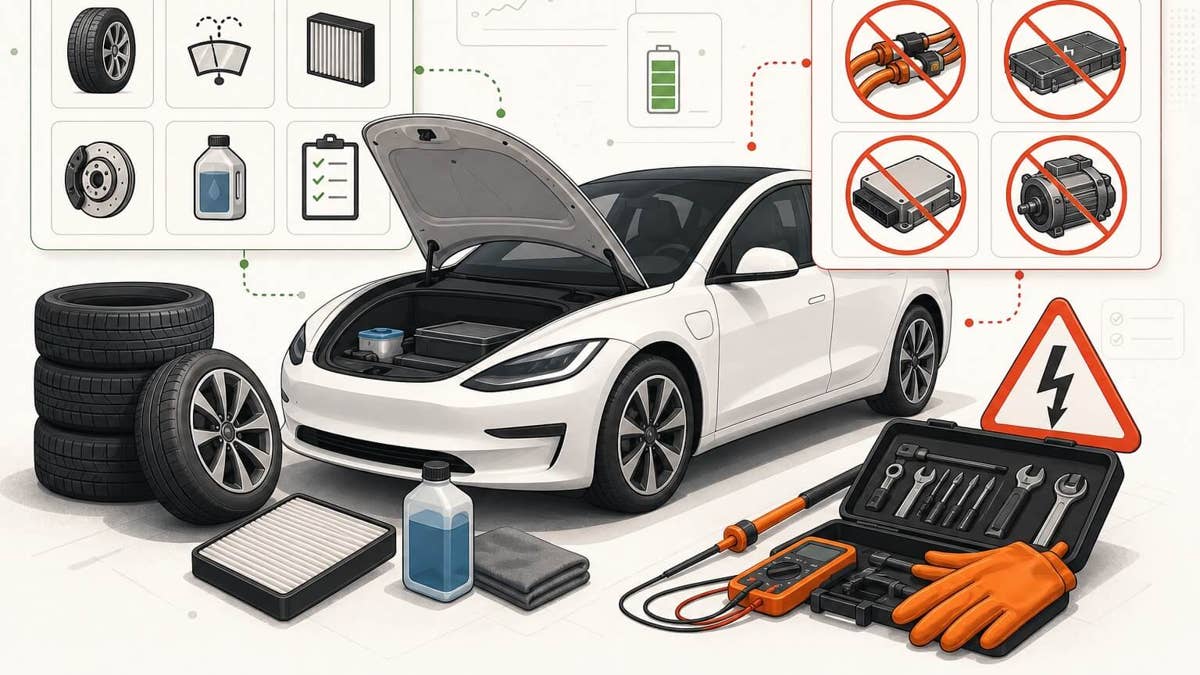
Electric vehicles swap 10,000 moving parts for about 150, but “lower maintenance” isn’t a free pass to ignore the garage. Most owners can handle tires and filters, but the orange high-voltage cables represent a literal dead-end for driveway heroes. This guide separates the safe driveway wins from the lethal mistakes most guides overlook.
The shift to electrification is often pitched as the end of the greasy-handed weekend mechanic. While it’s true that you’ll never have to change another spark plug or worry about a timing belt snapping, the heavy lifting isn’t gone. It’s just moved. Modern EVs are basically giant computers on wheels, and while the “engine” is simpler, the rest of the car is under more stress than ever before. If you want to keep your warranty intact and your heart beating, you need to know exactly where the “DIY EV Maintenance” line is drawn.
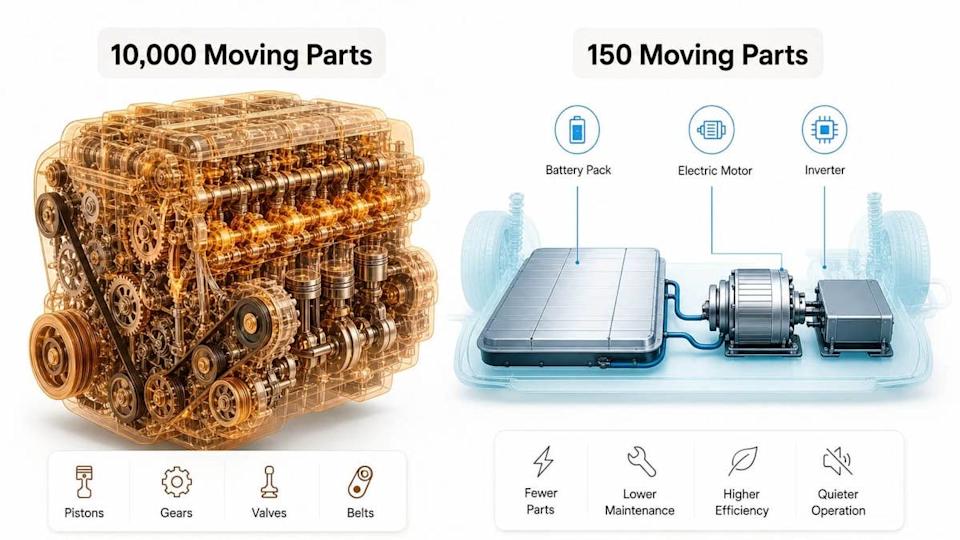
EVs trade mechanical complexity for electrical simplicity, drastically reducing the number of moving parts from 10,000 to just 150.
How DIY EV maintenance differs from traditional cars
The first thing you notice when you lift the hood of an electric car is the lack of, well, everything. A typical internal combustion engine (ICE) vehicle has over 10,000 moving parts working in a violent, high-heat environment. An electric car has closer to 150. This radical engineering shift changes the nature of service from “preventing mechanical failure” to “monitoring electrical and structural health.
Advertisement
Advertisement
However, lower maintenance does not mean zero maintenance. EVs are significantly heavier than their gas-powered cousins because battery packs are incredibly dense. A mid-sized electric sedan can weigh 1,000 pounds more than a comparable gas car. This extra weight puts immense pressure on the components that actually touch the road.
In 2026, the biggest difference in service is the role of software. Your tune-up is now likely an over-the-air (OTA) update that you receive while you’re sleeping. But software can’t rotate your tires or check if your brake pads are seizing from lack of use. That is where the driveway mechanic still has a job to do.
The Green Zone: Routine DIY EV maintenance tasks for any driveway
The “Green Zone” covers the tasks that are virtually identical to what you’ve been doing for years. These are low-risk, high-reward maintenance items that save you a trip to the dealership and a few hundred dollars in labor costs.
Tires and rotations
Because of instant torque and heavy curb weight, EVs eat tires for breakfast. If you aren’t rotating your tires every 5,000 to 7,500 miles, you’re throwing money away. Uneven wear happens fast on a heavy platform, and keeping your alignment in check is critical for range efficiency. Properly inflated and balanced tires can improve your EV’s efficiency significantly.
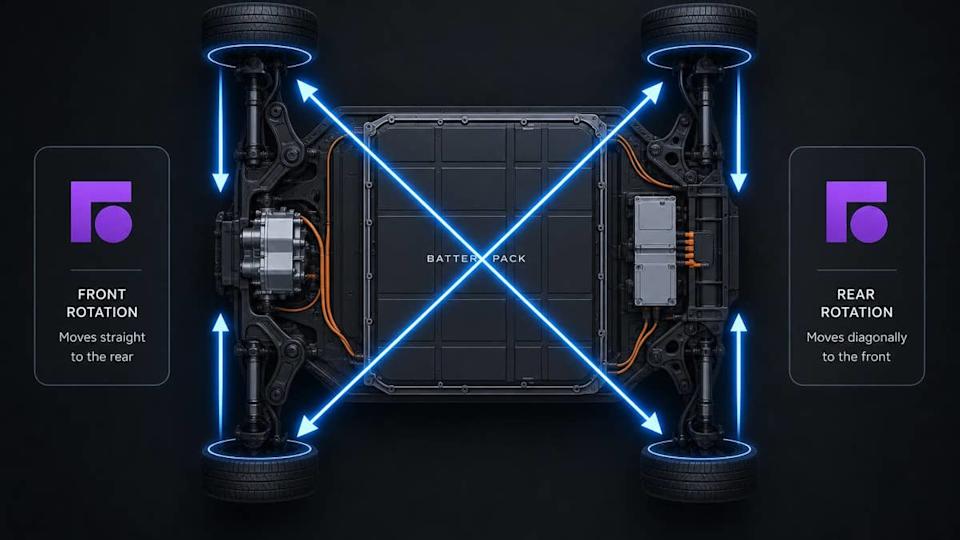
Frequent tire rotations are essential for heavy EVs to manage high torque and ensure even tread wear.
Cabin air filters
This is the easiest DIY win on the board. Most manufacturers hide the cabin filter behind the glovebox or a small panel in the frunk. In a Tesla Model 3, for example, this is a 15-minute job that only requires a basic screwdriver. Paying a dealer $150 to do this is a crime.
Wiper blades and fluids
The windshield wipers on an EV function exactly the same as any other car. Check them annually for streaks or dented motions. As for fluids, the only one you’ll be topping up frequently is the washer fluid. It’s a simple task that hasn’t changed in a century.
The Yellow Zone: Mechanical repairs for the seasoned wrench
The “Yellow Zone” is where things get a bit more interesting. These tasks are mechanical, not electrical, but they require a bit more gear and a healthy respect for the vehicle’s weight.
Brake pads and rotors
You might think you’ll never need brakes because of regenerative braking. It’s true that pads can last over 45,000 miles, but that’s actually a problem. In regions with salt and snow, the hydraulic brakes can seize from lack of use. You need to inspect your pads and rotors annually to ensure they aren’t rusting into a solid block. Lubricating the caliper pins is a vital DIY task that most EV owners ignore until they hear a whistling sound.
Suspension and steering
The extra weight of an EV means your shocks, struts, and bushings are working overtime. You should perform the classic “bounce test” by pushing down on the bumper. If the car bounces more than twice, those shocks are shot. While you can replace these at home, you’ll need heavy-duty jacks and a healthy dose of caution.
The hidden 12V auxiliary battery
Even though you have a massive battery pack under the floor, your car still relies on a standard 12V lead-acid or lithium-ion battery to run the lights, screen, and door locks. When this battery dies, the whole car bricks, even if the main pack is at 100%. Replacing this is a standard DIY task, but you need to know where it’s hidden (usually in the frunk or under a plastic shroud).
The Red Zone: High-voltage systems and the orange cable rule
This is the part of “DIY EV Maintenance” where we tell you to put the tools down. High-voltage systems in modern EVs carry between 400V and 800V. That is enough to kill you instantly if you touch the wrong component without proper training and PPE.
The Orange Cable Rule
Automotive manufacturers have a universal signal for “do not touch”: orange. Any cable, connector, or harness that is wrapped in orange is part of the high-voltage system. If you see orange, your hands stay back. There is no reason for a driveway mechanic to ever open or probe these lines.
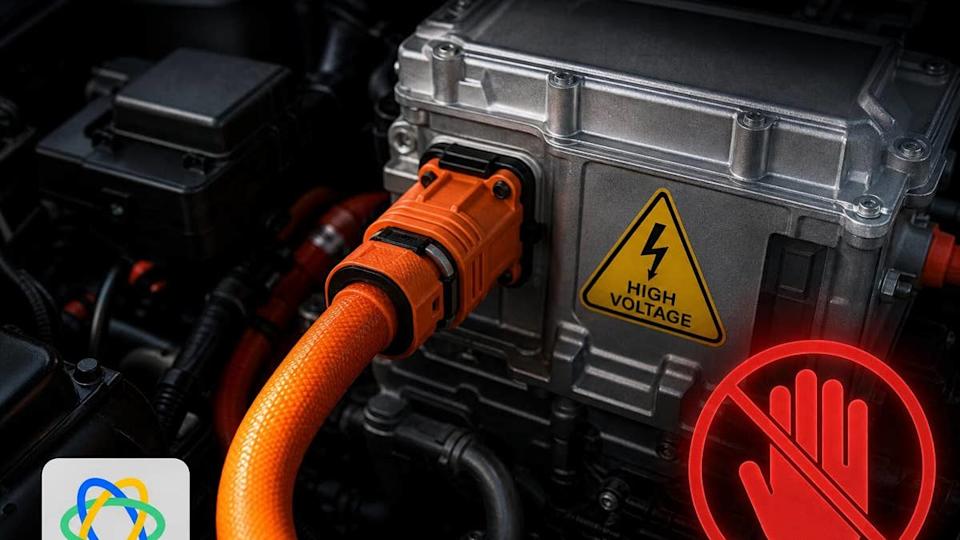
The universal orange coloring on cables serves as a critical warning: these high-voltage systems are strictly off-limits for DIY repairs.
Battery pack integrity
The main battery pack is a sealed unit. Disassembly, cell replacement, or module repair poses extreme electrocution and fire risks. These are specialized procedures requiring manufacturer procedures, insulated tools, and Class 0 gloves. If you suspect a battery fault, this is strictly a job for a certified shop to protect your safety and your warranty.
The inverter and motor
The traction inverter and motor internals are equally off-limits. Thermal management systems tied to the battery often require software calibration and pressure testing during service. Even if you’re a qualified mechanic on ICE cars, do not treat an EV motor like a weekend project.
Battery longevity: The DIY EV maintenance rules for 2026
While you can’t “fix” the battery, you can certainly maintain it through your habits. Battery health is the single biggest factor in your car’s resale value.
Advertisement
Advertisement
The 20-80 Rule: For daily use, keep your state of charge between 20% and 80%. Regularly letting it drop to 0% or sitting at 100% for long periods stresses the chemistry.
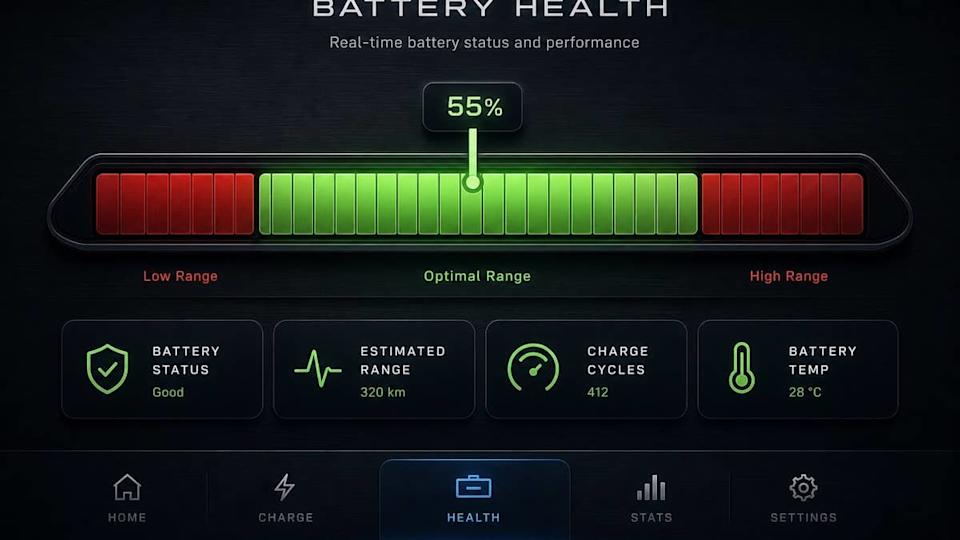
Maintaining your battery between 20% and 80% is the most effective way to preserve long-term cell health and capacity.
Advertisement
Advertisement
Thermal Management: Lithium-ion batteries hate extreme heat and cold. Park in a garage or a shaded area whenever possible. Many EVs have built-in thermal management that runs even when the car is off, but parking smartly reduces the energy drain.
Fast Charging Habits: Think of DC Fast Charging (Superchargers) as a “treat” or a road-trip tool. Daily fast charging can accelerate battery degradation over time. Use slower Level 1 or Level 2 home charging for your everyday needs.
Your AxleAddict DIY EV maintenance tool kit
If you’re serious about working on your EV, your toolbox needs an upgrade. You aren’t just looking for wrenches anymore; you’re looking for diagnostic depth.
Multimeter: You need a high-quality multimeter rated for CAT III or CAT IV (at least 1000V). Do not use a cheap $10 unit from the hardware store.
Class 0 Insulated Gloves: Even if you aren’t touching orange cables, having rated gloves when working near the battery pack is a necessary layer of safety.
OBD-II Scanner: You need a scanner that supports EV-specific protocols. Tools like LeafSpy for Nissan owners provide more information into battery health and cell balancing that a standard scanner will miss.
Torque Wrench: Since EVs are so heavy, torque specs for suspension and wheel lugs are non-negotiable.
Choosing the right path for your DIY EV maintenance
Electric vehicles are simpler to own, but the stakes for a mistake are much higher. Stick to the “Green Zone” for your monthly checks, approach the “Yellow Zone” with a good service manual and the right tools, and treat the “Red Zone” as a total “no-go” area.
At AxleAddict, we believe in the right to repair, but we also believe in staying alive to enjoy the ride. Keep your tires rotated, your cabin air fresh, and your hands away from anything orange. Your car (and your family) will thank you.