
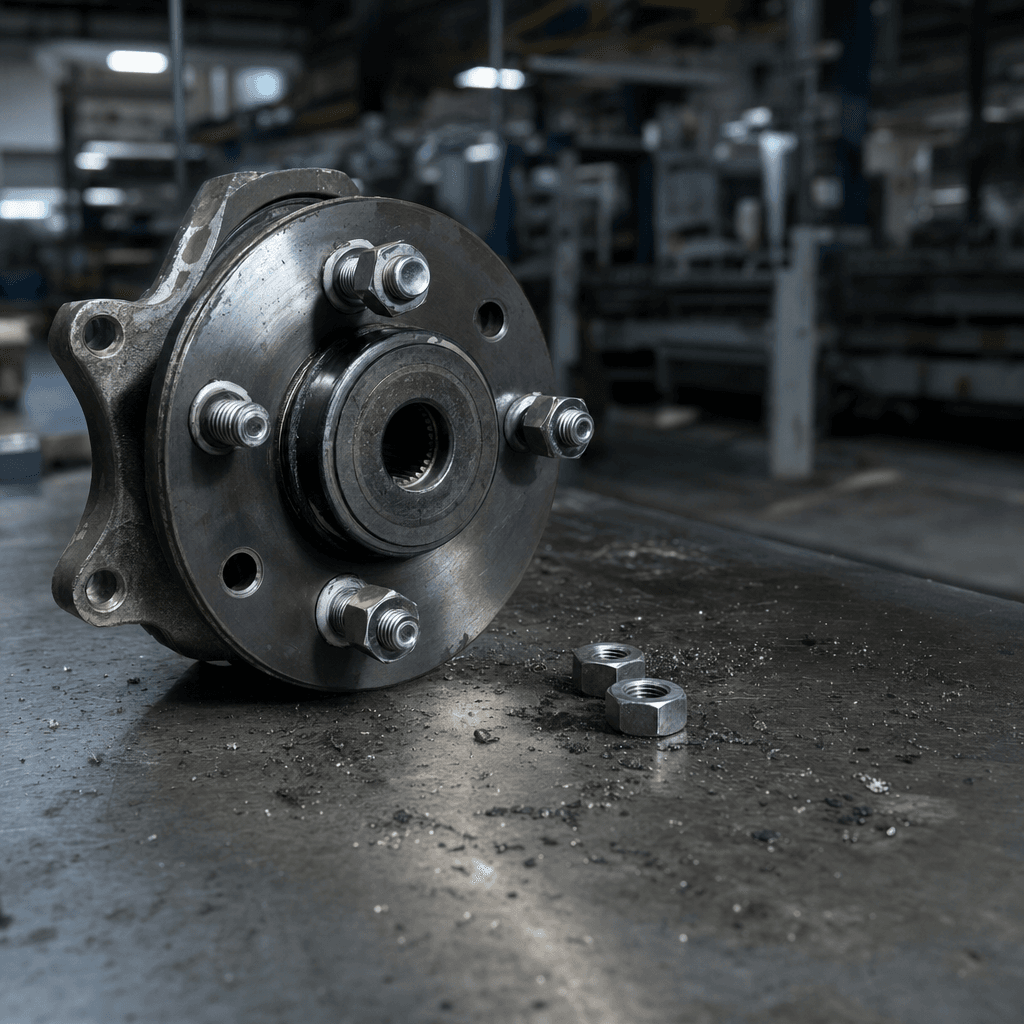
Tesla is recalling certain Cybertruck models after discovering wheels could separate from the vehicle unexpectedly – a critical safety defect caused by incorrect grease application and loose wheel nuts. The recall marks the 11th for Elon Musk’s polarizing electric pickup since its late 2023 launch, adding to mounting quality concerns that have plagued the angular stainless-steel truck throughout its troubled rollout.
Tesla can’t seem to catch a break with its Cybertruck. The company just announced yet another recall – the 11th since the vehicle launched – and this one’s particularly alarming. Certain Cybertruck models could experience sudden wheel separation while driving, a potentially catastrophic failure that stems from something as basic as using the wrong grease and improperly tightened lug nuts.
The news, first reported by Wired, underscores the ongoing quality control struggles that have dogged the Cybertruck since Elon Musk first unveiled the futuristic pickup back in 2019. What was supposed to be Tesla’s triumphant entry into the lucrative truck market has instead become a case study in manufacturing challenges and execution missteps.
Here’s what happened: during assembly, the wrong type of grease was apparently used on wheel hub components, and wheel nuts weren’t properly torqued. That combination creates a scenario where wheels could literally come off the truck while it’s being driven – the kind of fundamental safety issue that’s shocking to see from a company valued at over $800 billion. It’s not a software glitch that can be patched over-the-air. This is basic mechanical assembly gone wrong.
The recall adds to a growing list of problems that have plagued the Cybertruck since deliveries began in late 2023. Previous recalls have addressed issues ranging from accelerator pedals that could get stuck to faulty rearview cameras to problems with the truck’s massive windshield wiper. Each incident chips away at Tesla’s reputation for innovation and quality, particularly as traditional automakers like Ford and General Motors ramp up their own electric truck offerings with fewer headline-grabbing defects.
What makes this recall particularly concerning is how fundamental the issue is. Wheel attachment isn’t bleeding-edge EV technology or experimental design – it’s automotive basics that the industry figured out decades ago. The fact that Tesla’s manufacturing process allowed wrong grease and improperly torqued nuts to make it through quality control raises questions about oversight at the company’s production facilities.
For Cybertruck owners, the recall means another trip to a Tesla service center for inspection and repairs. The company hasn’t disclosed exactly how many vehicles are affected, but with Tesla having delivered an estimated 50,000 to 75,000 Cybertrucks since launch, even a fraction of that population represents thousands of potentially dangerous vehicles on the road.
The timing couldn’t be worse for Tesla. The company’s facing increased competition in the EV space, regulatory scrutiny over its Full Self-Driving software, and investor concerns about Musk’s attention being divided between Tesla and his other ventures including SpaceX and X (formerly Twitter). Quality issues with the Cybertruck – a vehicle Musk has personally championed – only amplify those concerns.
Industry analysts have noted that new vehicle platforms typically experience some growing pains, but the Cybertruck’s recall frequency exceeds normal patterns. Eleven recalls in roughly 18 months of production suggests systemic issues with Tesla’s manufacturing processes and quality assurance protocols. Traditional automakers might take years to accumulate that many recalls on a single model.
The Cybertruck’s unconventional design – with its angular stainless steel exoskeleton and nontraditional manufacturing requirements – may be contributing to these challenges. Tesla had to develop new production techniques for the vehicle, and it appears those processes are still being refined. But consumers paying $80,000 to $100,000 for a pickup truck expect it to work properly, not serve as a beta test for manufacturing methods.
What happens next will be crucial for the Cybertruck’s future. Tesla needs to demonstrate it can identify and fix the root causes of these recurring quality issues, not just patch individual problems as they surface. The company’s direct-to-consumer sales model and over-the-air update capabilities give it advantages in addressing recalls quickly, but those advantages don’t help when the problems are mechanical rather than digital.
The wheel separation recall represents more than just another item on Tesla’s growing list of Cybertruck problems – it signals deeper quality control challenges that could undermine consumer confidence in the brand. As traditional automakers prove they can build reliable electric trucks without double-digit recall counts, Tesla’s window to establish the Cybertruck as a serious competitor is narrowing. For now, affected owners should contact Tesla service immediately, and prospective buyers might want to wait until the company demonstrates it’s solved these fundamental manufacturing issues.