
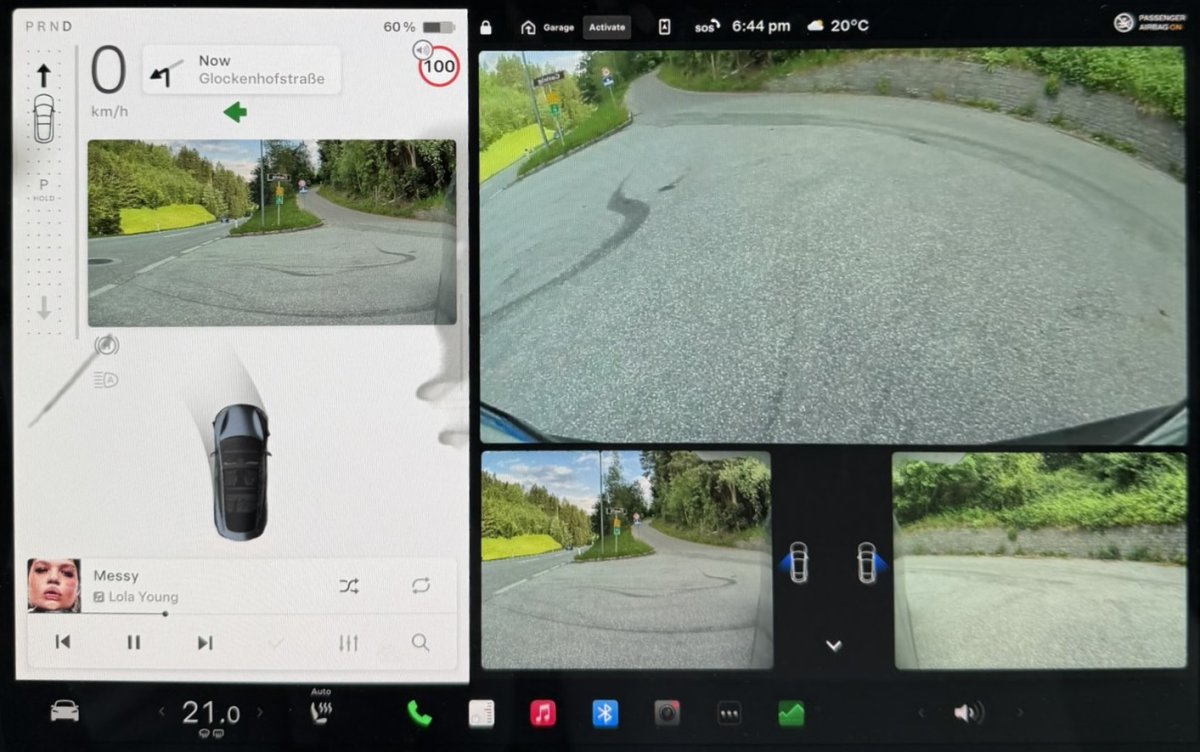
Tesla has issued a voluntary recall for 218,868 vehicles due to an issue with the rearview camera on certain HW3-equipped vehicles.
While the recall report states that 100% of Tesla’s vehicles recalled suffered from the defect, Tesla rapidly identified the problem and issued a simple OTA update to 99.92% of the fleet, doing so well before the recall paperwork was even filed.
The Recall
The recall primarily impacts 2020-2023 Model S, Model 3, Model X, and Model Y (and some 2017 legacy Model S and Model X vehicles) vehicles equipped with Hardware 3 in North America. On these vehicles, a software error would prevent camera streams from showing on the vehicle display for up to 11 seconds after shifting into reverse.
Tesla’s engineering teams were notified of the issue on April 10th when an engineering test vehicle running 2026.8.6 experienced the issue.
This date lines up with our data, where we update 2026.8.6, going from available to not available on a large percentage of the fleet. It also lines up with the sudden spike when update 2026.8.6.1 was rolled out.
Following the pause, Tesla issued an OTA update on April 11th, the next day, which corrected the delay and ensured that owners had access to their rearview cameras with update 2026.8.6.1. The engineering investigation was completed on April 27th, with the recall notification going out on May 1st, well after the entire issue was resolved.
The Issue
The actual issue centered on a communications delay between the HW3 Autopilot Computer and the Media Control Unit, or MCU. These two boards live sandwiched together and share a considerable amount of information, including pulling information from the cameras for FSD and the rear camera feed.
For the driver, this meant a blank rearview image for up to 11 seconds if they shift into reverse immediately after the vehicle wakes up. Because this delay violates the strict visibility requirements outlined in Federal Motor Vehicle Safety Standard 111, it triggered an automatic noncompliance event, initiating a recall.
The OTA Recall Reality
Tesla officially determined that a voluntary recall was necessary on April 27. However, by the time the NHTSA published the documentation, the problem was essentially nonexistent in the real world. As of the filing date, more than 99.92 percent of the targeted vehicles had already downloaded and installed the software remedy entirely free of charge.
Tesla noted only 27 warranty claims and two field reports related to the software bug, with zero associated collisions or injuries. While the term “recall” continues to be legally mandated for these software corrections, this incident further proves that over-the-air updates have transformed automotive safety management.