
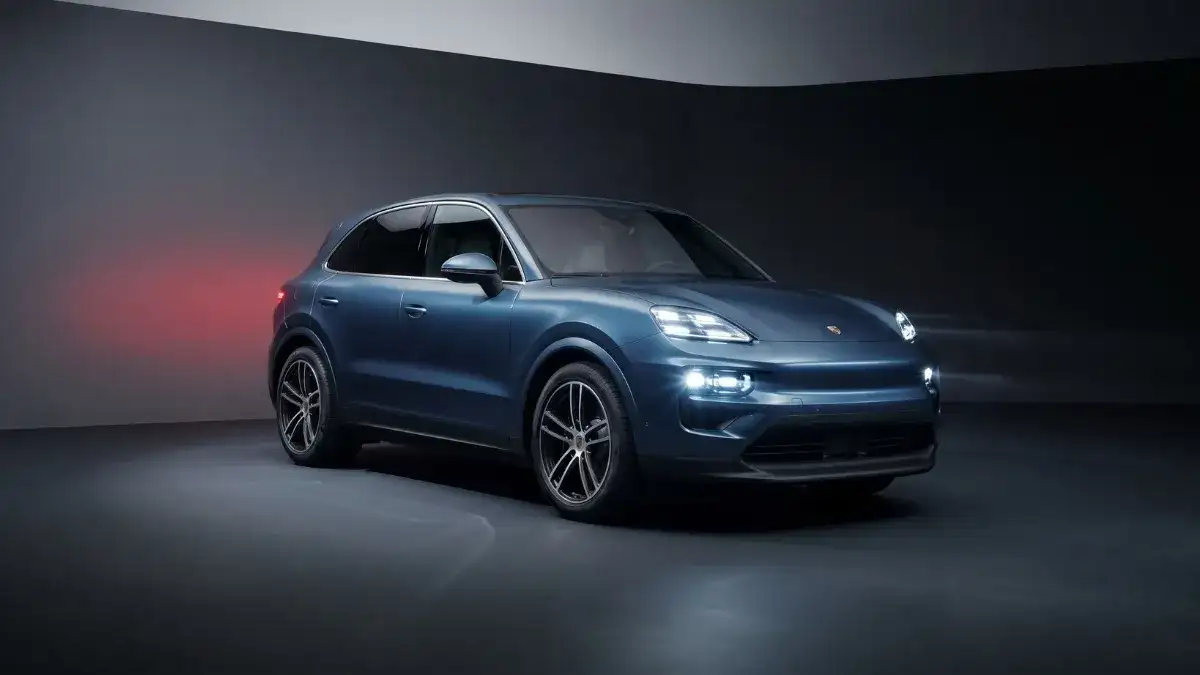
Porsche is currently navigating one of the most complex transitions in automotive history. While many legacy manufacturers are hedging their bets by mixing powertrains on shared platforms, Porsche is doubling down on the idea that an electric vehicle should be built from the ground up to be an electric vehicle. Their recent financial reports and delivery numbers show a brand that remains remarkably resilient, maintaining high margins even as the global EV market experiences volatility. The success of the Taycan proved that the “soul” of a Porsche could survive the removal of the flat-six engine, and now, with the upcoming Cayenne EV, we are seeing the culmination of that evolution.
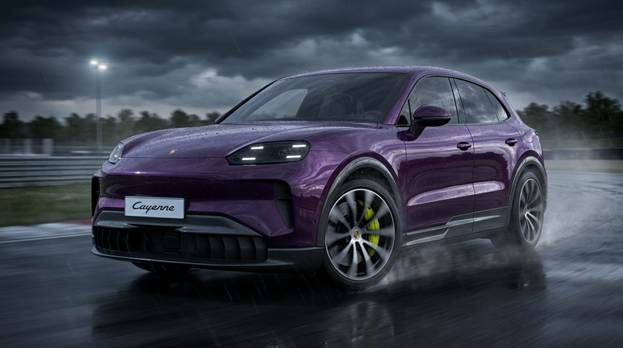
Porsche Stance on the Electric Frontier
The brand’s overall health is tied directly to its ability to modernize without alienating its core enthusiast base. Porsche has been more aggressive than many of its peers, targeting a goal where more than 80% of its new vehicle deliveries will be electric by 2030. This isn’t just about meeting emissions standards; it’s about performance. Porsche understands better than most that the instantaneous torque and lower center of gravity afforded by electrification are perfectly aligned with the brand’s performance DNA. They aren’t just making EVs because they have to; they are making them because, in many ways, they are becoming the superior expression of Porsche’s engineering capabilities.
The Benefits of a Clean Sheet Design
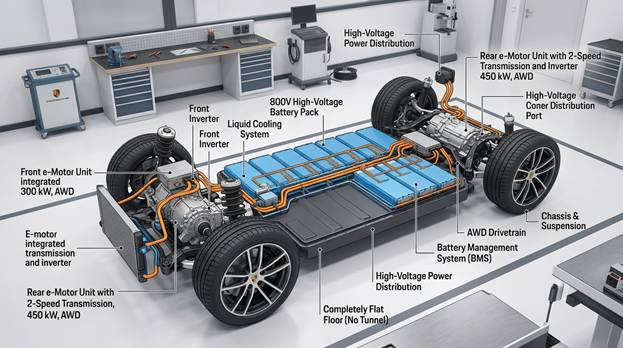
One of the most significant aspects of the new Cayenne EV is how little it shares with its Internal Combustion Engine (ICE) counterpart. In the early days of electrification, “compliance cars” were often just ICE frames stuffed with batteries, leading to compromised interior space and poor weight distribution. The Cayenne EV moves away from this by utilizing the Premium Platform Electric (PPE) architecture.
This is a massive win for the consumer. By not having to account for a transmission tunnel or a massive front-mounted engine, Porsche engineers have been able to optimize the wheelbase and interior volume. This allows for a much more spacious cabin and a lower hood line, improving both driver visibility and aerodynamic efficiency. When a car is designed as an EV from the start, the battery pack becomes a structural component of the chassis, significantly increasing torsional rigidity, which is the secret sauce for Porsche’s legendary handling.
Advertising
Performance Parity and the Electric Edge
When comparing the performance of the upcoming Cayenne EV to the current ICE models, the shift is dramatic. While a traditional Cayenne Turbo is a masterpiece of mechanical engineering, it still has to wait for turbos to spool and gears to kick down. The Cayenne EV, based on early preliminary drive reports from Car and Driver, promises a level of responsiveness that a gas engine simply cannot match. With a dual-motor setup likely pushing north of 600 horsepower in higher trims, the 0-60 mph sprints will be consistently faster and more repeatable.
Furthermore, the implementation of 800-volt architecture means the Cayenne EV won’t just be fast on the road; it will be fast at the “pump.” The ability to charge from 10% to 80% in under 25 minutes solves the primary pain point of EV ownership. The ICE Cayenne still holds the advantage for long-distance towing in remote areas without infrastructure, but for the vast majority of driving scenarios, the EV’s performance envelope—characterized by silent, relentless acceleration and a center of gravity that feels more like a 911 than a tall SUV—is the clear winner.
Cayenne EV vs Macan EV: The Power of Scale
The Cayenne EV follows closely on the heels of the Macan EV, and the comparison is vital for potential buyers. Both utilize the PPE platform, but the Cayenne scales everything up. While the Macan EV is the “sports car” of the compact SUV world, the Cayenne EV is the “executive express.” The Macan is nimbler, but the Cayenne offers significantly more rear-seat legroom and cargo capacity, making it the superior choice for families or those who frequently travel with adult passengers.
Advertising
In terms of technology, the Cayenne EV is expected to debut an even more refined version of the Porsche Driver Experience, with enhanced augmented reality head-up displays and a more integrated passenger screen. While the Macan focuses on agility, the Cayenne focuses on “presence” and comfort, utilizing an advanced air suspension system that provides a wider spread between “Comfort” and “Sport Plus” modes.
Identifying the Ideal Cayenne EV Buyer
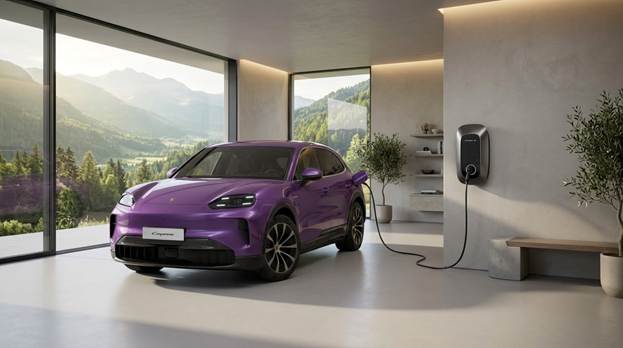
The ideal buyer for the Porsche Cayenne EV is the “early-adopter executive” who values performance but is tired of the maintenance and complexity of modern high-performance ICE engines. This is a buyer who likely already has a Level 2 charger installed at home and perhaps even a solar array. They want a vehicle that reflects their forward-thinking values without sacrificing the prestige or the driving dynamics they grew up with. This car is also perfect for the high-end suburban family that needs the utility of an SUV but wants a vehicle that is essentially a “stealth” performance car. It’s for the person who wants the fastest, most technologically advanced SUV on the market and recognizes that the era of gas-powered dominance has reached its plateau.
Wrapping Up
The Porsche Cayenne EV represents a massive leap forward for the brand and the industry. By moving to a dedicated electric platform, Porsche has avoided the compromises inherent in mixed-powertrain designs, resulting in a vehicle that is faster, more spacious, and more technologically capable than the model it replaces. While the ICE Cayenne remains a formidable vehicle, the EV version’s 800-volt charging, superior weight distribution, and instantaneous torque make it the definitive choice for the modern performance enthusiast. Porsche is proving that the future of the SUV isn’t just electric—it’s exceptional.
Disclosure: Images rendered by Artlist.io
Rob Enderle is a technology analyst at Torque News who covers automotive technology and battery developments. You can learn more about Rob on Wikipedia and follow his articles on TechNewsWord, TGDaily, and TechSpective.
Follow us today…


