
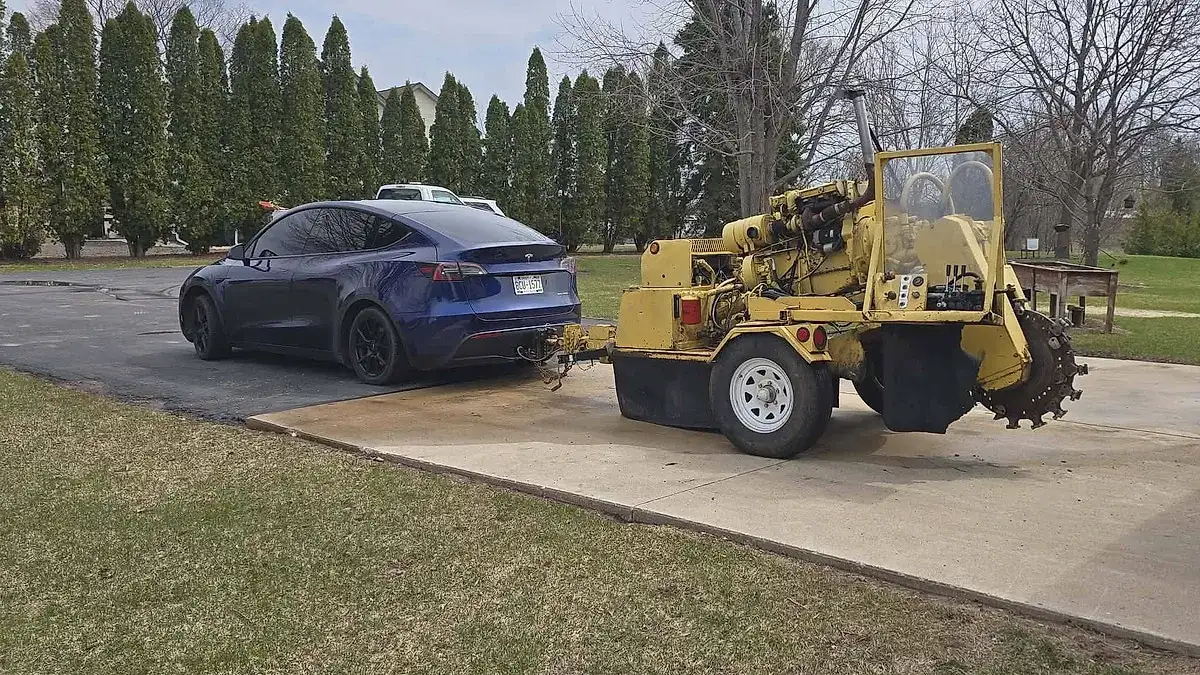
Josh Thayer sold his Tesla Model Y with 362,000 miles on the odometer, and a few months later, the Wisconsin buyer sent him a screenshot of a letter from the state Department of Revenue. The letter said the reported purchase price was lower than the average wholesale value for a vehicle of that make, model, and year. The buyer, who paid fair market value for a 362,000-mile car, was now being asked to prove the transaction was legitimate or face a tax assessment of $810 plus interest and penalties. The Model Y now shows 367,760 miles on its screen and is being used to tow heavy equipment, but none of that matters to the state’s valuation model. Wisconsin’s tax system treats it the same as a low-mileage garage queen.
The problem is not unique to Wisconsin. State tax valuation databases were built for an era when internal-combustion vehicles depreciated in a predictable curve tied to mileage, age, and condition. Electric vehicles have disrupted that curve, with Teslas routinely retaining functionality and value at mileages that would have totaled a gas car. When a state tax system relies on make-model-year averages without adjusting for actual odometer readings, it produces absurd outcomes like a 367,000-mile car being valued alongside an 80,000-mile car. The result is audit letters sent to buyers who paid what the market thinks a high-mileage EV is worth. That disconnect grows wider as mass-market EVs age into second and third ownership cycles.
State tax systems were built for a different kind of car
The Wisconsin letter demands documentation, including the bill of sale, financial agreement, and proof of payment, with a response deadline and a threat of additional tax, interest, and penalties. For a private-party sale of a 362,000-mile vehicle, this level of scrutiny would be routine if the price were suspiciously low for the mileage. But the state’s own letter never mentions mileage, because the valuation system does not use it. It only asks whether the reported price deviates from the average wholesale value for that make, model, and year, a methodology that assumes all 2020 Model Ys are worth the same regardless of whether they have 30,000 miles or 370,000. That assumption might have been reasonable when engine wear and transmission condition were the primary depreciation drivers, but it collapses when batteries and software define an EV’s remaining value.
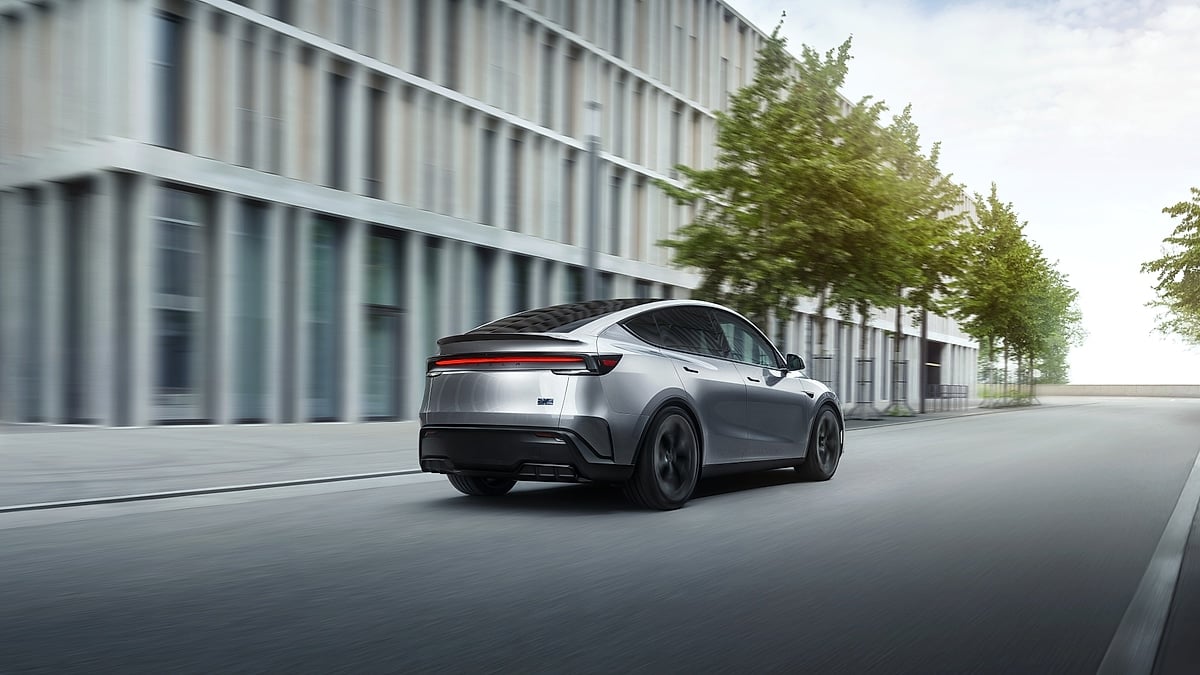
Tesla’s internal data shows that Model Y, after 200,000 miles, typically retains 85 to 88 percent of its original battery capacity, meaning range drops from roughly 300 miles to about 248. Real-world owners confirm the same pattern: one rideshare driver put 200,000 miles on a 2022 Model Y with only a $582 powertrain repair, and another owner reported how long a Tesla Model Y can last with minimal maintenance beyond tires. The Facebook comments under Thayer’s post reinforce this: a 2013 Model S with 200,000 miles still runs like new, and a 2020 Model Y with 237,000 miles recently sold for $12,500. The market has developed its own valuation logic for high-mileage Teslas, one that weighs battery health more heavily than odometer readings. State tax systems have not developed any equivalent logic, which is why they keep mailing letters that treat 367,000-mile cars as if they were fresh off a three-year lease.
Advertising
The market and the government are living in different worlds
The buyer is not just driving the Model Y to the grocery store. Photos show the car towing what appears to be a trencher or similar heavy equipment on a trailer, a workload that would strain most vehicles with a fraction of the miles. A Model Y owner says towing exposed a major flaw in Tesla’s range estimates, with energy consumption approaching one percent per mile and reducing highway range to roughly 70 miles per charge under load. But the fact that this particular 367,000-mile car is still towing at all is itself the story, because it demonstrates a durability that state valuation models simply do not account for. When a tax auditor looks at a 2020 Model Y, they see a four-year-old crossover. They do not see a vehicle that has covered the equivalent of fifteen years of average driving and is still pulling construction equipment.
The Wisconsin letter is a preview of a broader problem that will intensify as millions of Tesla Model 3s and Model Ys sold between 2018 and 2022 enter the high-mileage used market. Their transaction prices will routinely fall below what state tax systems expect, because those systems were never designed for cars that operate reliably at 300,000 miles. Tax departments will face a choice: rebuild their valuation models to account for battery health reports and actual odometer readings, or keep sending audit letters to buyers who paid market price. For now, the buyers are winning in court but losing in the mailbox. One commenter joked that insurance companies should feel the same way, but the taxman got there first. Until states update, the hidden cost of a cheap, high-mileage Tesla is the letter saying your deal was too good to be true.
About The Author
Advertising
Noah Washington is an automotive journalist based in Atlanta, Georgia, covering sports cars, luxury vehicles, and performance culture. His reporting focuses on explaining the engineering, design philosophy, and real-world ownership experience behind modern vehicles.
Noah has been immersed in the automotive world since his early teens, attending industry events and following the enthusiast communities that shape how cars are built and driven today. His work blends industry insight with enthusiastic storytelling, helping readers understand not just what a car is, but why it matters.
Noah is also a member of the Southeast Automotive Media Association (SAMA), a professional organization for automotive journalists and industry media in the Southeast.
His coverage regularly explores sports cars, luxury vehicles, and performance-driven segments of the automotive industry, including the evolving culture surrounding Formula Drift and enthusiast builds.
Read more of Noah’s work on his author profile page.
You can also follow Noah here:
Follow us today…


