
Electric mountain bikes equipped with select Bosch drive units are set to get a performance upgrade this month. The free software update promises to unlock more torque and rider support, though it stops short of increasing maximum power output beyond 750W. The move appears to be in response to the release of the new and powerful Avinox M2S e-bike motor, which many bike brands have already adopted.
Torque limit increase follows another increase just last year
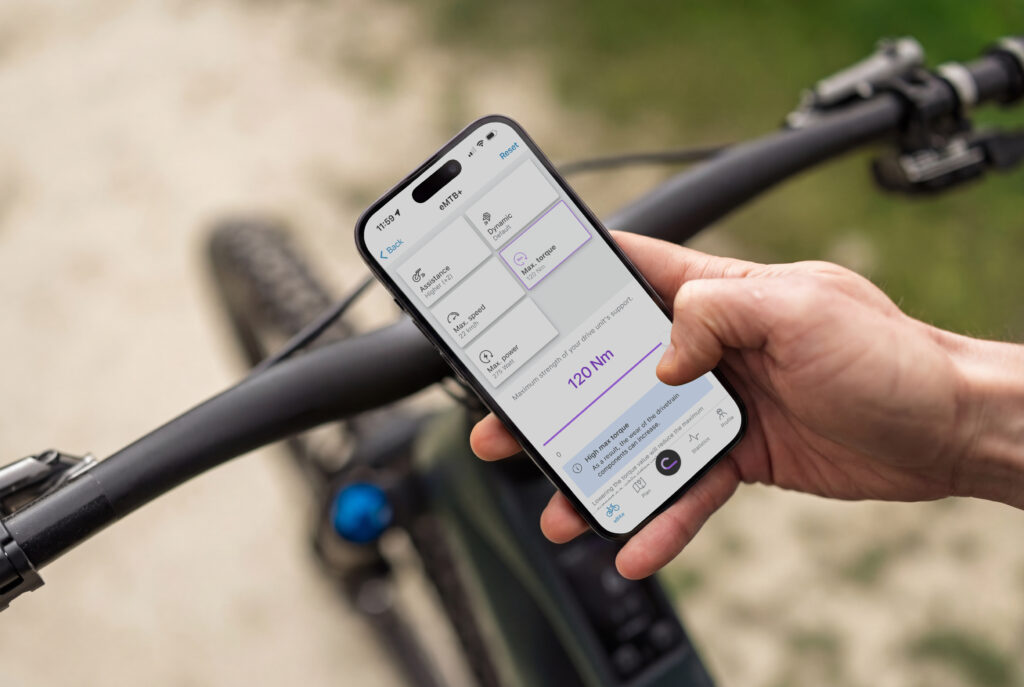
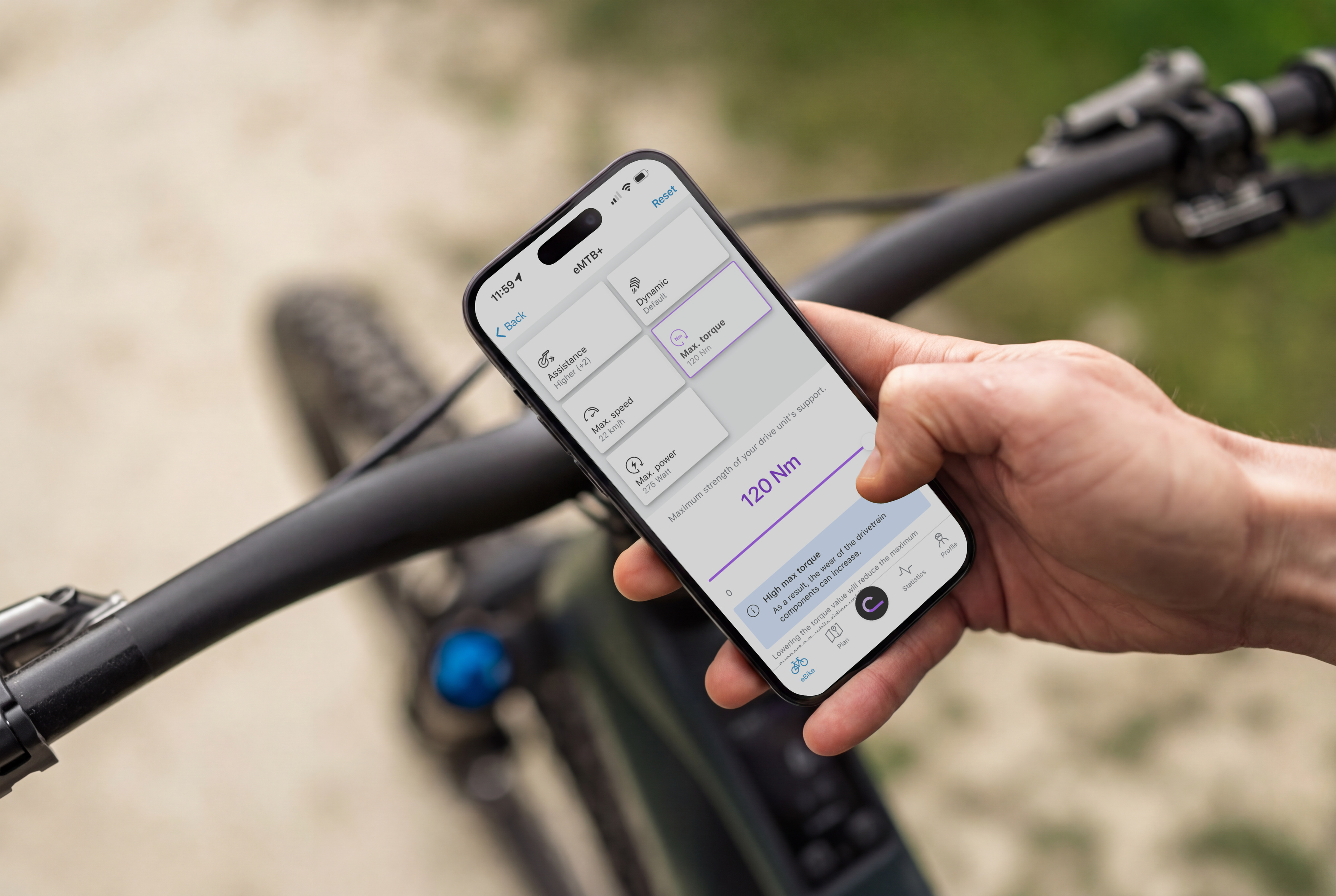
Less than one year ago, Bosch announced an update to the brand’s eBike Flow app that increased the maximum torque for select motor systems from 85Nm to 100Nm. At the time, the top e-bike motor from competitor Avinox boasted 105Nm of maximum torque. With the latest Avinox motor claiming up to 150Nm of torque, Bosch is increasing the limit once again, this time to 120Nm.
On the trail, more torque translates into faster acceleration from a stop. However, too much torque can put a strain on drivetrain parts, increasing wear and tear.
Further tweaks to the Bosch e-bike software seek to provide “longer service life and lower repair costs” given the additional strain associated with increased torque. Up to 120Nm of torque will be available in any riding mode, subject to the bike frame manufacturer’s limits.
Bosch sees power in restraint
Clearly, Bosch is not opposed to increasing the power of their e-bike motor systems — to a point. The 2025 software update that increased torque also increased the systems’ maximum power output, from 600W to 750W, the generally accepted legal limit for e-bikes in the USA. Not all manufacturers have interpreted US consumer product law defining the power limit for low speed electric bicycles in the same way. As a result, companies like Avinox are selling motors capable of delivering a maximum of 1500W in limited bursts.
Bosch says the latest software update unlocks up to 600% support in select ride modes:
Race, Turbo, eMTB+, Cargo, and Auto. However, Singletracks has confirmed that a hard 750W power limit is still in place. Even though the maximum power output has not changed, 600% support is a significant increase over last year’s Bosch update, which unlocked up to 400% support in Race mode.
Power and support are related, though they refer to slightly different performance metrics. For example, if a rider is providing 100W of pedal power, a motor with 600% maximum support adds up to 600W of additional power, for a total power output of 700W. If a strong rider is providing 250W of power, the system caps power output at 750W, leaving support at 200%, and even then, only for a short time.
“For riders who provide more input in the short term, the system delivers the decisive power boost and rewards them with a new sense of achievement,” according to a release. “Immediately afterward, the system adjusts back to an efficient level.” Bosch notes this limits wear on mechanical drivetrain parts and maximizes range.
In early April, mountain bike Hall of Famer and Bosch-sponsored rider Hans Rey penned an open letter to the cycling industry arguing that a 750W maximum power limit should be enforced for Class 1 e-bikes, the most common class that’s allowed on mountain bike trails.
Regular e-bike riders are more interested in longer range over increased power
Singletracks conducted a reader survey and found that among respondents who regularly ride e-bikes, 41% think power specs on the latest motors, such as those from Avinox and Specialized, are getting too high. Far fewer thought e-bike motor torque specs were too high, and only 1% thought e-bike range specs were too high. This suggests that many eMTB riders want additional range more than they want higher-power motors.

Update also delivers ride feel and performance tweaks
Electric bike manufacturers find themselves in a similar situation to digital camera companies in the early 2000s and bike light brands in the 2010s. Whether it’s megapixels, lumens, or watts, buyers are known to make purchase decisions based on a comparison of just one or two key specs. More subjective qualities, like ride feel and performance, are not as readily comparable.
In press materials for the Bosch performance upgrade 2.0 software update provided to Singletracks, the brand touts a new “Drivetrain Tensioner” feature that promises to improve drivetrain responsiveness when transitioning from coasting to pedaling. This is said to be especially useful for low-speed technical riding and in situations where a rider is constantly switching between applying power and backing off.
“The result is almost instantaneous traction with an even quieter freewheel,” Bosch says. Not only that, “the Drivetrain Tensioner can protect the freewheel and thus ensure a longer service life and lower repair costs.”
Without having experienced the feature for myself, I asked Bosch for more information about the Drivetrain Tensioner feature to understand how it works.
“This feature is designed to remove the ‘dead zone’ between pedaling intent and motor drive engagement,” a Bosch representative told Singletracks over email. “Normally, after coasting and then re-engaging the pedals, there’s a brief delay before forward drive is delivered. This delay is caused by the time required to take up any chain slack and fully engage the rear freehub.
“The system works to eliminate that delay by preloading the drivetrain. It does this by closing the internal freewheel in the motor and slightly pre-rotating the chainring. This effectively keeps the drivetrain in a ready state. As a result, power transfer begins immediately when the rider applies pedal input.”
Even with this explanation, it’s unclear how this solution affects drag or pedal kickback, if at all. What is clear is that controlling torque and power delivery in a way that feels intuitive to the rider is complex, and there’s room for further optimization.
Along with the addition of the Drivetrain Tensioner function, Bosch is giving riders the ability to customize the amount of overrun the motor delivers for each assist mode. Overrun refers to the amount of power the motor delivers via the bike’s chain once the rider has stopped pedaling. This gives e-bikes a more natural feel instead of an abrupt drop in support, and Bosch’s system can be set to deliver up to 2.2 yards (2m) of overrun.
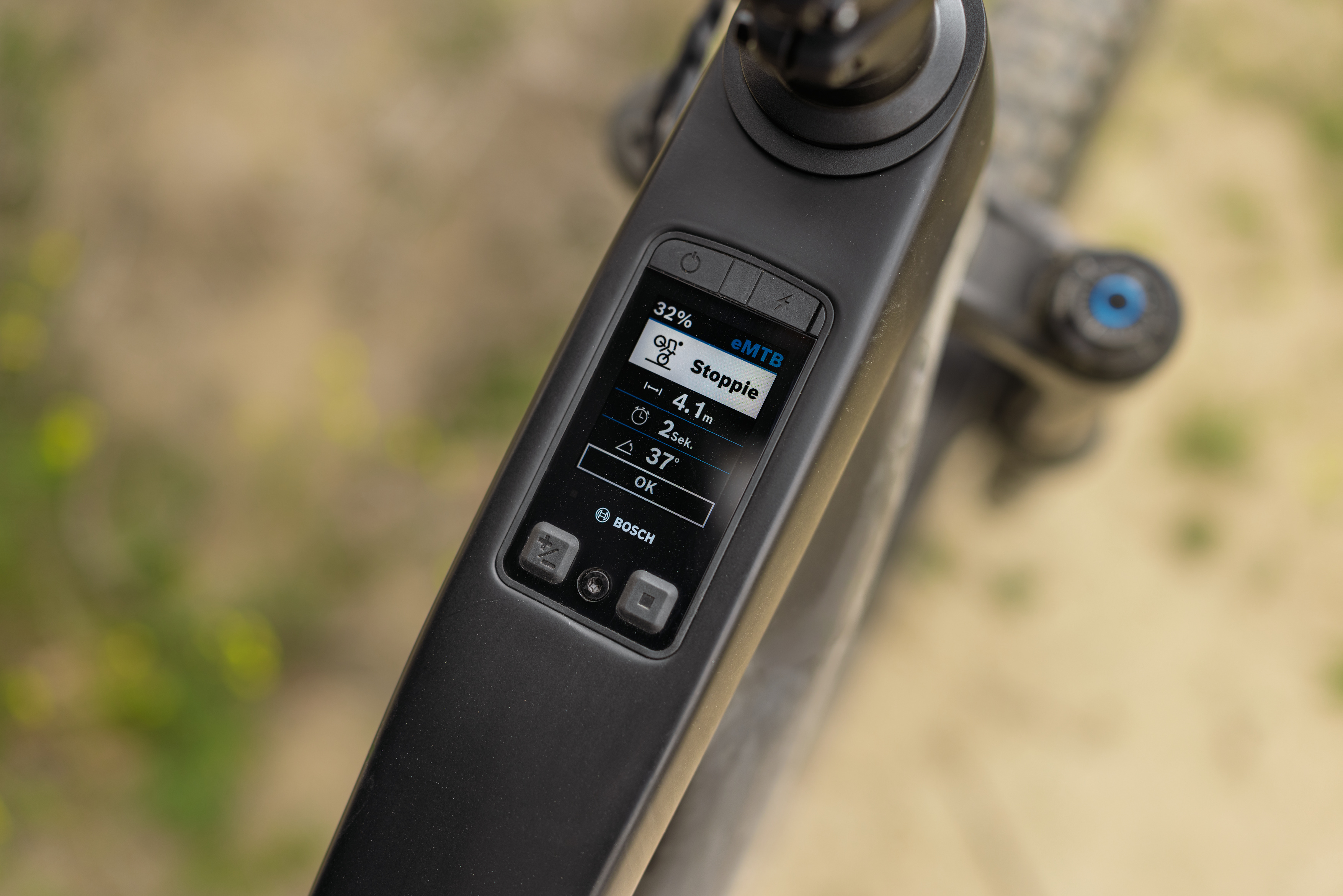
Finally, the software update adds a Trick Check feature to select systems that can identify (and quantify) mountain bike tricks like jumps, wheelies, and stoppies. Though Garmin GPS units have long offered a jump-detection feature, Bosch can track wheelies and stoppies using data from integrated sensors within the bike.
The Bosch performance upgrade 2.0 will be available over the air for free via the eBike Flow app beginning May 4, 2026. However, not all of the features described here are available on all drive units. Check the Bosch website for additional details.