
Nine months after Austin went live, Tesla has 25 unsupervised vehicles, 14 logged crashes, and a CEO that cannot decide consistently when scale will happen. By Stewart Burnett
New data from the Robotaxi Tracker platform indicates that Tesla’s fledgling robotaxi operation in Texas has grown to 25 unsupervised vehicles operating across Austin, Dallas and Houston. The development marks the first meaningful movement in the numbers for a programme that has remained at a small—albeit unconfirmed—number since its launch in June 2025.
The Dallas and Houston fleets, such as they are, remain extremely small. Both services were launched on 18 April with a single vehicle apiece, just days before Tesla’s Q1 results were due for release. Both reached three vehicles by the month’s end, with the remaining 19 vehicles attributable to the Austin service. The total Austin fleet appears to be in the range of 45-50 vehicles when supervised vehicles are taken into account, although Tesla does not provide hard numbers.
The expansion has been accompanied by a significant—albeit wholly unsurprising—disclosure from Chief Executive Elon Musk during the Q1 earnings call. That is, that large-scale, unsupervised deployment will not proceed until FSD v15. This update is expected to develop an architectural overhaul of the software system, and is scheduled for late 2026 at the earliest and early 2027 at the latest. As with all forward-looking statements from Tesla—and especially Musk–these timelines should be taken with a large pinch of salt. The Tesla Semi entered mass production on 29 April, fully seven years later than originally promised.
Musk cited known safety improvements in the pipeline as sufficient reason alone to defer scaling operations, adding that the existing Hardware 3 platform—fitted to a substantial portion of Tesla’s global fleet—lacks the memory bandwidth required for unsupervised operation and cannot be upgraded without replacing both the compute unit and the cameras. It has been less than a year since Musk made the claim Tesla’s robotaxi services would cover half of the US mainland by end-2025.
The fleet’s troubled safety record has added urgency to that deferral. Tesla’s Austin robotaxi service logged 14 crashes between its June 2025 launch and mid-January 2026 across an estimated 800,000 cumulative paid miles—a rate of approximately one incident every 57,000 miles. Tesla’s own Vehicle Safety Report benchmarks the average US driver at one minor collision per 229,000 miles, placing the robotaxi fleet at roughly four times that rate by the company’s own metric; independent estimates using police data would place it closer to nine times.
All 14 crashes occurred with trained safety monitors present. Breaking with every single other autonomous vehicle operator in the US, Tesla redacts the narrative section in each of its NHTSA crash report—ostensibly due to business confidentiality—making independent assessment of fault or avoidability effectively impossible.
As Tesla moves to expand its robotaxi service, the competitive environment around it has sharpened considerably. Waymo now operates well upwards of 3,000 robotaxis across ten US cities, one of them being Austin. The firm also completes more than 500,000 paid rides per week, and raised US$16bn in February to fund, among other things, its first overseas expansion to London and Tokyo respectively.
Meanwhile, Nebius-backed AVride has already deployed 200 autonomous vehicles in Texas—notably receiving far less media attention than Tesla, despite the fleet size disparity. The firm is currently offering rides via the Uber platform in Dallas, a city where Tesla launched its own service with one vehicle. Neither Avride nor Amazon-owned Zoox requires the supervised-versus-unsupervised distinction that continues to define and limit Tesla’s reported progress.
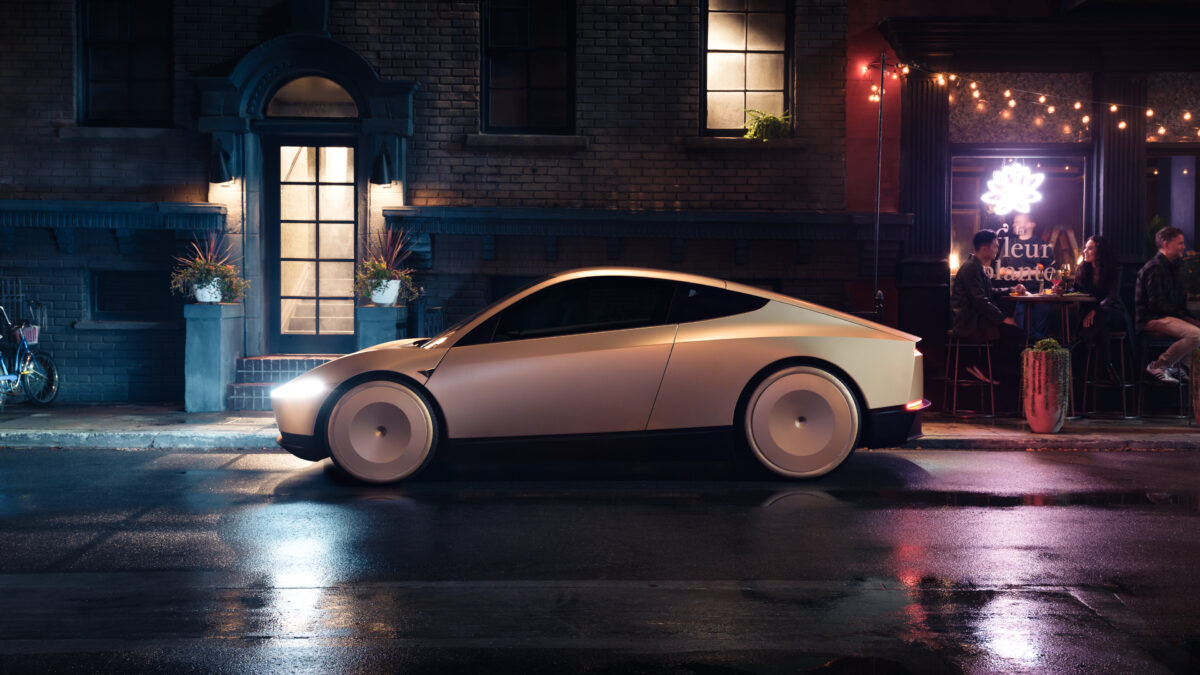
The Cybercab, a purpose-built two-seat autonomous vehicle with no steering wheel or pedals, has entered production and is reported to drive itself from the factory to staging areas without human assistance, suggesting the manufacturing side is advancing faster than the regulatory and operational framework required to actually deploy it at any meaningful scale. During the earnings call, Musk warned that the robotaxi “likely will not see material revenue until at least 2027”.