
It’s not cheap, but it feels like every penny is well – spent. This is one of the key factors enabling Xiaomi to sell cars in the 250,000 – yuan, 300,000 – yuan, and even 600,000 – yuan price ranges.
Take the Xiaomi SU7 Ultra as an example. The starting price of 529,900 yuan is definitely not cheap. However, considering that it has 1,548 horsepower, equivalent to that of a multi – million – dollar supercar, and with a kit worth about 300,000 yuan, it can become the “fastest mass – produced four – door electric vehicle” on the Nürburgring circuit, outperforming the Porsche Taycan Turbo GT. Xiaomi’s asking price then seems like a “bargain”.
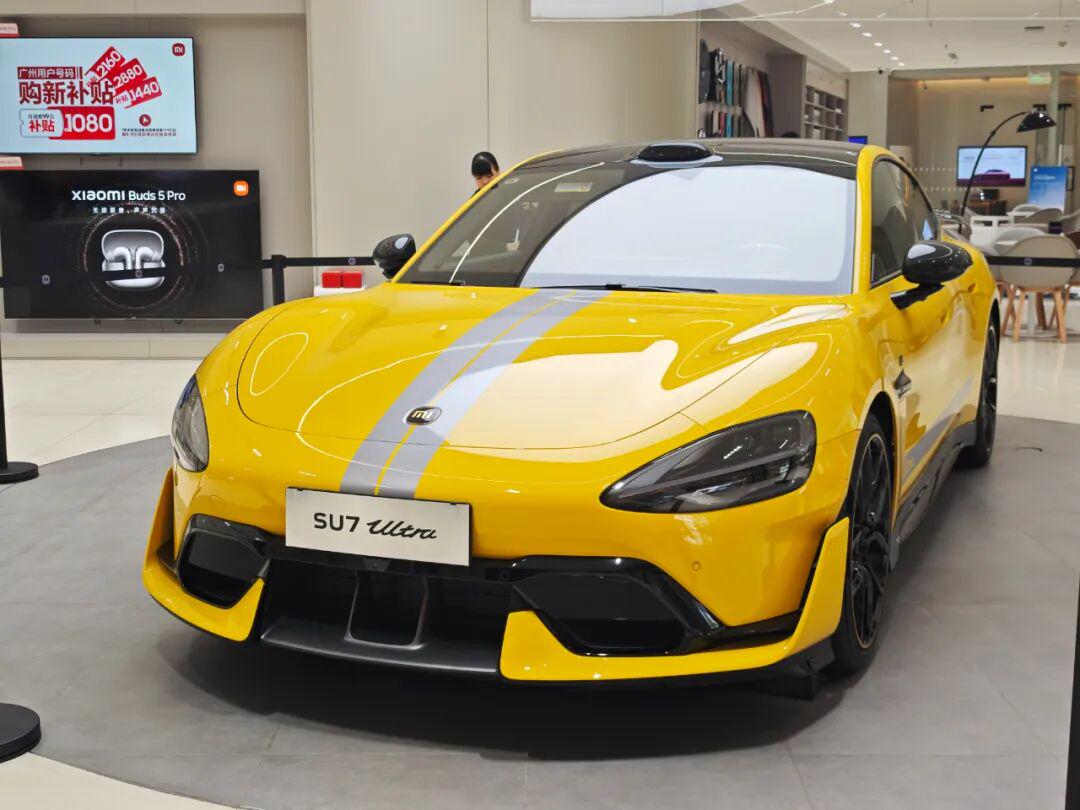
With this approach, the Xiaomi SU7 Ultra once stole a lot of the limelight from Porsche before the public opinion storm. Although there is no direct data to prove that most consumers who didn’t buy Porsche became owners of the Xiaomi SU7 Ultra, it is a fact that Porsche’s Taycan delivery volume in China decreased by more than 20% year – on – year in 2025.
After this lesson, Porsche has come up with a disruptive sales strategy with a Xiaomi – like flavor for its latest and most important all – electric model.
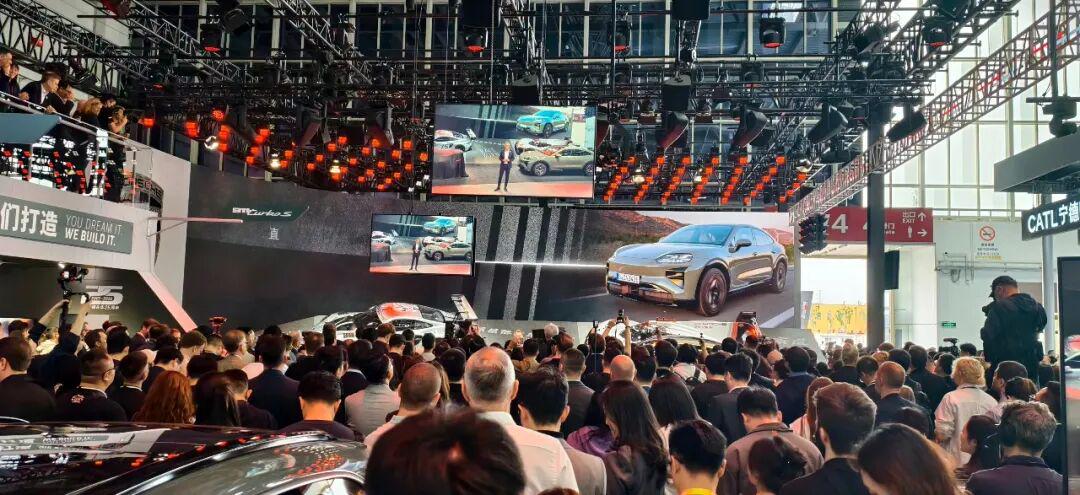
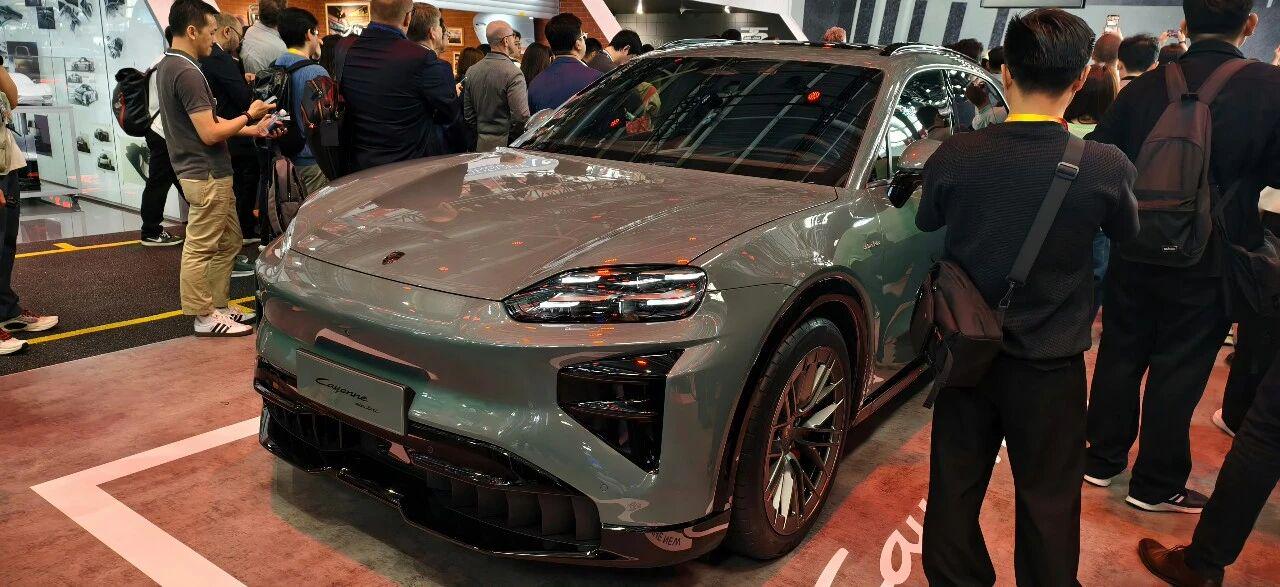
At the 2026 Beijing Auto Show, Porsche officially announced that the starting price of the all – electric Cayenne Turbo is 1,118,000 yuan, and the starting price of its derivative model, the all – electric Cayenne Turbo Coupe, is 1,158,000 yuan. It may seem normal for a Porsche mid – to – large SUV to start at 1,118,000 yuan. However, for a Porsche with a maximum horsepower of over 1,150 and equipped with an active suspension system, this price is a “bargain” within the price system of this German ultra – luxury brand.
For reference, the four – door all – electric sedan Taycan Turbo, which has slightly inferior performance on paper compared to the all – electric Cayenne Turbo, is priced at 1,568,000 yuan on Porsche China’s official website. To install the Porsche Active Ride active suspension system, which is standard on the Cayenne Turbo, an additional 50,000 yuan is required.
It can be said that Porsche’s sincerity shown in the all – electric Cayenne Turbo is worth at least 500,000 yuan.
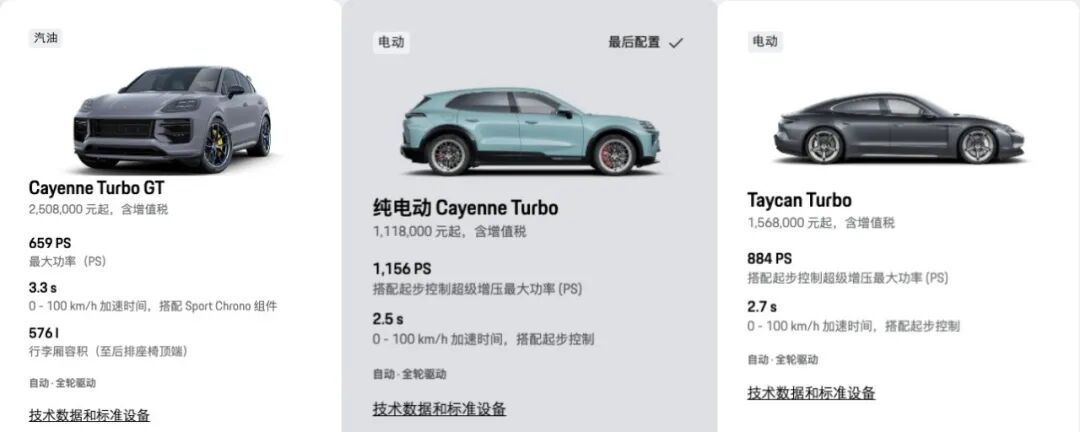
The pricing of the all – electric Cayenne Turbo will have a significant impact on Porsche’s existing price system, especially on its fuel – powered models.
Currently, the most powerful model in the fuel – powered Cayenne lineup is the Cayenne Turbo GT, with a starting price of 2,508,000 yuan. However, its maximum horsepower of 659 is significantly lower than that of the all – electric Cayenne Turbo, and there are also differences in core configurations such as the suspension.
In response, Alexander Pollich, CEO of Porsche China, also gave a positive response at the 2026 Beijing Auto Show: “The pricing of the old – model V8 Turbo was severely pushed up due to the 25% large – displacement consumption tax and 10% purchase tax. The all – electric version is exempt from the consumption tax and enjoys a 50% reduction in the purchase tax. Therefore, the starting price of 1,118,000 yuan is a return to value, not a price cut.”
It should be noted that Porsche’s strategy of “electric cars being cheaper than fuel cars” is not exclusive to the Chinese market.
In another major sales market for Porsche, the North American market, the all – electric Cayenne Turbo is priced at $163,000, equivalent to about 1,114,000 yuan. In contrast, the fuel – powered Cayenne Turbo GT starts at $214,800, equivalent to about 1,468,000 yuan.
Obviously, Porsche hopes to regain ground globally with a new and irresistible pricing system.
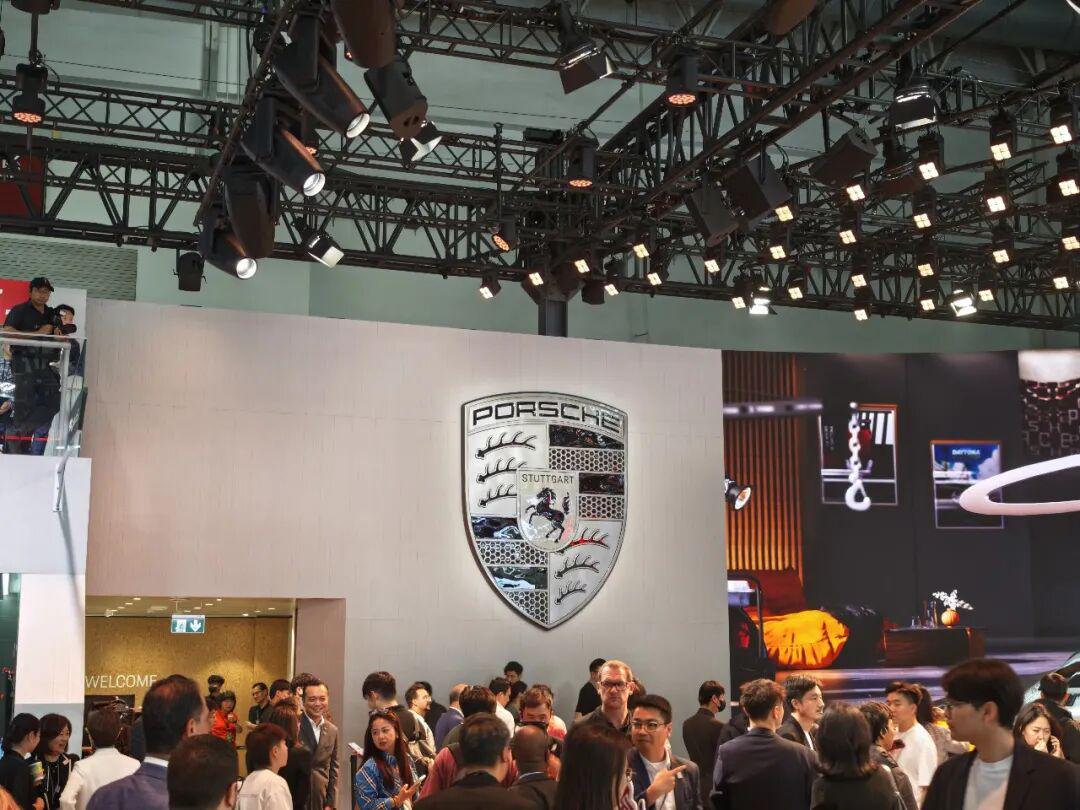
According to the latest market data released by Porsche on April 10, its global new – car delivery volume in the first quarter of 2026 was 61,000 units, a year – on – year decline of 15%. Specifically, in the four major core markets of Germany, North America, China, and Europe (excluding Germany), Porsche only achieved year – on – year positive growth in its home market of Germany. The other three regional markets all experienced double – digit declines, and the decline in the Chinese market reached 21%.
“This downward trend is in line with the company’s previous expectations. The core reasons include the discontinuation of the fuel – powered 718 model, the high – base effect of the all – electric Macan in the same period last year, and the cancellation of the US electric – vehicle tax – incentive policy,” Porsche said.
If we look at a longer time frame, Porsche’s struggling performance in the first quarter of 2026 is just a continuation of its weak performance in recent years.
Since 2024, Porsche’s global sales and profit data have been on a downward trend. If we only look at the Chinese market, the downward trend started as early as 2022. By 2025, Porsche’s operating profit had dropped to 413 million euros, a year – on – year decline of 92.7%. Although this includes one – time special expenses of up to 3.9 billion euros, such as layoffs and tariffs, it still sends a very pessimistic signal.
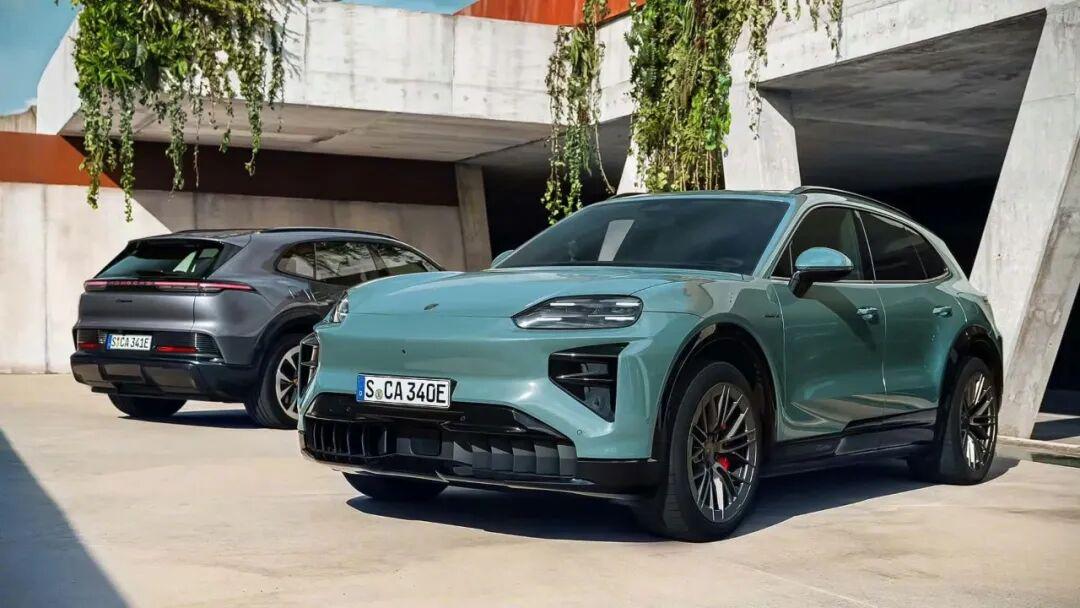
From this perspective, Porsche’s determination shown in the pricing of the all – electric Cayenne Turbo may just be the beginning.
After the all – electric Cayenne Turbo, Porsche is expected to gradually launch more entry – level and affordable models such as the all – electric Cayenne in the Chinese market. According to its current pricing strategy, the new models are expected to enter the 700,000 – 800,000 – yuan market segment. This means that the price gap between Porsche and the flagship models of brands such as AITO Wenjie, Li Auto, and NIO will be reduced to 200,000 yuan or even 100,000 yuan.
If the price systems of Porsche’s new – energy models such as the all – electric Macan and Taycan are also adjusted accordingly, a top – down battle among million – yuan electric vehicles will be launched in the domestic auto market.
Some pictures are quoted from the Internet. Please inform us if there is any infringement, and we will delete them.
This article is from the WeChat official account “Source Media Hub”. Author: Pan Zhuolun. Republished by 36Kr with permission.