
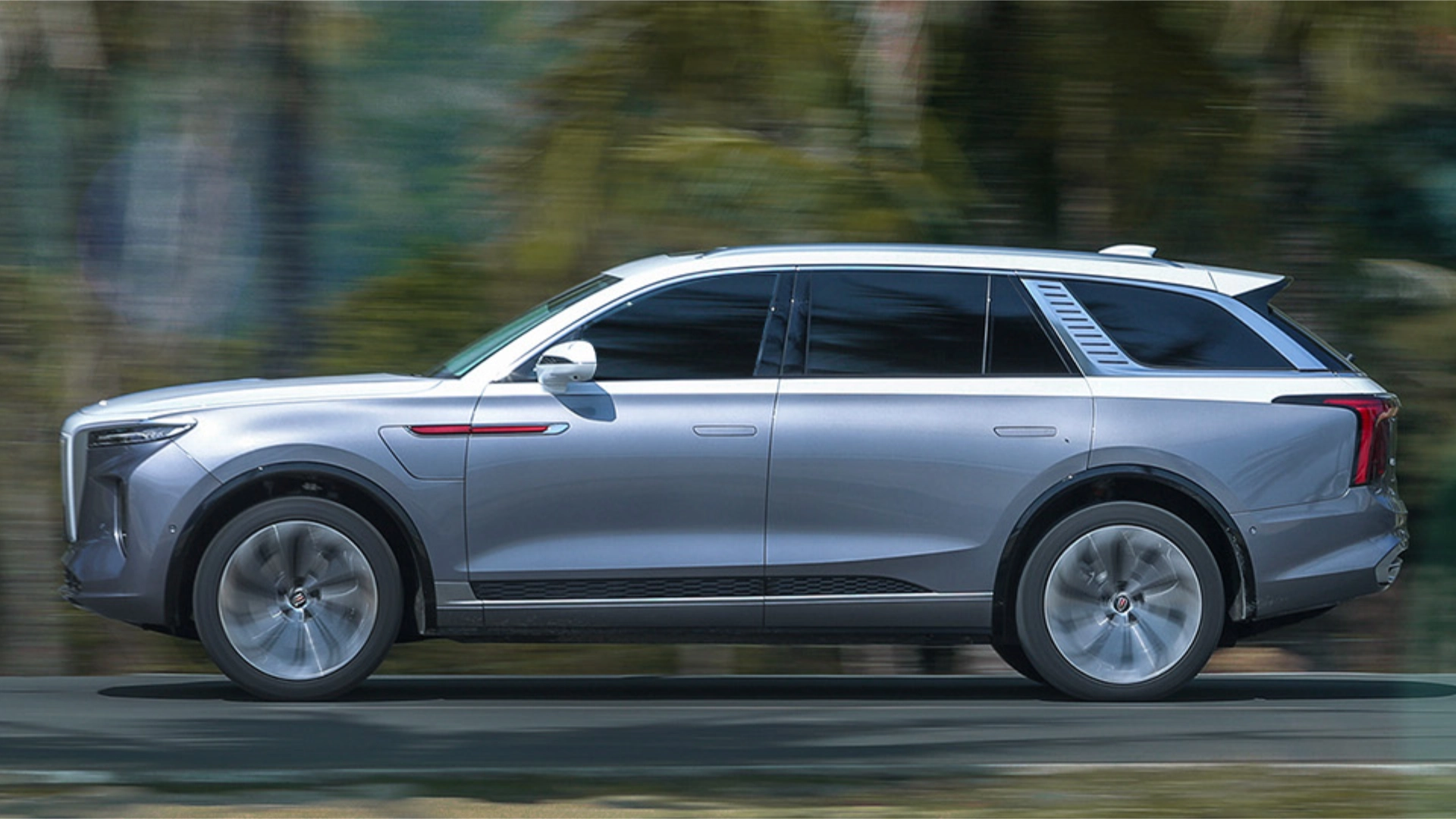
Chinese luxury brand Hongqi is in talks with Stellantis to build vehicles at one of the automaker’s Spanish factories, Reuters reported on Monday, citing five sources familiar with the matter.
The negotiations are being held through Leapmotor, the Chinese EV maker in which both Hongqi‘s parent company FAW Group and Stellantis hold stakes, two of the sources told the outlet.
Two of the sources told Reuters that Hongqi vehicles would be produced at Stellantis‘ Zaragoza plant — the same facility where the group is preparing to begin Leapmotor production in the second half of this year.
The talks “are ongoing” and the agreement for production in the South European plant is not finalised or guaranteed, according to the report.
However, a deal would give Hongqi its first manufacturing base in western Europe without the cost and time needed of building a new factory.
At the same time, the approach would enable the company to circumvent EU tariffs on Chinese electric vehicles — a factor that has prompted several automakers to consider establishing local production over the past two years.
A collaboration between Leapmotor and Hongqi wouldn’t be new.
The two Chinese companies struck an agreement last year for Leapmotor to supply Hongqi with an EV platform, and the first model built on it is expected to enter production in the fourth quarter of this year.
The vehicle will share its underpinnings with Leapmotor‘s compact SUV B10.
Hongqi
Hongqi is one of China’s oldest automakers, founded in 1958 as a maker of vehicles for senior Communist Party officials.
The brand is a division of state-owned FAW Group.
Hongqi has entered several European markets, including Norway, the Netherlands, and Poland, however its footprint remains small.
According to Automotive World, the brand shipped an initial batch of around 600 vehicles to Europe in late 2024 and sold a total of 771 units across the continent through October 2025.
For comparison, Leapmotor — which sold nearly 600,000 vehicles in 2025 and is targeting one million deliveries this year — took roughly two years of international expansion through Stellantis‘ network to surpass 67,000 overseas sales.
At the 2025 Munich Motor Show, the company announced plans to launch 15 electric and hybrid models in Europe by 2028, expanding to 25 markets with more than 200 dealerships.
One of Reuters‘ sources said the brand is targeting annual sales of one million vehicles by 2030, with at least 10% outside China.
EU Tariffs
Building vehicles inside Europe allows Chinese automakers to avoid the countervailing duties the European Commission imposed in October 2024 on battery electric vehicles imported from China.
The additional tariffs — which come on top of the EU’s standard 10% import duty — were set based on each manufacturer’s cooperation with the Commission’s 2023–2024 probe into state subsidies.
BYD faces a 17% countervailing duty, Geely 18.8%, and SAIC Motor 35.3%. Other cooperating companies, including Nio and XPeng, are subject to 20.7%.
Tesla, which requested an individual examination for its Shanghai-built vehicles, was assigned 7.8%.
Combined with the base rate, Chinese EV makers face total tariffs of up to 45.3%.
The duties have prompted a wave of local production plans.
BYD has begun trial production at its first European plant in Hungary and is building a factory in Turkey.
XPeng signed an agreement with Magna Steyr to assemble vehicles in Austria.
As trade tensions rose around the globe, Brussels and Beijing have been negotiating alternatives to the duties, including minimum price commitments — an option presented by China during the first round of negotiations in 2024 and that the EU had first rejected.
Spanish Manufacturing
The reported talks would make Hongqi the latest Chinese automaker to target Spain — a country that has quickly emerged as a magnet for Chinese EV investment.
As Bloomberg reported last week, SAIC Motor’s MG brand is planning to set up a factory there.
MG faces the highest EU tariff of any Chinese brand, at 45.3%, making local production especially urgent.
Chery has already begun assembling vehicles at a former Nissan plant in Barcelona through its Ebro joint venture with Spanish-based EV Motors SA, using knocked-down kits shipped from China.
BYD, which led plug-in vehicle sales in the country in the first quarter with 9,430 registrations and a 16% market share, has reportedly been considering Spain for its third European factory.
Madrid has actively courted the investment.
Prime Minister Pedro Sánchez visited China earlier this month, meeting with President Xi Jinping and Premier Li Qiang, and touring Xiaomi‘s Beijing headquarters as the tech giant prepares to start vehicle sales in Europe in 2027.
Late last year, his government announced Plan Auto 2030, an incentive package exceeding €1.3 billion to support EV adoption and manufacturing.
Spain offers an established automotive ecosystem, lower labor costs relative to northern Europe, and growing battery supply chains.
China’s giant CATL is building a €4 billion plant near Zaragoza, expected to begin production later this year to supply Stellantis‘ nearby car factories.
The country’s EV market is expanding to match.
BEV registrations rose 41.6% year over year in the first quarter to 27,226 units, pushing market share to 9.1% from 6.9% a year earlier, according to ACEA data.