
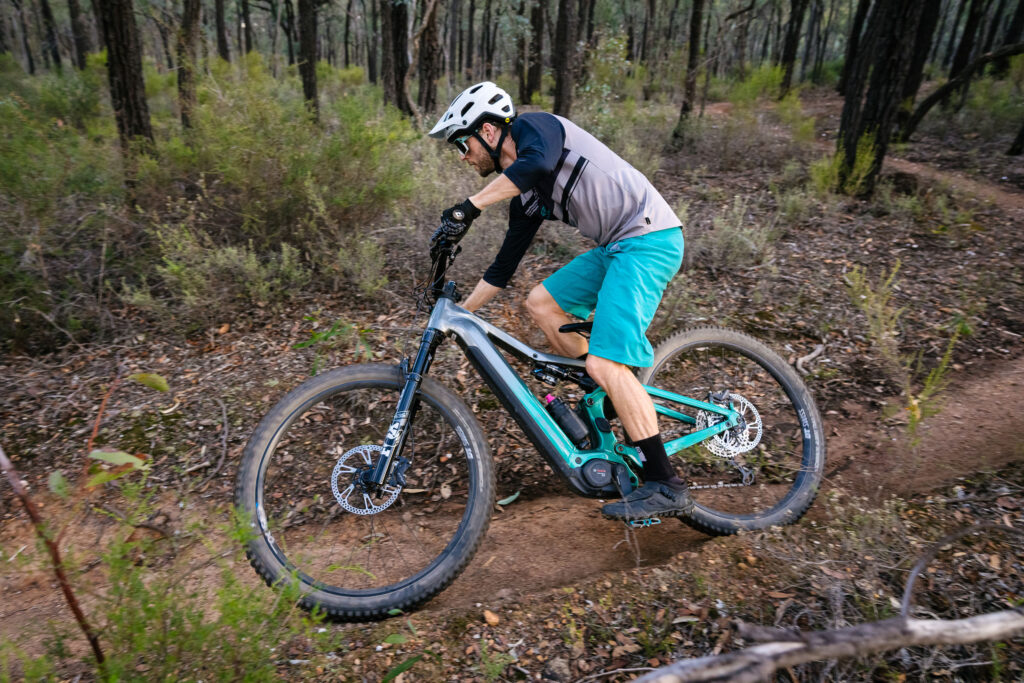
Best e-MTBs 2026 | The best electric mountain bikes ridden & reviewed
Year after year, the world of e-MTBs keeps shifting under our feet. Motors are getting more powerful and efficient, batteries are getting lighter, and complete bikes are dropping weight to the point where full-powered e-MTBs now rival the SL bikes of just a few years ago. At the same time, pricing has become more competitive, with plenty of high-performing e-MTBs sneaking in under the $10,000 AUD mark.
That pace is not slowing down either. The Avinox M1 motor changed the conversation around e-MTB power, and the arrival of the newer Avinox M2 and M2S systems shows just how quickly the category is moving. For clarity, the Avinox-powered bikes we have reviewed in this roundup are M1-equipped bikes, but we have included M2 and M2S in the motor explainer below because they are already shaping the next wave of high-powered e-MTBs.
We’ve spent the past few years riding and reviewing a huge range of electric mountain bikes, from long-travel self-shuttling rigs through to stealthy lightweight e-MTBs that almost pass as analogue bikes. With more people asking us what they should buy, we’ve put together this guide to the best e-MTBs of 2026, based only on the bikes we’ve actually tested.
This is not a shootout, and these bikes were not all tested on the same day, by the same rider, on the same trails. It is a roundup of the bikes that have stood out across our reviews, grouped by the kind of riding they suit best.
In this guide you’ll find our favourite full-powered trail e-MTBs, the best long-travel and gravity e-MTBs, the standout lightweight and SL electric mountain bikes, and a look at which motors are the most powerful, which bikes are the lightest, and which ones have delivered the longest range in our testing.
Related:
Our top e-MTB picks for 2026
Best benchmark full-power e-MTB: Specialized Levo 4
Most powerful e-MTB system we have tested: Amflow PL Carbon with Avinox M1
Best all-round e-MTB: Santa Cruz Vala
Best high-pivot all-rounder: Norco Sight VLT CX
Best value Avinox M1 e-MTB: Teewing Turbo Force XT
Best alloy Bosch trail e-MTB: Focus JAM² 6.9
Best self-shuttling mini-DH e-MTB: Velduro Rogue R
Best burly Bosch e-MTB: Focus SAM² 6.9
Best long-travel descender: Giant Reign Advanced E+
Best lightweight e-MTB: Specialized Levo SL
New motor system to watch: Avinox M2 and M2S
Best full-powered trail & all-mountain e-MTBs 2026
Full-powered trail and all-mountain e-MTBs are the do-most-things bikes of the electric mountain bike world. They bring big motor support and enough battery for proper rides, but they are not always trying to be full-blown gravity sleds. For most riders, this is the category to focus on first.
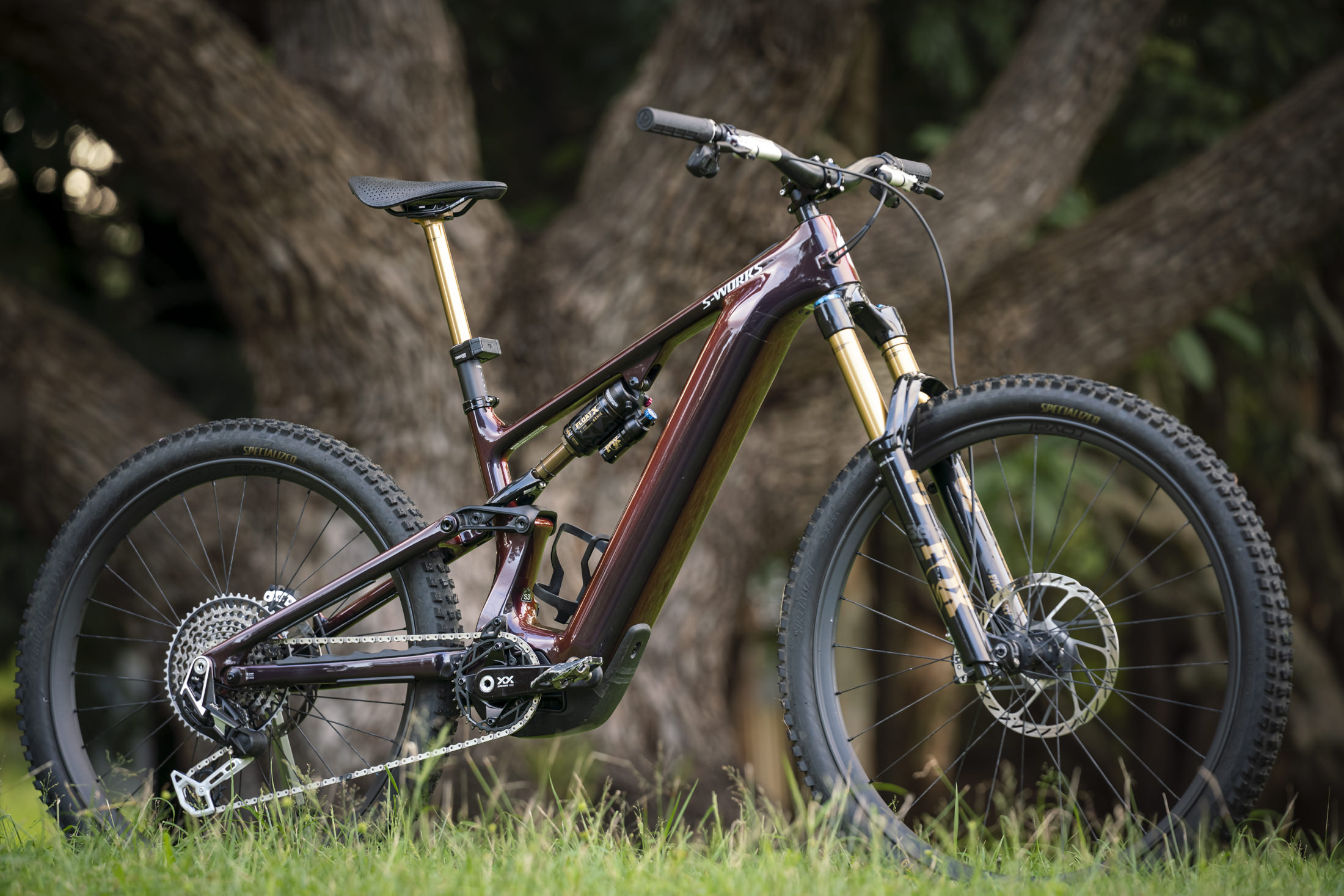 New for 2025 is the Gen 4 Specialized Levo, an iconic silhouette in the e-MTB world.
Specialized Levo 4 | benchmark full-power e-MTB
Highs: Excellent handling with heaps of geometry adjustability, new motor is smoother, quieter & more powerful
Lows: Very expensive, heavier than the previous generation
The fourth-generation Specialized Levo doesn’t hold back. It brings a mullet wheel setup, a new motor and battery, the impressive Fox GENIE shock and a huge amount of adjustable geometry.
The new Brose 3.1 motor is smoother, quieter and punchier than before, with up to 111Nm of torque on the S-Works version and rapid acceleration in Turbo mode. The GENIE shock delivers coil-like suppleness through the first 70% of travel while maintaining strong mid-stroke support.
On the trail, the Levo feels incredibly plush, controlled and adaptable. It’s still one of the benchmark full-powered e-MTBs on the market, though the pricing will make your wallet cry.
Read our in-depth Gen 4 Levo review here.
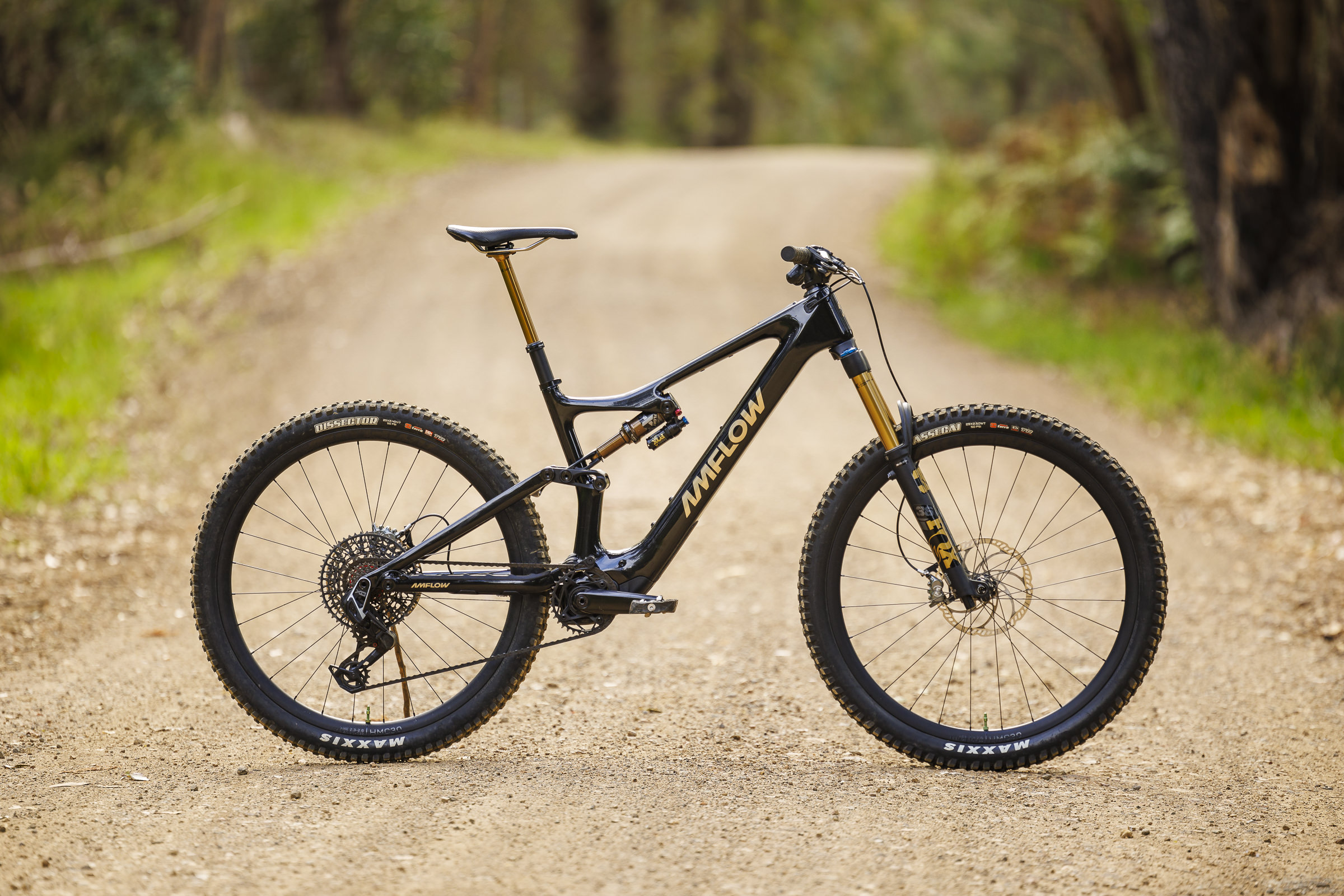 The Amflow PL Carbon, fitted with DJI’s Avinox M1 motor, was the most talked-about e-MTB release of 2024.
Amflow PL Carbon | most powerful e-MTB system we have tested
Highs: Incredibly powerful motor, excellent climbing performance, surprisingly competitive pricing
Lows: No size Small, minor motor rattle on descents, limited seatpost insertion
The Amflow PL Carbon is easily one of, if not the most talked-about electric mountain bike of 2024. That’s impressive given it only broke cover at Eurobike in July that year, and it’s no surprise when you look at the numbers coming from its powerful DJI Avinox M1 motor. While Avinox has since unveiled the newer M2 and M2S systems, the PL Carbon remains the Avinox M1 bike that reset expectations for power-to-weight performance in the e-MTB world.
This compact drive unit weighs just 2.58kg yet pumps out 105Nm of torque and 850W of peak power, with a 30-second Boost mode that lifts output to 120Nm and 1000W. That gives it a significantly higher power-to-weight ratio compared to the latest Shimano EP801 and Bosch Performance Line CX motors.
There are four main assist modes; Eco, Trail, Turbo and Auto. Auto is an adaptive mode using a variety of sensors to vary power output automatically depending on rider input and terrain, much like Bosch’s eMTB mode. It quickly became our preferred setting for technical off-road riding.
On the trail, the Amflow PL Carbon fully delivers on its spec sheet. The motor is outrageous when you want it to be, but the bike itself is balanced and surprisingly fun. Neutral geometry, smooth suspension and a relatively low overall weight make it a sporty all-rounder. There are burlier options for full-blown gravity abuse, but if you want maximum power and range without sacrificing ride quality, the Amflow PL Carbon is hard to ignore.
Read the full review of the Amflow PL Carbon here.
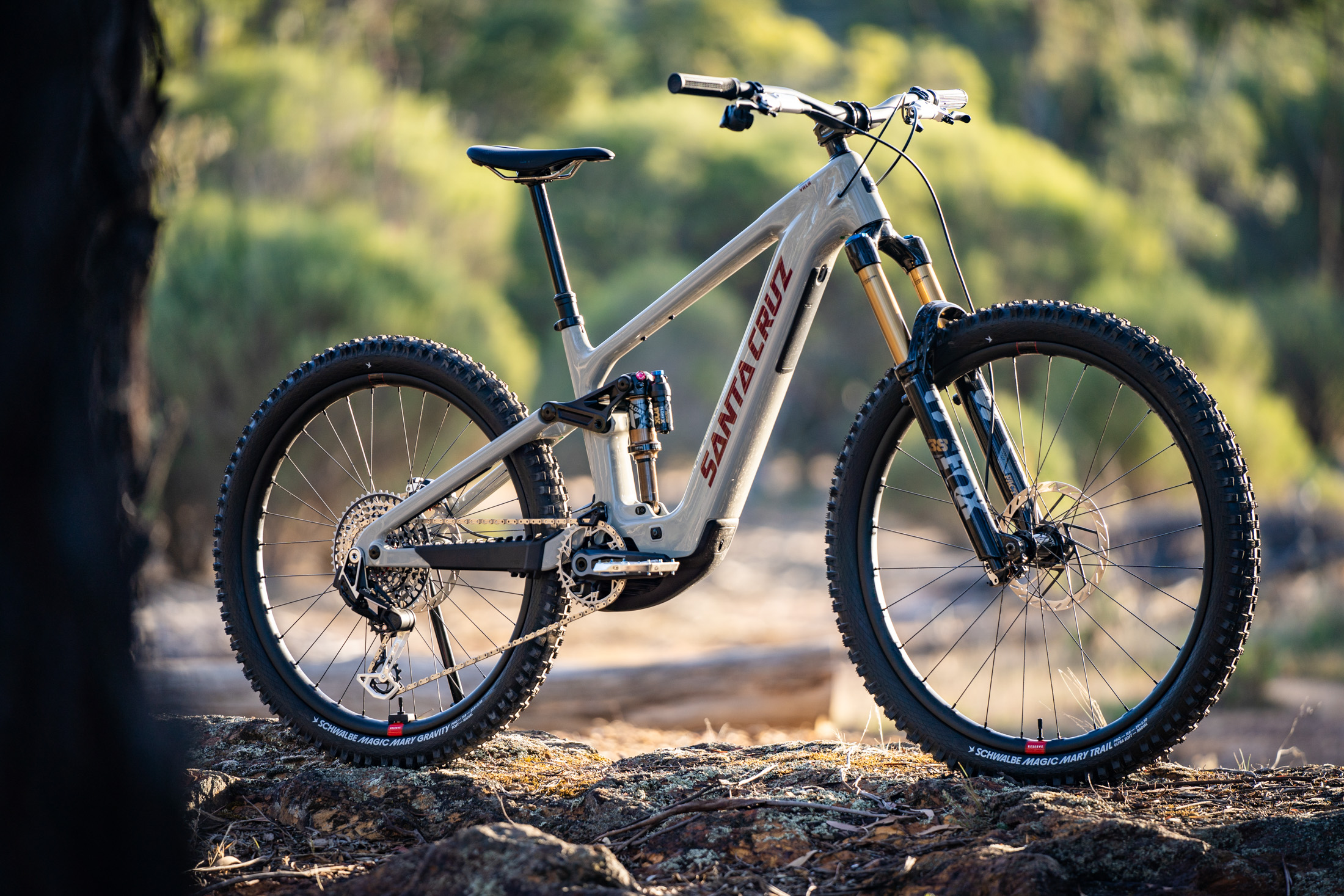 The Santa Cruz Vala broke the internet with the move away from VPP. Thankfully, it rides as good as it looks.
Santa Cruz Vala | best all-round e-MTB
Highs: Floaty, high-traction suspension with fun & intuitive handling
Lows: No wheelsize flexibility, 600Wh battery may be small for some riders
The Santa Cruz Vala made quite the splash when it launched at the end of 2024. It was one of the first e-MTBs to feature the new Bosch Performance Line CX Gen 5 motor, and more dramatically, it’s the first Santa Cruz mountain bike to use a four-bar suspension platform instead of the brand’s iconic VPP layout.
Looks are one thing, but on the trail the Vala makes a huge amount of sense. The suspension is wonderfully neutral with excellent small-bump sensitivity, allowing you to float over rocks and roots while maintaining grip and composure. The handling is intuitive and fun, and it feels like a true do-it-all e-MTB.
Battery capacity is wrapped around a 600Wh unit, which will be fine for many riders but may limit those who like massive days with high assist levels. Even so, the Vala, even when new to the market, already stands as one of the best e-MTBs we’ve ever tested. If you’re looking for one bike to do almost everything, this should be very high on your list.
Read the full Santa Cruz Vala review.
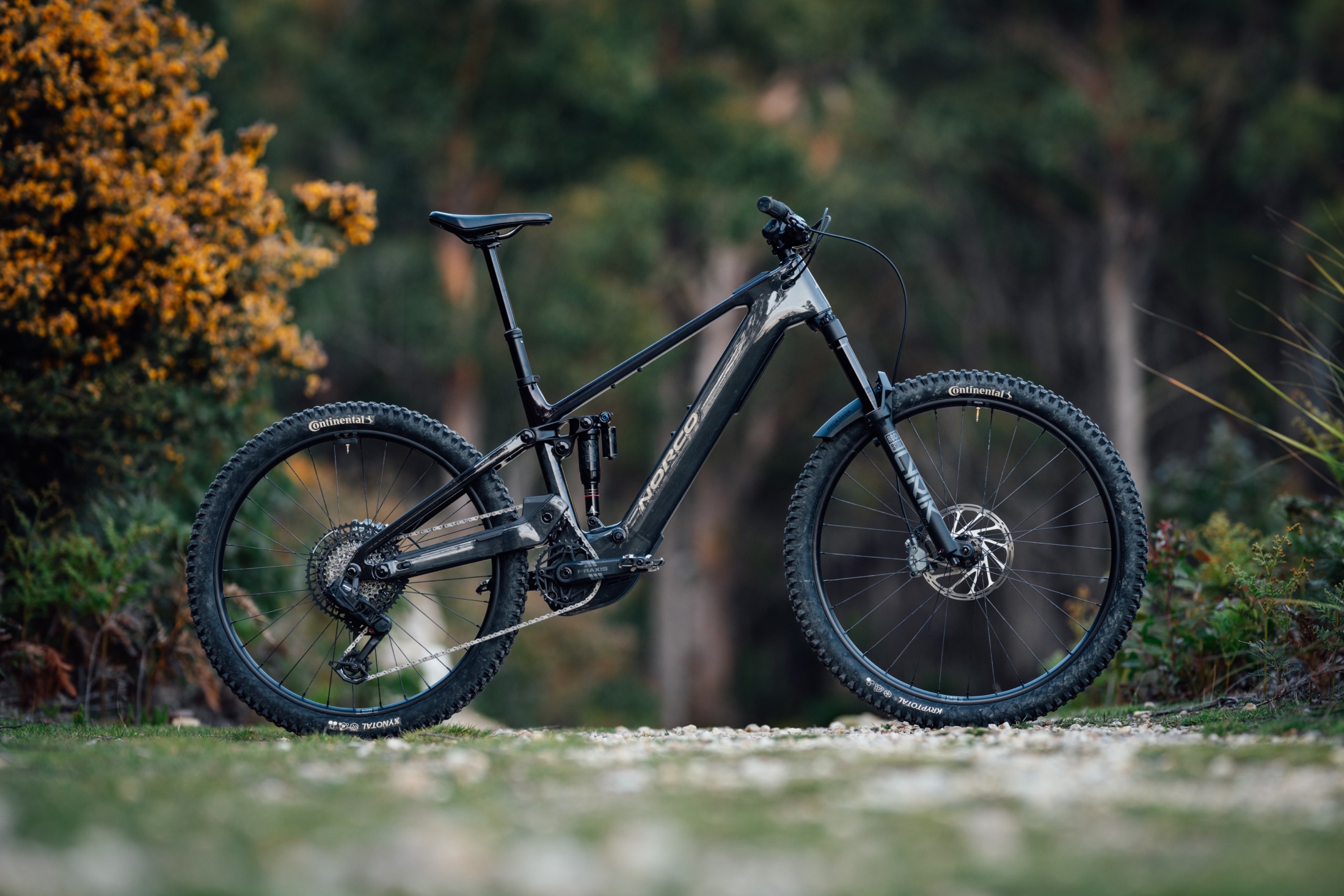 Norco’s fourth-generation Sight VLT CX brings a lighter chassis, huge battery and refined high-pivot suspension together in one seriously capable all-mountain e-MTB.
Norco Sight VLT CX | best high-pivot all-rounder
Highs: Big-range 800Wh battery, smooth yet supportive high-pivot suspension, rare combo of full-power grunt and genuinely playful handling
Lows: Charger port cover is really hard to open
The fourth-generation Norco Sight VLT CX is a full-power all-mountain e-MTB that finally makes high-pivot travel feel fun again. It keeps Norco’s VPSHP layout with a mullet wheel setup and 160/150mm travel, but wraps it in a far sleeker carbon frame and pairs it to Bosch’s latest Performance Line CX motor and an 800Wh PowerTube battery.
On the trail, the Sight VLT CX feels noticeably lighter and more animated than the old Sight VLT. The rear wheel tracks back and out of the way when you’re ploughing through rocks, giving you that classic high-pivot stability and traction, but the bike doesn’t feel like a couch. It carries speed like a big brawler, yet still pops, manuals and changes lines in a way most full-power rigs simply don’t.
Range is a huge part of the appeal here. Between the 800Wh battery and the Bosch CX’s efficient support modes, it’s the sort of bike you can happily point at long alpine days or massive e-shuttle missions, and still have juice left for one more lap. If you’re chasing a high-pivot e-MTB that can actually be ridden all day and still feels playful when you point it downhill, the Sight VLT CX belongs on the shortlist.
Read the full Norco Sight VLT CX review here.
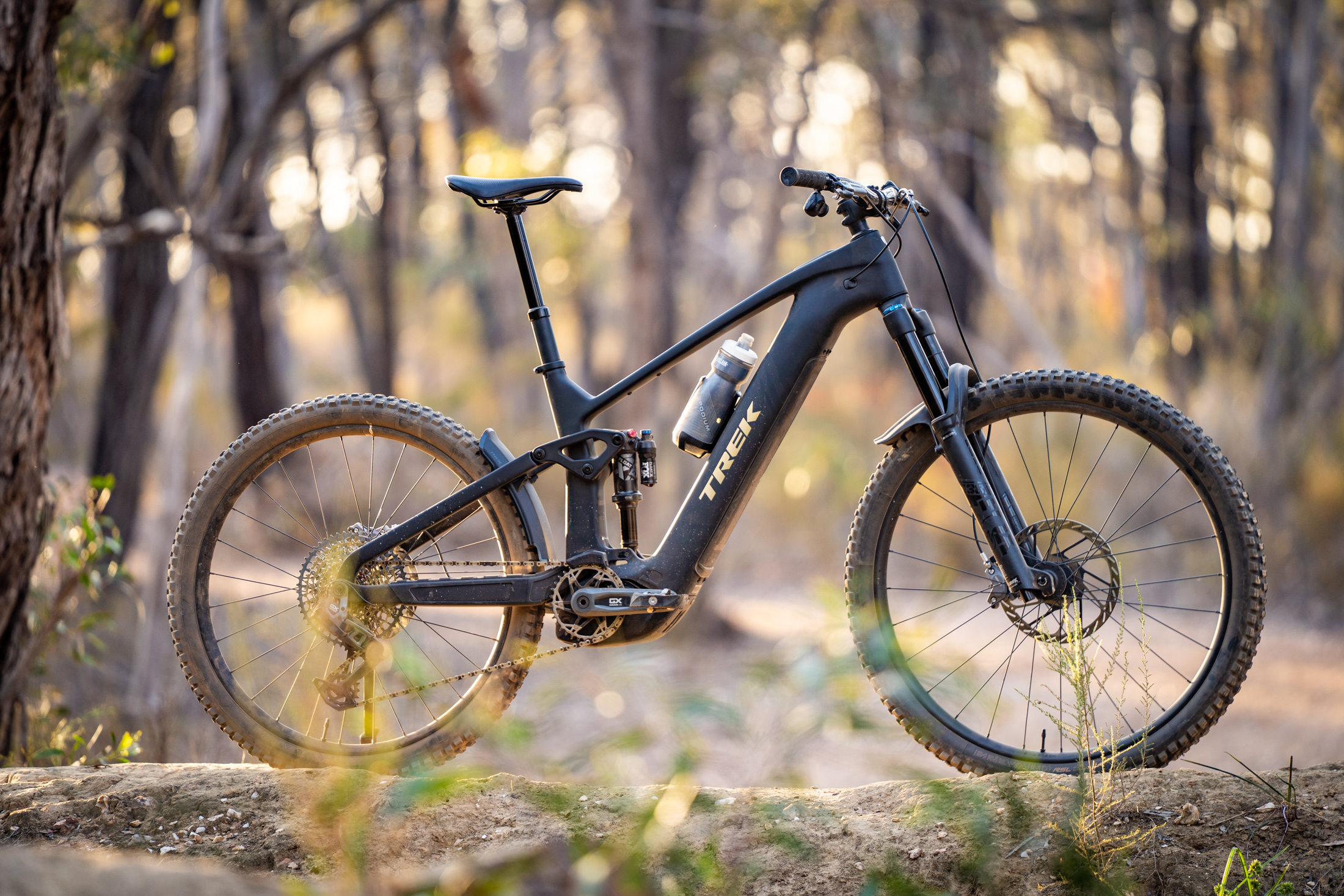 The updated Trek Rail+ gets a sleek new frame and the latest Bosch CX Gen 5 motor.
Trek Rail+ | plush and poppy full-power all-rounder
Highs: Beautifully balanced suspension that’s plush & poppy, impressive pricing
Lows: Big gap between M & L sizes, fixed rear centre length across all sizes
The latest Trek Rail+ is one of the best-handling full-powered e-MTBs we’ve tested. For 2025 it gets a brand-new frame in alloy and carbon variants, purpose-built around a mullet setup, apart from the size Small, which runs 27.5in front and rear, and 160mm of travel at both ends.
The suspension is incredibly smooth and active, whether you’re braking hard or pedalling through rough rock gardens. The extra 10mm of rear travel over the previous Rail gives it an even floatier ride quality, yet it still responds well to rider input.
The dedicated mullet layout, 64.5° head angle and low bottom bracket make the Rail+ both playful and stable. The 27.5in rear wheel helps it change direction easily, while the overall chassis feels solid and planted at speed.
Read the full Trek Rail+ review.
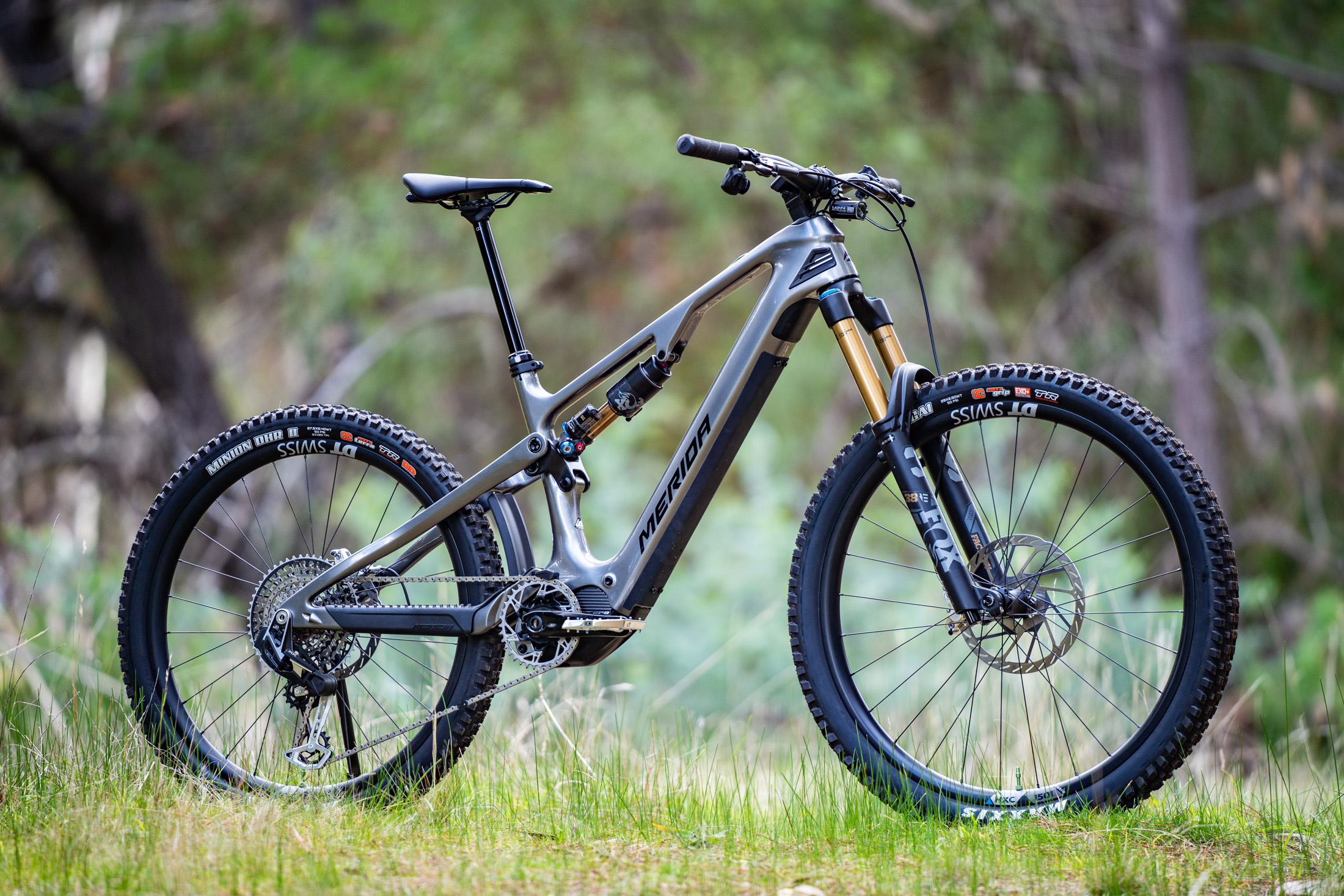 The Merida eOne-Sixty has been wildly popular, and the latest iteration only improves it.
Merida eOne-Sixty | big-travel all-rounder
Highs: Impressively agile for a big-travel e-MTB, adaptable suspension & wheelsize, broad price range
Lows: Not quite as poppy as the previous version, headset cable routing
The Merida eOne-Sixty is a familiar sight on Australian trails and has long been one of the most popular e-MTBs on the market. Since we first rode one back in 2018, it’s impressed us with its smooth suspension, user-friendly handling and sensible component choices.
For 2024 Merida turned the volume up, bumping travel to 170mm front and 174mm rear. It still uses a mullet setup, but a flip chip in the linkage allows you to run a 29in rear wheel too. There are alloy and carbon versions, both powered by the Shimano EP801 motor. The carbon models get an integrated 600Wh battery, while the alloy bikes use a removable 750Wh battery. All are compatible with Merida’s 360Wh range extender.
On the trail, the latest eOne-Sixty continues to be one of our favourite e-MTBs. The extra travel and updated kinematics boost its technical capabilities, offering more grip and stability in chunky terrain. It still handles brilliantly thanks to the mullet layout and supportive suspension platform, making it surprisingly versatile and fun for such a big bike.
Read our full Merida eOne-Sixty review.
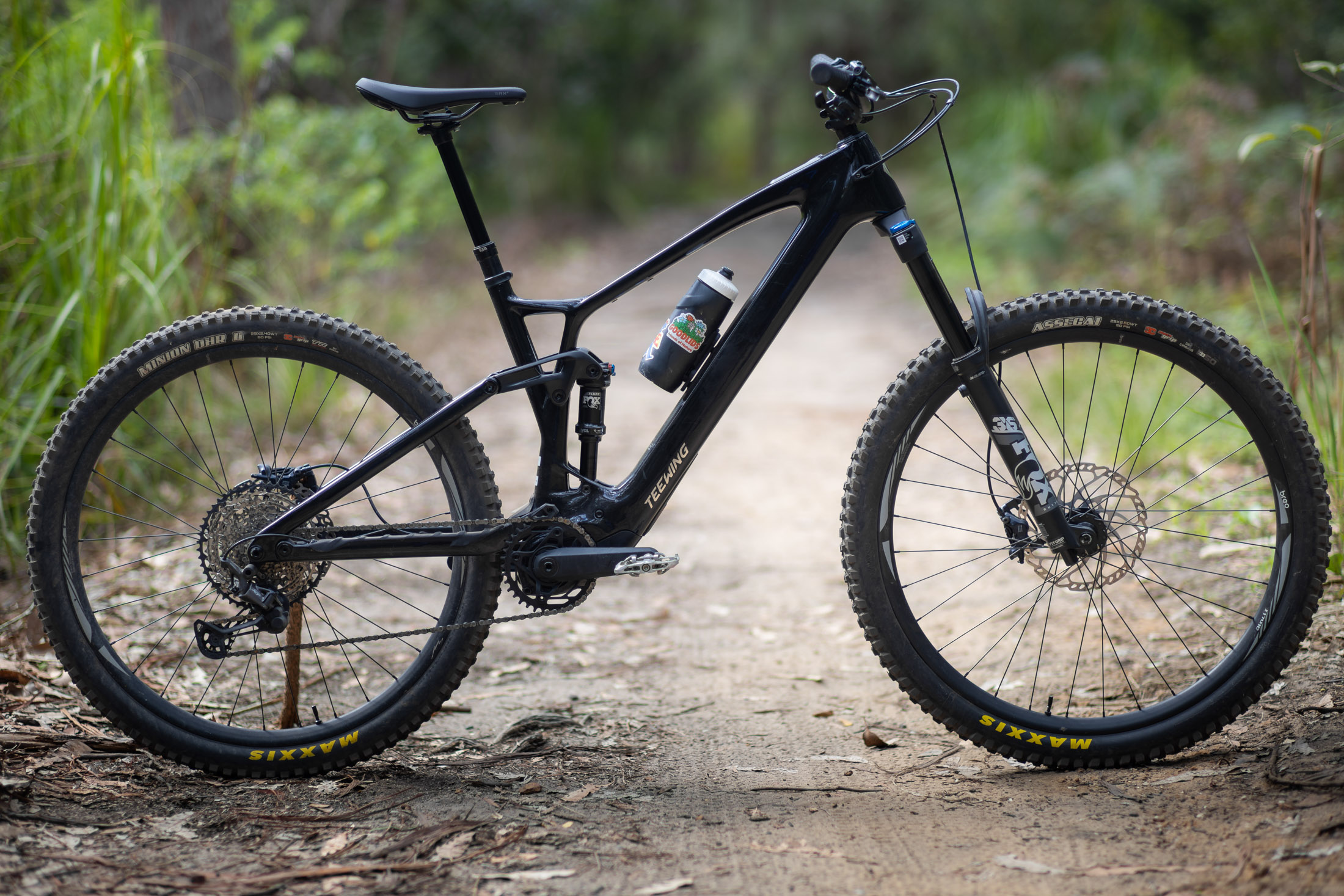 The Teewing ticks a lot of boxes on paper. Tom set out to see how it all translated in the real world.
Teewing Turbo Force XT | best value Avinox M1 trail e-MTB
Highs: Feels light & playful on the trail and weight is well disguised, excellent value for money, easy to ride & simple to maintain
Lows: Rear EXO+ tyre tore on the first ride, fit may not suit everyone, only three sizes & no geometry adjustments, noisy chain slap
The Teewing Turbo Force XT has drawn plenty of attention, especially the XT model Tom tested. Starting at $7,999 AUD, it proves that a fully equipped, full-power e-MTB of this calibre can now compete on price with many non-powered bikes in the same category. There’s no corner-cutting either. The Avinox M1 motor is among the best currently available, even with the newer M2 and M2S systems now entering the conversation.
The bike is built around 150mm of rear travel, paired with a 160mm fork and the Avinox M1 drive unit. The competitors that come to mind are the Amflow PL, Specialized Levo 4 and Norco Sight VLT CX. All strong players in an increasingly competitive do-it-all e-MTB category.
The Avinox M1 is powerful yet relatively light, and the hype is justified. This drive unit is seriously impressive. It delivers 105Nm of continuous torque, with a 120Nm Boost available for short bursts of up to 60 seconds, 1000W of peak power, all while weighing just 2.58kg.
Tom managed to get 1640m of climbing from a full battery. It’s worth noting this was done entirely in Turbo mode, with heavier DH-casing tyres fitted. He weighs 76kg, and the terrain was very steep, so the motor was working hard on the climbs.
This is a true trail bike, not just an e-MTB version of one. It has that lively, fast-rolling character often praised in bikes in this travel bracket. In the 21kg range, it’s already a light full-powered e-MTB, but on the trail, it feels even lighter than the numbers suggest.
Whenever a new brand enters the market, there are always plenty of questions, especially when the pricing is very competitive. With the Teewing Turbo Force, however, the hype and intrigue are justified. Teewing has produced a well-rounded package, and most importantly, the bike is genuinely enjoyable to ride.
Read the full Teewing Turbo Force XT review here.
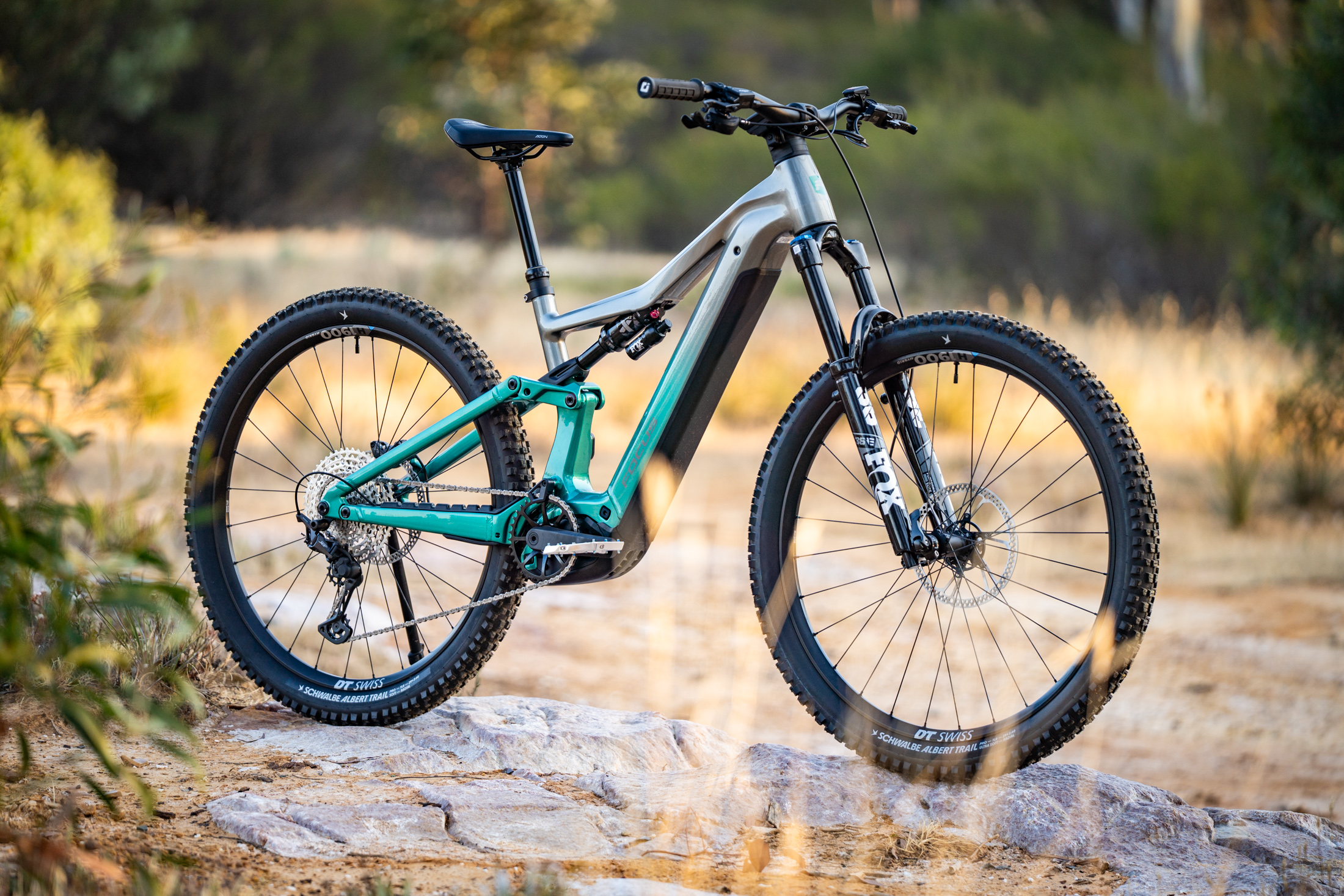 The latest Focus JAM² has introduced a host of updates that have improved the suspension performance, handling and overall aesthetic.
Focus JAM² 6.9 | alloy Bosch trail e-MTB
Highs: Fun & agile handling, smooth suspension performance, sturdy chassis & DT Swiss wheels, TRP brakes deliver excellent modulation & power, supple & high-traction Schwalbe Radial tyres
Lows: No mullet compatibility, chainstays are too long for the Small, sluggish dropper post, bulky user interface & busy headset
Whereas the SAM² is the big travel enduro bike, the Focus JAM² is designed for all-round trail riding. With a 160mm travel fork and 150mm of rear travel, it sits in a similar space to the Specialized Levo, Trek Rail+, Merida eOne-Sixty, Amflow PL Carbon and Santa Cruz Vala.
The headline upgrade is the Bosch CX Gen 5 motor. Out of the box this delivers 85Nm of torque and 600W of peak power, though you’re only a free firmware update away from boosting those numbers to 100Nm and 750W, if you so choose.
Electrons are supplied by a 600Wh battery, which is 1.4kg lighter than the old 750Wh battery used in the previous JAM². It’s also considerably smaller, which is why the new bike looks so much sleeker.
Confirmed weight for our Focus JAM² 6.9 test bike is 24.9kg. That’s a bit less than claimed, which Wil believes is from removing the inner tubes and setting the tyres up tubeless.
At 24.9kg, it is of course no lightweight, but it doesn’t feel that heavy on the trail. It is very well balanced, especially on the Medium size frame where there’s almost a perfect 50:50 split between the rear centre length and reach.
Once Wil had everything dialled in, he began to really enjoy his time with the Focus JAM². It is a great all-rounder that’s fun and easy to ride across a wide variety of terrain. The suspension performance is outstanding, with a plush and traction-rich feel, while the smaller battery helps keep the bike lively compared to bigger battery rivals.
The latest Focus JAM² is a pleasing evolution of a platform that has benefitted from 10 years of experience behind it. Compared to the previous model, the new bike offers better weight distribution courtesy of a smaller battery. The handling is excellent for all-round duties, and the suspension performance is outstanding.
Read the full Focus JAM² 6.9 review here.
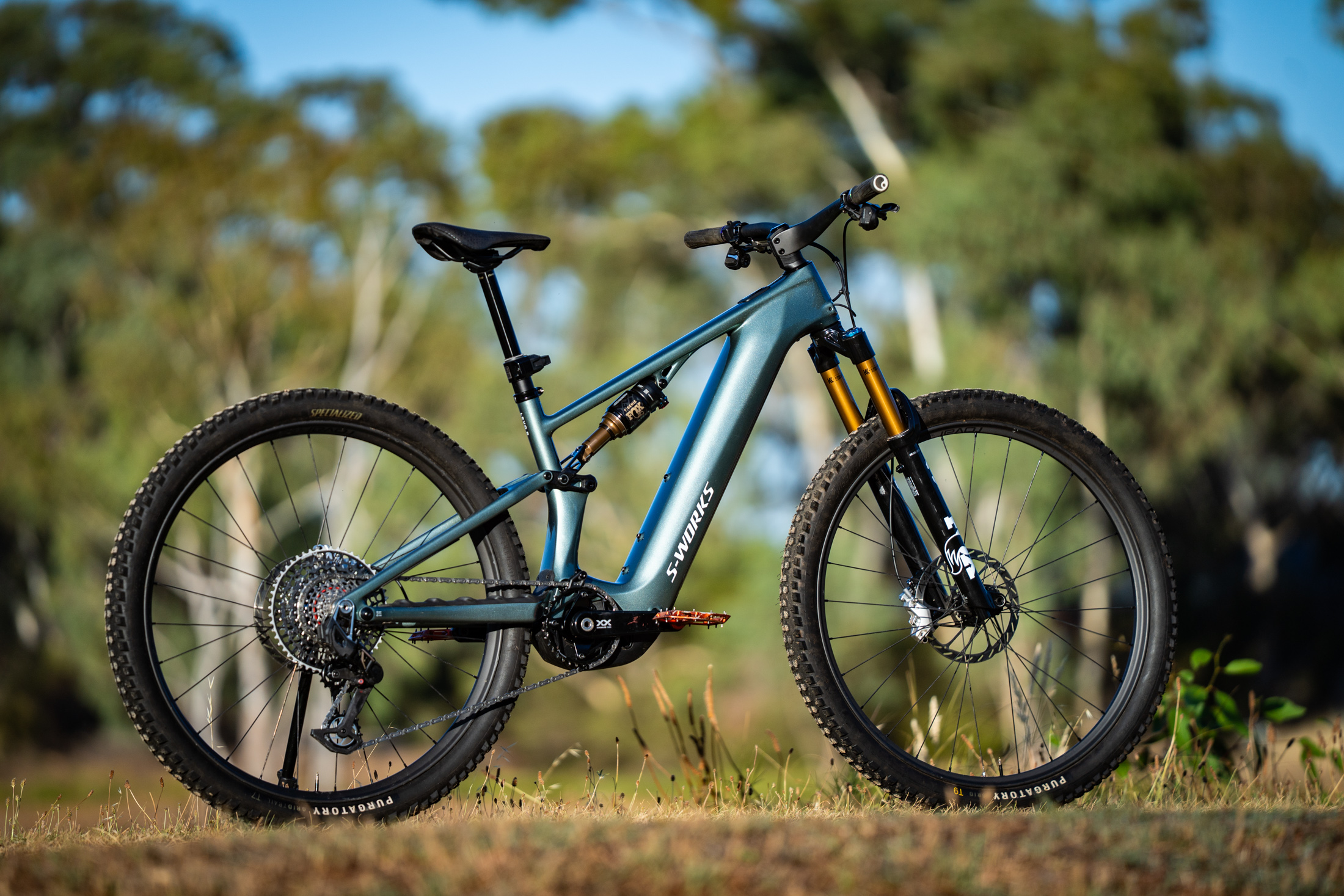 The Specialized Levo R is lighter and sportier, but its short-travel concept left us scratching our heads.
Specialized Levo R | short-travel full-power e-MTB
Highs: Smooth & responsive suspension performance, balanced geometry, six frame sizes, quiet and easily tuneable motor, huge battery capacity, excellent app and user interface
Lows: Too heavy for a short travel e-MTB, no mullet option aside from smallest size, brakes lack sustained power for long descents, lightweight tyre casings, short dropper post, pricing is high
Brand new for 2026, the Specialized Levo R is a shorter travel variant of the Levo 4. While the concept has merit, Wil reckons it needs to be lighter to truly maximise its intent.
Designed for XC and trail riding, the Levo R features a unique chassis that’s equipped with a 140mm travel fork, 130mm of rear travel and dual 29in wheels. The exception is the smallest S1 size, which comes as a dedicated mullet with a 27.5in rear wheel.
Powering the Levo R is the same Brose-manufactured 3.1 motor that’s used in the Levo 4. This motor was recently treated to a free firmware update that has provided a noticeable bump in support. The standard motor now reaches 105Nm of torque and 810W of peak power, while the S-Works version lifts those figures to 111Nm and 850W.
You’ll also find the same 840Wh battery, which can be easily removed from the side of the downtube. Those wanting maximum battery capacity will be happy to know that the Levo R is compatible with Specialized’s 280Wh range extender, taking total capacity to a whopping 1120Wh.
Confirmed weight for our Specialized S-Works Levo R test bike is 21.26kg without pedals and with the tyres set up tubeless. That’s reasonable for a full-power e-MTB, and it’s nearly 2.4kg lighter than the regular S-Works Levo. However, given the reduction in travel and weight-conscious build kit, it’s not as light as we were expecting.
Riding the Specialized Levo R for the first time, it was apparent this would be a very different experience to the regular Levo 4. With less travel and weight, it has a noticeably sportier ride quality. You’ve still got that powerful 3.1 drive unit, but the lighter wheels and faster-rolling tyres mean acceleration is punchier.
The short travel platform is also more responsive than the bigger, gooier Levo 4. It allows you to pump the bike more effectively through rolling terrain, where you can actually build speed without sacrificing as much input energy.
As Wil found out, the Levo R can absolutely rip on the right terrain, but its limitations show when the trail gets steeper and rougher. The relatively high weight and dual 29in wheels made it less agile than expected from its 130mm travel platform. The brakes lack outright power for flat-out descending speeds, which also had him wishing for burlier tyres and a longer dropper post.
For some folks, the Levo R could be just what they’ve been waiting for. On the right terrain, it not only makes sense, it absolutely rips.
Read the full Specialized Levo R review here.
Best long-travel & gravity e-MTBs 2026
These are the bigger, burlier e-MTBs that are built for rough descents, bike park laps and self-shuttling. They are heavier, tougher and more descending focused than the average trail e-MTB.
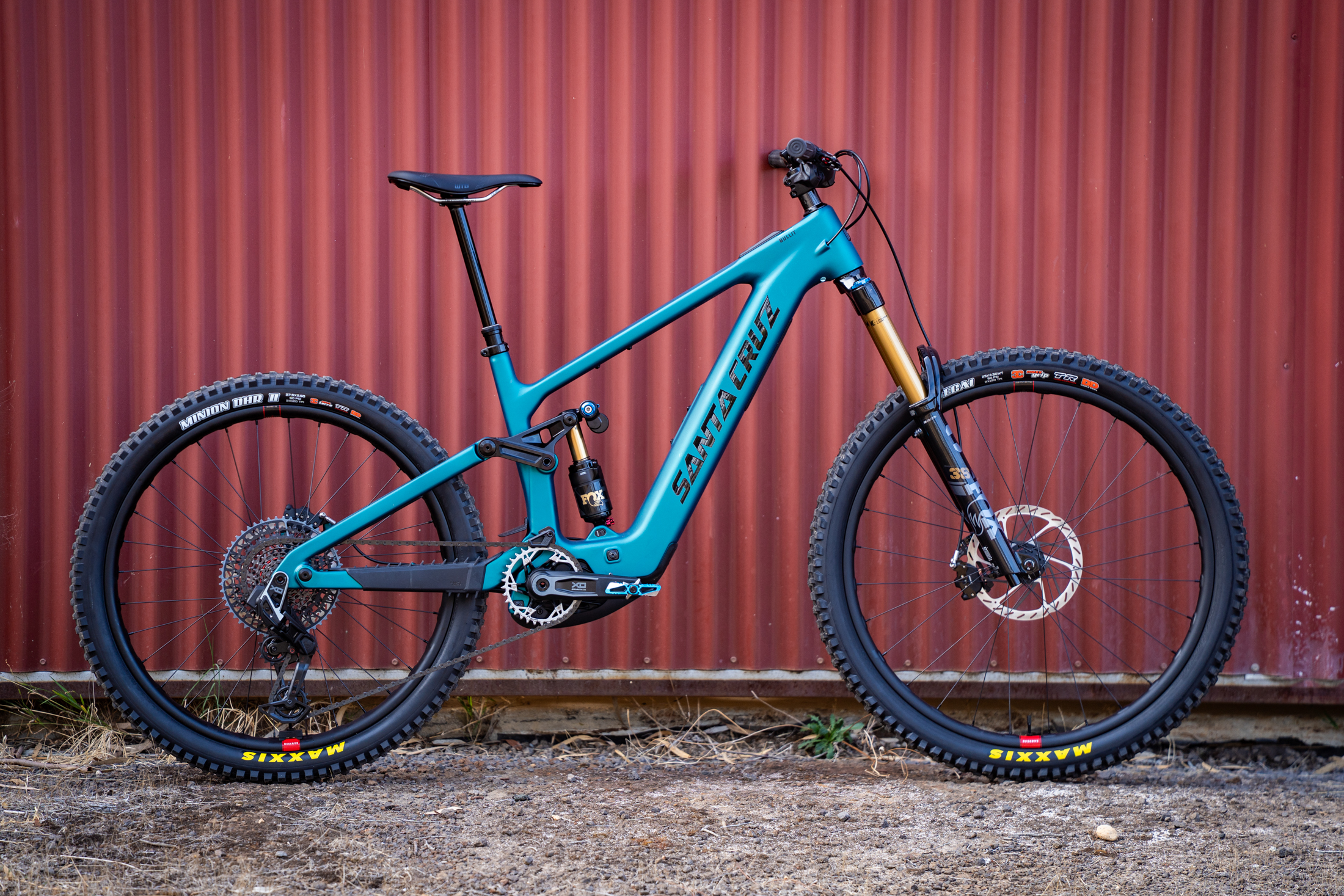 The Santa Cruz Bullit saw a major update in 2025, with a new four-bar suspension platform and Bosch CX Gen 5 motor.
Santa Cruz Bullit | best self-shuttling gravity e-MTB
Highs: Wildly capable on the roughest and steepest terrain, yet surprisingly well-rounded
Lows: Expensive, no wheelsize flexibility, 600Wh battery may limit big days
The Santa Cruz Bullit is the brand’s long-travel, full-powered e-MTB, a modern reincarnation of its old freeride behemoth. For 2025 it received a ground-up overhaul, swapping VPP for the same four-bar layout we see on the Vala and adopting the Bosch CX Gen 5 motor.
Built around a full carbon chassis with no alloy option, the Bullit packs a hefty 170mm of travel front and rear and rolls on a mullet setup with a 29in front wheel and 27.5in rear. Santa Cruz sticks with a 600Wh battery, claiming the weight saving over the larger 800Wh unit benefits handling.
The Bullit is an exceptional self-shuttling gravity rig. It offers more stability and grip than the Vala, and those 170mm of plush suspension let it gobble up steep, technical terrain with ease. If your priority is descending at warp speed but you still want a bike you can ride all day, this is one of the best e-MTBs for the job.
Read the full Santa Cruz Bullit review.
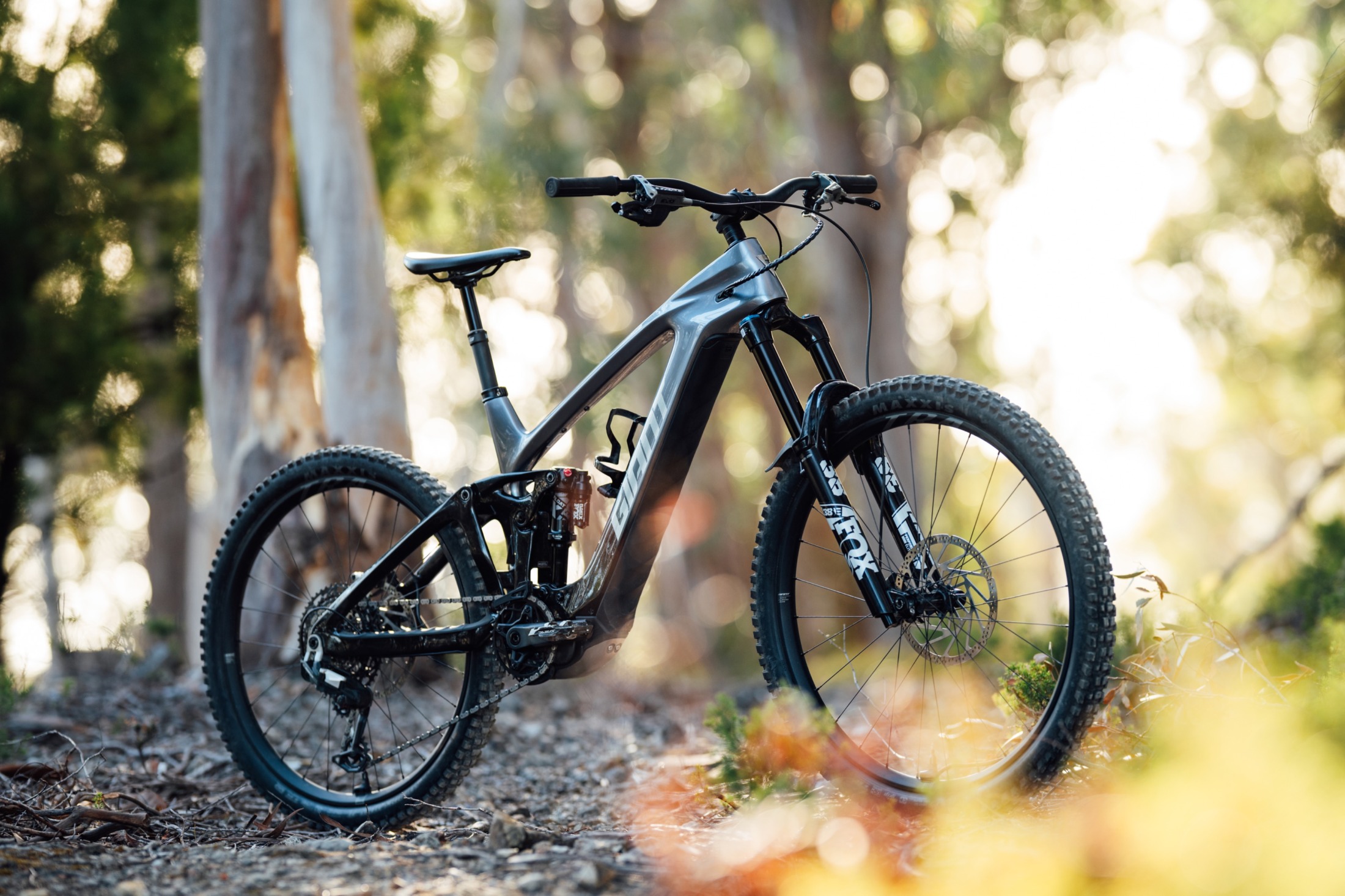 The latest Giant Reign Advanced E+ is big, burly and far more versatile than its numbers suggest, a long-travel e-MTB that corners shockingly well.
Giant Reign Advanced E+ | best long-travel descender
Highs: 180/170mm travel with classic Maestro composure, powerful new 48V SyncDrive Pro 3 motor, flip-chip geometry and reach adjust make it surprisingly versatile
Lows: Still a big bike to muscle around on mellow trails, E+ system and app add some setup faff, pricing nudges into premium territory
On paper the Giant Reign Advanced E+ looks like a park-only bruiser: a full carbon chassis, 180mm fork, 170mm of Maestro rear travel and Giant’s new 48-volt SyncDrive Pro 3 motor. In reality it’s a lot more than a point-and-plough sled. The updated frame is notably lighter than the previous Reign E, and the suspension kinematics give you that bottomless Maestro feel without turning the bike into a deadweight in tighter, flatter terrain.
The new motor system is a big part of the story. SyncDrive Pro 3 delivers up to 800W of peak power from a 560Wh EnergyPak battery, with the option to add a 280Wh range extender for monster days. Support stays consistent at higher cadences, and the whole system runs at lower amperage thanks to the 48V architecture, which helps with efficiency and heat management on long, steep runs.
What surprised us most is how willing the Reign Advanced E+ is to carve and pop for something with this much travel. The flip-chip at the linkage and the reach-adjust headset let you tame the geometry for tighter trails or slacken and lengthen things for big-mountain and bike-park riding.
Read our full review of the Giant Reign Advanced E+ here.
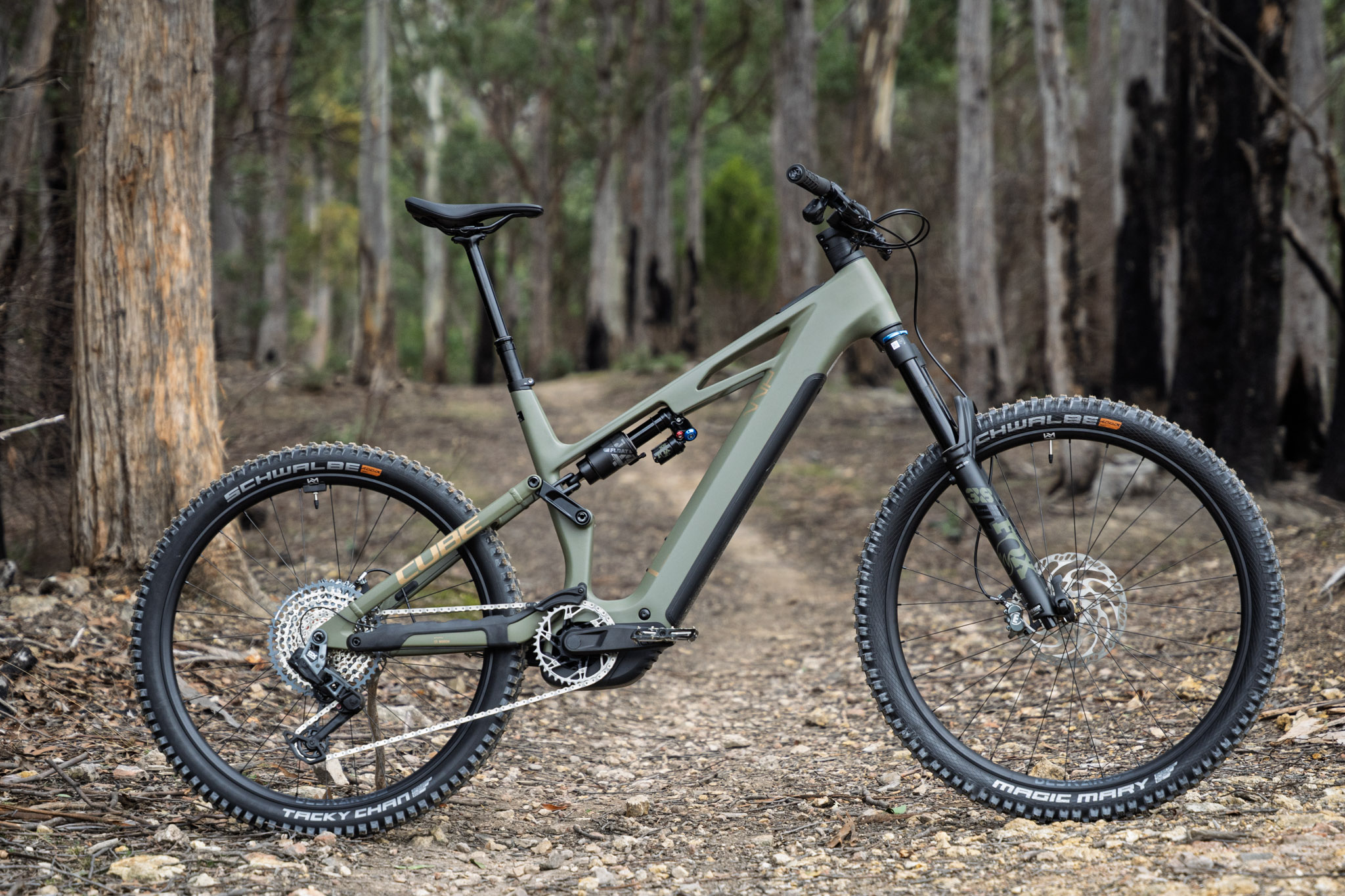 It’s big, it’s green, and it’s incredibly stable.
Cube Stereo Hybrid One77 HPC | hilariously stable plough bike
Highs: Gooey, traction-rich suspension, balanced geometry that puts you in a strong attack position
Lows: Headset cable routing, tricky to manoeuvre in tight terrain
The Cube Stereo Hybrid One77 HPC replaces the older Hybrid 160 and brings Cube’s long-travel e-MTB into the modern age with a mixed wheel setup, 170mm of travel front and rear, the Bosch CX Gen 5 motor and an 800Wh battery.
The dialled reach, tall stack and relatively conservative head angle in the Moderate setting make it a versatile bike for a variety of trails. The riding position is centred, giving you a great platform to attack steep descents and rough terrain.
The suspension tune leans hard towards traction and bump absorption over pop, with a plush, gooey feel that makes it ridiculously composed in rough, high-speed sections. The Fox X2 shock and overall kinematics combine to create a bike that wants to plough through whatever’s in front of it.
Read our full Cube Stereo Hybrid One77 review.
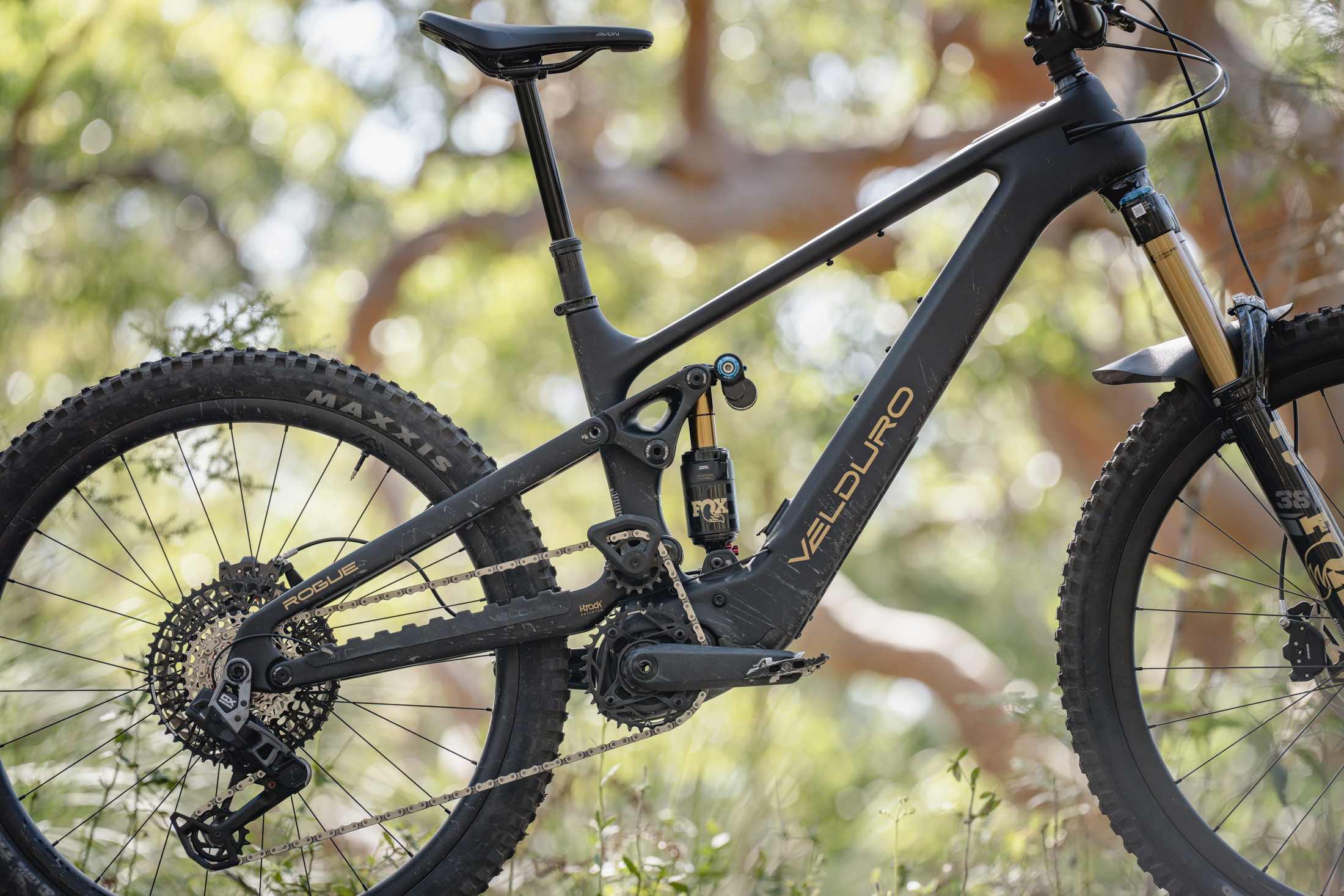 Big travel, a powerful Avinox motor and a hefty battery. While we’ve tested Avinox bikes before, the Rogue feels like a whole new beast.
Velduro Rogue R | self-shuttling mini-DH e-MTB with Avinox M1 power
Highs: Top notch DH capability, spec is well compiled for enduro/DH riding, Avinox drive unit complements the bike well, frame only options are rare for e-MTBs
Lows: Some limits on shock compatibility & clearance, can be a lot to handle on steep descents, motor makes a subtle clacking sound in rough terrain
Long travel, a powerful motor and a big battery. That’s the e-MTB formula plenty of riders are chasing right now, and judging by the questions Tom has been getting on the trail, the Velduro Rogue has definitely caught people’s attention.
The Rogue we tested came with mixed wheels, 165mm of rear travel and a 170mm fork in the standard flip-chip position. But that’s just one of several possible setups, with multiple travel and wheel-size options available.
It may be a new brand, but the bike feels well-refined. The high-pivot suspension, built around the I-Track system, rides great. Neat finishing touches like the thick chainstay protector and cable port plugs that keep moisture and dirt out show real attention to detail.
The Avinox M1 drive unit is arguably one of the most influential MTB components in recent years. There’s no shortage of power here, with 105Nm of torque, a 120Nm Boost mode for up to 60 seconds and peak output of 1000W. The Rogue comes standard with a large 800Wh battery, which Tom found ideal for lapping descents under his own steam.
The newer Avinox M2 and M2S systems push those headline numbers even further, but the Rogue we tested is an M1-powered bike, and that system already provides more than enough grunt for the job.
At 23.1kg, the Rogue is on the lighter side for a full-power e-MTB with this much travel and such burly components. Better still, it hides that weight well in most situations. It never feels especially cumbersome, and it’s surprisingly easy to get airborne for such a big bike.
Straight off the bat, Tom thinks this is a great enduro bike. Forget about the motor for a moment; the bike itself rides very well. It’s easy to get along with and, put simply, an absolute blast to ride.
As it comes stock, Tom wouldn’t really classify the Rogue as an all-mountain e-MTB so much as a mini DH bike. That’s not a negative, but it’s worth mentioning. For riders who aren’t regularly tackling the gnarliest trails, it may feel a bit hefty straight out of the box. But if your priority is descending hard and getting back to the top without needing a shuttle crew or chairlift, the Velduro Rogue makes a lot of sense.
Read the full Velduro Rogue R review here.
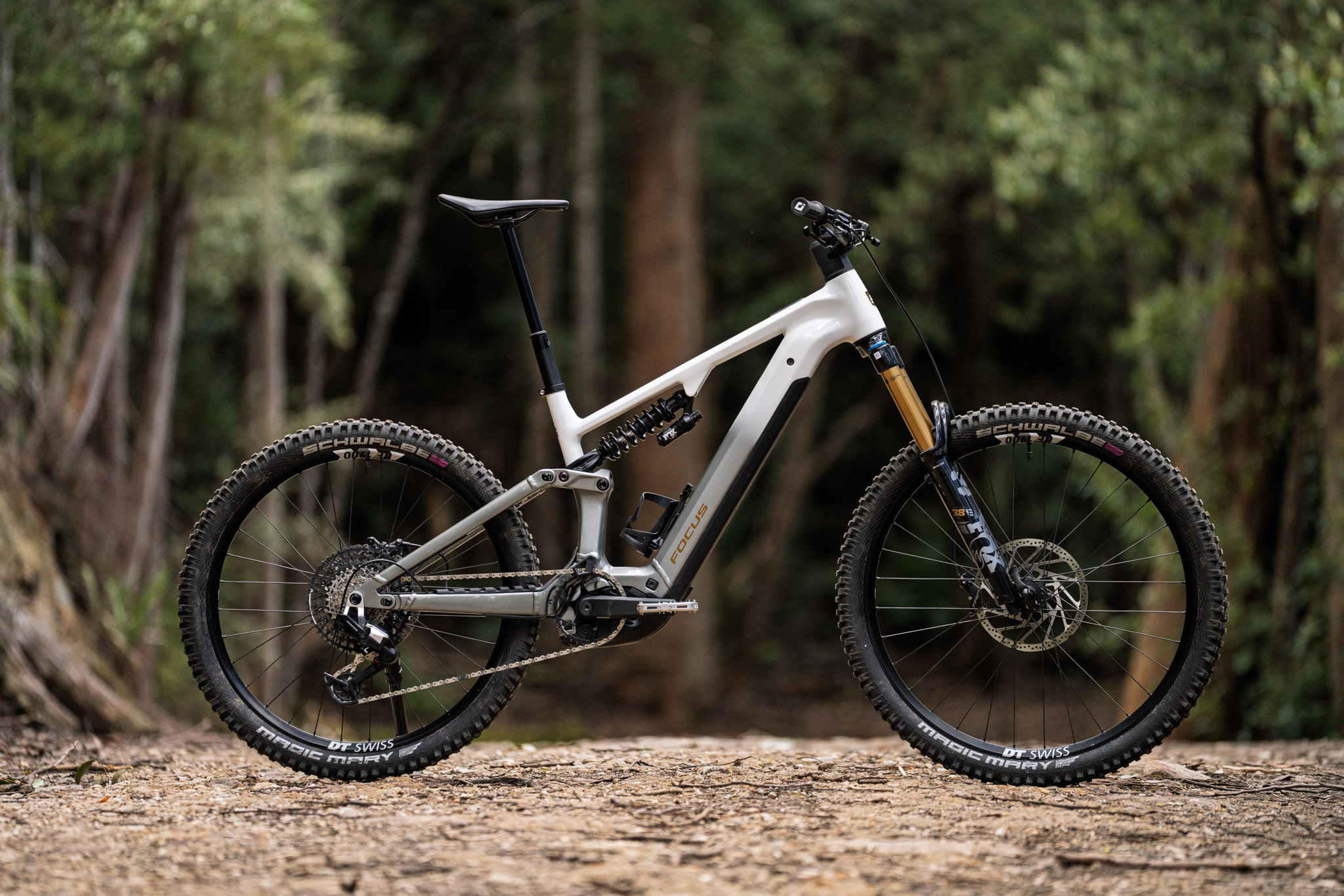 A sleek new frame, party-sized rear wheel, updated geometry and a new motor for Focus’ burliest e-MTB.
Focus SAM² 6.9 | unapologetically burly Bosch CX e-MTB
Highs: Planted, muted ride feel, low entry price for Bosch CX performance & reliability, well considered build specs
Lows: Weight makes it difficult to manoeuvre, headset cable routing is frustrating to work on
German brand Focus gave its burliest e-MTB, the SAM², a refresh in late 2025. There’s an updated motor package, improved adjustability, and a mixed wheel platform, all the right ingredients for a rowdy time.
The biggest news with the updated SAM² is the swap to a mixed wheel-only platform. The previous iteration rolled on a pair of 29in hoops, with no adjustability for the party-sized wheel out back.
The frame’s overall aesthetic has been refined, too, and we must admit it’s a sleek-looking rig. It’s no secret that the older generation SAM² was a bit of a tank, and this newer bike looks and feels much more refined overall.
The frame is only available in 7005 Aluminium, with no carbon fibre options in the lineup. Suspension-wise, there is 165mm of rear wheel travel out back, a 5mm decrease from the previous iteration. This is paired with a 170mm fork up front on all models.
Similar to the previous iteration of the SAM², this one is powered by the Bosch CX motor system, albeit the updated Gen5 version. It punches out 100Nm of torque and 750W of peak power, and the motor characteristics can be fine-tuned in the Bosch Flow app.
The SAM² is compatible with both the 600Wh and 800Wh Bosch PowerTube batteries, but in Australia, folks will only be able to buy the 600Wh flavour. The frame is compatible with the Bosch 250Wh range extender, which boosts the total capacity up to 850Wh, but it is an aftermarket purchase.
On the FlowHQ scales, the SAM², in size Large, set up tubeless and without pedals, weighed 26.44kg. That takes the crown as the heaviest e-MTB we’ve ever tested. Ouch.
While on paper and on the scales, the SAM² is a heavy bike, the low centre of mass and smaller 27.5in rear wheel do work in its favour. Thanks to its weight, the SAM² has a muted, planted ride feel. The coil shock out back is sensitive and supple, and paired with the Fox 38 up front, it wants to hug the ground and motor over everything.
The Bosch CX Gen 5 system as a whole is superb, delivering a natural yet boosted level of power and best-in-class response, especially under softer pedalling inputs. The overall integration of the Bosch system is well refined, the charger port is neat, and the cable management in the downtube is well secured.
Folks will quickly jump to conclusions based on the weight, but the SAM² isn’t designed to compete with the 20-22kg trail e-MTBs. It’s for smashing rowdy descents and ripping back up them, in a low fuss, highly reliable package. It’s composed and confident, and despite the weight, it suits beginner-to-intermediate riders looking to tackle gnarlier terrain who are searching for a rig that will help them, rather than punish them for mistakes.
Similar to the previous generation, the SAM² is well-suited to bike destroyers looking for a reliable, long-travel e-MTB. It’s also worth noting that the maximum rider weight is listed as 150kg, which is more than the 115-125kg limit we often see.
Read the full Focus SAM² 6.9 review here.
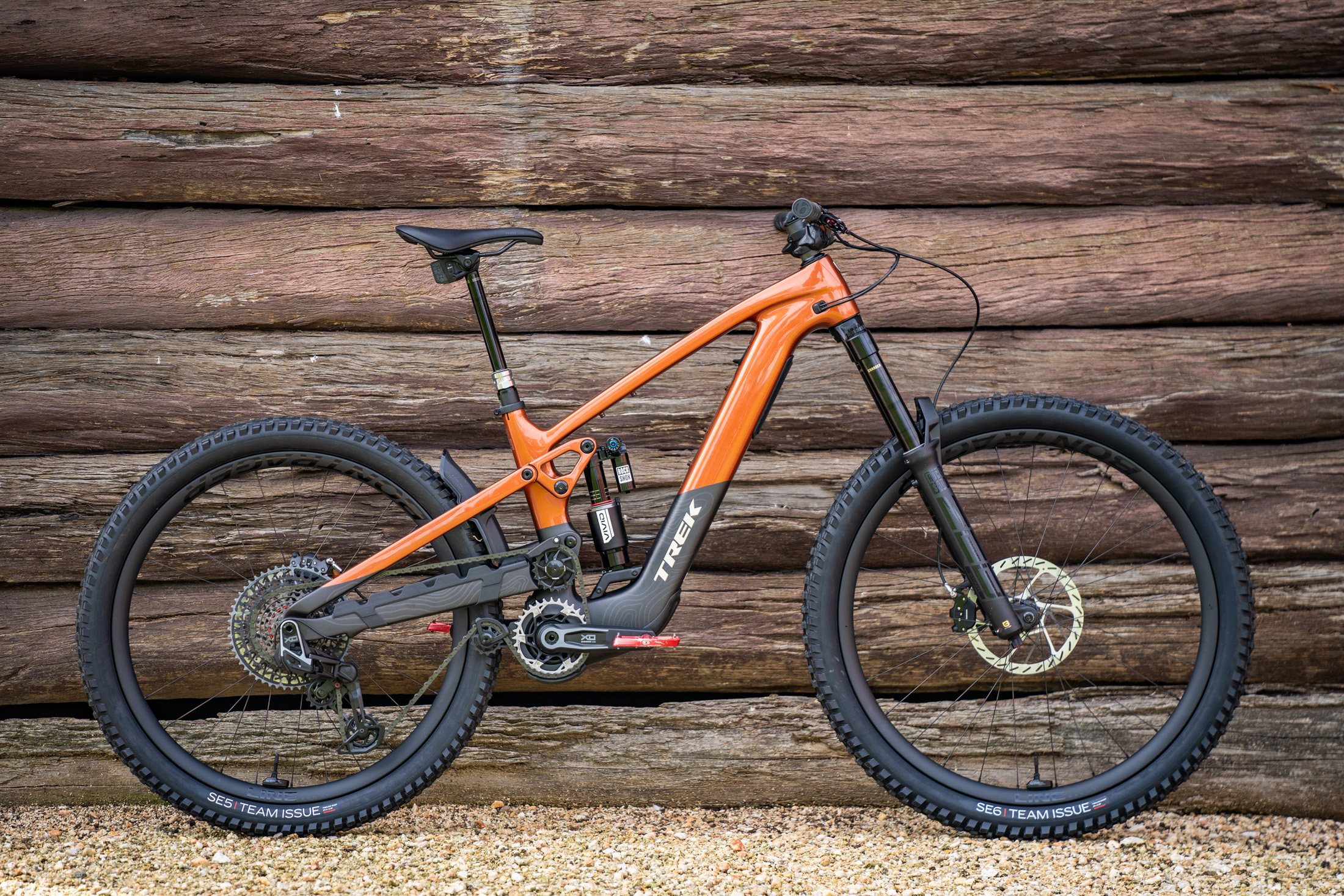 The Slash+ pairs long-travel suspension with the subtle TQ HPR50 motor for a remarkably capable lightweight e-MTB.
Trek Slash+ | long-travel lightweight e-enduro
Highs: Stupendously plush suspension, incredible composure at speed
Lows: Noisy chain slap, heavy for a “lightweight” e-MTB
The Trek Slash+ debuted in 2024 as the longest-travel electric mountain bike Trek has produced. Building on the lightweight Fuel EXe from 2022, the Slash+ keeps the compact TQ HPR50 motor but ups the battery to 580Wh and adopts the high-pivot suspension design from the analogue Slash.
On the trail, the standout feature is the suspension. The rear end devours rocks and roots, with enough rearward axle path to help the wheel move out of the way quickly, maintain momentum and keep the bike composed at speed. Despite the modest motor, the Slash+ feels like a true e-enduro machine, with the TQ system adding its trademark near-silent, natural-feeling assistance.
Best lightweight & SL e-MTBs 2026
Lightweight and SL e-MTBs aim to keep the ride feeling as close as possible to a regular mountain bike, while still giving you a useful boost on the climbs. They generally run smaller motors with lower torque, slimmer batteries and more conservative travel numbers, though there are now some seriously aggressive lightweight e-MTBs too.
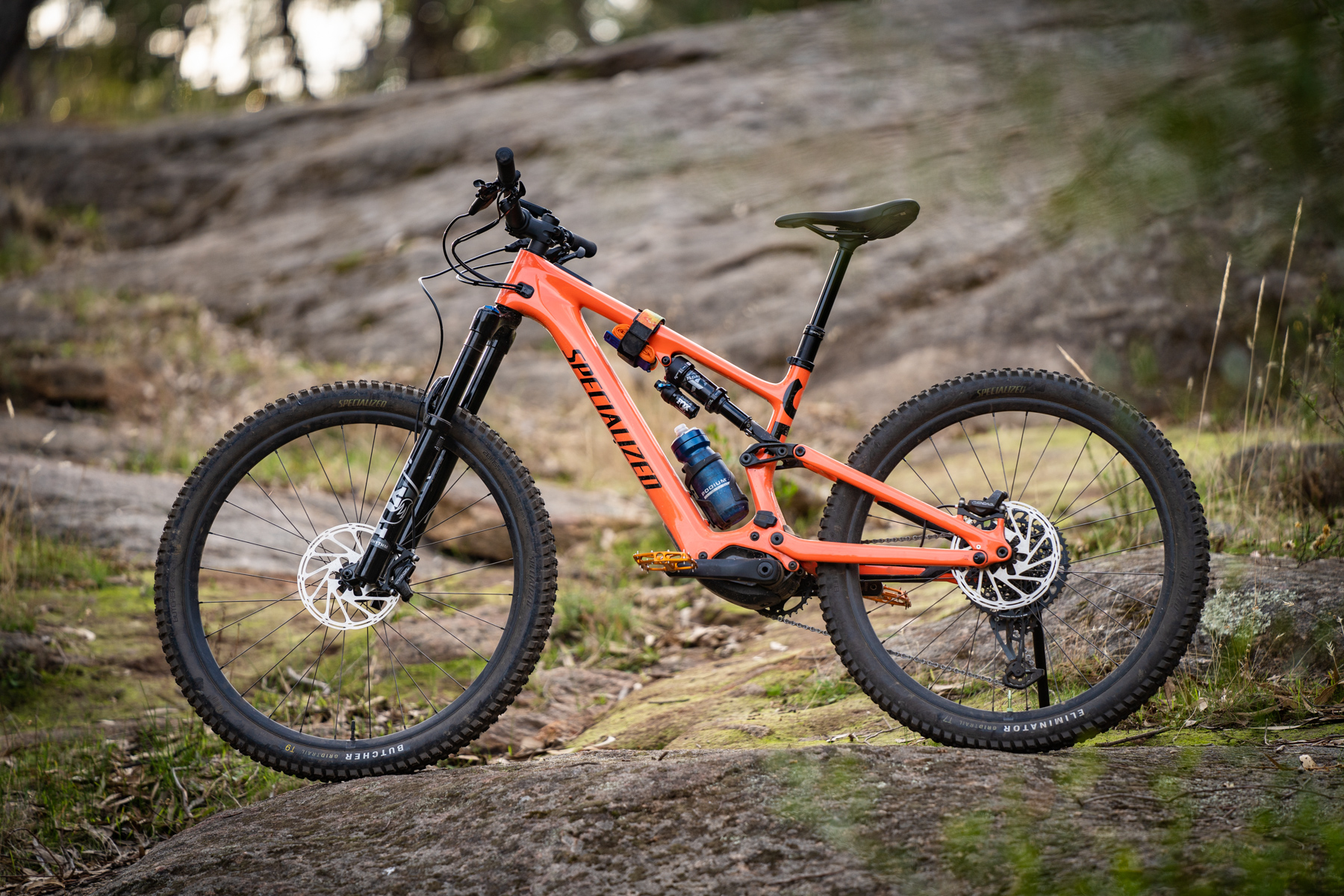 The original Levo SL legitimised the lightweight e-MTB category. The latest version is even better.
Specialized Levo SL | best lightweight e-MTB we’ve tested
Highs: Plush & responsive suspension, playful handling, powerful & efficient motor, brilliant user interface, highly adjustable chassis, huge size range
Lows: Dropper could be longer, kinked seat tube limits insertion, high price of entry
When Specialized launched the first Levo SL in early 2020, it effectively legitimised the lightweight e-MTB category. The second generation, released in 2023, aims higher again with more power, better integration and improved handling.
It uses a new FACT 11m carbon frame with updated geometry and a mixed wheel setup, 29in front and 27.5in rear, with a flip chip to run full 29in. The suspension kinematics have been reworked to provide better sensitivity and support.
The star of the show is the SL 1.2 motor, which uses a two-piece magnesium housing to reduce weight and noise. It delivers more torque and power than the previous SL unit, bringing it in line with other lightweight motors. The MasterMind TCU display is neatly integrated into the top tube, offering excellent control and tuning via the Mission Control app.
The Levo SL is fast, agile and remarkably capable for a small e-MTB, and we can comfortably say it’s the best lightweight e-MTB we’ve tested so far.
Read our full Specialized Levo SL review.
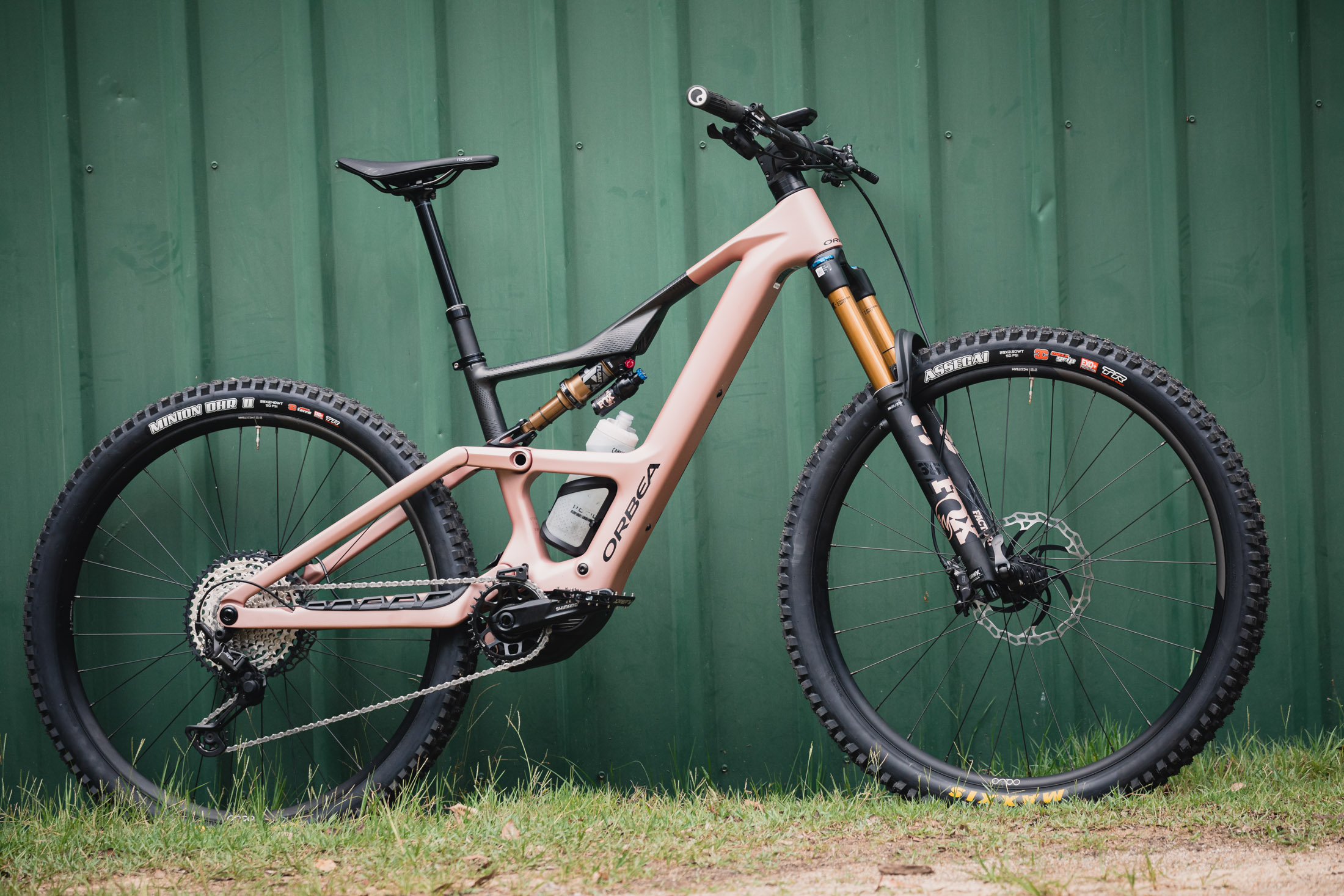 Orbea has expanded the Rise lineup with the longer travel LT and shorter travel SL.
Orbea Rise LT | lightweight aggressive trail e-MTB
Highs: Lightweight considering travel and battery size
Lows: Headset cable routing
The Orbea Rise LT is part of Orbea’s new generation of lightweight e-bikes, combining modern geometry, aggressive builds and low weights. The LT model we’ve tested runs 160mm front and 150mm rear travel, aimed at everything from flowy jump lines to rowdy enduro tracks.
Most models feature the Shimano EP801 RS Gen 2 motor, tuned in collaboration with Orbea to provide a more natural power feel. It can deliver up to 85Nm of torque, but the mapping is designed to keep the assistance feeling smooth and intuitive.
On the trail, the Rise LT feels much closer to an analogue enduro bike than a full-powered e-MTB. It’s lighter, easier to move around and quicker to change lines, while still giving you enough of a boost to stack more laps into a ride.
Read the full Orbea Rise LT review.
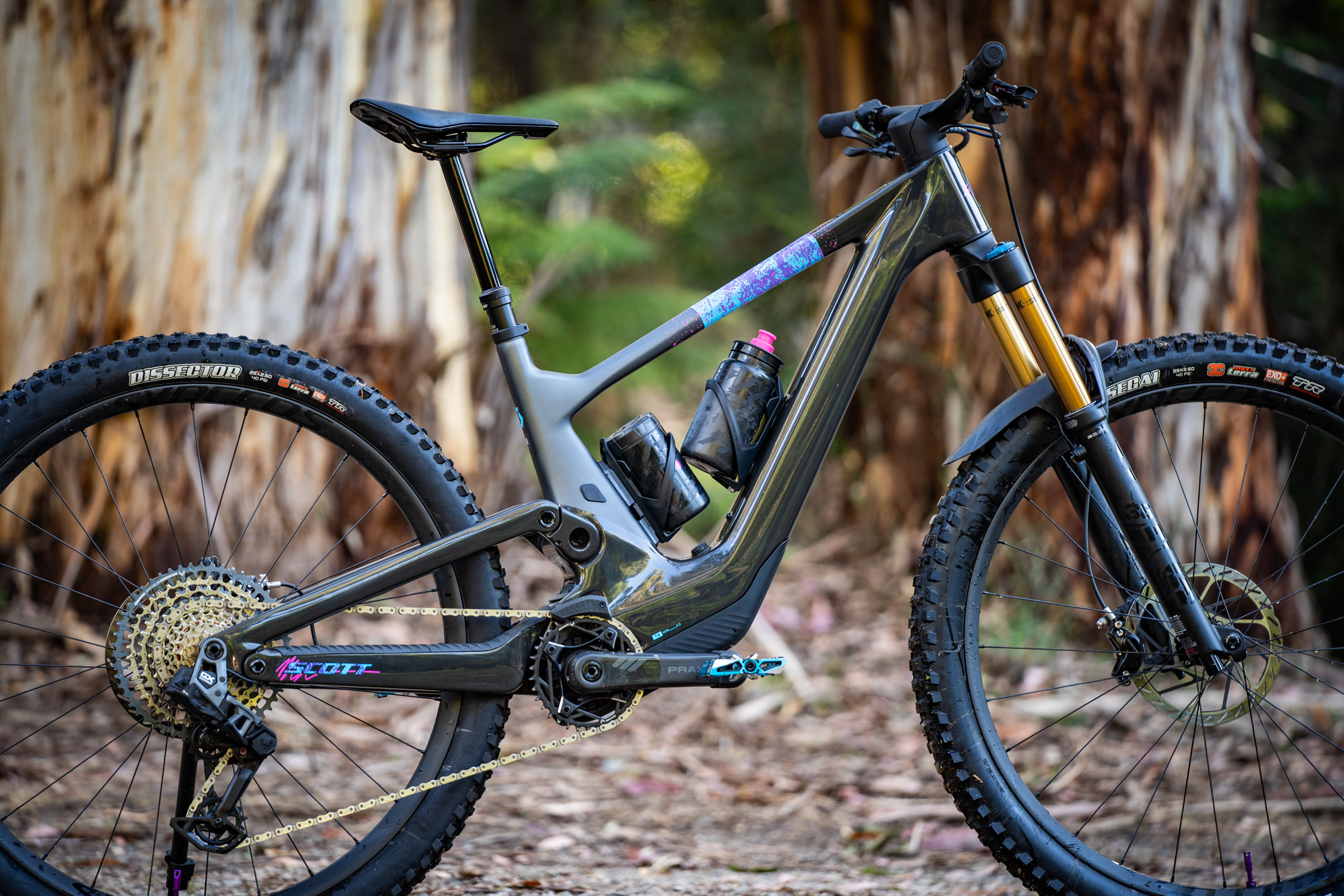 The level of integration on the Scott Voltage is impressive, but not everyone will love it.
Scott Voltage | aggressive lightweight e-enduro
Highs: Incredible carbon frame design, plush & supportive suspension
Lows: Integration won’t be for everyone, tight tyre clearance, expensive compared to rivals
The Scott Voltage is a lightweight e-MTB aimed at aggressive trail and enduro riding. It runs 29in wheels with 160mm front and 155mm rear travel, and uses the same stealthy in-frame shock layout as the Scott Genius.
It’s powered by the TQ HPR50 motor with 50Nm torque and a slim 360Wh battery, with the option to add a range extender. The integration is jaw-dropping, with the shock, linkage and much of the wiring and hardware hidden inside the downtube, though that also makes some servicing more involved.
On the trail, the Voltage feels like the aggressive lightweight e-MTB many riders have been waiting for. The raked-out geometry and supportive suspension make it incredibly capable when pointed downhill, yet the motor provides just enough assistance to get back to the top without turning it into a full-powered plough.
Read our Scott Voltage review.
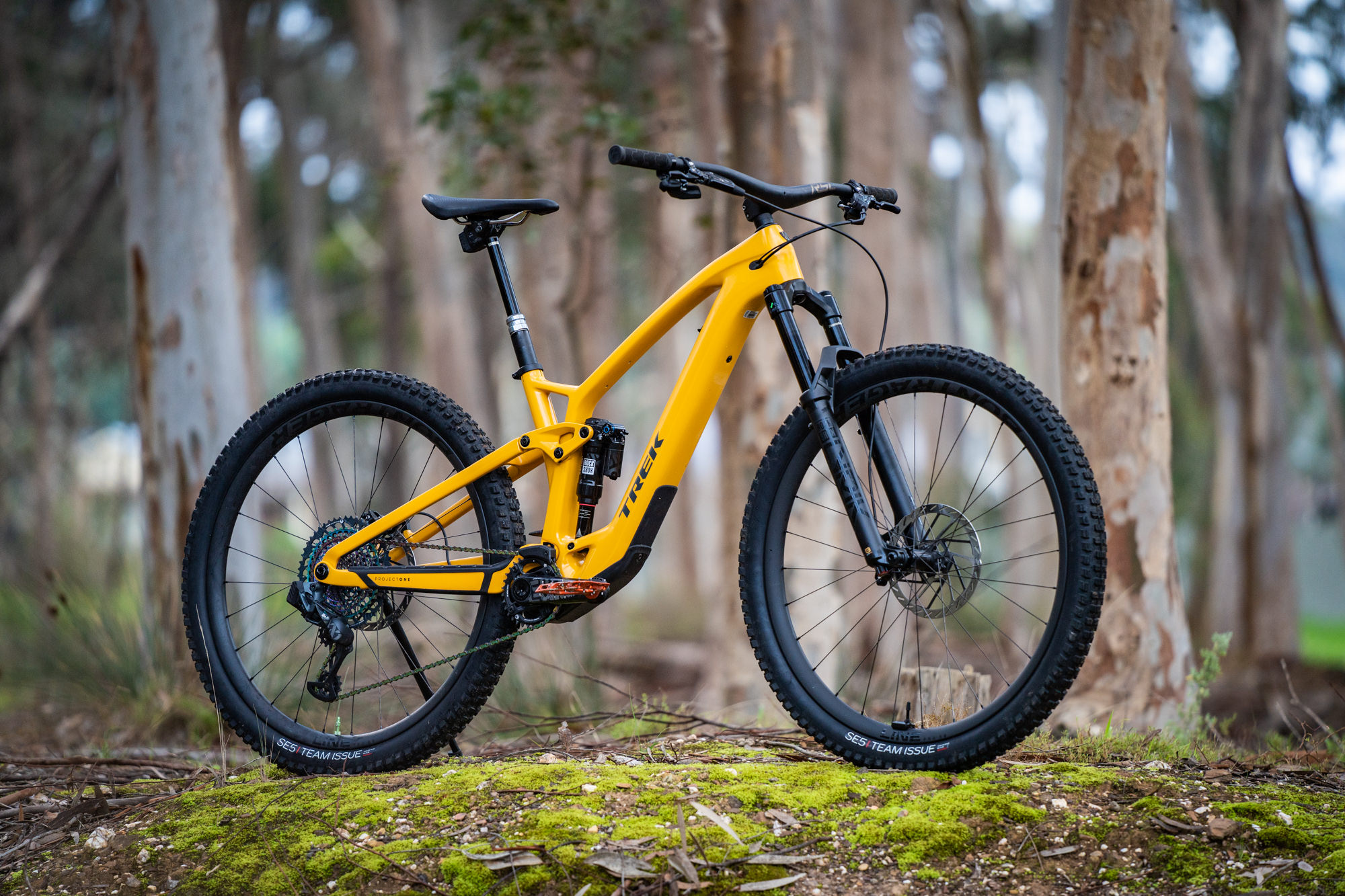 The Trek Fuel EXe was the first bike we saw with the TQ motor, and it changed how we thought about lightweight e-MTBs.
Trek Fuel EXe | near-silent trail e-MTB
Highs: Sleek frame, near-silent motor, excellent weight distribution, great geometry, supportive suspension
Lows: TQ motor can lag slightly, marginally heavier than some rivals, noisy rear axle lever, wide Q-factor
The Trek Fuel EXe sits between the full-powered Rail and analogue Fuel EX. Co-developed with Bavarian company TQ, it uses the compact, quiet TQ HPR50 motor and a 360Wh removable battery. The motor’s harmonic pin-ring design has only two moving parts and delivers very smooth assistance.
We regularly achieved 1000-1300m of climbing over 30-38km rides, and the range estimations proved accurate. The Q-factor is on the wide side, which some riders will notice, and the motor isn’t the quickest to respond to cadence changes, but the near-silent operation is a huge win.
With 29in wheels, a 150mm fork, 140mm rear travel and modern geometry, the Fuel EXe feels planted and controlled, especially at speed. It rewards an active riding style and feels closer to a regular trail bike than most full-powered options.
Read the full Trek Fuel EXe review.
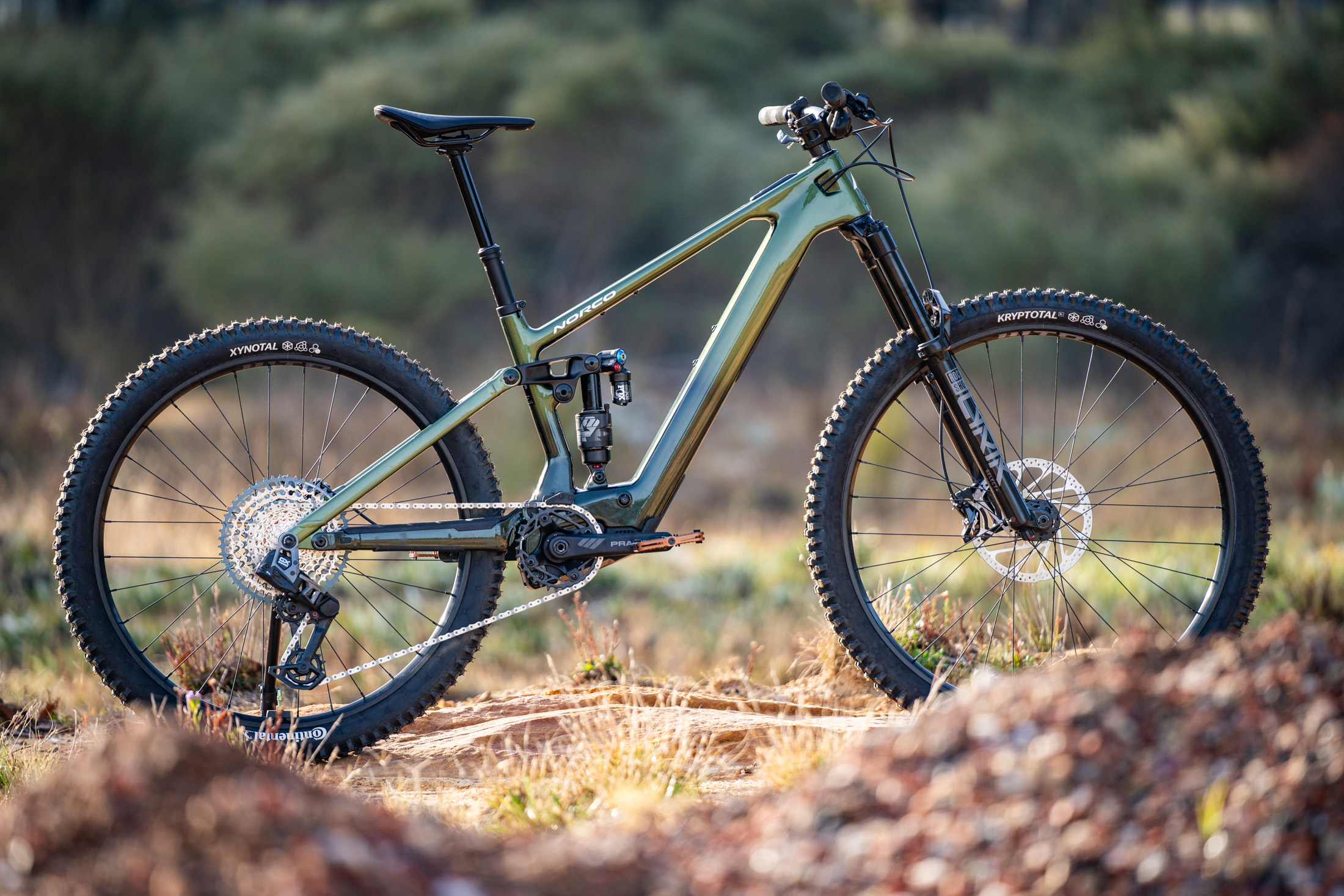 The Norco Fluid VLT launched alongside the Bosch Performance Line SX motor.
Norco Fluid VLT | lightweight Bosch SX trail bike
Highs: Excellent geometry and handling, punchy motor, strong value
Lows: Could use more travel, stock tyres struggle in loose or wet conditions, motor clacking noise
The Norco Fluid VLT is Norco’s first lightweight e-MTB and one of the early adopters of the Bosch Performance Line SX motor. It runs a mixed wheel setup with a 29in front and 27.5in rear, chosen partly to keep the chainstays short on smaller frame sizes.
Most models feature a 150mm fork and 140mm rear travel, with the top-end C1 130 model stepping down to 140/130mm like the analogue Fluid. The SX motor produces 55Nm of torque, but at higher cadences it can match the 600W peak power of the Bosch CX, while being smaller and almost a kilo lighter.
Norco pairs it with a 400Wh internal battery, helping keep complete bike weights in the 18-20kg range. On the trail, the Fluid VLT feels lively, with well-placed weight, short chainstays and the mullet layout making it easy to tip into turns and rip through corners.
Read the Norco Fluid VLT review.
Previously tested e-MTBs still worth reading about
We’ve tested plenty more e-MTBs over the years, and some of them are still interesting or relevant in the second-hand market. To keep this main list focused on the most current recommendations, we’ve moved a few older reviews here rather than keeping them in the core roundup.
What is the most powerful e-MTB motor?
When we talk about power on an e-MTB, we’re really talking about three different but related things: torque, peak power and support percentage. Together, these determine how much oomph you feel on the trail.
Torque
Torque is the rotational force the motor produces, measured in Newton metres. It’s the grunt that helps move the bike forward at lower speeds and on steep, technical climbs.
Peak power
Peak power is the maximum output of the motor in watts. In Australia, e-MTBs are limited to 250W of continuous power, but motors can exceed that figure for short bursts. That is what brands are referring to when they quote figures like 600W, 750W, 1000W or more peak power.
Support percentage
Support percentage refers to how much the motor multiplies your own effort. For example, if a system offers 300% support, it will add 300W when you put in 100W yourself.
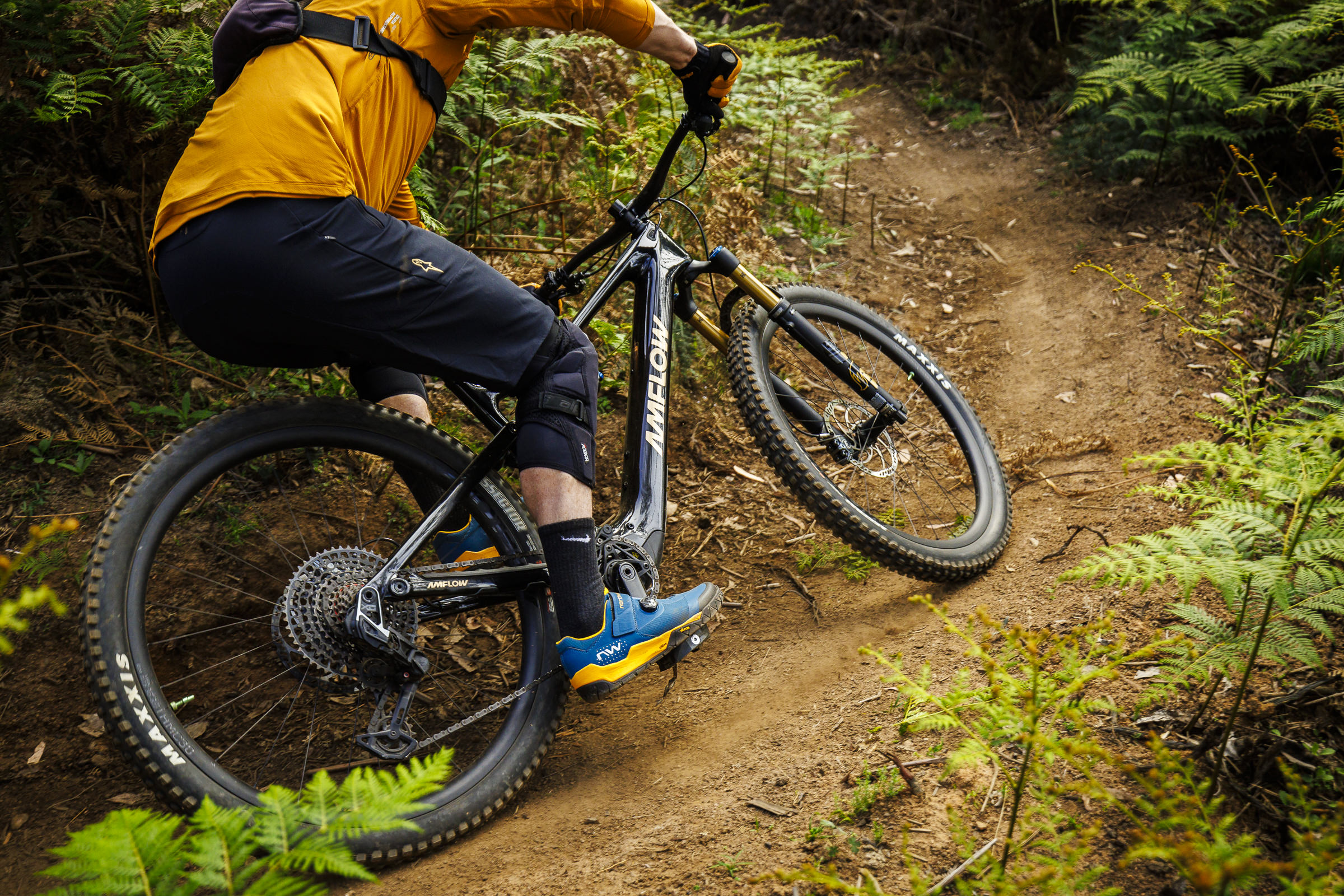 The Avinox M1 changed the conversation around e-MTB power, and the newer Avinox M2 and M2S systems are pushing those numbers even further.
Avinox M1 vs Avinox M2 vs Avinox M2S
The Avinox M1 is the system we have ridden across bikes like the Amflow PL Carbon, Teewing Turbo Force XT and Velduro Rogue R. It delivers 105Nm of torque in regular assist modes, a 120Nm Boost mode and up to 1000W of peak power, while keeping motor weight to a claimed 2.58kg.
The newer Avinox M2 and M2S systems raise the ceiling again. Current reporting lists the M2 at up to 1100W and 125Nm, while the M2S steps things up to 1300W and 130Nm continuously, or 1500W and 150Nm in short bursts. We have not yet completed a Flow review on an M2 or M2S-equipped bike, so for now these figures are market context rather than a Flow ride impression.
e-MTB motor power at a glance
Avinox M2S: up to 130Nm continuous torque, up to 150Nm in Boost mode, up to 1500W peak power
Avinox M2: up to 125Nm, up to 1100W peak power
DJI Avinox M1: 105Nm in regular assist modes, 120Nm Boost mode for up to 60 seconds, 1000W peak power, 2.58kg
Specialized 3.1: 105Nm, 810W peak power
Specialized 3.1 S-Works: 111Nm, 850W peak power
Bosch Performance Line CX Gen 5: 100Nm, 750W peak power, 2.8kg
Bosch Performance Line CX Gen 4: 85Nm, 600W peak power, 2.9kg
Shimano EP801: 85Nm, 600W peak power, 2.6kg
Giant SyncDrive Pro 2: 85Nm, 600W peak power, 2.7kg
Bosch Performance Line SX: 55Nm, 600W peak power, 2.0kg
Fazua Ride 60: 60Nm, 450W peak power, 1.95kg
Specialized SL 1.2: 50Nm, 320W peak power, 1.95kg
TQ HPR50: 50Nm, 300W peak power, 1.85kg
On paper, the Avinox M2S now has the biggest headline figures of any e-MTB motor system in this list. However, the most powerful motor we have actually tested remains the Avinox M1, as fitted to the Amflow PL Carbon, Teewing Turbo Force XT and Velduro Rogue R. And remember, the best motor for you isn’t always the one with the biggest number. It’s the one that delivers power in a way that suits your riding style and terrain.
Related:
What is the lightest e-MTB?
Some SL e-MTBs are now flirting with the weights of their analogue counterparts, and full-powered e-MTBs are also trending down thanks to lighter motors, smaller batteries and more efficient frame designs. Non-removable batteries are increasingly common too, saving weight by avoiding the need for a giant hatch in the downtube.
Here’s how the weights of the e-MTBs we’ve tested over the past couple of years stack up:
At the time of writing, the Focus VAM² SL 9.0 is the lightest e-MTB we’ve tested at just 16.9kg, which is seriously close to a regular high-end trail bike. At the other end of the scale, the latest Focus SAM² 6.9 takes the crown as the heaviest e-MTB we’ve tested at 26.44kg.
Which e-MTB has the longest range?
The other big question everyone asks is: how far can I ride on a single charge? Unfortunately, the answer is “it depends”, on battery size, motor efficiency, rider and bike weight, how hilly your ride is, your chosen assist mode, tyre choice, and even wind and temperature.
To compare e-MTBs as fairly as possible, we run a standardised range test with the same 65kg rider on the same circuit. The test involves repeating a tarmac climb in the highest assist mode, then descending a singletrack trail, and logging how much elevation gain we can notch up before the battery goes flat.
Here’s how some of the bikes we’ve tested stack up in terms of total climbing achieved in that test:
Norco Sight VLT (Shimano EP8, 900Wh) | 2478m climbing
Amflow PL Carbon (DJI Avinox M1, 800Wh) | 2460m climbing
Canyon Spectral:ON (Shimano EP8, 900Wh) | 2451m climbing
Cube Stereo Hybrid 160 (Bosch CX Gen 4, 750Wh) | 2320m climbing
Specialized Levo R (S-Works 3.1, 840Wh) | 2201m climbing
Merida eOne-Sixty (Shimano EP801, 600Wh) | 2114m climbing
Rocky Mountain Altitude Powerplay (Dyname 4.0, 720Wh) | 2108m climbing
Scott Patron eRIDE (Bosch CX Gen 4, 750Wh) | 2079m climbing
Trek Slash+ (TQ HPR50, 580Wh) | 1962m climbing
Specialized Levo 4 (S-Works 3.1, 840Wh) | 1908m climbing
GasGas ECC 6 (SRAM Powertrain, 630Wh) | 1882m climbing
Santa Cruz Vala (Bosch CX Gen 5, 600Wh) | 1767m climbing
Focus JAM² SL (Fazua Ride 60, 430Wh) | 1665m climbing
Teewing Turbo Force XT (DJI Avinox M1, 800Wh) | 1640m climbing in Turbo mode
Scott Lumen (TQ HPR50, 360Wh) | 1567m climbing
Velduro Rogue R (DJI Avinox M1, 800Wh) | 1400-1500m climbing in Turbo mode
Orbea Rise (Shimano EP8-RS, 360Wh) | 1388m climbing
Norco Fluid VLT (Bosch SX, 400Wh) | 1361m climbing
Trek Fuel EXe (TQ HPR50, 360Wh) | 1312m climbing
Scott Voltage (TQ HPR50, 360Wh) | 1311m climbing
Specialized Levo SL (SL 1.2, 320Wh) | 1307m climbing
Giant Trance X E+ Elite (SyncDrive Pro, 400Wh) | 1057m climbing
Specialized Kenevo SL (SL 1.1, 320Wh) | 1053m climbing
So far, the Norco Sight VLT with its 900Wh battery still holds the title for the longest range e-MTB we’ve ridden, though the Amflow PL Carbon and Canyon Spectral:ON aren’t far behind.
FAQs: choosing the best e-MTB in 2026
What is the best e-MTB in 2026?
There is no single best e-MTB for every rider. The Santa Cruz Vala is one of the best all-round e-MTBs we have tested, the Specialized Levo 4 remains one of the benchmark full-power e-MTBs, and the Amflow PL Carbon has the most powerful motor system we have ridden so far. Riders looking for value should also look closely at bikes like the Teewing Turbo Force XT, Focus JAM² 6.9 and Superior eXF.
What is the best full-power trail e-MTB?
For riders looking for a full-power trail e-MTB, bikes like the Santa Cruz Vala, Norco Sight VLT CX, Focus JAM² 6.9, Teewing Turbo Force XT and Specialized Levo R all approach the category differently. The Vala is refined and intuitive, the Sight VLT CX adds high-pivot suspension and a huge battery, the Focus JAM² is a Bosch-powered alloy all-rounder, the Teewing delivers strong Avinox value, and the Levo R brings a short-travel full-power concept.
What is the best long-travel e-MTB?
For rougher trails and self-shuttling, bikes like the Santa Cruz Bullit, Giant Reign Advanced E+, Cube Stereo Hybrid One77, Velduro Rogue R and Focus SAM² 6.9 are the bikes to focus on. They are heavier and more descending-focused than most trail e-MTBs, but they offer more confidence when the terrain gets steep and rough.
What is the most powerful e-MTB motor we have tested?
The Avinox M1 remains the most powerful e-MTB motor system we have tested. It delivers 105Nm of torque in regular assist modes, a 120Nm Boost mode and 1000W of peak power while weighing just 2.58kg. The newer Avinox M2 and M2S systems have higher headline output figures, but we have not yet completed a Flow review on an M2 or M2S-equipped bike.
What is the difference between Avinox M1, M2 and M2S?
The Avinox M1 is the system we have tested so far, as found on bikes like the Amflow PL Carbon, Teewing Turbo Force XT and Velduro Rogue R. It delivers 105Nm of torque in regular assist modes, a 120Nm Boost mode and up to 1000W of peak power. The newer Avinox M2 and M2S systems increase the headline numbers, with the M2 listed at up to 1100W and 125Nm, while the M2S reaches up to 1500W and 150Nm in short bursts. We’ll update this article once we have reviewed an M2 or M2S-equipped bike.
Is the Specialized Levo R a lightweight e-MTB?
The Specialized Levo R is lighter than the regular Levo 4, but at 21.26kg for our S-Works test bike, it is not as light as we expected for a short travel e-MTB. It is still significantly heavier than SL e-MTBs like the Scott Lumen, Focus VAM² SL and Specialized Levo SL.
Is the Velduro Rogue an all-mountain e-MTB?
Tom found the Velduro Rogue to be less of an all-mountain rig and more of a self-shuttling, mini e-DH machine. It shines when lapping descents, especially with the powerful Avinox motor helping it get back to the top.
Is the Teewing Turbo Force good value?
The Teewing Turbo Force XT starts at $7,999 AUD and comes with a carbon frame, 150mm rear travel, a 160mm fork and the DJI Avinox M1 motor. After riding it, Tom considered it excellent value compared with other bikes in this segment.
How much does the Focus JAM² 6.9 weigh?
Confirmed weight for our Focus JAM² 6.9 test bike is 24.9kg with the tyres set up tubeless. It is no lightweight, but Wil found it very well balanced on the trail, helped by the smaller 600Wh battery and improved weight distribution.
How much does the Focus SAM² 6.9 weigh?
The Focus SAM² 6.9 weighed 26.44kg on the FlowHQ scales in a size Large, set up tubeless and without pedals. That makes it the heaviest e-MTB we have tested, but its weight is also a big part of its planted, muted ride feel.
Full-powered vs lightweight e-MTB | which should I buy?
If you want maximum assistance, the ability to self-shuttle and aren’t fussed about bike weight, a full-powered e-MTB with a big battery is the way to go. If you prefer a more natural ride feel, value agility and want an e-MTB that rides closer to your regular enduro or trail bike, a lightweight or SL model will likely suit you better.
How much travel do I need on an e-MTB?
For general trail riding, 130-150mm of travel is plenty. If you’re riding steeper, rougher terrain or hitting bike parks regularly, 160-180mm travel bikes like the Santa Cruz Bullit, Giant Reign Advanced E+, Velduro Rogue R, Focus SAM² or Trek Slash+ will offer more confidence and comfort.
How long does an e-MTB battery last?
On average, you can expect around 1000-1500m of climbing from a 600Wh battery in mixed modes, but this varies hugely depending on rider weight, terrain, assist mode and tyres. Smaller SL batteries around 320-360Wh will deliver less, while 800-900Wh batteries can keep you out all day if you manage your modes sensibly.
Are e-MTBs allowed on my local trails?
Access rules for e-MTBs vary depending on land managers and local regulations. Before you buy, check the rules at your local networks and national parks to make sure Class 1 pedal-assist e-MTBs are permitted.
Wrapping up
As always, this isn’t an exhaustive list of every great e-MTB out there. It’s a roundup of the best electric mountain bikes we’ve personally ridden and reviewed.
The arrival of Avinox M2 and M2S means the power race is far from over, but for now our recommendations remain based on the bikes we have ridden. As more M2 and M2S-equipped bikes come through FlowHQ, we’ll update this list with real-world ride impressions rather than spec-sheet assumptions.
If there’s a specific e-MTB you’d like to see us test next or a question you still have about choosing the best e-MTB for your riding, drop a comment and let us know.
Editorial Guidelines
At Flow Mountain Bike, we’re committed to delivering engaging and trustworthy content, from product reviews to destination showcases, news, interviews, and features. While many of the brands and destinations we cover may advertise with us, our editorial team operates independently, ensuring our content is guided by expertise and passion—not commercial influence. Sponsored content is always clearly disclosed, and we remain dedicated to providing honest and unbiased coverage across everything we publish. For more details, see our Transparency Report.