
Key Takeaways Before You Read:
A Kia Niro EV lessee is eyeing lemon-titled 2024 Ioniq 5 and Ioniq 6 units under $25,000, most flagged for ICCU failure and parts delays.
Real owner experiences split sharply, with some calling their lemon buys outstanding deals and others warning of subsequent main battery failure.
Before buying any lemon-titled EV, every buyer must verify warranty carryover, pull the VIN history, and get an independent pre-purchase inspection.
Scroll to see the comments or be the first to voice your opinion.
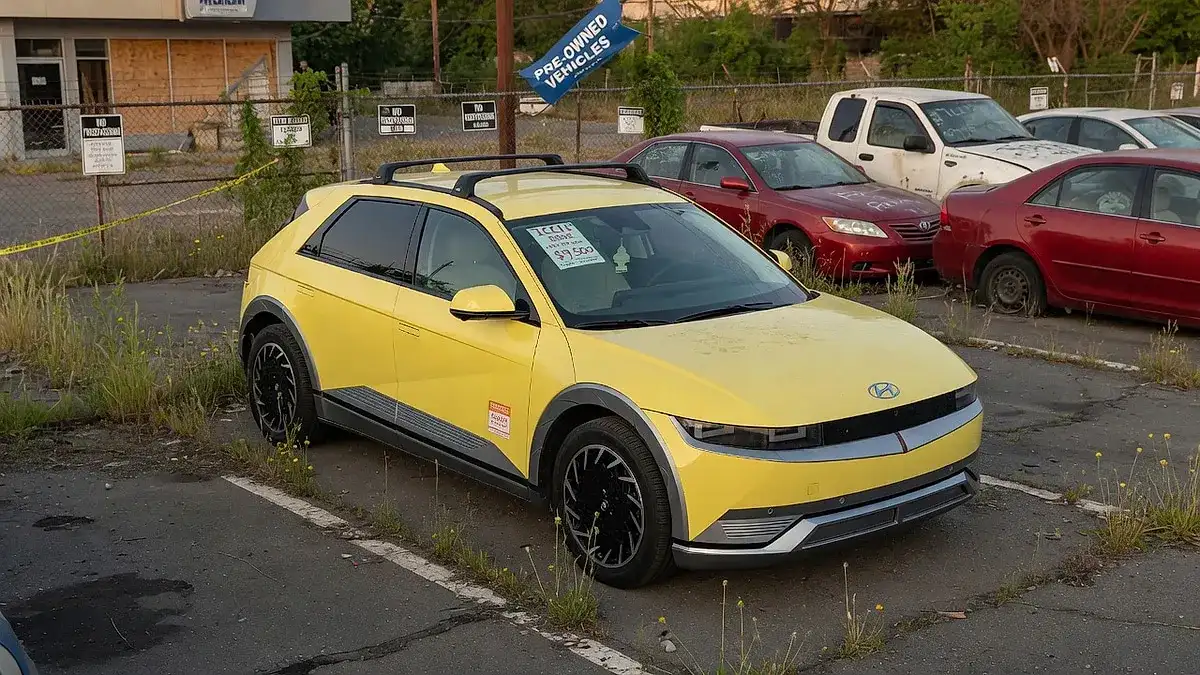
A Kia Niro EV driver’s lease ends in May. He spotted something unusual in the used EV market. Several 2024 Ioniq 5 units, and even some Ioniq 6 models, sit near him for under $25,000 with fewer than 10,000 miles. One has under 2,000 miles. Every single one carries a lemon title. Should he pull the trigger? That question is igniting a very real debate among Hyundai EV owners right now.
This morning I found that debate playing out in detail inside The Ioniq Guy public Facebook group. After covering the automotive industry for 15 years, I have seen this exact dilemma before. The price looks unbeatable. The risk is real. And the answer depends entirely on what you know before you sign.
Here is exactly what Brian Frenck, the Kia Niro EV lessee, posted to the group.
“I’m currently leasing a Niro EV that ends at the end of May and am looking at buying a used Ioniq 5. My question is about buying a ‘lemon.’ There are several 2024 I5s and even a few I6s near me with less than 10k miles (one less than 2k) available for $25k or less near me. They all have a lemon title and they all seem to have it because the ICCU failed and it couldn’t be repaired in time. All carry the balance of the original warranty. Does anyone have experience or advice for buying a ‘lemon?’”
That post drew dozens of responses fast. Some were encouraging. Some were alarming. And all of them are worth reading before you make a decision anywhere close to Brian’s.
What Is the ICCU, and Why Did It Create So Many Lemon Titles?
The ICCU stands for Integrated Charging Control Unit. Think of it as the alternator of an electric vehicle. It manages onboard charging and keeps the 12-volt battery alive. When it works, you never think about it. When it fails, your Ioniq 5 or Ioniq 6 stops dead without warning.
We have covered Hyundai EV owners questioning the ICCU reliability extensively at TorqueNews. The core problem was not just the part failing. It was the wait. Parts were extremely delayed. Owners sat without their cars for weeks, sometimes months. Once a vehicle crosses certain repair thresholds under state lemon laws, the manufacturer must buy it back. That is exactly what happened to most of the units Brian is now seeing on the market.
So those lemon titles do not necessarily mean the car is destroyed. They often mean the owner simply ran out of time waiting for a fix. That distinction matters enormously.
What Real Owners Say About Buying a Lemon Ioniq 5
The group responses to Brian’s question cover both ends of the spectrum. Here is what real owners reported.
Steve Johnson did not hold back. He wrote, “I purchased a buyback in Jan. Great deal BUT… main battery pack failure in March. Been in the shop since 10 March with no ETA on a new main battery pack. I have told Hyundai I wanted to initiate a buyback (there is a federal law on this as well). AVOID grabbing one. You may get one that’s fine. I am almost at the point of having the car as a BRICK longer than operational. If they buy it back I will move to a Mach-e. All manufacturers have issues but ‘support’ at Hyundai has been frustrating. Just my 2 cents.”
Chris Lanham added his own live experience. “Driving a Lemon vehicle now. I had it for a month, headed to the dealership now to drop off for the electrical warranty, as I got the warning this week. Technician said they have changed to a different part so hopefully this fixes it. I am in a 2023 with 32k miles and bought for under $18k.”
Rick Gourlay offered a contrasting data point. “I bought a GV60 performance with the buy back title and everything is fine so far.”
Alex Berman brought depth to the conversation. “That’s about all there is to say… parts were extremely delayed so people were able to use the Lemon Law to get out. From what we’ve seen the problem of ICCU dying is still possible even on a car you are looking at with a replacement. Allegedly there is a new part number in the last few months and some believe it to be a redesigned part but until we have a confirmed failure of one of these part numbers or the hopefully new platform comes out that removes ICCU from the discussion Hyundai/Kia EVs will always be holding their breathe. I did 2 years 23,000 miles in a ’24 IONIQ 6 mostly using public fast chargers and did not have a failure. Because of this I took the chance on getting a 2026 Ioniq 5. There is no vehicle with this level of public charge speed and being an apartment dweller that’s very important to me. Plus it’s a very nice vehicle.”
Taylor Elizabeth reported a success story from Arizona. “We bought a lemon out of California. We live in Arizona so dealerships purchase these at auction. In March we bought a ’24 HI5 Limited with 900 miles for $27k. Sticker price is $59k. We called Hyundai with the VIN and were told it was a battery issue and the battery was replaced. We have about 3k miles on it now and are completely satisfied!! I also own a ’22 SEL which I purchased new, still own it, still love it.”
Advertising
Spencer Allen kept it simple. “I bought a 2022 Ioniq 5 with 20k miles with a lemon title back in September. No regrets and would probably buy another one if I can get one for the right price.”
These are five real people with five very different outcomes. That range tells you exactly what the risk profile looks like.
Hyundai’s Recent ICCU Warranty Extension Changes the Calculation
Here is something critically important that Brian needs to know. Hyundai recently confirmed to Torque News that it is extending ICCU coverage to 15 years based on ICCU performance monitoring in certain Hyundai EVs. That is a significant development for anyone considering a lemon-titled Ioniq 5 or Ioniq 6.

In a statement provided to Torque News, Hyundai Motor America confirmed the warranty extension in full. The company approved the extension specifically based on ongoing monitoring of ICCU performance. In plain terms, Hyundai watched the data, the data pointed in a concerning direction, and they acted. That matters for lemon buyers because it reduces the financial exposure on the exact component that caused most of these cars to get their lemon titles in the first place.
It does not eliminate the risk. But it changes the math.
We have also tracked the broader story of owners who picked up their Ioniq 5 after an ICCU fix and immediately started shopping for something else. That reaction tells you how deeply the ICCU issue shook confidence in these vehicles. Even owners who got their cars fixed were already mapping exit strategies.
What You Need to Know Before Buying a Lemon-Titled EV
Let me be direct here. A lemon title is not automatically a dealbreaker. But it requires more homework than a standard used car purchase. Here is a clear checklist.
First, understand what caused the lemon designation. ICCU failures that could not be repaired in time due to parts delays carry a very different risk profile than a recurring electrical defect that nobody could actually fix. Ask the dealer for the original defect documentation in writing.
Second, pull the full vehicle history report. Services like Carfax and AutoCheck will flag manufacturer buyback status and show all documented repair attempts. You want to see whether the ICCU replacement actually happened and whether any subsequent issues appeared before the car went to auction.
Third, confirm the warranty carryover. Brian noted these cars carry the balance of the original warranty. That is important, but verify it directly with Hyundai. Call the manufacturer with the VIN before you buy. Taylor Elizabeth did exactly that in Arizona, and that one phone call gave her the confidence to proceed.
Fourth, get an independent pre-purchase inspection from a qualified EV technician, not just any mechanic. Ask them specifically to assess the 12-volt battery health alongside the ICCU replacement status. Monitoring the Ioniq 5 twelve-volt battery health reveals critical information about the ICCU’s current performance. A compromised 12-volt battery after an ICCU replacement is a yellow flag worth investigating.
Fifth, know the resale impact. A lemon title reduces the car’s resale value, period. You are getting a discount now, but you will likely pass that discount along when you eventually sell. If you plan to drive the car for five or more years, that discount may more than offset the resale hit. If you plan to flip it in two years, run the numbers carefully first.
The Ioniq 5 and Ioniq 6 Are Still Compelling EVs Despite This History
Advertising
Here is where I push back against the narrative that a lemon title makes these cars untouchable. The Ioniq 5 and Ioniq 6 run on Hyundai’s 800-volt E-GMP platform. That architecture enables some of the fastest public charging speeds available in any non-luxury EV. For anyone without home charging, like an apartment dweller, that matters more than almost any other spec on the sheet.
We have documented Ioniq 5 owners who drove over 81,000 miles and spent only $228 on charging before ICCU issues surfaced. That kind of economy is not accidental. It reflects genuinely strong engineering underneath a known weak link.
One owner drove 50,000 miles over three years, dealt with multiple warranty repairs, and still plans to run the Ioniq 5 into the ground. That is not a brand defender talking. That is an owner who weighed the evidence and reached a clear conclusion. The car, flaws and all, earns loyalty.
The question for Brian is not whether these are good cars in general. They are. The question is whether the specific unit he is looking at represents an acceptable risk at the price being asked. That answer requires the homework described above.
A previous Torque News discussion on a lemon-titled Ioniq 6 buyback with under 1,000 miles raised the same exact debate. The community consensus then, as now, is: price and documentation together determine whether the deal makes sense.
What the Lemon Law Actually Covers, and What It Does Not
This is important and frequently misunderstood. Lemon laws protect the original buyer. If you buy a car that already carries a lemon title, you are purchasing it as a used vehicle with known history. You are not the original consumer who triggered the buyback. That means your protections come primarily from the manufacturer’s carryover warranty, not from lemon law status on the prior owner’s claim.
Motor1.com has covered this dynamic well. The advice consistently is to figure out the prior history, get the car to a qualified mechanic before spending a dime, and verify exactly what warranty coverage transfers with the vehicle. That advice applies directly to Brian’s situation.
If Hyundai’s carryover warranty still covers the ICCU under the new extended terms, that is meaningful protection. If the specific unit Brian is looking at already had a second component fail or the warranty has been voided for any reason, the calculation shifts entirely.
An earlier Torque News article advising Ioniq drivers to get ICCU recall work done immediately and describing the smooth sailing that can follow is worth reading before making this purchase decision. Some of those lemon buybacks went through recall work before the buyback was initiated. Others did not. Knowing which category the specific car falls into changes everything.
The Moral of This Story for Any Used EV Buyer
After 15 years of covering the automotive industry, I have watched buyers make expensive mistakes in both directions, paying too much for certainty and paying too little without doing the work to understand the risk. The sweet spot is always the same. Do the research, ask the uncomfortable questions, and make the decision with eyes fully open.
A 2024 Ioniq 5 with under 2,000 miles for under $25,000 is a genuinely extraordinary price point for a car that stickered at $45,000 or more. That kind of discount does not appear without a reason. The reason here is well documented. The question is whether that reason has been adequately addressed for the specific vehicle you are considering.
Do not buy on price alone. Do not walk away on title alone either. Make the manufacturer call. Pull the Carfax. Get the inspection. Make the informed decision. That is the only way to turn what looks like a risk into what could be a remarkable value.
Hyundai’s ongoing ICCU investigation and owner responses show this story continues to develop. Anyone stepping into this market right now is entering a situation that is still actively evolving. Stay current. And stay careful.
The 2024 Ioniq 5 is one of the genuinely great electric vehicles on the market. Some of these lemon units represent some of the best used EV deals available anywhere right now. But some of them carry problems that have not been resolved. The difference between those two categories is entirely in the documentation. Go find it before you buy.
Have you ever purchased a lemon-titled vehicle, and did it turn out to be the deal you hoped for or the problem you feared? If you are considering a used Ioniq 5 or Ioniq 6 with a buyback title right now, what is the factor that would most influence your decision either way? Share your experience in the comments below.
About The Author
Armen Hareyan is the founder and Editor-in-Chief of Torque News and an automotive journalist with over 15 years of experience writing car reviews and industry news. Now based in the Charlotte region (Indian Land, SC, he founded Torque News in 2010, which since then has been publishing expert news and analysis about the automotive industry. He can be reached at Torque News on X, Linkedin, Facebook, and Youtube. Armen holds three Masters Degrees, including an MBA, and has become one of the known voices in the industry, specializing in the landscape of electric vehicles and real-world stories of actual car owners. Armen focuses on providing readers with transparent, data-backed analysis bridging the gap of complex engineering and car buyer practicality. Armen frequently participates in automotive events throughout the United States, national and local car reveals and personally test-drives new vehicles every week. Armen has also been published as an automotive expert in publications like the Transit Tomorrow, discussing how will autonomous vehicles reshape the supply chain, and emerging technologies in vehicle maintenance.
Follow us today…


