
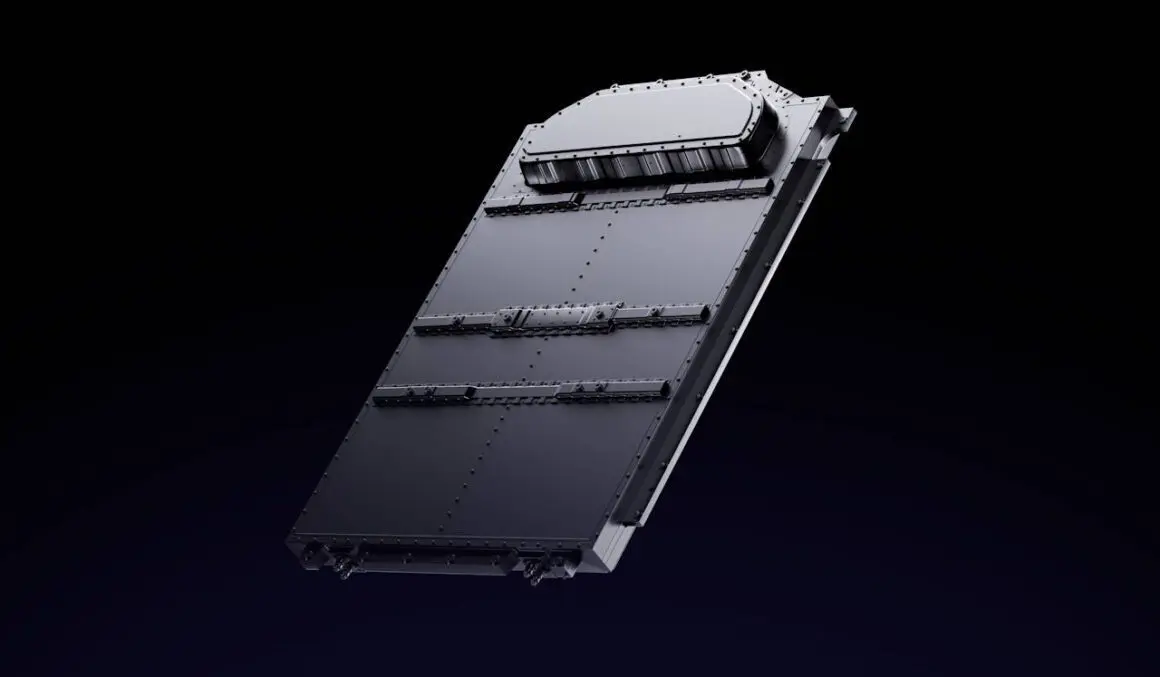
Chinese battery manufacturing giant CATL hosted has unveiled six stunning new battery technology innovations, including an electric vehicle (EV) battery with driving range of up to 1,500 kilometres (km) and the third generation of its Shenxing Superfast Charging Battery that it says can charge from 10 to 90 per cent in 6 minutes and 27 seconds.
The new innovations were unveiled at CATL’s 2026 “Super Technology Day” on Tuesday, and also included plans to begin large scale manufacturing of its Naxtra sodium-ion battery, and the debut of a fully integrated supercharging and battery-swapping solution.
CATL chief scientist Dr. Wu Kai suggested that lithium iron phosphate (LFP) batteries are nearing their theoretical energy density limit, making them better suited for a technology roadmap focused on extreme fast charging. He said sodium-ion batteries offer broad potential for extreme temperatures and energy storage applications.
Of the headline developments, the third generation of CATL’s Shenxing Superfast Charging Battery stood out, as it now addresses the risk of heat generation and dissipation through three new measures that deliver better control..
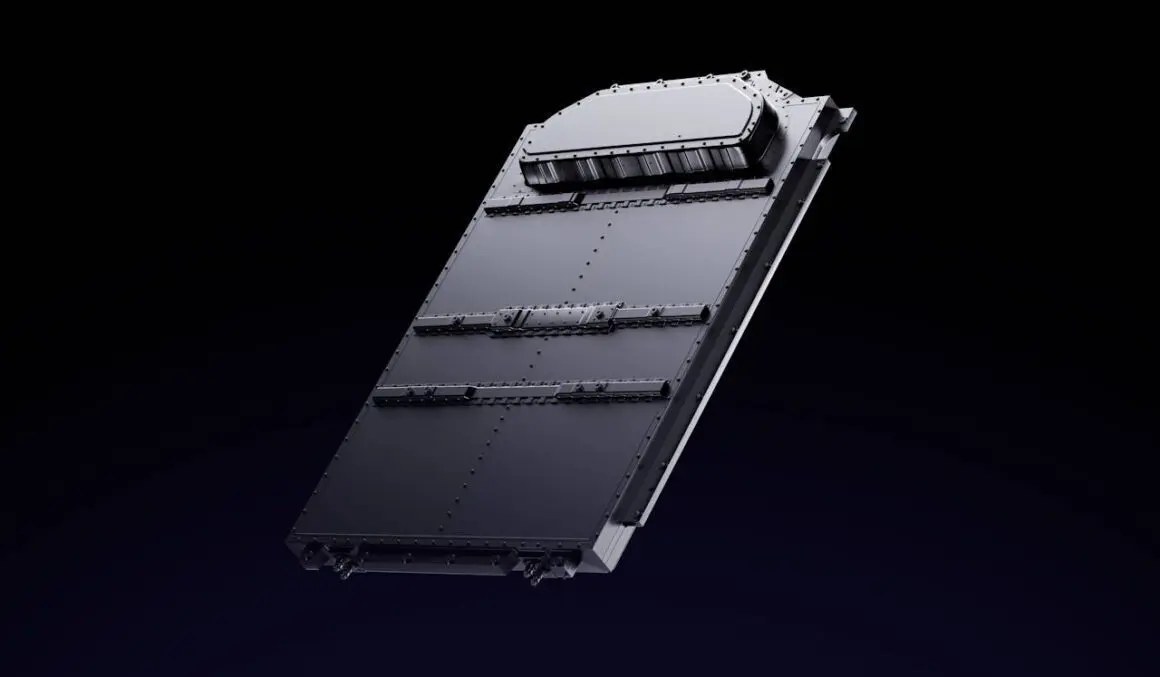 Image Credit: CATL
Testing found that after 1,000 complete cycles, the Superfast Charging Battery’s capacity retention remains above 90 per cent, achieving what CATL hopes is “an optimal balance between extreme superfast charging and ultra-long service life.”
The third-generation battery now boasts charging from 10 per cent to 35 per cent in 1 minute; 10 to 80 per cent in 3 minutes and 44 seconds; and 10 to 90 per cent in 6 minutes and 27 seconds. Importantly, even in the extreme cold of −30°C, charging from 20 to 98 per cent only takes 9 minutes.
“In addition, by combining battery self-heating technology with a fully integrated supercharging and battery-swapping network, the system is designed to enable low-temperature superfast charging that is not limited by charging piles—offering both fast charging and battery swapping,” CATL added.
Also reaching its third generation is CATL’s Qilin Battery, featuring an LFP chemistry designed specifically for long-range EVs.
The battery now boasts cell energy density of 280 Wh/kg, enabling driving ranges of up to 1,000km while also supporting 10C superfast charging.
It is also able to deliver 3 MW peak power, doubling the output of the previous Qilin track battery, and weighs in at only 625 kilograms (kg) – resulting in a weight reduction compared with equivalent LFP systems of 255 kg and space savings of 112 litres.
Energy consumption per 100km for the latest generation Qilin Battery decreases by more than 6 per cent, saving approximately 0.78 kWh per 100km, improved acceleration allowing for better overtaking and evasive manoeuvres, and enhanced durability.
CATL also unveiled the new Qilin Condensed Battery, which applies aviation-grade technology to passenger vehicle batteries for the first time, resulting in cell energy density of 350 Wh/kg and volumetric energy density of 760 Wh/L – a new record for mass-produced batteries.
 Image Credit: CATL
This delivers electric driving range of up to 1,500km for sedans and over 1,000km for large SUVs, and a battery pack weight within 650kg.
The new condensed battery features a high-nickel cathode and low-expansion silicon-carbon anode which help to boost energy density by 50 Wh/kg.
The first-ever aviation-grade titanium alloy case reduces thickness by 60 per cent and weight by 30 per cent, all the while tripling unit strength and delivering an additional 20 Wh/kg in energy density.
The new Naxtra Sodium-ion Battery also marks CATL’s transition from laboratory breakthrough to large-scale manufacturing following what the company describes as “systematically overcoming hundreds of engineering challenges”.
Finally, CATL also introduced an integrated supercharging and battery-swapping network which it has designed as a unified system, rather than separate solutions. Built on three different technologies – home charging, public charging, and battery swapping – the new system aims to deliver the optimal charging system for EVs.
Battery swapping stations for both CATL’s “Choco-Swap” passenger EVs and “QIJI” heavy trucks will also now be equipped with Shenxing supercharging systems in integrated stations which CATL expects will reduce energy conversion steps and lower overall power loss.
CATL is planning to build 4,000 of these integrated charge-swap stations by the end of 2026, covering nearly 190 cities in China and a nationwide network spanning 12 vertical and 11 horizontal corridors.

Joshua S. Hill is a Melbourne-based journalist who has been writing about climate change, clean technology, and electric vehicles for over 15 years. He has been reporting on electric vehicles and clean technologies for Renew Economy and The Driven since 2012. His preferred mode of transport is his feet.