
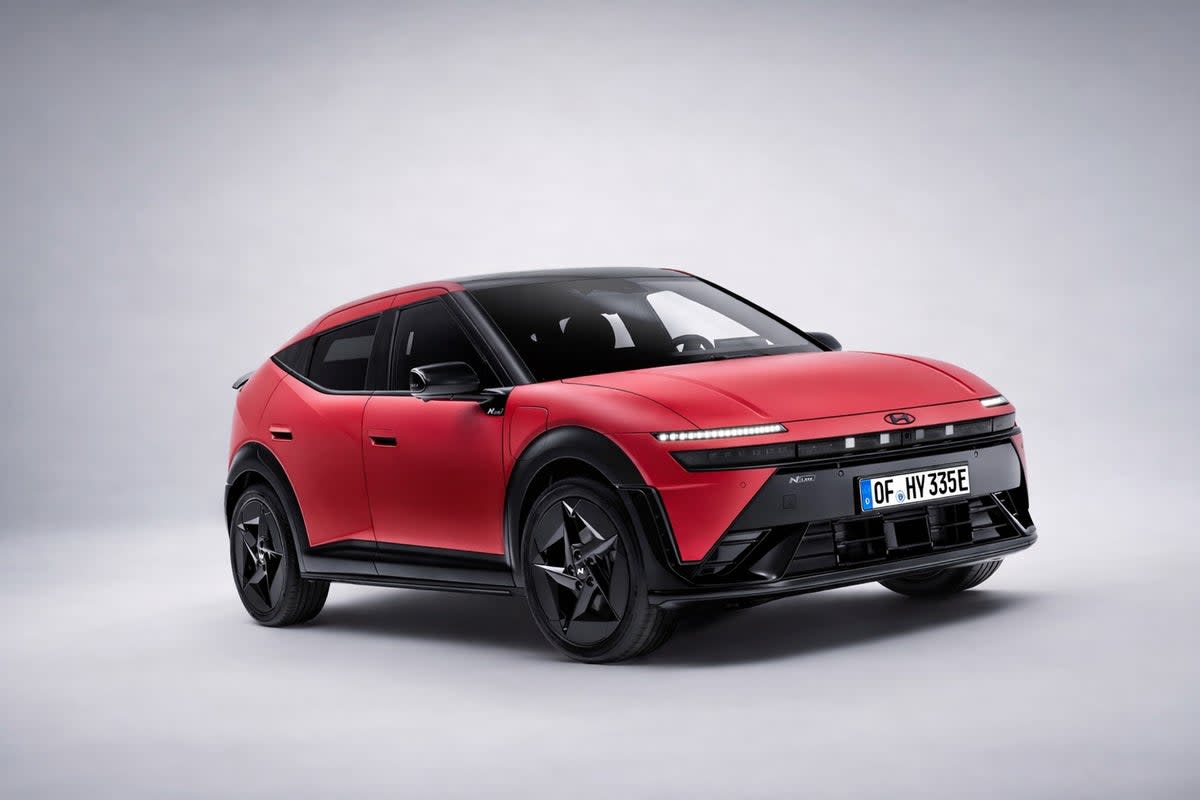

The new Hyundai Ioniq 3 promises a range of up to 308 miles (Hyundai)
Hyundai has revealed its latest electric car, the Ioniq 3, a compact hatchback designed with a clear focus on everyday usability for European buyers. Sitting below the larger all-electric Ioniq models, the newcomer is intended to make switching to electric feel a bit more straightforward, combining a relatively compact footprint with the sort of space, range and technology buyers now expect.
At the heart of the Ioniq 3 is what Hyundai calls a new “Aero Hatch” design, which aims to balance aerodynamic efficiency with a roomy interior. The shape is defined by a low nose and a long, straight roofline that stretches over both rows of seats before tapering into the rear. The idea is simple enough: maximise cabin space without compromising efficiency.
That efficiency is helped by a claimed drag coefficient of 0.263, while the platform underneath is Hyundai’s familiar Electric-Global Modular Platform (E-GMP). In this case it runs a 400-volt electrical system – rather than the 800-volt setup seen in larger Ioniq models – while still supporting relatively rapid charging, although no DC charging figure has been released.
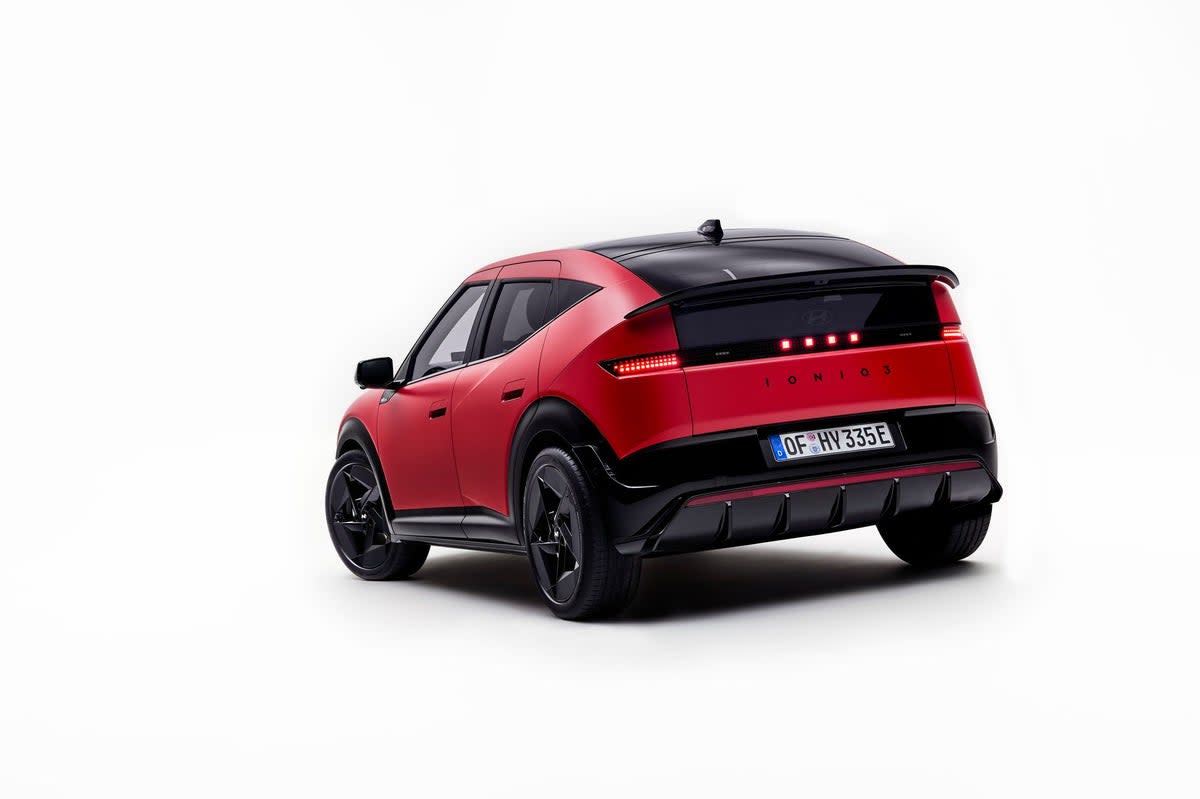
The new Hyundai Ioniq 3 aims to make life simpler for EV owners (Hyundai)
Two battery options will be offered. A standard-range version is expected to deliver up to 214 miles, while a long-range model targets up to 308 miles. Fast DC charging from 10 to 80 per cent is quoted at around 29 minutes, while AC charging of up to 22kW is also supported.
Power outputs are modest rather than headline grabbing, with figures of up to 145bhp and 133bhp depending on version, alongside 250Nm of torque. Top speed is listed at 106mph.
Hyundai says the focus with Ioniq 3 is less about outright performance and more about making the day-to-day experience of owning an electric car as easy as possible. That approach extends to the inside of the car where a flat floor and long wheelbase help create what the company describes as “upper-segment roominess” despite the car’s compact size.
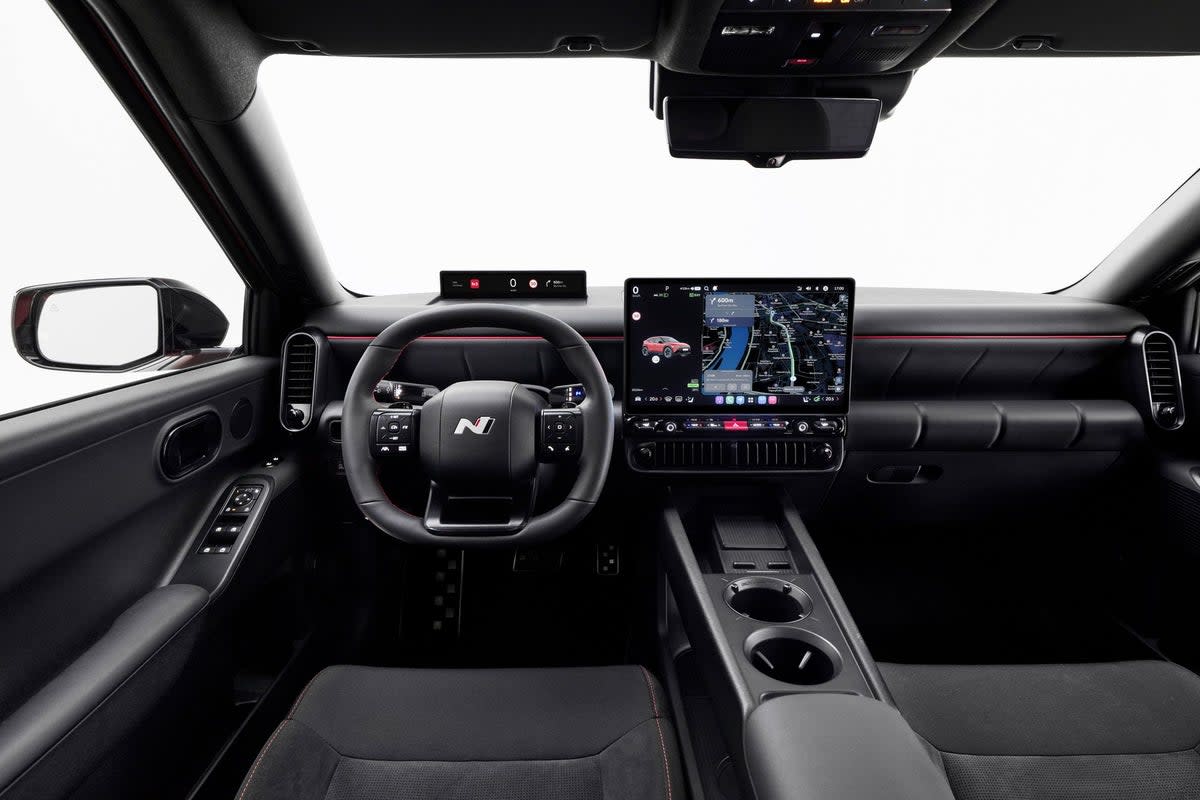
The Ioniq 3 brings a new Android-based infotainment system to Hyundai (Hyundai)
There’s seating for five, with Hyundai claiming three adults can sit comfortably in the back, while boot space is quoted at 441 litres. That includes an additional underfloor storage area known as the Megabox.
Technology has also been simplified with usability in mind. The Ioniq 3 is the first Hyundai model in Europe to feature the new Pleos Connect infotainment system, based on Android Automotive. Buyers will get either a 12.9in or 14.6in display, with integrated navigation, connectivity and vehicle controls.
Other features include a digital key that allows access via smartphone or wearable devices, along with Plug and Charge functionality and vehicle-to-load capability for powering external devices.
Hyundai’s usual suite of driver assistance systems is available, including Highway Driving Assist 2, Remote Smart Parking Assist and Blind-Spot View Monitor, alongside seven airbags and features such as intelligent LED lighting.
Design-wise, the Ioniq 3 introduces Hyundai’s latest ‘Art of Steel’ language to the smaller end of the EV market. Clean surfaces and simple forms are paired with the brand’s now-familiar pixel lighting, along with small details such as four central dots referencing the letter “H” in Morse code.
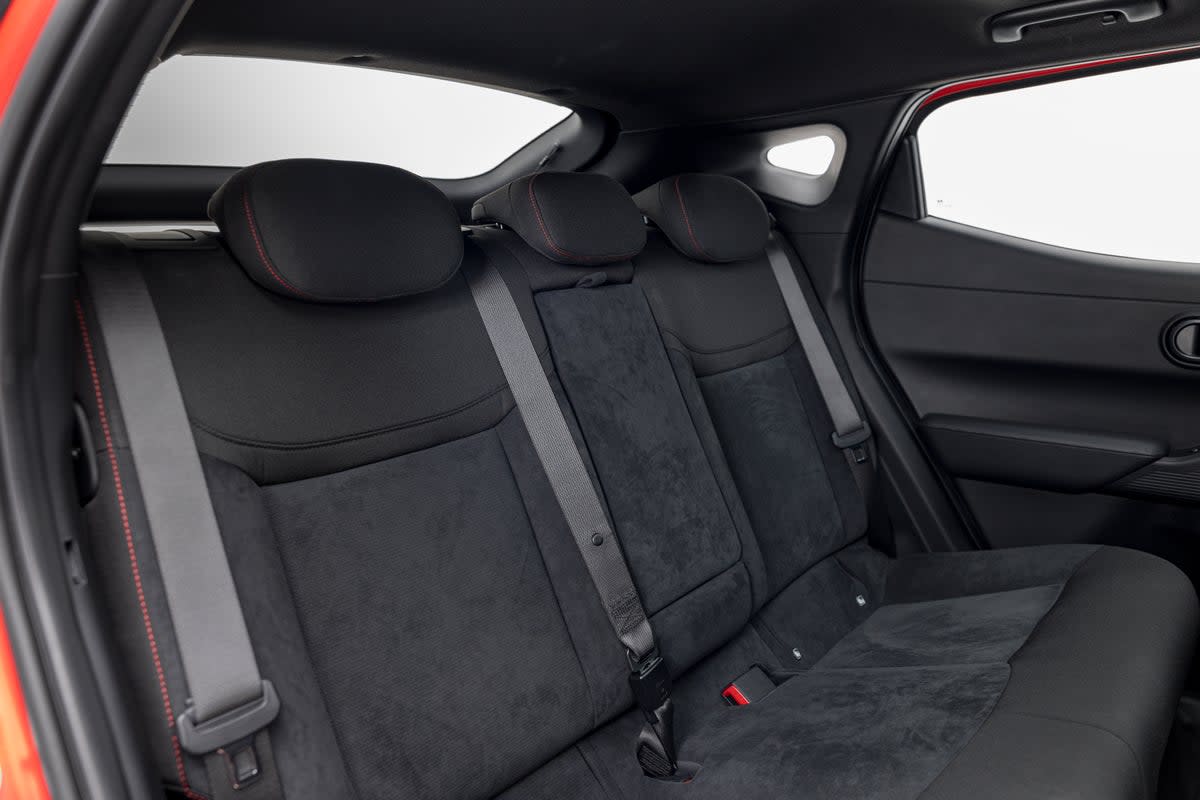
Despite its compact size, the new Hyundai Ioniq 3 is said to seat five people (Hyundai)
Customers will be able to choose from a range of exterior colours and wheel sizes up to 19in, with a sportier N Line version also available.
Explaining the thinking behind the new model, Xavier Martinet, president and CEO of Hyundai Motor Europe, said: “With Ioniq 3, we are bringing the bold design, driving enjoyment and advanced features of the Ioniq brand to a broader range of customers across Europe. Built for people’s real everyday needs, Ioniq 3 combines an expected segment-leading driving range and aerodynamics with extraordinary levels of space, comfort and practicality. Ioniq 3 also marks the debut of the Pleos Connect infotainment system, delivering sharp graphics, an intuitive user experience and broad customisation options – raising the bar for the segment.”
The car has been designed in Europe and will be built at Hyundai’s plant in Turkey, underlining the brand’s push to tailor its EVs more closely to local markets. That means it could also benefit from the UK government’s Electric Vehicle Grant.