[Photo: Donut Lab]
[Digital Today reporter Jinju Hong] Donut Lab released additional details on the battery structure and charging performance of the Verge TS Pro second-generation electric motorcycle equipped with a solid-state battery. It is highlighting ultra-fast charging and an air-cooled design as it moves to target the next-generation two-wheeled EV market.
InsideEVs reported on April 17 local time that the model supports 100 kW-class DC fast charging and takes about 11 minutes to charge from 10 percent to 80 percent. It also said charging to 90 percent takes less than 15 minutes.
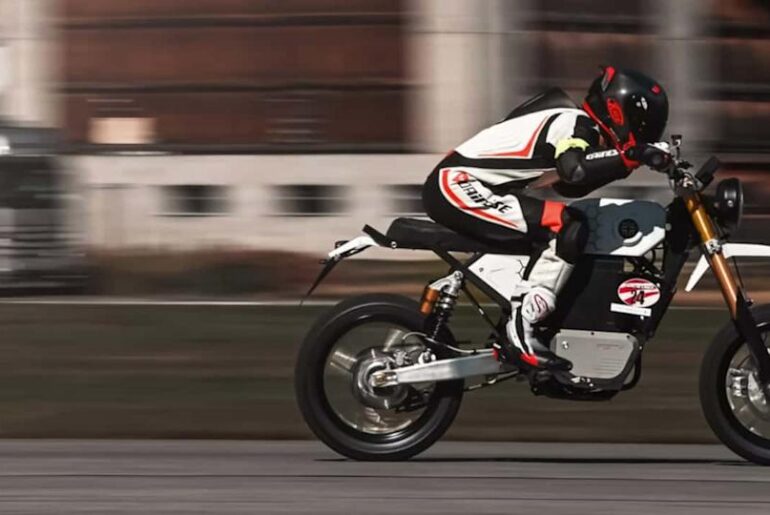
The focus of the new disclosure is the battery pack design. Donut Lab co-founder and chief technology officer Ville Pipo (빌레 피포) explained the solid-state battery pack configuration in an official video and stressed that the model is “the world’s first solid-state electric motorcycle and the fastest-charging motorcycle.”
The standard-range version uses 192 94 Wh cells, with a nominal capacity of about 18 kWh and up to about 20 kWh. The long-range version increases to about 30 kWh nominally, but the battery enclosure size remains the same. The module configuration is 2P 96S, delivering a 400-volt-class system voltage.
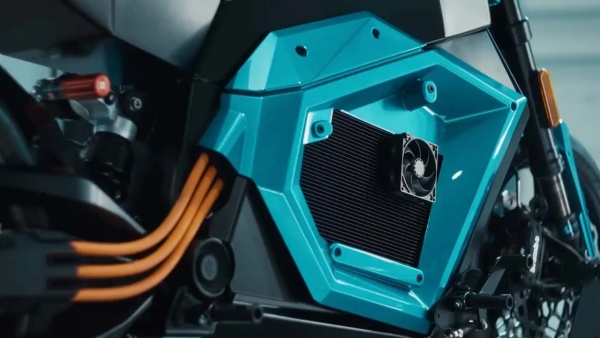
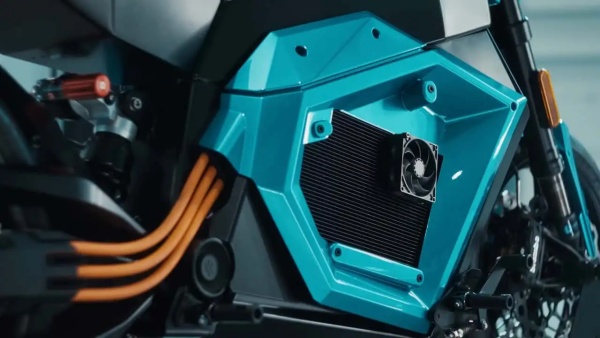
The cooling method also drew attention. It places heat transfer plates between each cell layer to release heat outward, and applies small fans and heat sinks on both sides of the battery pack. It is an air-cooled structure rather than liquid cooling, described as a design that takes into account the limited space on a motorcycle.
Charging performance was also highlighted. The maximum input is about 103 kW, delivering a charging speed above 5C relative to battery capacity, it said. Based on this, the company claimed it is the fastest charging speed among existing electric motorcycles. It also said a single charge enables up to about 217 miles (about 349 km) of driving, and about 12 miles (about 19 km) of range can be secured per minute of charging.
Questions over technical verification remain. Donut Lab highlighted the commercial potential of solid-state batteries and presented an energy density of 400 Wh per kg and a charging life of 100,000 cycles, but it has not yet disclosed patents or independent verification data to support this. The industry has pointed to the need for a cautious approach to the actual chemical composition and performance.
The company said it began mass production of the model last month, but external test results for a production vehicle equipped with a solid-state battery have not yet been confirmed. As a result, the Verge TS Pro second generation’s actual performance and technical level are expected to be determined through independent verification in the future.