![Custom Trips, Pause and New Widgets [VIDEO]](https://www.evshift.com/wp-content/uploads/2026/04/1776608571_new_trip_card_2026.jpg "Custom Trips, Pause and New Widgets [VIDEO]")
April 19, 2026
By Karan Singh
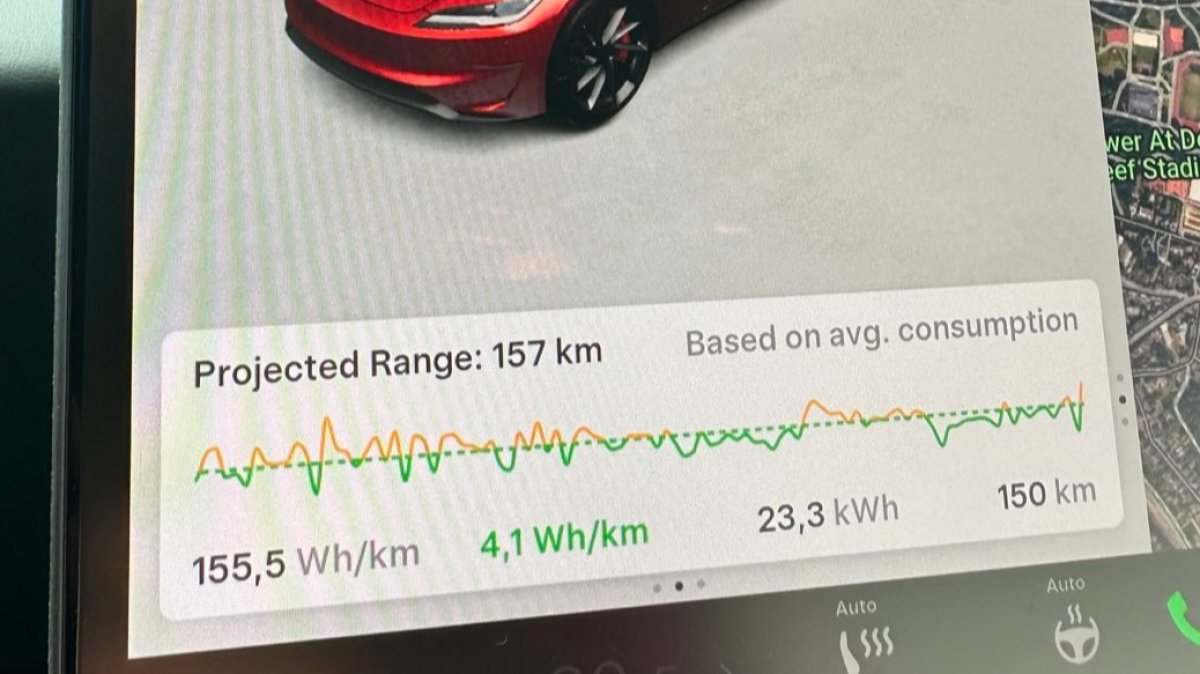
Tesla previously updated the Energy App back in December 2024, providing owners with a clearer picture of their vehicle’s power consumption. Now, with the rollout of the 2026 Spring Update, Tesla is pushing its energy tracking and trip management tools even further with a big set of improvements.
New Energy Widgets
One of the most noticeable changes in the Spring Update is the addition of energy graphs directly within the widgets near the music player for the Model 3, Model Y, and Cybertruck.
Instead of having to open the full Energy App to see energy graphs, you can now access them from the trips widget at the bottom left corner of the display. As before, you can swipe left on the music player to access the Trips widgets, but you can now swipe down to reveal a new interface that displays an energy graph for each trip meter.
How to swipe through the energy card now in 2026.14.1 pic.twitter.com/ekkMkHWovK
— Max (@maxbrco) April 18, 2026 Trips in Energy App
The Spring Update also brings a total overhaul to the dedicated Trips Menu, removing previous limitations of Trip meters.
Trip meters are now part of the Energy app, rather than a section in Settings. The Energy app now includes three tabs, Drive, Park and Trips. With the move to the Energy app, Tesla is adding various features.
First, drivers are also no longer restricted to just two custom trip meters (Trip A and Trip B). The Trips section of the Energy app keeps the same trip meters as before, such as Current Drive, Since Last Charge, and others, but now lets you add unlimited custom trips.
Each trip meter now also has its own energy graph, letting you see consumption over certain periods of the trip.
The default view is an overview of all your trips, but you can tap a trip to see a more detailed view and additional options. To keep everything organized, you can provide a custom name for each trip.
Trips can be reset or even paused, allowing you to record only a portion of a trip.
This new Energy App looks really cool pic.twitter.com/pGOaydR6rW
— Max (@maxbrco) April 18, 2026 Reducing the Guesswork with Range
By integrating these new visualization tools directly into the quick cards and vastly expanding the capabilities of the Trips Menu, Tesla is making it easier than ever for drivers to understand exactly how their vehicle uses energy. These quality-of-life improvements continue to make range anxiety a thing of the past by providing crystal clear, highly accessible data.
Subscribe to our newsletter to stay up to date on the latest Tesla news, upcoming features and software updates.
April 19, 2026
By Karan Singh
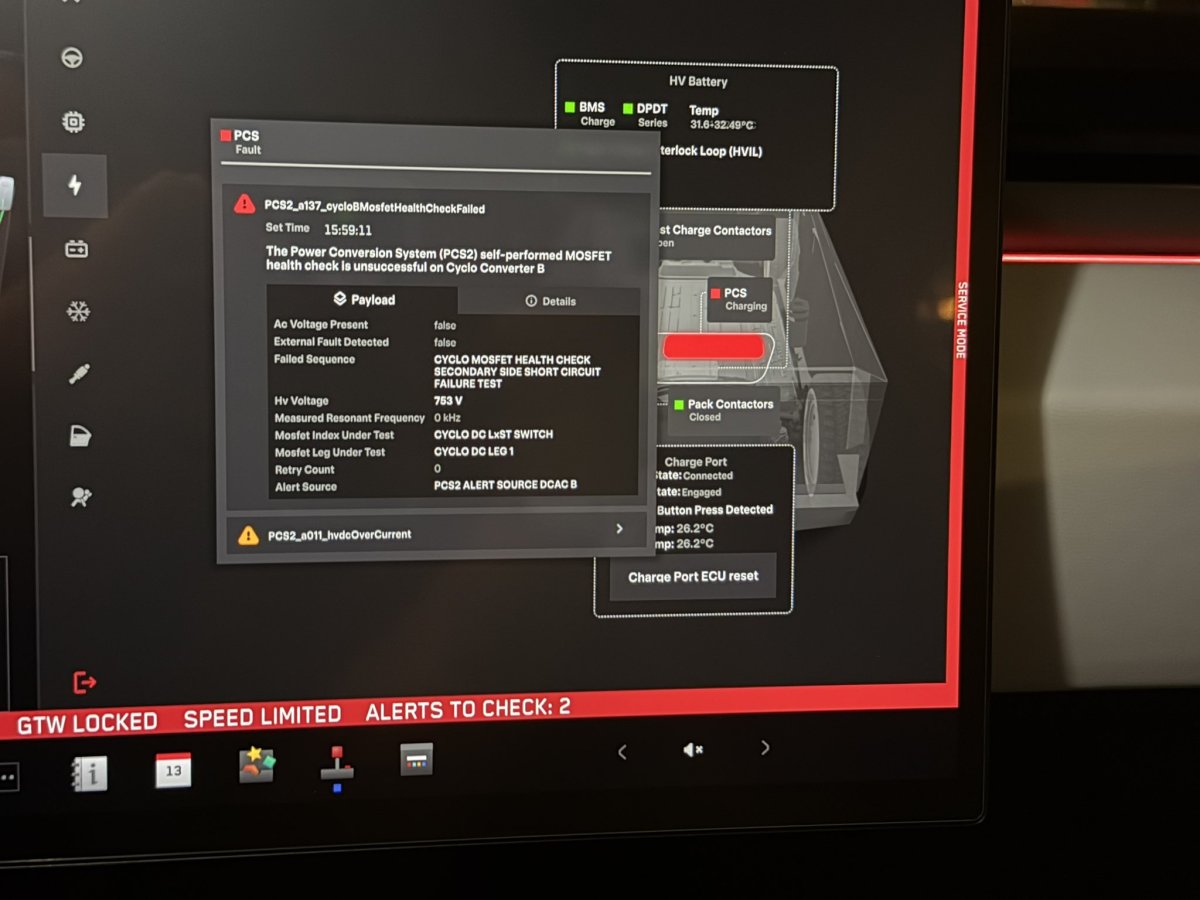
Tesla Cybertruck owners are facing a mounting hardware issue that is leaving many without the ability to charge their vehicles at home. A widespread failure rate in the vehicle’s Power Conversion System (PCS) has become a significant headache, rendering AC charging useless and exposing owners to potentially massive out-of-warranty repair costs.
Guys, what’s wrong with my Cybertruck?
Am I cooked??? pic.twitter.com/ksoBEGfmym
— LilHumansBigImpact (@BigImpactHumans) April 15, 2026
Despite a growing number of confirmed cases, recognizable diagnostic codes, and reported service center backlogs, Tesla has yet to issue a formal NHTSA recall for the component. For many, the headache of having a looming threat in their vehicle, waiting to fail, means they may be hesitant to take road trips or plan travel without considering the possibility of being stranded on the side of the road.
The Symptoms
The Power Conversion System is a vital piece of the Cybertruck’s power electronics. It acts as the gatekeeper for the vehicle’s energy, integrating the On-Board Charger and the DC-DC converter into a single unit that manages all alternating-current power flowing into the battery while stepping down the high-voltage pack to power the truck’s 48-volt low-voltage architecture.
There are several potential causes of PCS failure, which appear tied to failing MOSFETs or other internal components drifting out of spec under heavy electrical loads. Failures have been frequently reported at remarkably low mileage, often below 10,000 to 18,000 miles, and have occasionally happened repeatedly on the same vehicle after a full PCS replacement.
There are a few known symptoms that appear before full failure, which can help owners diagnose an issue before a full failure occurs:
Sudden “AC Charging Unavailable” warnings on the primary display
AC charging speeds are throttled from 48A to 24A or lower before failing completely at home chargers
PowerShare V2L and PowerShare V2H output errors
Diagnostics codes in Service mode related to the PCS, including PCS2_a094, PCS2_a095, PCS2_a137, and those related to High Voltage DC overcurrent trip failures
In many cases, the truck can still be driven and accept DC fast charging at Superchargers. However, without the ability to AC charge at home, the vehicle’s convenient daily use is effectively bricked until it undergoes major surgery.
Invasive Repairs and High Costs
Fixing a failed PCS is not a simple parts swap. Because the unit is buried deep within the vehicle’s architecture, service technicians must remove the tonneau cover, the bed floor, and elements of the air suspension just to access it.
Under the primary Basic Vehicle Limited Warranty (4 years or 50,000 miles), Tesla covers replacement, often installing an updated hardware revision (Rev G) along with a new wiring harness.
However, for high-mileage owners whose trucks are already out of warranty, the costs have been staggering. Previously, an out-of-warranty PCS replacement cost between $5,000 and $7,200 for parts and labor. Tesla has recently lowered this cost to approximately $1,000 as a “goodwill” gesture, but owners are still footing the bill for what appears to be a systemic hardware defect.
Further compounding the frustration, Service Centers are currently dealing with severe parts shortages. Pickup dates for affected trucks have slipped multiple times, with owners reporting no firm lead times for the replacement units. According to one owner on social media, a Tesla service employee allegedly admitted that the “first 75,000 Cybertrucks had defective PCS systems prone to failure.”
Day 16
Cybertruck PCS2 failure, in for service
Started at 62% charge and is in low power mode
Now at 39% and expected 2 weeks more till parts arrive.
Who else has been waiting longer? pic.twitter.com/eOtrHztct5
— Gary – contractorsPOV⚡🦺 (@contractorsPOV) April 16, 2026 The Terrestrial Armor Problem
The already invasive repair process becomes significantly more complex for vehicles equipped with the Terrestrial Armor retrofit or factory package. This heavy-duty underbody shield must be fully removed and carefully reinstalled to access the deeply buried power electronics.
According to service documentation, dealing with the Terrestrial Armor can increase the repair time to approximately eight hours of total labor. For owners outside their warranty window, this added complexity means Tesla may be charging a massive premium in pure labor hours just to access the failing component, adding significant financial sting to an already frustrating breakdown.
The Warranty Discrepancy
Adding insult to injury is how Tesla is handling long-term coverage for the vehicle. Tesla recently introduced a new 7-year/70,000-mile ZEV propulsion parts warranty for 2026+ model year Cybertrucks, which explicitly covers high-priced propulsion components like the PCS.
Early adopters who purchased 2024 and 2025 Foundation Series trucks are not provided this retroactive protection. For these older trucks, the PCS is covered solely under the basic vehicle warranty, which expires at just 50,000 miles.
Furthermore, unlike the Model S, Model 3, Model X, and Model Y, Tesla does not currently offer an Extended Service Agreement (ESA) subscription for the Cybertruck. Owners of early models are entirely exposed to repair costs once they cross the 50,000-mile threshold.
Where is the Recall?
Despite the clear pattern of failure affecting dozens of confirmed vehicles, and reports that some service centers proactively replace the PCS when trucks come in for unrelated tire or trim service, there is no official NHTSA recall or proactive owner notification specifically addressing the PCS hardware defect.
For now, early Cybertruck owners are left hoping their PCS either fails safely within the initial 50,000-mile warranty window or survives long enough for Tesla to officially acknowledge the defect and issue a sweeping recall.
April 18, 2026
By Nehal Malik
Tesla is continuing its aggressive push into the autonomous ride-hailing market, and this time, the Lone Star State is getting a double dose of the future. After months of speculation and private testing, the company has officially expanded its Robotaxi service into Dallas and Houston.
The announcement was made via the official Robotaxi account on X, which simply stated: “Robotaxi now rolling out in Dallas & Houston.” This move effectively triples Tesla’s presence in Texas, joining the existing pilot program in Austin as the company works toward its goal of a global, unsupervised ride-hailing network.
My friend just shared his first unsupervised Robotaxi ride in Dallas, TX! pic.twitter.com/xsYRqZSoRX
— Innovating (@InnovatingCoin) April 18, 2026 Mapping the New Geofences
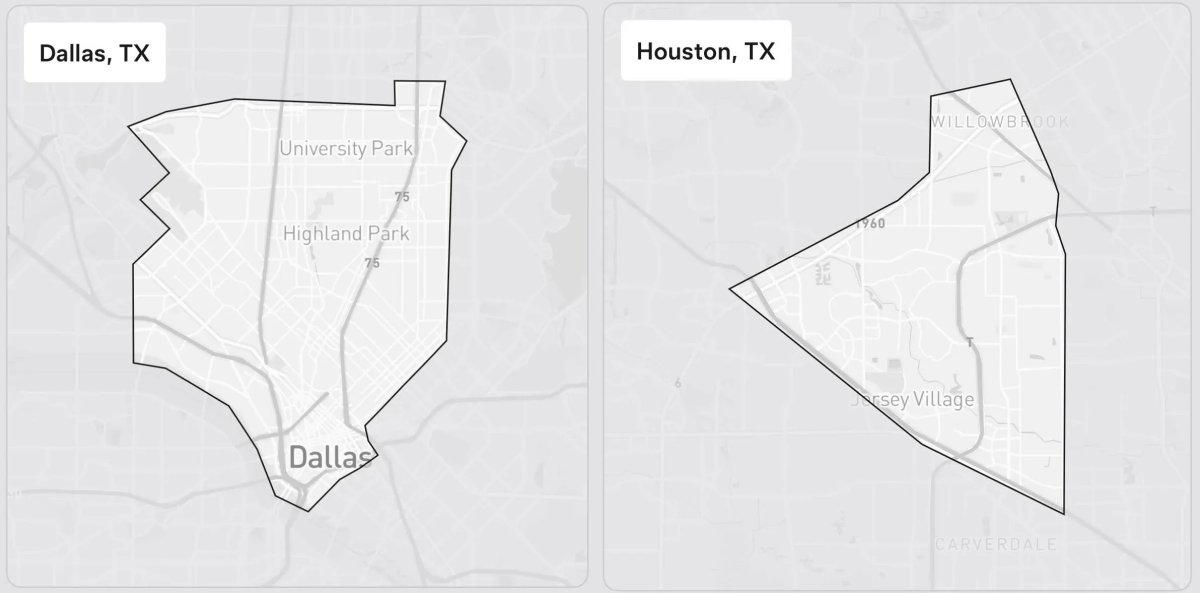
For the initial launch phase, Tesla is keeping the operating areas relatively tight. In Houston, the geofence focuses on the Northwest region, forming a triangle that covers the Jersey Village and Willowbrook areas. This initial zone appears to be around 12 to 15 square miles.
Dallas, on the other hand, is launching with a significantly larger footprint. The service area there covers a complex trapezoid-shaped region that includes much of the city’s “urban core” and the Park Cities, encompassing roughly 30 to 35 square miles.
While these areas might seem modest, they follow the playbook Tesla established in Austin. When the service first launched there last year, it covered a small 20-square-mile fraction of the city. Today, Tesla’s Austin geofence has exploded to approximately 245 square miles, growing over 12 times its original size. We expect a similar expansion pattern for Dallas and Houston as the system gathers more data on local traffic patterns and infrastructure.
Unsupervised Robotaxi
Tesla announced it’s launching robotaxis in Dallas and Houston, and users have now confirmed the service is unsupervised. This is a surprising move, as many expected Tesla to launch a supervised service in new areas before removing the safety monitors, much like they did in Austin.
However, it’s not clear whether these new areas include only unsupervised service or a mix of supervised and unsupervised. In the San Francisco Bay Area, the service still uses a safety driver behind the wheel, while Austin features a mix of cars with safety monitors in the passenger seat and fully autonomous units.
For this new Texas expansion, Tesla shared a video of Robotaxi rides with no one in any of the front seats in both cities, seemingly confirming an unsupervised service. This means that for riders in Dallas and Houston, the car will arrive and navigate to the destination with no human hand-holding.
Robotaxi now rolling out in Dallas & Houston 🤠 pic.twitter.com/G3KFQwqGxB
— Tesla Robotaxi (@robotaxi) April 18, 2026
That said, we might see the company take a hybrid approach during these early days. Just like the more established sibling in Austin, Tesla could operate a mix of both supervised and unsupervised vehicles. Some riders may still find a safety monitor present as Tesla continues to gather data and refine its “edge case” handling in these new urban environments. While the official “unsupervised” tag is a major milestone, we’ll be keeping a close eye on social media to see the ratio of truly empty front seats as the first public rides begin this weekend.
Timing is Everything
The timing of this launch is likely no coincidence. Tesla is scheduled to release its Q1 2026 earnings and present its financial performance to investors on Wednesday, April 22. By launching in two major Texas cities just days before the call, Tesla leadership has a massive “win” to discuss with investors who are looking for progress on the company’s pivot toward AI and robotics.
This Texas expansion is just the beginning of a very busy first half of the year for the company’s robotaxi ambitions. Tesla has already been spotted staging for a launch in Phoenix, and there are plans to bring the service to Miami, Orlando, Tampa, and Las Vegas this year.
As Tesla’s dedicated ride-hailing app continues to mature, the dream of a car that makes you money while you sleep is moving closer to reality. For residents in Dallas and Houston, the chance to summon a self-driving Tesla is finally here, marking another major milestone in the slow but steady death of the traditional taxi.