
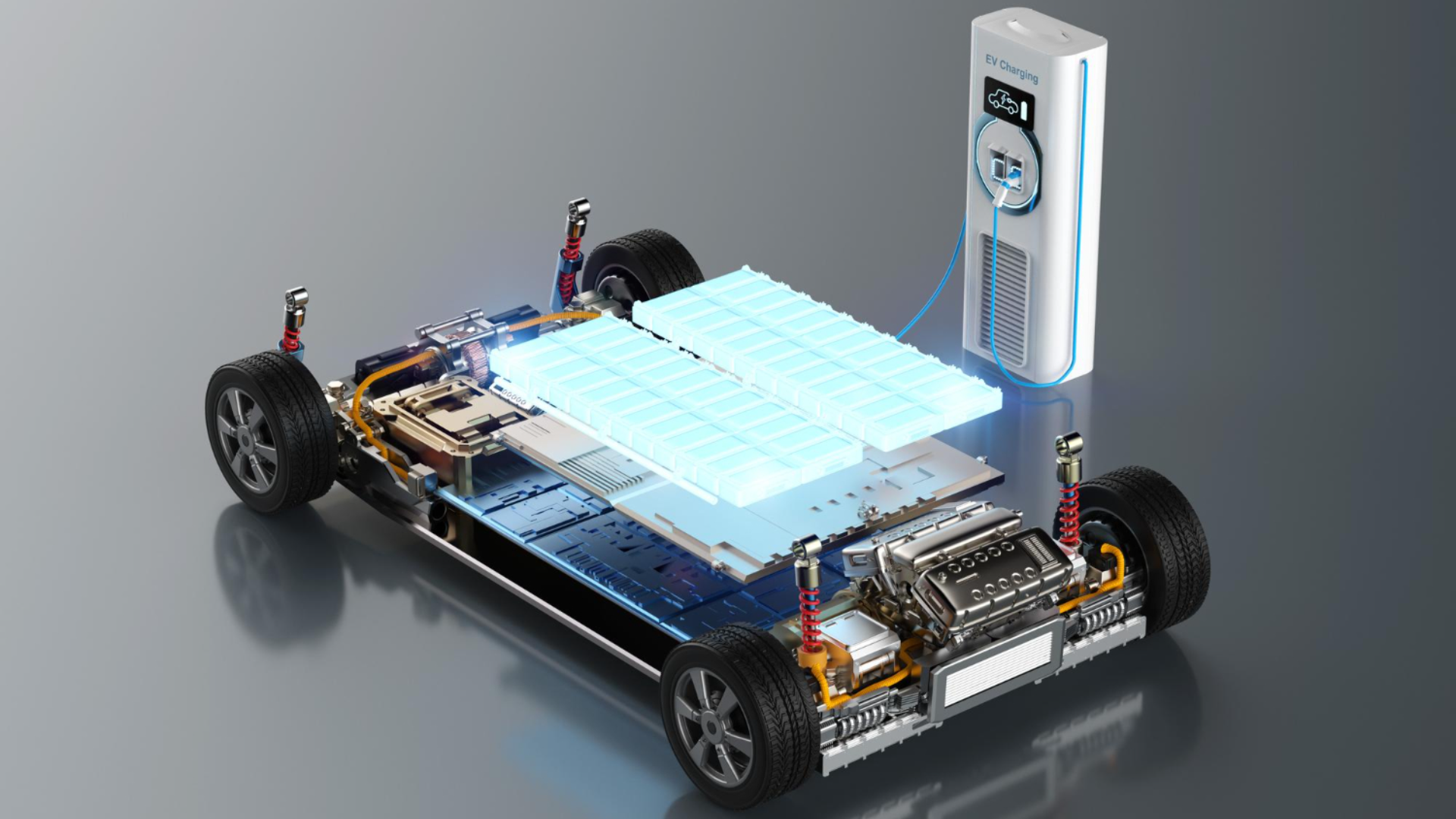
Amid intensifying focus on EV safety, researchers at Nanjing Tech University have developed a lithium battery insulation material capable of withstanding temperatures up to 2,372°F. The material is based on a silica aerogel insulation sheet, engineered to significantly limit heat transfer between lithium-ion cells during thermal runaway events – a critical failure mode in which internal temperatures spike rapidly.
In such scenarios, a single compromised cell can reach extreme temperatures within seconds, triggering a chain reaction that spreads across adjacent cells and increases the risk of fire. By acting as a high-temperature “firewall”, the aerogel layer helps contain and slow this propagation, buying valuable time for onboard safety systems to respond.
Researchers claim the approach could enhance battery pack integrity without adding substantial weight, making it particularly relevant as automakers push for higher energy densities and longer driving ranges.
Material shows hours-long thermal isolation in tests
Test results point to a significant jump in high-temperature resilience for next-generation battery insulation. In controlled trials, a 0.09-inch aerogel sheet exposed to 1,832°F for five minutes kept the opposite surface below 212°F, demonstrating strong thermal shielding under extreme conditions. Researchers say the material can sustain thermal isolation for up to two hours, a window that could prove critical in containing cascading battery failures, CarNewsChina reports.
Earlier aerogel-based battery solutions typically operated at around 572°F, well below the 1,202°F to 1,832°F range commonly observed during lithium-ion cell combustion. The new material raises that tolerance ceiling from roughly 1,202°F to 2,372°F, aligning more closely with real-world failure conditions and significantly improving the ability to slow or contain thermal runaway.
At the core of the material’s performance is an ultra-light, nanoporous structure that is roughly 99% air, inherently limiting heat conduction. Building on this, the research team enhanced thermal resistance by reinforcing the internal network and fine-tuning catalyst conditions during synthesis, resulting in a more robust and heat-tolerant aerogel.
To overcome the brittleness typically associated with aerogels, the material was engineered for mechanical flexibility, achieving more than 90% elastic compression while maintaining structural integrity. This is particularly important in battery systems, where cells undergo continuous expansion and contraction during charge and discharge cycles, requiring insulation layers that can adapt without cracking or degrading over time.
Efficient solvent recovery drives scale-up of next-gen battery insulation
Moving beyond lab constraints, the team tackled manufacturing bottlenecks by refining a supercritical CO₂ drying process, a key step in producing high-performance aerogels. The optimized approach significantly improved efficiency, particularly through solvent recovery, where ethanol reuse exceeded 99.5%. This closed-loop system helped cut raw material costs by more than half, addressing one of the major barriers to large-scale adoption.
With these process improvements, the material has progressed from experimental development to industrial-scale production readiness. The ability to manufacture consistently at scale positions the insulation technology as a viable candidate for integration into commercial battery systems, especially as demand grows for safer, high-density energy storage solutions.
The material is already finding its way into commercial battery systems, with reported adoption by companies such as CATL, BYD, Sungrow, and Xiaomi. While its immediate relevance is in electric vehicles, the aerogel insulation is also suited for aerospace applications and high-temperature industrial settings where thermal management is critical.
The breakthrough comes amid a broader wave of battery innovation across the industry. Sodium-ion technologies are advancing toward lower-cost, longer-life cathode chemistries, while Great Wall Motors’ battery arm Svolt has begun mass production of an 80 kWh plug-in hybrid battery – one of the largest capacities announced for PHEVs to date.