April 15, 2022
By Gabe Rodriguez Morrison
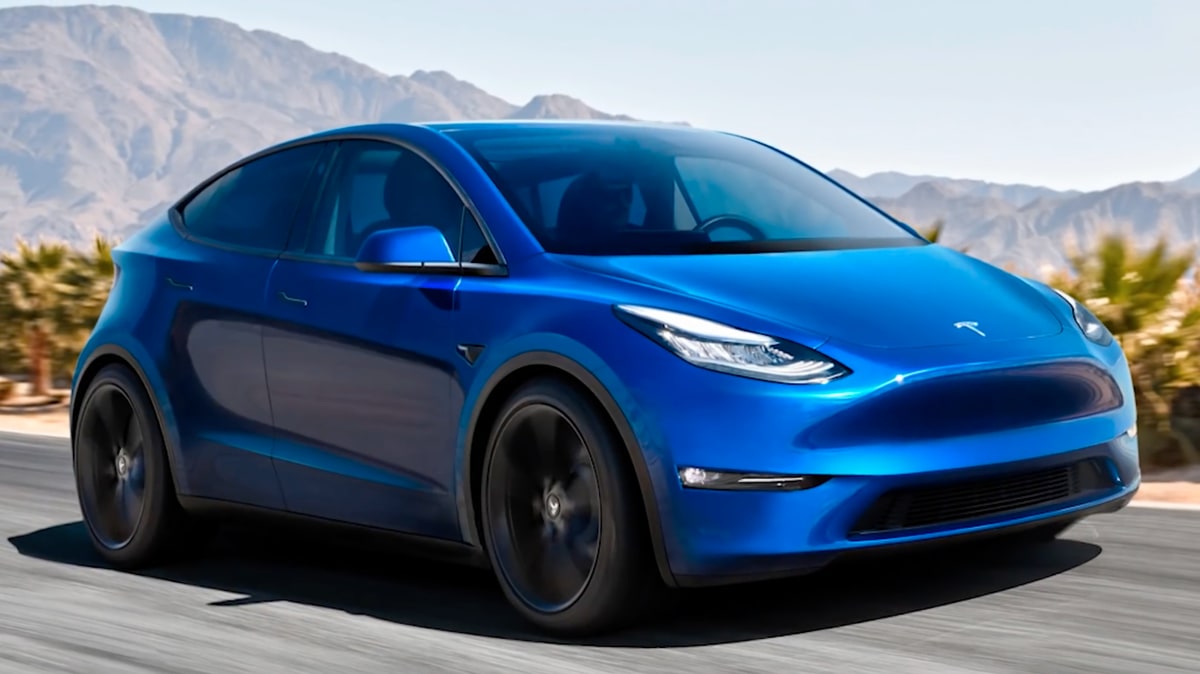
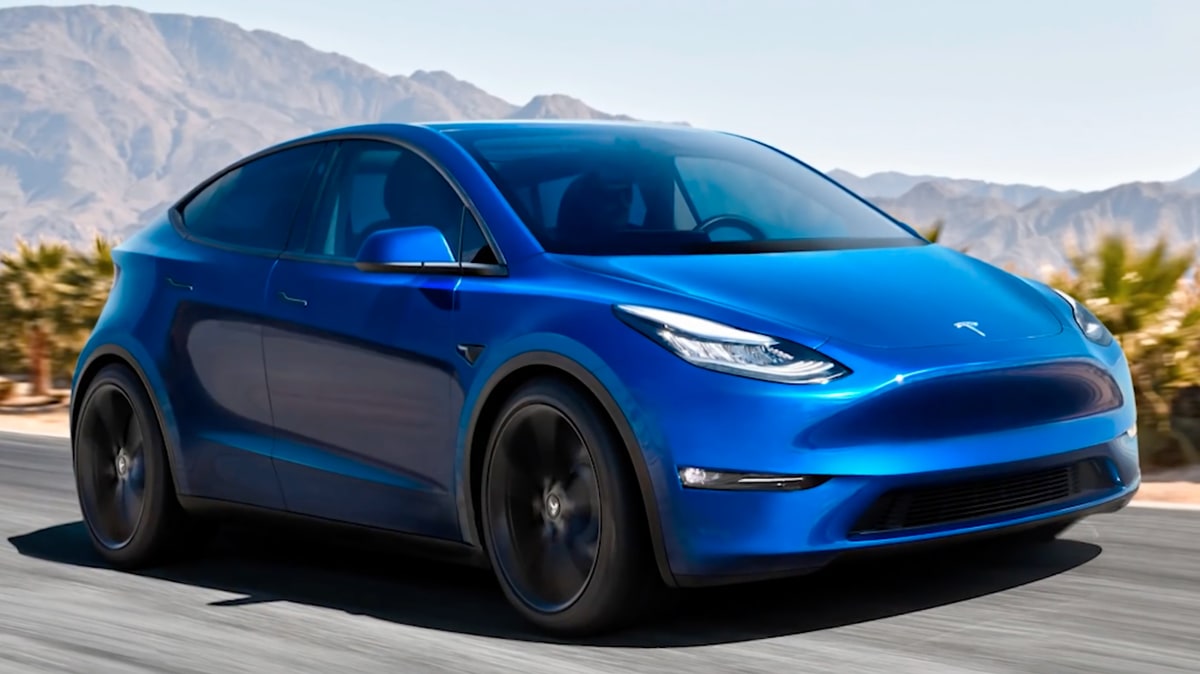
The Tesla Model 2 aims to make electric vehicle ownership more affordable. Tesla probably won’t use the name “Model 2” because it implies a smaller version of the Model 3 when it will really be a more economic version. Tesla’s target is a $25k car, but the Model 3 was also supposed to be $35k but ended up being more expensive. The Model 3 currently sits at just under $47k in the US.
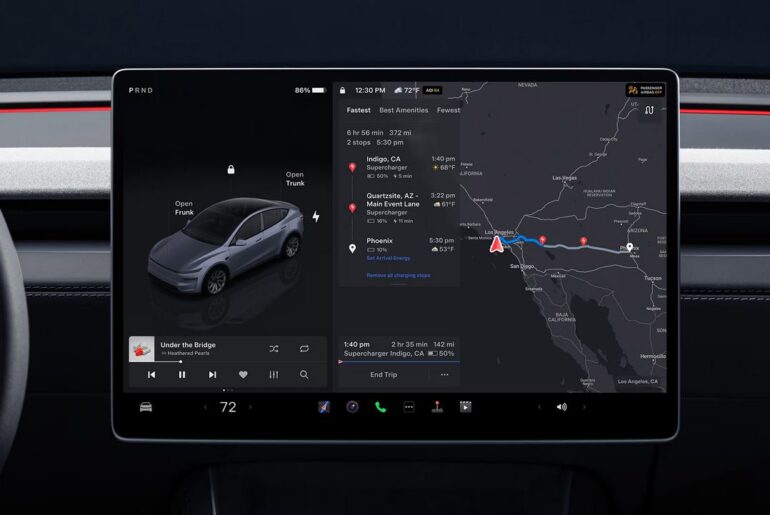
When Tesla created the Model 3, they essentially built a scaled-down, more efficient version of the Model S by removing features that were more expensive or hard to manufacture. Many of the switches, vents, and features were either simplified or completely removed, including the instrument cluster.
This includes replacing physical controls with on screen controls, like the handle for the glove box, mirror adjustment buttons, windshield wiper controls and many others.
Other controls were simplified to reduce complexity and therefore cost. Some examples include the simplified vent system and steering wheel buttons. The interior and exterior door handles were also redesigned to reduce the amount of moving parts.
Back in 2016 when the Model 3 was unveiled it wasn’t entirely clear which features were cost-cutting measures and which were feature iterations and would become standard in all future Teslas.
When Tesla debuted the new Model S in 2021 it became clearer which features may have been cost-cutting measures. We saw a lot of Model 3 features carry over to the redesigned Model S, such as a horizontal center screen, one continuous vent with on screen controls, but not every feature made it over.
These were seen as the compromises Tesla made to create a vehicle that is cheaper to manufacture when compared to the Model S.
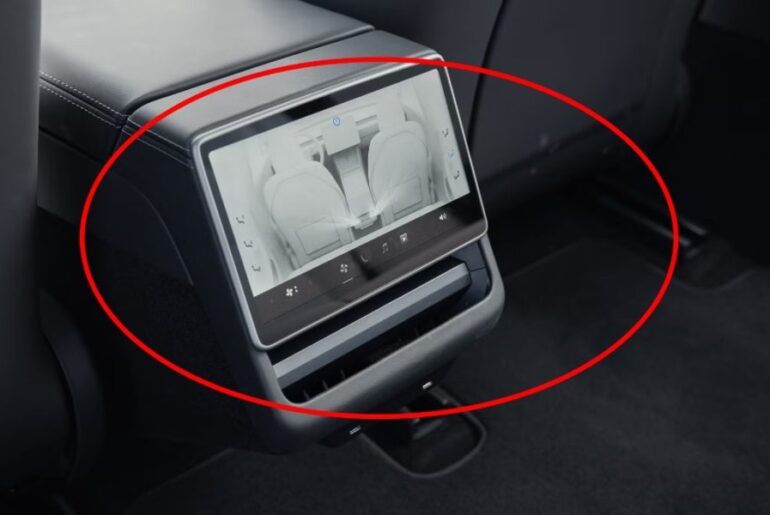
The Model 3 doesn’t have an air suspension, cooled seats, a rear screen, or an instrument cluster. It also has a slightly smaller center screen. So what more can Tesla remove or simplify from a Model 3 to create a more affordable, scaled-down vehicle?
Tesla would likely keep all software-only features since they don’t add much to the cost of the vehicle. Some possibilities may include fewer speakers, removing heated seats in the rear, removal of wireless chargers, and removal of the glass roof. Removing any cameras or the FSD computer is unlikely since the FSD package is profitable for Tesla and there are also safety features that depend on that hardware.
It’s possible that Tesla’s Model 2 has transformed into the supposed Robotaxi mentioned at the Giga Rodeo Event. Elon has previously talked about creating a car without steering wheels or pedals, which would be fitting for a fully autonomous vehicle.
At Battery Day, Tesla said that standard range vehicles and future models will use lithium iron phosphate batteries. LFP batteries are cheaper to produce and have some advantages and disadvantages when compared to nickel batteries. Tesla would likely use the 4680 LFP battery for the Model 2. This would make the vehicle smaller and lighter, but may also offer less range.
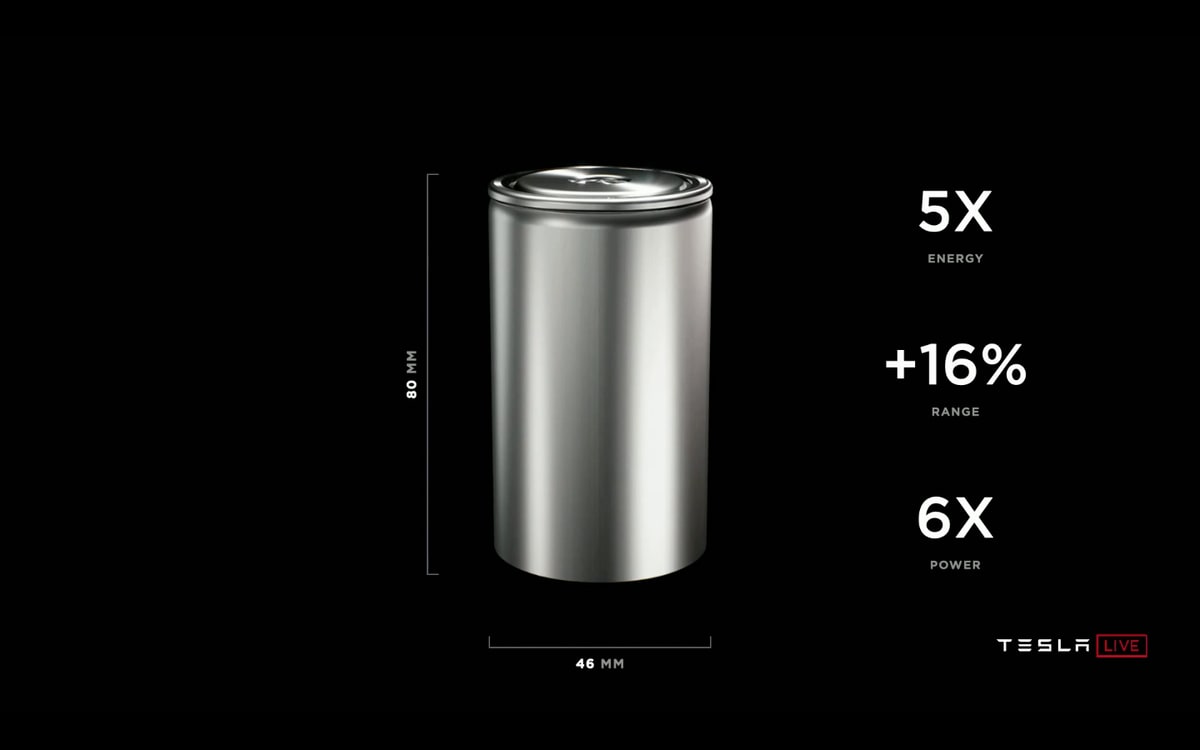
Tesla’s 4680 cell is named after its dimension, 46mm x 80mm. They are much cheaper to manufacture, producing 5x more energy, 16% more range, and 6x more power, making them far more economic than traditional batteries. Using 4680 batteries, the Model 2 is expected to have a travel range of 250 to 300 miles.
Tesla will use a structural 4680 cell pack in a single body cast to manufacture the Model 2 as efficiently as possible. This along with advanced robotics will help Tesla achieve economies of scale and mass-manufacture their most affordable car yet.
In May 2022, during the Financial Times ‘Future of the Car’ interview (video), Elon stated that there is some probability that Tesla would make a car smaller than the Model 3, leaving the possibility open for both, a smaller Model 3 and a Tesla Robotaxi.
Don’t expect the “Model 2” anytime soon, Elon has talked about Tesla finishing the CyberTruck this year and starting production in 2023. Tesla also has the Roadster and Semi to produce, which are very likely to be ahead of the Model 2.
By that time, we may see drastic improvements in FSD that could warrant a fully autonomous Robotaxi. I wouldn’t expect the Model 2 before 2024 at very best, but we could see prototypes before then.
Subscribe to our newsletter to stay up to date on the latest Tesla news, upcoming features and software updates.
April 16, 2026
By Nehal Malik
Elon Musk is not letting up on Tesla’s relentless pursuit of computational dominance. Just hours after confirming that the next-generation AI5 chip has officially finished its design phase, Musk took to X to share some eye-watering specs for its successor: AI6.
According to Musk, the AI6 chip will feature a massive performance leap, delivering a “true doubling of performance over AI5.” This progress is particularly impressive considering a single AI5 chip is expected to offer five times as much raw compute power as current AI4 hardware (which features a dual-SoC design), despite it being a rush job. Musk admitted that the team “had to make several design concessions to move fast,” even though they managed to finish the design 45 days ahead of schedule. Musk added that AI6 will address those early shortcuts while introducing “many new great ideas.”
The Architectural Step-Change: AI6 and AI6.5
AI6 won’t just be an incremental bump; it represents a generational shift in how Tesla handles memory and processing. While Samsung was originally expected to be the sole producer after a massive $16 billion deal last year, Musk has also revealed a surprise “mid-cycle” refresh: AI6.5.
The standard AI6 chip will be manufactured using Samsung’s 2nm process at its new facility in Taylor, Texas. However, AI6.5 will see production shift to TSMC’s 2nm process in Arizona to further eke out performance. This dual-sourcing strategy suggests that Tesla is looking to leverage the slight technical advantages of different foundries to keep its lead. Both chips will transition to LPDDR6 memory, moving beyond the LPDDR5 (or LPDDR5X) expected in AI5, providing the massive bandwidth required for the next generation of neural networks.
The SRAM Secret Sauce
One of the most technical details shared by Musk involves how these chips handle data. Both AI6 and AI6.5 dedicate about half of their TRIP AI computation accelerators to SRAM, which is ultra-fast onboard memory.
This is a big deal because it allows the chip to perform complex AI calculations in a high-speed workspace without constantly waiting on the main system memory (DRAM). Musk noted that this design makes the effective memory bandwidth “an order of magnitude greater than DRAM bandwidth.” Essentially, by keeping the most critical data right on the chip, Tesla is bypassing the hardware bottlenecks that currently plague the AI4 fleet.
From Cars to the TERAFAB
While Musk recently downplayed the need for AI5 in current consumer vehicles, claiming AI4 is enough for “better than human safety,” the roadmap for AI6 is clearly looking toward the future of unsupervised autonomy. These chips will likely serve as the brain for the Cybercab and the Optimus humanoid robot once they reach high-volume production.
The development of these chips will likely also be supported by the jointly developed TERAFAB project between Tesla and xAI. This vertically integrated facility will consolidate chip design, memory production, and advanced packaging under one roof, allowing Tesla to iterate on a nine-month cycle. By the time AI6 enters mass production, Tesla’s “galactic civilization” goals might not seem so far-fetched.
April 16, 2026
By Nehal Malik
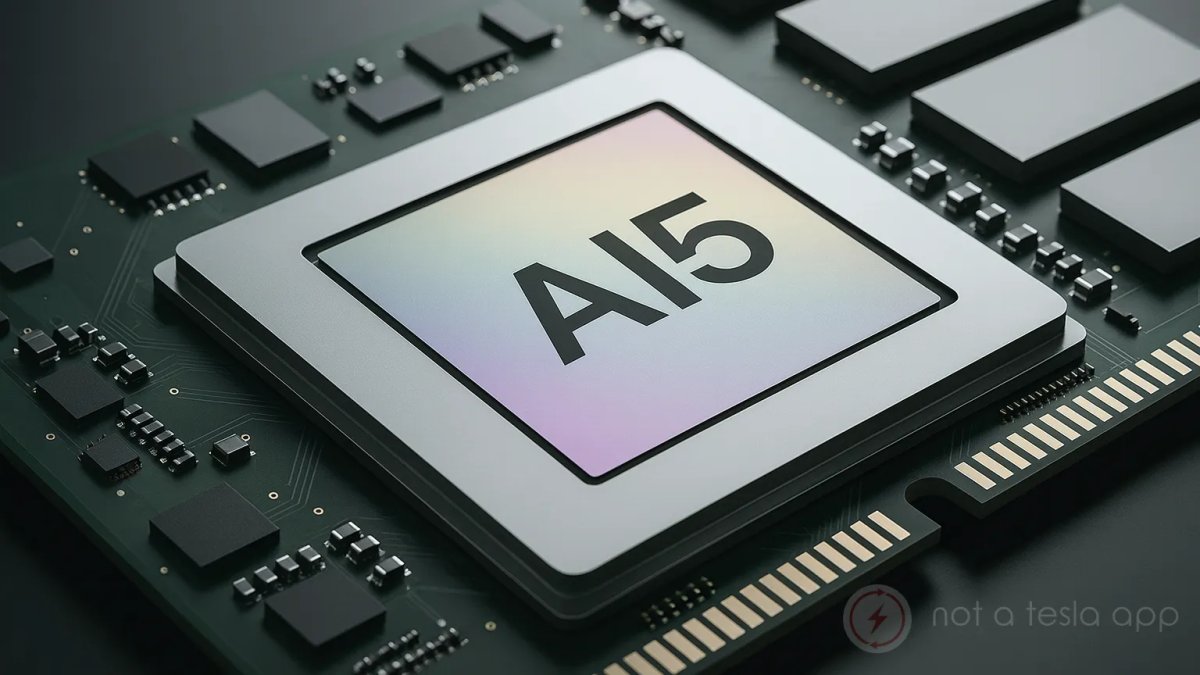
Elon Musk has officially announced that Tesla’s next-generation “AI5” chip has exited the tape-out stage, and it is a literal beast of a processor. In a post on X, Musk confirmed the design was ready while sharing that a single AI5 chip delivers roughly 5 times the useful compute power of the dual-SoC AI4 setup found in current Teslas.
While Musk is currently downplaying its arrival in consumer vehicles — noting that AI4 is already “enough to achieve much better than human safety” — this chip represents an architectural step-change. It appears that Tesla is finally moving away from the redundant dual-chip design of HW3 and HW4, suggesting a new level of confidence in the hardware’s reliability. By consolidating into a single-chip design, Tesla can maximize efficiency and raw power without the overhead of keeping two identical chips in sync.
The Memory Monster
While the compute leap is impressive, the real “monster” metric for AI5 is its memory. Musk has previously hinted at a 40x improvement in certain metrics, which aligns with rumors of a staggering increase in RAM. While the current AI4 computer relies on 16GB of RAM, Musk has previously teased that AI5 could feature roughly 9 times more memory, potentially reaching up to 144GB. We’ll have to wait and see just how much of that Tesla can realize, given the ongoing global memory shortage and sky-high LPDDR5 prices.
AI models are incredibly memory-hungry, and Tesla engineers are already hitting bottlenecks with AI4. This massive RAM upgrade will allow Tesla to run models that are, as Musk would say, orders of magnitude larger than what we see today. For context, the much larger 10-billion-parameter model originally intended for FSD v14 was pushed back to v15, likely to give engineers more time to optimize for current hardware. AI5 will effectively remove these “handcuffs,” letting the software team build the massive neural networks they’ve been dreaming of.
Robots and Supercomputers First
In a pivot from his previous rhetoric, Musk recently said that consumer vehicles won’t be the first to receive AI5. Instead, the initial batches of silicon are destined for the Optimus humanoid robot and Tesla’s massive supercomputer clusters. This makes sense; Optimus requires high-density compute to navigate the physical world, and Tesla’s training clusters need every ounce of performance to process the billions of miles of fleet data.
The Cybercab robotaxi is still expected to launch with AI4 hardware after entering mass production this month, but it will almost certainly be the first vehicle to get an AI5 refresh once volume production ramps up in 2027. Consumer vehicles like the Model 3 and Model Y will likely follow that same timeline. Tesla is currently targeting an aggressive nine-month development cycle for its chips, with AI5 production split between Samsung in Texas and TSMC in Arizona.
The End of the Hardware Bottleneck
Tesla’s journey from HW3 to AI5 has been a series of hard-fought lessons. Engineers are currently maxing out what is possible with distillation and model shrinking just to make FSD run smoothly on existing cars. AI5 represents the light at the end of that tunnel.
With 5x the raw compute power of two AI4 chips and much more RAM, AI5 could serve as the foundation for the “Unsupervised” era of FSD. While Tesla maintains that Unsupervised FSD is technically possible on AI4, it’s highly probable that we’ll see it perfected on AI5 first before being backported. By the time 2027 rolls around, the specialized AI silicon in your car might just be more powerful than the high-end gaming PC in your den.