
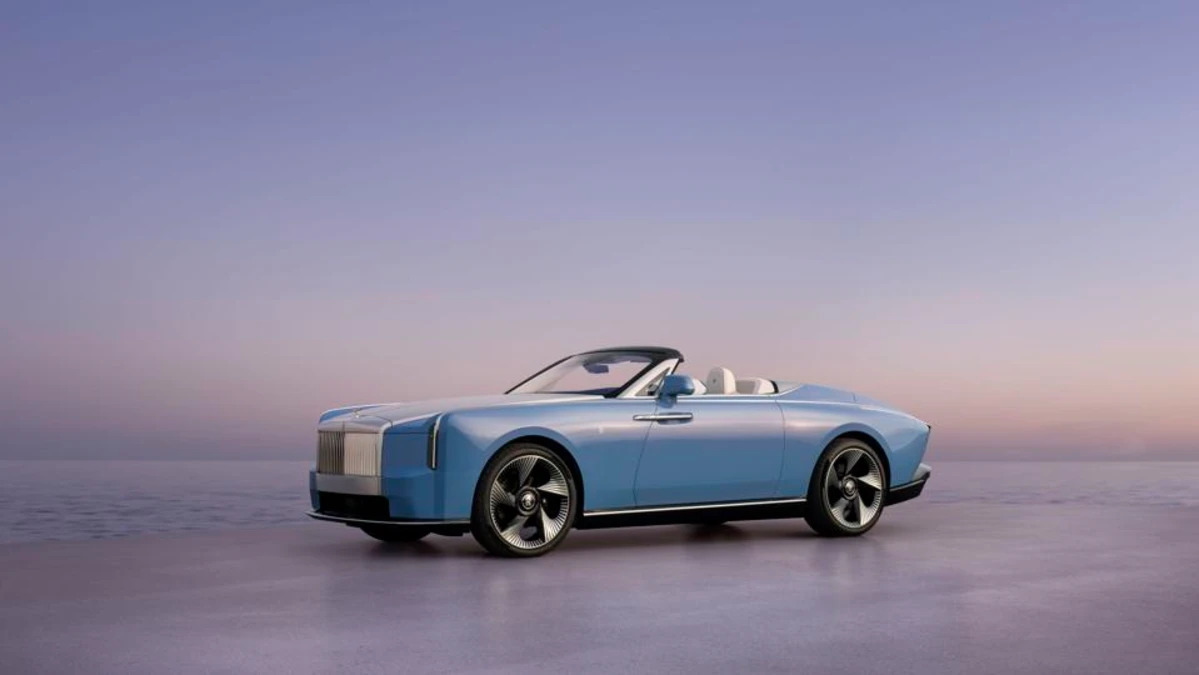
When a handful of Rolls-Royce’s most exacting clients asked the marque to push beyond its own boundaries, the brief wasn’t incremental—it was existential. The result is Project Nightingale, a striking new open-top concept that blends traditional coachbuilding with a fully electric drivetrain.
For Rolls-Royce Motor Cars, this is more than a limited-run release. As CEO Chris Brownridge frames it, the project brings together elements the brand has never previously combined: the full creative latitude of coachbuilding, near-silent electric propulsion, and a newly imagined open-air driving experience. The ambition channels the experimental spirit of founder Henry Royce, whose boundary-pushing “EX” cars of the 1920s helped shape the marque’s early identity.
A Design Language Rooted in the Past—But Not Bound by It
Project Nightingale draws heavily on the streamlined elegance of the Art Deco era, particularly the late-phase Streamline Moderne movement, in which simplicity of form outweighed ornamentation. Under the direction of Domagoj Dukec, Rolls-Royce’s design team has distilled that philosophy into something both familiar and startlingly new.
The car’s proportions are intentionally dramatic. At nearly 5.8 meters long—comparable to the flagship Rolls-Royce Phantom—it devotes its entire footprint to just two occupants. The result is a silhouette dominated by an elongated hood and tapered rear, with a compact cabin set deep within the body.
References to the brand’s experimental past are explicit. The rare Rolls-Royce 16EX and Rolls-Royce 17EX models serve as conceptual anchors. Their torpedo-like forms and performance ambitions are reinterpreted here through a contemporary, electric lens.
The Power of Silence
What truly sets Project Nightingale apart isn’t just its design, but the experience it enables. Freed from the constraints of an internal combustion engine, the car’s fully electric architecture allows for expansive, uninterrupted surfaces and a fundamentally different sensory environment.
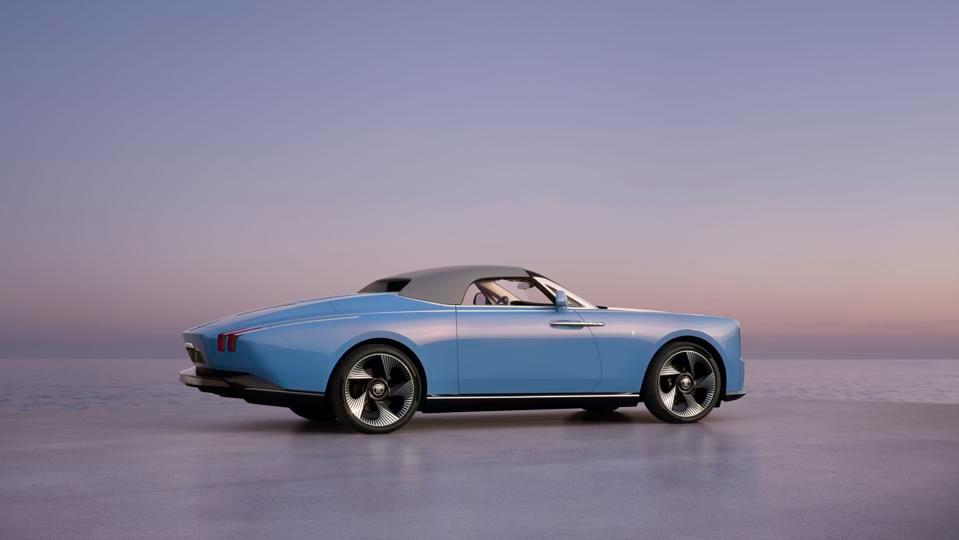
Project Nightingale
Rolls-Royce Motor Cars
With the roof down, the absence of mechanical noise transforms the act of driving into something closer to sailing. Engineers describe early prototypes as eerily quiet—wind minimized, engine noise eliminated—leaving only ambient sounds: ocean waves, rustling trees, distant birdsong.
Translating Sound Into Light
Inside, Project Nightingale’s most distinctive feature is what Rolls-Royce calls the “Starlight Breeze” suite. Inspired by the acoustic patterns of birdsong—specifically the nightingale—the interior lighting system translates soundwaves into a constellation of more than 10,000 tiny illuminated points. It’s housed within a sculptural framework known as the “Horseshoe,” which rises behind the seats and reinforces the sense of enclosure.
The rest of the interior follows suit: restrained, tactile, and meticulously detailed. Controls are reduced to a minimal set, each rendered with jewelry-like precision, while hidden compartments and sliding elements emphasize both functionality and theater.
Craft Meets Code in a New Coachbuild Era
Only 100 examples of Project Nightingale will be produced, each hand-built at Goodwood and tailored to its owner through Rolls-Royce’s bespoke program. But ownership extends beyond the vehicle itself.
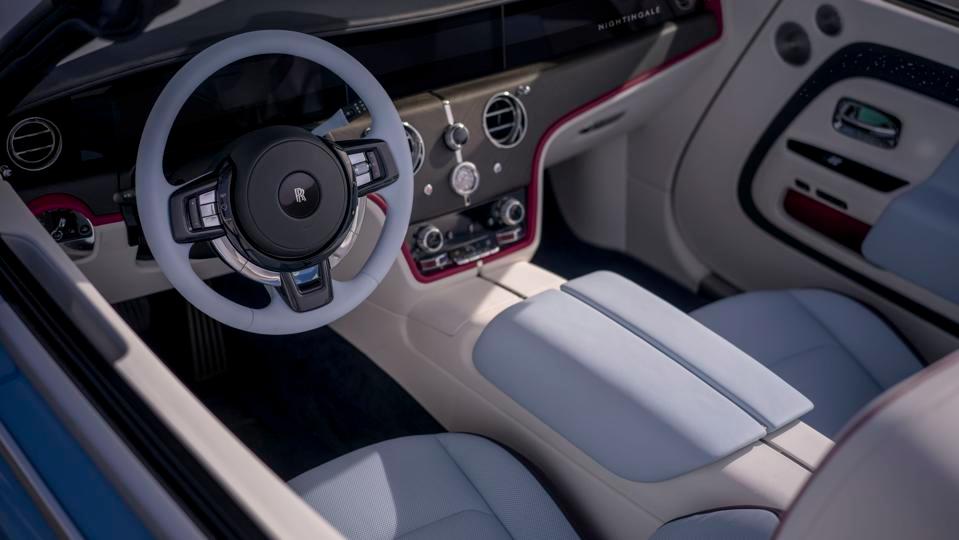
Project Nightingale
Rolls-Royce Motor Cars
Clients are already participating in a multi-year commissioning journey—part design collaboration, part social membership—complete with curated events and private gatherings in destinations that mirror the car’s Riviera-inspired aesthetic. It’s a reminder that, at this level, Rolls-Royce isn’t simply selling automobiles; it’s orchestrating experiences.
Rewriting the Rules of Electric Luxury
Project Nightingale arrives at a moment when the luxury automotive sector is grappling with electrification—not just as a technical shift, but as a philosophical one. Where many brands struggle to translate heritage into an electric future, Rolls-Royce appears to be leaning into the disruption.
By pairing silent propulsion with maximalist craftsmanship, the company is reframing electric vehicles not as compromises, but as enablers of entirely new forms of expression.
Deliveries are expected to begin in 2028, but in many ways, Project Nightingale is already doing its work—redefining expectations, challenging conventions, and setting a new benchmark for what ultra-luxury mobility can look and feel like in the decades ahead.
This article was originally published on Forbes.com