‘In China, for China’ push underpins new Ioniq EV lineup
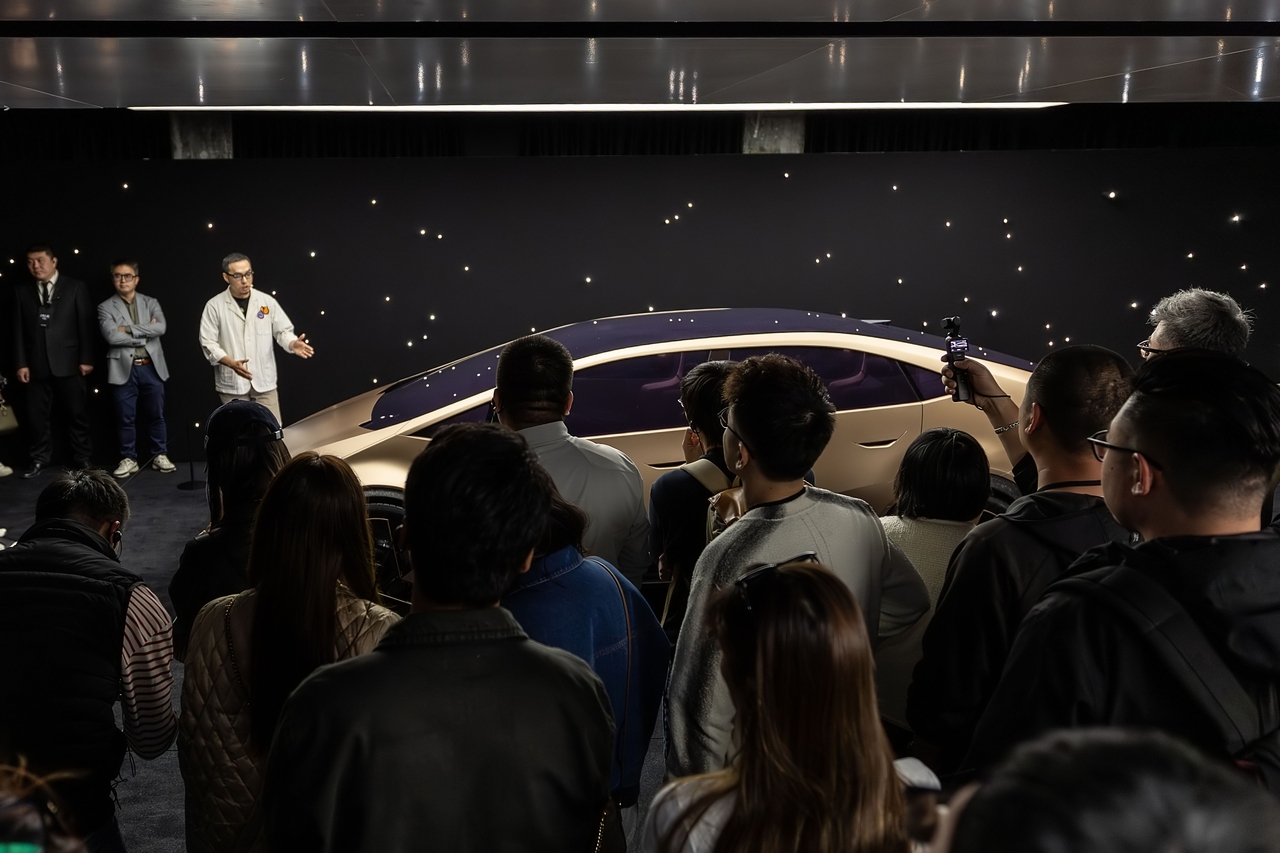 Wen Jiali, chief designer of AVP China Hyundai Design Team, explains the Venus concept at the launching event in Beijing on Friday. (Hyundai Motor Group)
Hyundai Motor is making its boldest attempt in years to win back Chinese consumers, betting on China-tailored Ioniq electric vehicles to fuel a comeback in the world’s largest automotive market.
Last week, Hyundai officially introduced its flagship EV brand Ioniq to the Chinese market, unveiling two concept cars at a brand launch event: the Ioniq Venus sedan and the Earth sport utility vehicle. Hyundai is gearing up to roll out a broader electrification strategy and debut its mass-production Ioniq model later this month at Auto China 2026, which runs April 24 to May 3.
“The newly launched Ioniq brand in China evolves beyond a traditional product lineup into a broader mobility ecosystem,” the company said in a statement. “While drawing on strong global experience, Ioniq was shaped specifically for the Chinese market, integrating local technologies and partnerships with Hyundai’s established standards of safety and quality.”
Li Fenggang, president of Beijing Hyundai Motor, the company’s joint venture with BAIC Motor, said that, beginning with the two concept cars, Hyundai will continue to present products that “reflect deep insight into Chinese customers and our genuine commitment to this market.”
Li’s appointment as the head of Hyundai’s Chinese operation in November was widely seen as a sign of that focus. By naming a Chinese national to lead the joint venture for the first time in its 23-year history, Hyundai signaled its determination to deeper localization and to give local leadership greater strategic authority in one of the world’s most competitive auto markets.
Hyundai is betting that with its renewed EV push, it could reclaim its former glory in China, once counted among the carmaker’s most lucrative markets.
Why Hyundai cannot give up China
From 2010 to 2016, Hyundai sold over 1 million cars every year in China, peaking at 1.1 million in 2016 — making China the carmaker’s largest market, surpassing even South Korea. But its fortunes took a sharp turn after a diplomatic row between Seoul and Beijing over the 2017 deployment of THAAD, an advanced US anti-missile system, in Korea.
Annual sales plunged 30 percent to 785,000 units in 2017, and continued to erode, falling to around 440,000 units by 2020. The slide has yet to bottom out and by 2025, annual sales had dwindled to roughly 130,000 units, leaving Hyundai clutching less than 1 percent of the market.
The decline was hastened by China’s aggressive EV push, which propelled the surge of homegrown brands and steadily wrested market share away from established foreign automakers. Chinese brands, led by BYD and Geely, now capture nearly 70 percent of China’s auto market, which sell over 34 million units annually.
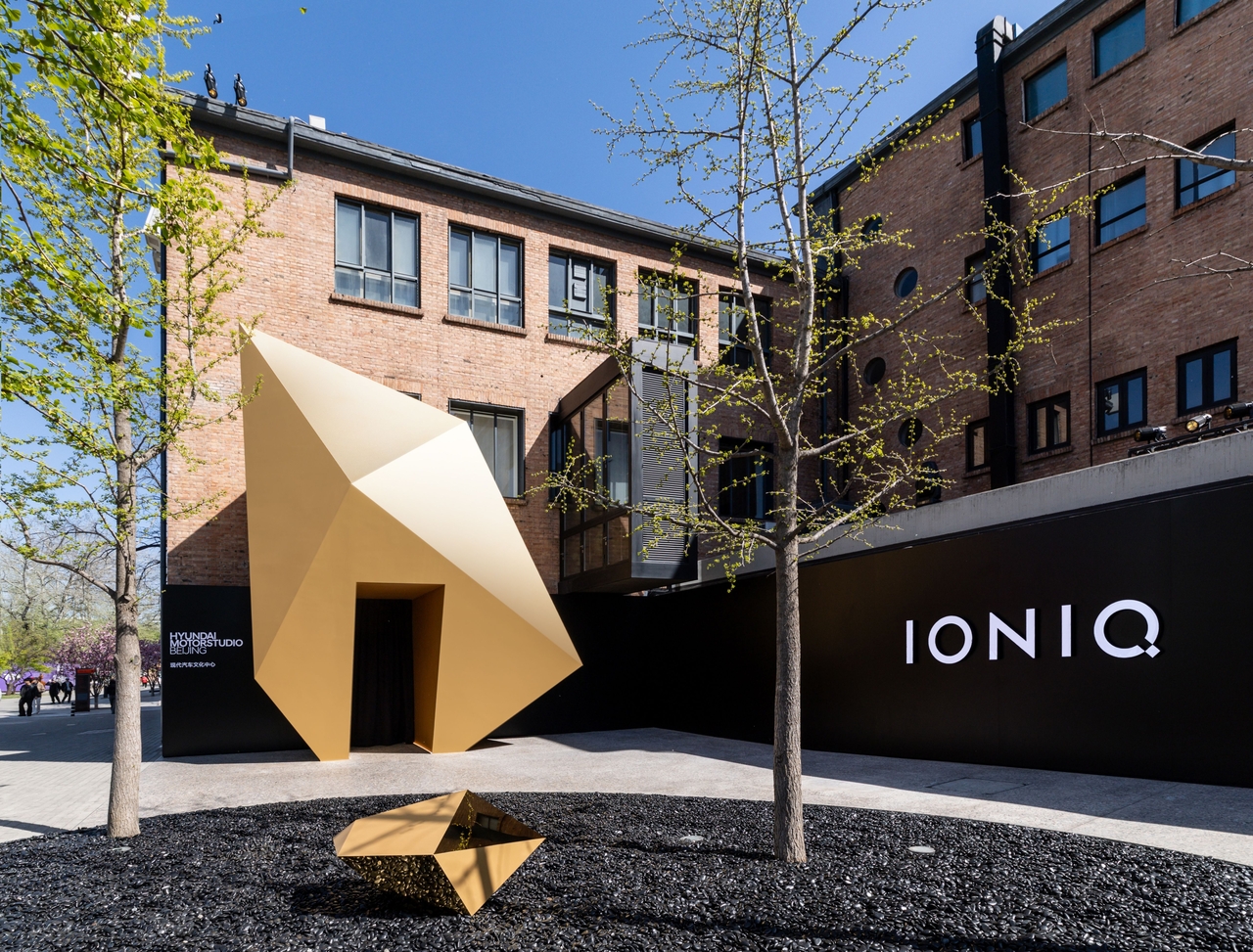 The Golden Gate display at Beijing Hyundai Motor Studio, symbolizing the design direction of the Ioniq lineup in China (Hyundai Motor Studio)
Struggling to keep up with homegrown EV makers — backed by generous state subsidies, tax incentives and a local battery supply chain that drove prices down — some global automakers choose to scale back their investments or pull out of the Chinese market altogether. Hyundai, however, is taking the opposite approach and doubling down on the market under its “In China, For China, To Global” strategy.
“Hyundai cannot afford to give up on China, even though the market has become far more difficult,” said Kim Pil-su, an automotive engineering professor at Daelim University.
Kim said even a 0.5 percentage point gain in China would mean more than 1 million additional vehicles. “That is why it remains such a critical market, and why Hyundai believes that, depending on how well it executes, it still has a chance.”
Hyundai Motor CEO Jose Munoz said in a shareholder letter in March that the carmaker plans to launch 20 new models over the next five years, with a goal of reaching 500,000 annual sales.
Hyundai turns to Chinese style, tech
To that end, Hyundai is rebuilding its China strategy by tailoring designs, technology and services to local preferences rather than relying on imported models or globally developed products tweaked slightly for Chinese buyers.
For its China-specific Ioniq models, Hyundai plans to adopt a new naming system based on planets instead of the numerical labels used globally, such as Ioniq 5 and Ioniq 6.
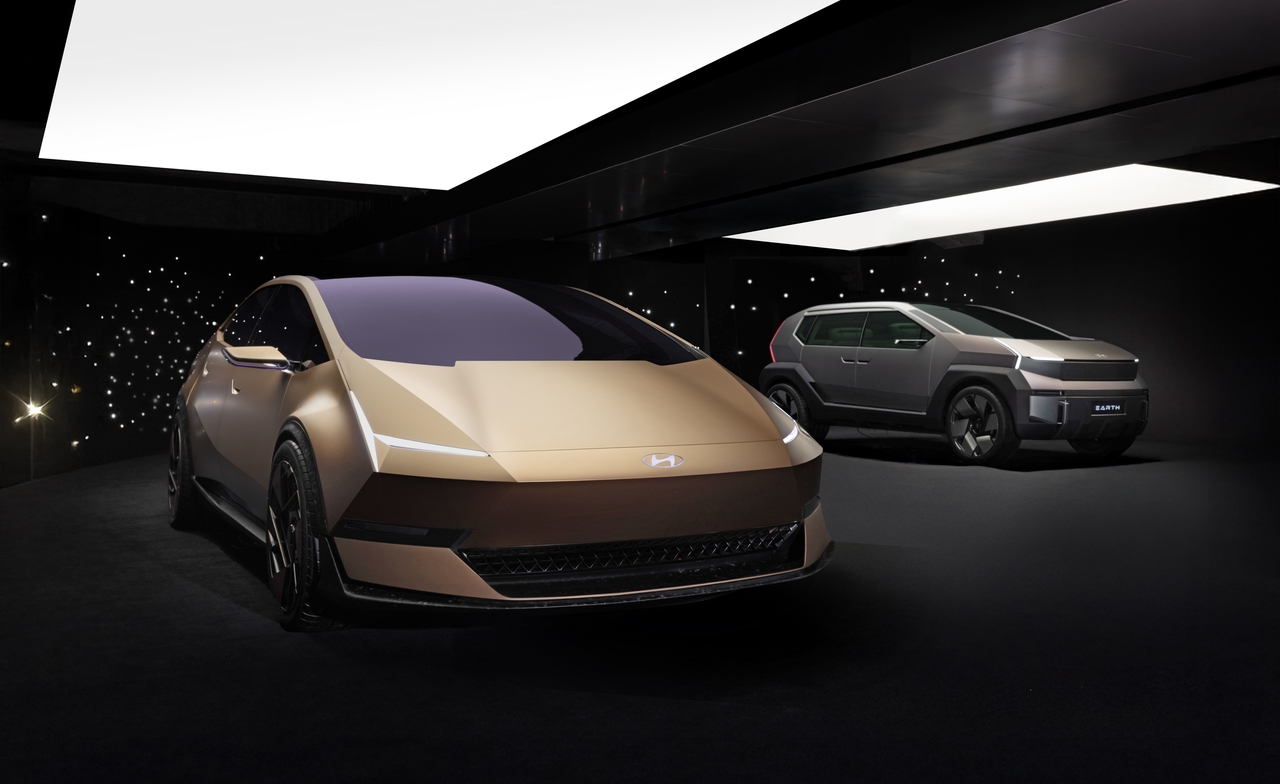 Hyundai Motor’s two Ioniq concept vehicles, the Venus (left) and the Earth (Hyundai Motor Group)
Hyundai is also localizing the underlying technology.
The company said it is working with Chinese autonomous-driving startup Momenta to develop driver-assistance features tailored to local road conditions, which would be key in competing with Chinese EV brands.
Alongside its battery-electric models, Hyundai also plans to introduce extended-range EVs to China for the first time — a powertrain that pairs an electric motor with a gasoline engine that recharges the battery on the go. The move is widely seen as a bid to cater to one of the most popular powertrain references in the Chinese market.
All eyes are on whether Hyundai’s new Ioniq models can gain traction and win back a meaningful slice of the market, which has become the world’s largest for EVs, accounting for more than half of global EV sales.
To hit its target of 500,000 annual sales by 2030, Hyundai would need to more than triple its current volume and persuade Chinese consumers that its next-generation EVs offer something the homegrown alternatives do not, observers say.
“Hyundai and Kia are priced slightly above many Chinese brands, so the key question is whether consumers feel they are getting something better in return,” said Kim.
That does not necessarily mean Hyundai has to cut prices, he added. “The real issue is value for money: a combination of price, features, technology, quality and brand image.”
“Whether Hyundai succeeds in China will depend on how well it can combine three things: a product tailored to Chinese tastes, strong value for money and a clear brand identity that sets it apart from Chinese rivals,” he said.
sahn@heraldcorp.com