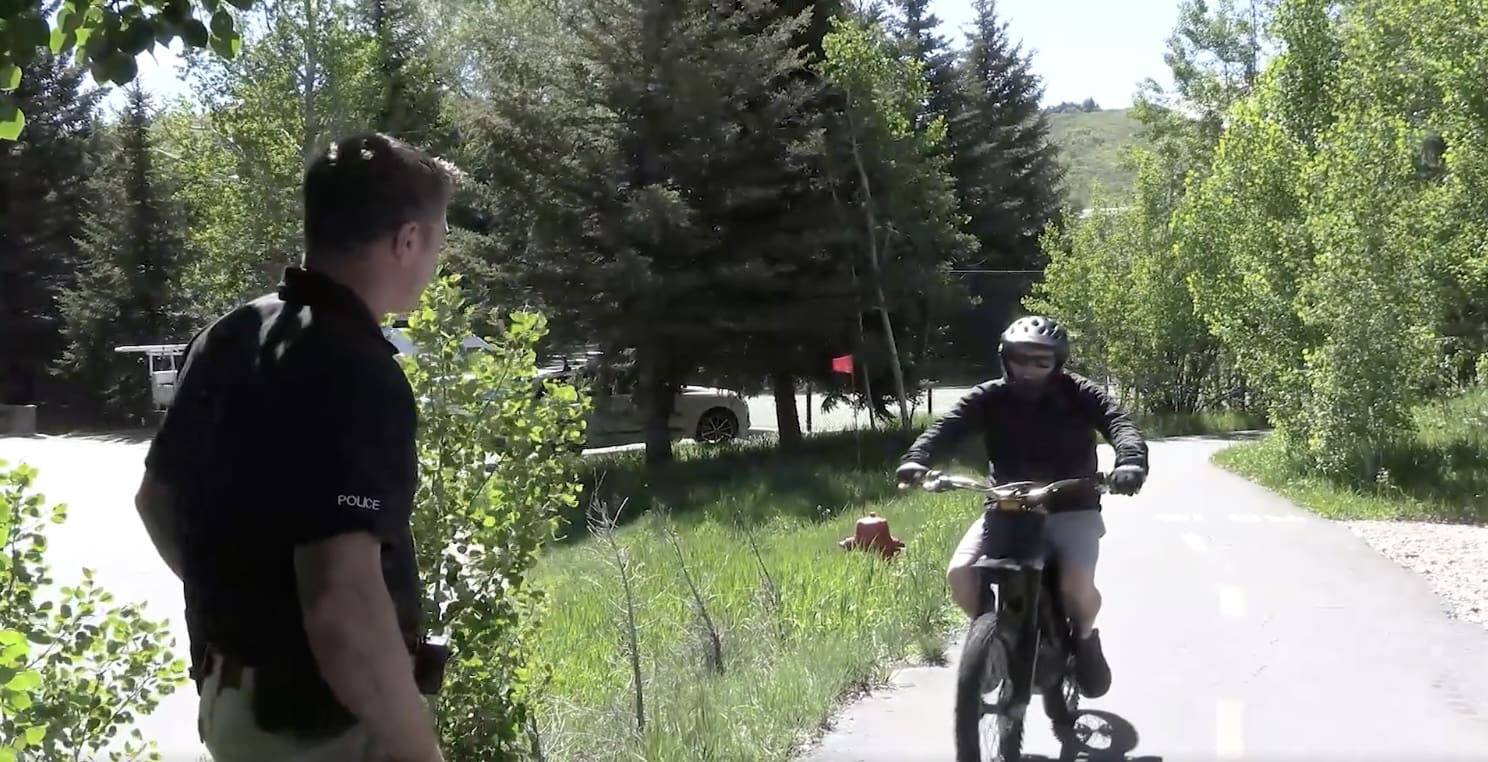
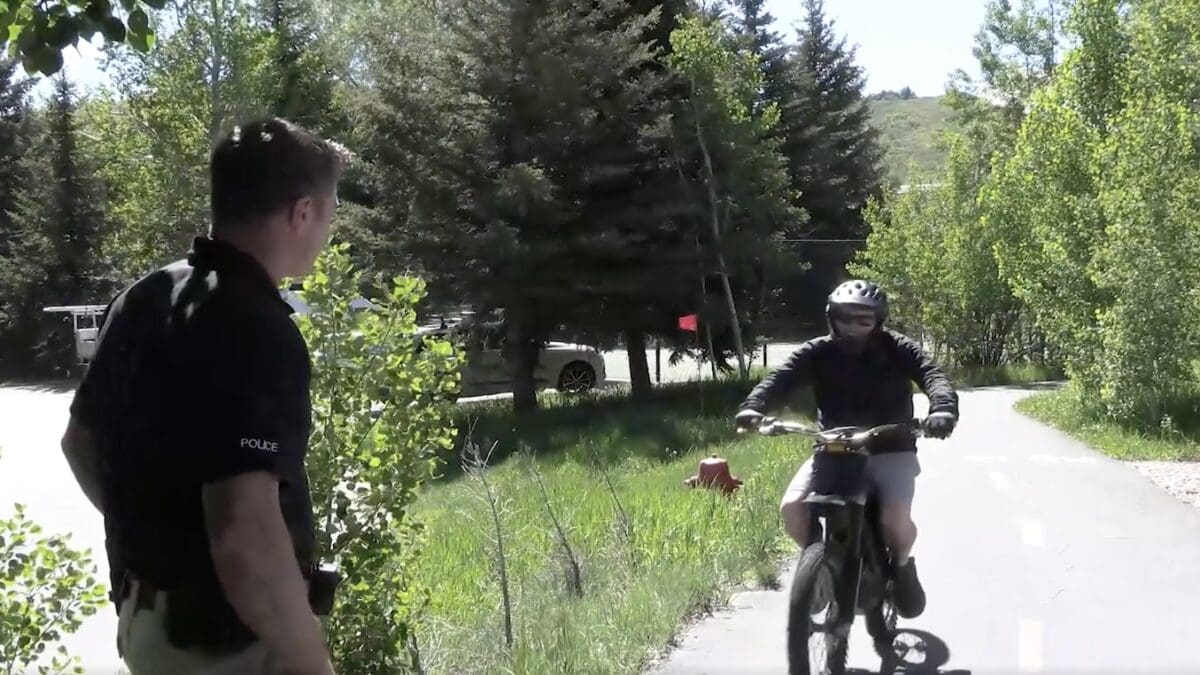
E-motorcycle on a trail. Photo: Park City Police Department
PARK CITY, Utah — Two juveniles riding electric motorcycles attempted to evade law enforcement at Pinebrook Park last week, prompting an investigation that ultimately led to both riders being identified and their bikes impounded, according to the Summit County Sheriff’s Office.
Deputies observed the juveniles operating the electric motorcycles recklessly and began initiating a traffic stop, according to office spokesperson Sgt. Skyler Talbot. When a deputy activated emergency lights, both riders fled the area, and deputies chose not to pursue.
“Deputies are given wide discretion in these situations and are expected to weigh the risks of a pursuit against the need for immediate apprehension,” Talbot said. “We are not going to be in the business of chasing juveniles on electric motorcycles when doing so would create a greater safety risk for them, the public, or our deputies.”
Similar Reads On TownLift
Talbot said one of the juveniles was later located and stopped, while the second was identified through follow-up investigation.
Although no citations or juvenile referrals were issued, both electric motorcycles were impounded. Authorities said the impound was due to the vehicles not being registered, lacking insurance, and the riders not having valid motorcycle licenses. Both juveniles were released to their parents.
The incident comes on the heels of a recently passed Utah bill that will come into law May 6. The bill updates the state’s electric bike regulations, including helmet requirements for many riders and expanded enforcement authority for law enforcement.
While Summit County deputies have spent the past few years focusing on educating riders about legal versus illegal bikes, Talbot previously told TownLift that enforcement would become more strict this summer, including impounding illegal bikes and issuing citations or referring cases to juvenile court.
Talbot emphasized that choosing not to pursue in the moment does not mean individuals avoid consequences.
“We want to be clear that fleeing does not prevent accountability,” he said. “While we may choose not to pursue in the moment for safety reasons, we are often able to identify individuals after the fact and take appropriate action.”
Officials added that while investigative resources are primarily focused on serious crimes, they will be used when necessary to address behavior that poses a risk to public safety.
Legal ways to ride
While in many cases electric motorcycles are not legally allowed on public road ways, officials emphasize there are still legal ways for youth to ride.
There are three “classes” of e-bikes:
Class 1: Pedal assist, max 20 mph, no license or insurance required. Ages 8–14 must ride with adult supervision.Class 2: Throttle or pedal assist, max 20 mph, no license or insurance required. Ages 8–14 must ride with adult supervision.Class 3: Pedal assist, max 28 mph, helmet required under age 21, riders must be 16+.
Children under the age of eight are not legally permitted to operate an e-bicycle.
By contrast, many electric motorcycles — which often have foot pegs instead of pedals and can reach speeds of 30 to 60 mph — fall into a different category and are subject to stricter requirements, including registration, insurance, and a valid motorcycle license.
Similar Reads On TownLift