
Written by Emily J. Thompson, Senior Investment Analyst
Source: Fool
Updated: 21 minutes ago
0mins
Source: Fool
Production Shortfalls: Rivian promised to produce 50,000 vehicles in 2022 but only managed 24,337, resulting in an 80% drop from its IPO price, while Lucid produced just 7,180 of its planned 20,000, leading to a nearly 70% market value loss.
Market Challenges: Both companies face supply chain constraints, production issues, and soaring costs, with Rivian’s gross margin at -276.59% and Lucid’s at -9280.51%, indicating severe financial health concerns.
Future Outlook: Rivian expects its upcoming R2 SUV, priced lower than the R1T and R1S, to attract new customers with a delivery target of 62,000-67,000 vehicles in 2026; Lucid aims for 25,000-27,000 Gravity SUVs, though a recall of over 4,000 units may hinder production.
Investment Risks: Despite analysts projecting revenue growth of threefold for Rivian and sixfold for Lucid from 2025 to 2028, both companies are likely to remain unprofitable and issue more shares for cash, indicating high investment risks.
Trade with 70% Backtested AccuracyStop guessing “Should I Buy RIVN?” and start using high-conviction signals backed by rigorous historical data. Sign up today to access powerful investing tools and make smarter, data-driven decisions.Sign upAnalyst Views on RIVN
Wall Street analysts forecast RIVN stock price to rise
Wall Street analysts forecast RIVN stock price to rise
Current: 15.430

Current: 15.430
About RIVN
Rivian Automotive, Inc. is an automotive technology company, which is engaged in developing and manufacturing category-defining electric vehicles (EVs) as well as vertically integrated technologies and services. The Company’s R1 platform consists of two vehicles: the R1T, a two-row five-passenger pickup truck, and the R1S, a three-row seven-passenger sport utility vehicle (SUV). In the commercial market, the Company offers a Rivian Commercial Vehicle (RCV) platform. The vehicle on this platform is the Electric Delivery Van (EDV), designed and engineered by Rivian in collaboration with Amazon. The Company also offers FleetOS, its proprietary, end-to-end centralized fleet management subscription platform. It also offers a variety of services, including vehicle repair and maintenance, financing, insurance, joint venture, software subscriptions, and vehicle accessories, among others. Its other services include vehicle electrical architecture and software development services, and more.
About the author
Emily J. Thompson
Emily J. Thompson, a Chartered Financial Analyst (CFA) with 12 years in investment research, graduated with honors from the Wharton School. Specializing in industrial and technology stocks, she provides in-depth analysis for Intellectia’s earnings and market brief reports.
 Rivian’s Opportunities in the Electric Vehicle Market
 1 day agoNASDAQ.COM
Declining EV Sales: U.S. electric vehicle sales fell by 28% in the first quarter, indicating a waning consumer enthusiasm for EVs, which may lead major automakers to reconsider their investment strategies in electric vehicles, potentially impacting future market competition.
New Model Launch: Rivian has introduced its new R2 lineup, with expected prices below $50,000, which is close to the average cost of new cars, potentially attracting more consumers to choose its products and thereby increasing market share.
Cost Control Advantage: Rivian has successfully reduced production costs per vehicle by retooling internal components and adjusting its supply chain, allowing the company to maintain competitiveness and improve profit margins amid rising inflation and material costs.
Long-Term Growth Potential: Despite facing market challenges, Rivian’s strategic adjustments and new model launches indicate the company’s long-term growth potential in the electric vehicle market, leading investors to remain optimistic about its future performance.
 Rivian and Lucid Electric Vehicle Stocks Plummet
 21 minutes agoFool
Production Shortfalls: Rivian promised to produce 50,000 vehicles in 2022 but only managed 24,337, resulting in an 80% drop from its IPO price, while Lucid produced just 7,180 of its planned 20,000, leading to a nearly 70% market value loss.
Market Challenges: Both companies face supply chain constraints, production issues, and soaring costs, with Rivian’s gross margin at -276.59% and Lucid’s at -9280.51%, indicating severe financial health concerns.
Future Outlook: Rivian expects its upcoming R2 SUV, priced lower than the R1T and R1S, to attract new customers with a delivery target of 62,000-67,000 vehicles in 2026; Lucid aims for 25,000-27,000 Gravity SUVs, though a recall of over 4,000 units may hinder production.
Investment Risks: Despite analysts projecting revenue growth of threefold for Rivian and sixfold for Lucid from 2025 to 2028, both companies are likely to remain unprofitable and issue more shares for cash, indicating high investment risks.
 Ineos Automotive Plans U.S. Expansion for SUV Production
 5 hours agoCNBC
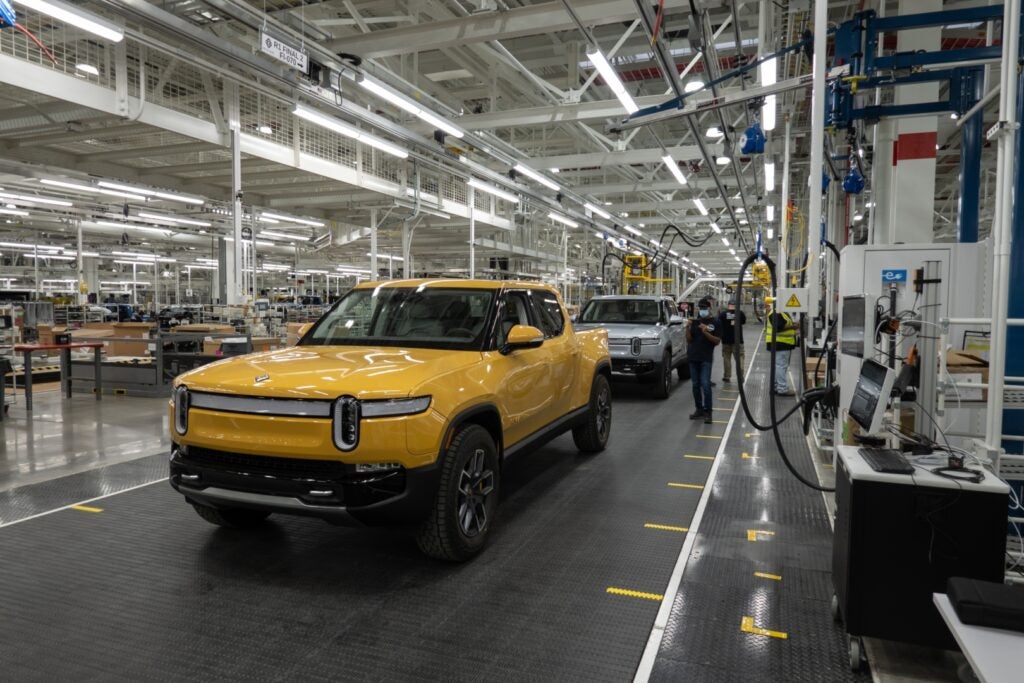
Sales Growth Target: Ineos Automotive aims to increase U.S. sales by 30% to 35% in 2023, targeting sales of 200,000 to 250,000 units, highlighting its focus on the U.S. market and potential profitability.
Production Expansion Strategy: The company is considering limited assembly in the U.S. to avoid a 25% ‘chicken tax,’ which will help reduce costs and enhance market competitiveness, further driving its North American business development.
Financial Status: Since its formation in 2017, Ineos has invested approximately $2 billion, a relatively low figure that supports its operations in 50 global markets, demonstrating its viability in the capital-intensive automotive industry.
New Model Development: Ineos plans to launch a new model named Fusilier in the next two to three years, expected to feature hybrid designs, marking a strategic shift towards electric vehicles and aiming to accelerate product refresh cycles.
 Ineos Automotive Targets 30-35% Sales Growth in U.S. Market5 hours agoNewsfilter
U.S. Market Growth Target: Ineos Automotive aims for a 30% to 35% year-over-year sales increase in the U.S. market, which is crucial for achieving breakeven in 2023, reflecting the company’s strong commitment and confidence in this key market.
Production Expansion Options: CEO Lynn Calder indicated that the company is fully exploring options for U.S. production to mitigate import tariffs and enhance competitiveness, particularly given that approximately 60% of its sales come from the U.S.
Record High Orders: Ineos is set to announce record orders for its flagship Grenadier model in the first quarter, establishing a strong foundation for the year and indicating robust market demand for its vehicles.
Future Product Planning: The company plans to introduce a new model, the Fusilier, expected to launch in the next two to three years, and is considering partnerships with other firms to accelerate product development, showcasing its adaptability in a competitive automotive landscape.
 Rivian Faces Threats from Economic Slowdown6 hours agoFool
Economic Slowdown Risk: The OECD estimates inflation will reach 4.2% this year, significantly higher than the previous 2.6% forecast, which could stem from the ongoing war with Iran, potentially impacting Rivian’s sales if the situation worsens.
Rising Layoff Trends: Layoffs exceeded 21 million in 2025, up from 20.1 million in 2024 and 19.8 million in 2023, indicating a weakening job market that may reduce consumer purchasing power, thereby affecting demand for Rivian’s vehicles.
R2 Model Launch Challenges: Rivian’s R2 model is priced at approximately $58,000, with plans to release cheaper versions, yet EV sales have dropped 28% in Q1 2023, posing significant challenges to the R2’s success.
Car Payment Pressures: The average monthly car payment is now $772, with one-third of car buyers underwater, meaning they owe more than their vehicle’s worth, which could further suppress demand for Rivian’s new models and impact market performance.
 Rivian’s Software Rollout Failure Threatens Stock Gains
 8 hours agostocktwits
Software Update Failure: Rivian halted its 2026.07 software rollout over the weekend, causing disruptions for Gen 1 vehicles, including disabled phone apps and key fobs, which is expected to negatively impact the company’s stock performance.
Delivery Performance Comparison: While Rivian exceeded delivery expectations with a forecast of 62,000 to 67,000 vehicles for 2023, Tesla’s Q1 deliveries fell short at 358,023 vehicles against a 370,000 target, potentially increasing Rivian’s market visibility.
Investor Sentiment Shift: Following Tesla’s weak delivery results, Rivian’s stock had rallied for three consecutive days, but is projected to drop 2% at Monday’s open due to the software issues, indicating fragile investor sentiment.
Analyst Rating Discrepancies: Among 26 analysts, 9 recommend holding, 8 suggest buying, and 4 advocate for strong buy, reflecting mixed market views on Rivian’s future performance, with target prices ranging from $14 to $25, indicating varied expectations for its stock price.