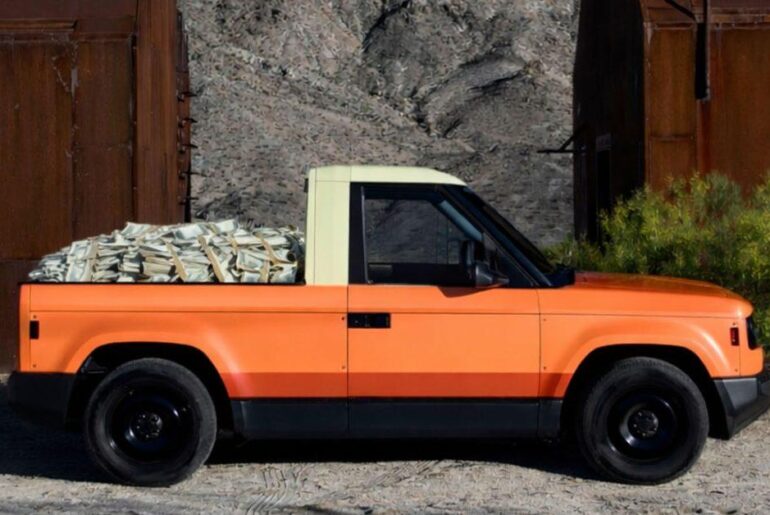
When we look at vehicles on mining and construction sites, typically the largest machinery pulls focus but light commercial vehicles are just as important. Integral for moving people and equipment, these workhorses must be reliable and extremely robust. Munro Vehicles, a newcomer to the market, reckons it has an all-electric solution for the job.
Founded in Scotland in 2019, Munro unveiled its first prototype in 2022. Co-founders Russell Peterson and Ross Anderson started with the ambition to build an electric 4×4 that could be all things to all customers. Over the past three years though, the target market has been refined down to niches in mining, construction, defence and emergency services.
“The vehicle is quite an extreme off-roader, we’ve lent very heavily into the commercial vehicle off-highway segment. If you don’t have a requirement for those extreme off-road attributes then it becomes a compromise. So, to get the best product market fit, we’ve had to focus on the industries we feel we can add the most value to and the ones which are the most interesting and accessible to us,” says Peterson.
Why mines need EVs
Discussing the suitability of EVs for mining applications, Peterson says, “Combustion-engine vehicles do not work well in mining environments. They’re doing lots of low speed, short journeys and gradients on harsh ground. At the mines I visited, generally the vehicles had DPF or EGR faults and third gear was completely broken on manual gearboxes. Mines are using road vehicles that are not fit for purpose.”
Munro’s prototypes are able to perform various tasks including going off-highway, towing, carry people and equipment
Early deployments
So far, five examples of Munro’s latest prototype have been deployed with customers over the past 12 months in various applications.
“The first vehicle we delivered was to the construction industry,” Peterson says. “The biggest challenge with that customer was integrating the vehicle into the fleet. It could do all the things they asked of it in terms of going off highway, towing, carrying people and equipment. The challenge was the training, handover, documentation and how we support the vehicle.”
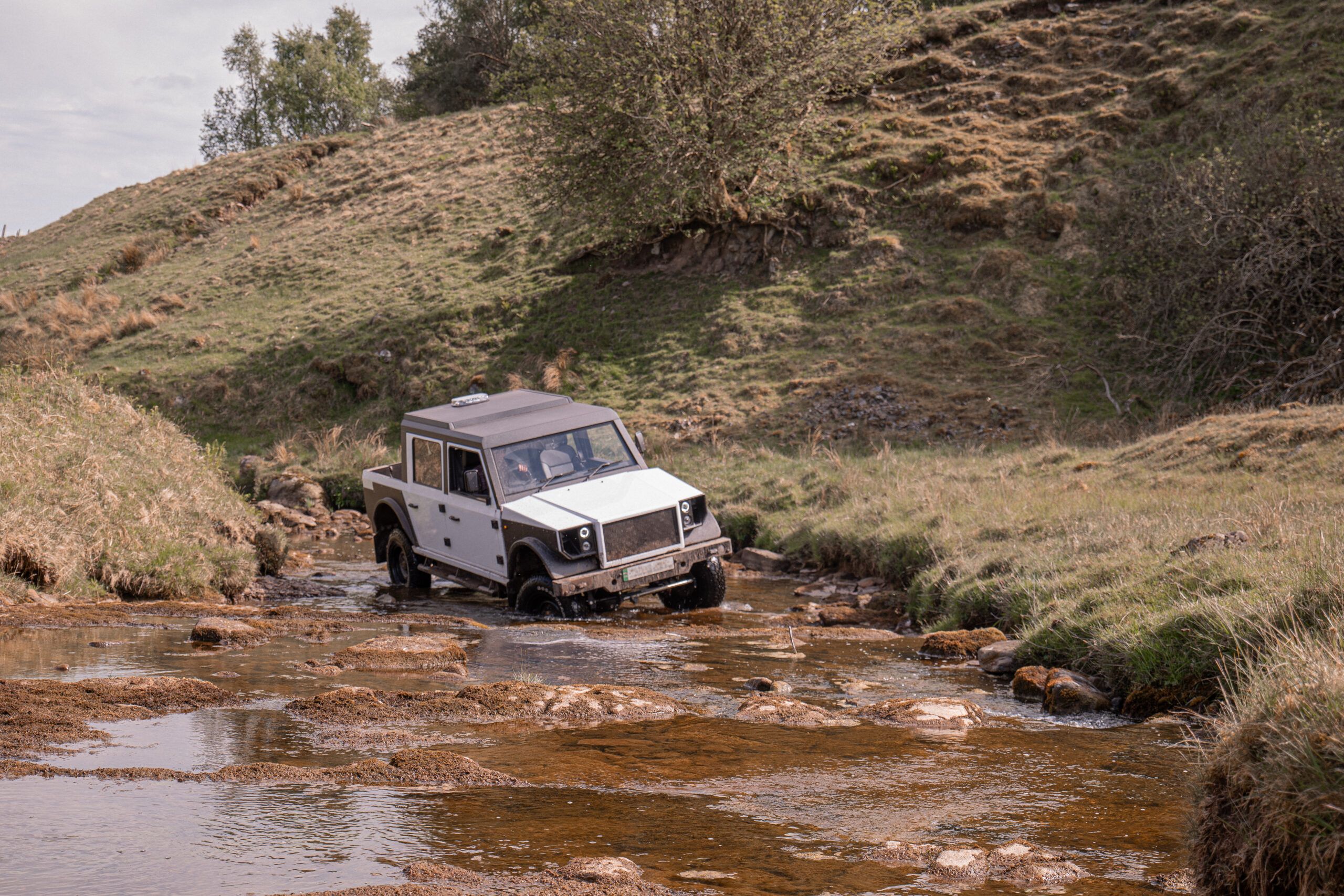
“The next two vehicles went to a mining project in Sweden. We had a lot of change content on those vehicles since the first one, so the systems architecture was completely new. Those vehicles demonstrated a number of different mining environments and helped us collect really valuable data from deployments in open surface-mines in Northern Europe.”
“Combustion-engine vehicles do not work well in mining environments. They’re doing lots of low speed, short journeys and gradients on harsh ground”
“The biggest thing we learned wasn’t necessarily the terrain because the terrain in mines is okay. We learned about the operational side of integrating the vehicle into the fleet, what training, safety requirements, risk appetite, past problems and exposure to EVs the operator had.”
Adapting to EVs
While Munro isn’t intending to be an infrastructure provider, early adopters have been supported with infrastructure planning. “A lot of mines have a huge amount of power capacity on site. But the domain knowledge about EVs is where we need to educate customers about what kind of infrastructure they need,” says Peterson.
Although power supply is not necessarily an issue, Peterson says that some minor adaptations to working patterns can be required to suit EVs.
Shift patterns largely dictate charging requirements as vehicles can either spend longer periods charging overnight at lower capacity chargers or quick charge between shifts for a swift turnaround. “That’s not unique to Munro, that’s just a consequence of electrification,” he says.
As with all electric vehicles, shift patterns dictate charging requirements
Maintenance strategy
As with any new product, initial deployments have come with some teething problems.
“We don’t think that we can build the most reliable vehicle in the world. We’re not a big enough company and we haven’t got enough experience. Speak to anyone that operates machinery and every machine breaks down; it’s how you deal with it that matters,” says Peterson.
For large fleets that take multiple vehicles with a service agreement, Munro plans to deploy its own technicians and engineers to maintain the vehicles as required. In scenarios where the customer may be located further away or have in-house maintenance capabilities, the idea is to train workshop staff and ensure a good supply of spare parts.
To make life as easy as possible for fleets carrying out their own maintenance, Munro is developing simple documentation for the vehicle which details which tasks can be done without having to isolate the high voltage system.
“A huge amount of common repairs, probably more than 95% can be done without having to disconnect the battery or do anything where you need to have high-voltage training. The majority of work can be done by standard trained workshop technicians,” Peterson says.
Beyond purchase price
Whether it’s upskilling staff, installing infrastructure or just purchasing the 4×4, like with any commercial vehicle, total cost of ownership (TCO) is a key consideration.
However, Peterson says, “We’ve found that the decision-making around light vehicles is really difficult for mines because their way of thinking in the light vehicle space is not as mature. If you’re going to buy a £3 million dump truck, the process for selecting the supplier, brand and model is huge because it’s such a big asset to procure.”
Additional factors like service support, depot location and parts supply all come into play. But in the light commercial vehicle segment, Peterson argues the comparative low price and familiarity with existing models means operators often settle for the same solutions.
“The reason why operators don’t bother assessing other vehicles in any meaningful way is because all the options are below average.
“With Munro coming in and taking a specialist look at not only the requirements on the mine site, but also the support, service, backup and spare parts, it means that we’ve helped them develop a much more mature TCO model. It’s not just about mpg, purchase price and resale value, but actually looking at the opportunity cost of downtime and employee retention through driving a car that is suited to the job.”
Overcoming industry hesitation
While Munro feels it has proved the vehicle’s capabilities and suitability for mining, Peterson says electrification in this space requires a much wider cultural shift.
“Nobody wants to make the first move – that’s the challenge we have in the mining industry. We’re really lucky with the experiences we’ve had so far but people are very wary, particularly as there have been other startups in this space that have overpromised and underdelivered.”
Scaling production
Now the first few vehicles are in the field gathering data, the next stage in the company’s growth plan is to refine its production line.
“We’ve done a lot of learning and development, now we’re proving. This year is all about delivering vehicles at a repeatable rate. We want to demonstrate that rate, improve that rate and then it’s about scaling. The pipeline is huge, we’ve got £70 million in our qualified sales pipeline and over £20 million in orders, the appetite is massive but we’re taking baby steps because we want to get it right,” says Peterson.
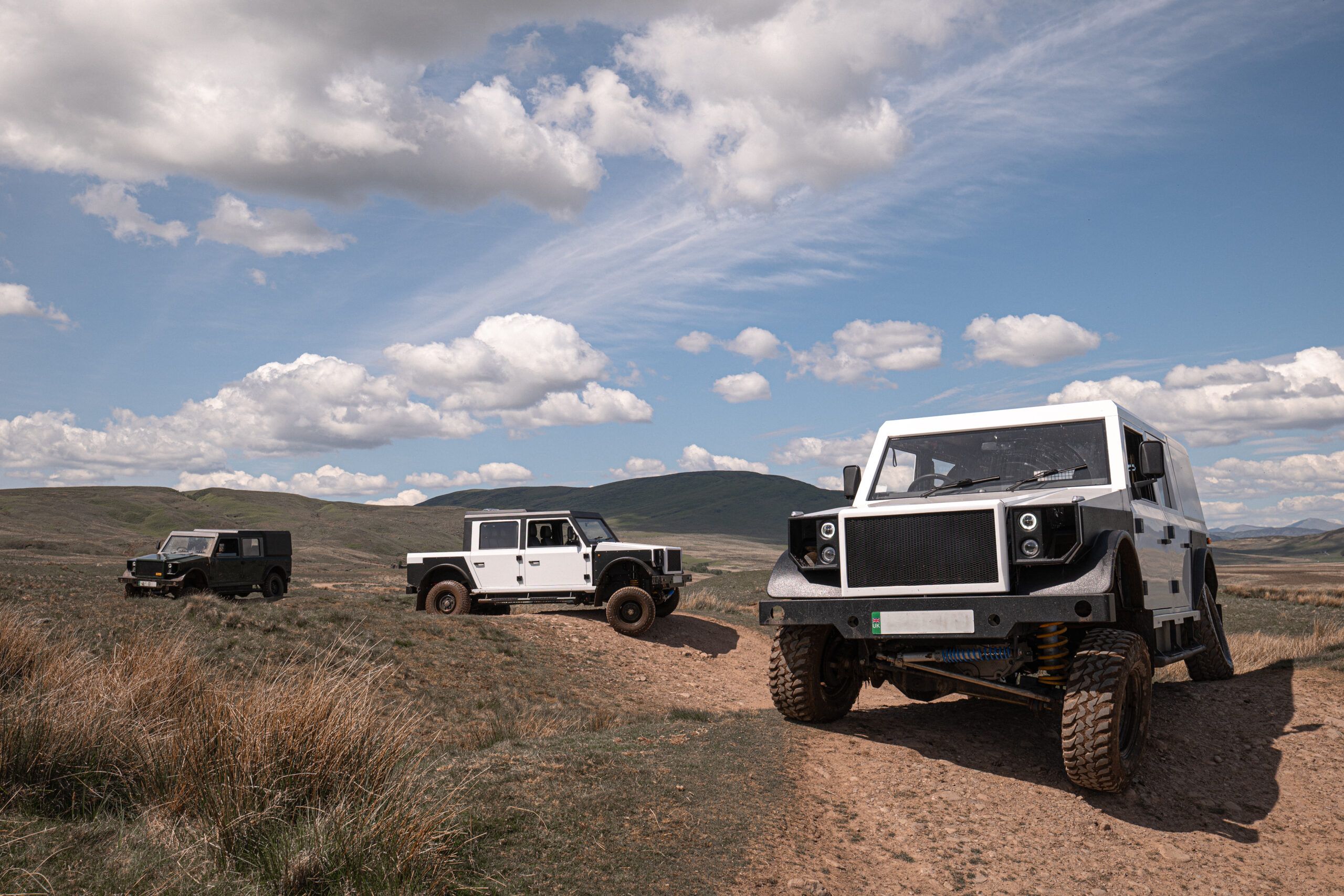 ABOVE: Following the deployment of five prototypes, the next stage in Munro’s growth plan is to refine its production line
Munro has just secured an additional £2 million in funding from its investor Elbow Beach to scale production. Over the next six years, the company expects to create an additional 300 manufacturing jobs in Glasgow as it targets 5,000 units annually. While Munro intends to cater to UK and European markets from its Scottish headquarters, on a global level, the company is exploring selling directly into South America, South Africa and Australia specifically for mining customers. Vehicle manufacturing would also be localized in these regions.
A design for the future
Looking to the future of product development, Peterson says that additional equipment needed on mining sites such as telematics, cameras, reflective strips and transponders for autonomous vehicles are all shaping Munro’s design process.
“We’re looking at the concept of this being used as a mobile workshop or a site office, or any number of things on a mining site. It’s the first and foremost thing on our mind when we’re doing interior, exterior and cargo area design. Those use cases are really getting embedded now in our product design cycle. The next generation of Munros, which I’m hoping will hit the ground in about two years’ time, will be a big step up in all of light vehicle space, they’ll be for the mines of the future.”
This article first appeared in the February/March issue of iVT