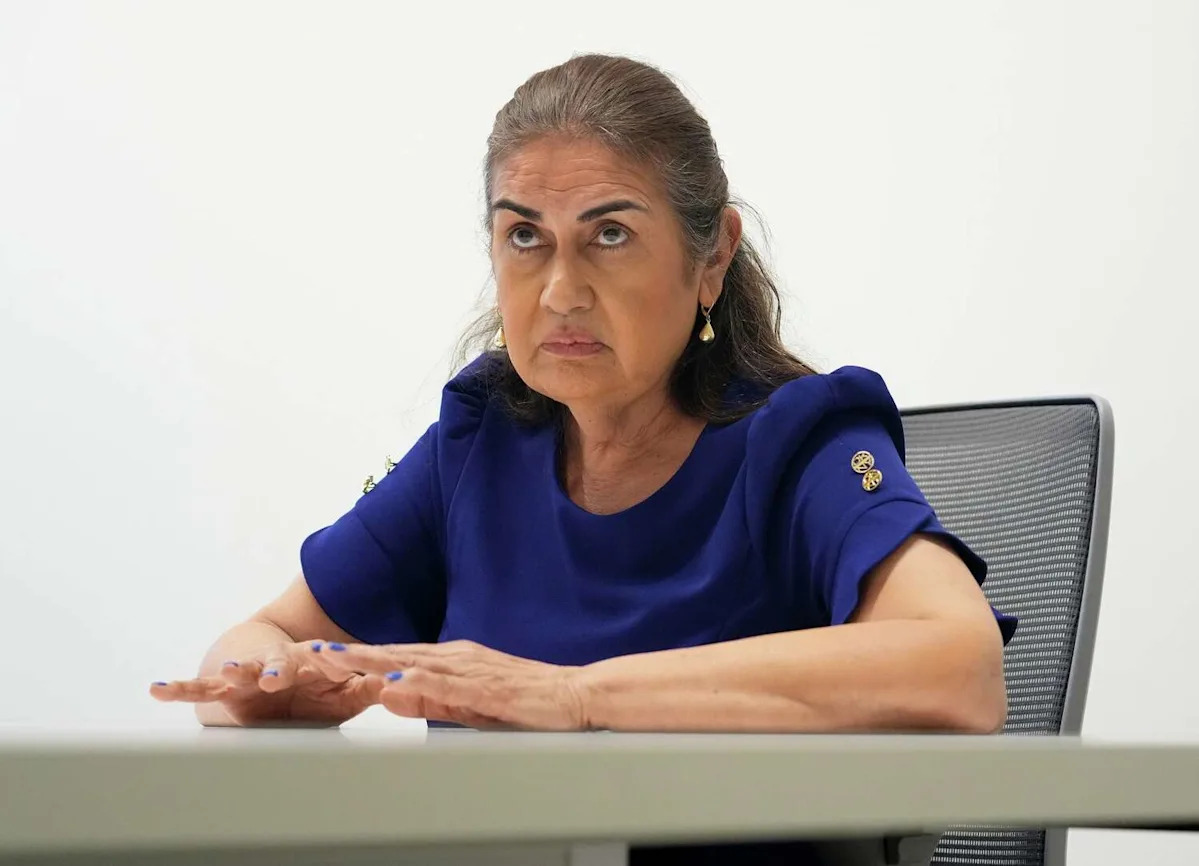
Tesla Inc. wants a judge to deny a court trial to a woman who says she was physically assaulted by a fellow employee at Gigafactory Texas.
The Austin automaker’s lawyers say that Lillian Brady, who filed suit last month after her assailant was identified as the suspect in a mass shooting on West Sixth Street, agreed to an out-of-court process to resolve disputes with Tesla when she was hired and that’s how her case should be handled.
Brady’s attorneys acknowledge that she agreed to arbitration as a condition of employment but argue her claims are outside the scope of the agreement. They say the deal she signed doesn’t clearly delegate such a case to an arbitrator — and cannot if she was sexually assaulted.
Brady filed suit against Tesla four days after Ndiaga Diagne was identified by police as the gunman in the March 1 shooting spree that left three people dead and 15 injured in downtown Austin. She says he physically assaulted her in early December inside the plant, leading her to accuse Tesla of failing to monitor the factory’s common areas or supervise sanctioned activities in those spaces, “creating an unreasonably dangerous condition.”
She also has accused Tesla of not knowing its employees’ backgrounds and withholding Diagne’s identity as she sought for months to pursue charges against him.
During a hearing Thursday in state District Court in Austin, Tesla attorney Joshua Romero cited Brady’s lawsuit along with Tesla’s “broad” arbitration agreement, which says “any and all disputes arriving from or related to your employment go to arbitration.”
Brady’s lawyers made a case to Judge Daniella DeSeta Lyttle that Tesla uses arbitration when it suits it, telling the judge “they cannot use this as a sword and a shield.” They said Brady’s claims are outside the scope of the agreement’s terms and argued for the first time that Diagne’s actions that morning could amount to sexual assault.
Romero told the judge it’s “absolutely true” that a sexual assault case would counteract arbitration but said the facts belie the claim. “It’s absurd to say it’s a sexual assault case,” he said.
Brady’s lawyers argued that if a non-employee had walked through the common area and been similarly assaulted, they could have sued Tesla.
Romero said that would constitute trespassing, as only invitees and employees can access Gigafactory Texas, describing security at the facility as “essentially Fort Knox.”
Tesla’s lawyers declined to comment after the hearing, citing the ongoing litigation.
Brady’s lawsuit also outlined a request for Tesla to preserve maps, photographs, videotapes and other information related to her case.
Among those records is video of the incident captured by Tesla security cameras inside Gigafactory Texas. The Travis County Sheriff’s Office has confirmed it obtained the video from Tesla days before the West Sixth Street shooting.
The Austin American-Statesman’s request for the video and other records from the sheriff’s office related to Brady’s case was denied. The newspaper is appealing that denial.
Hilliard Law, the firm representing Brady, previously said it was working with Tesla attorneys to obtain the security video footage. In Thursday’s hearing, it speculated Tesla doesn’t want it to be viewed.
“They want it to go to arbitration so no one else sees the video, because then it becomes confidential, and we want to make sure it stays public.” attorney Bob Hilliard said after the hearing.
In an interview last month, Brady said she “wasn’t really looking for a lawsuit” against Tesla over the alleged assault but thought the company should have identified Diagne. Now she wonders if the people killed and wounded that morning would have made it home safely if the Austin automaker had provided his identity so she could bring charges.
“I think this needs to be brought out that this individual probably wouldn’t have done this tragedy that he did… if something would have been done by Tesla,” Brady said. “If they were to release the name or arrest him on the spot — because we had deputies outside — maybe all this could have been avoided.”
DeSeta Lyttle said Thursday she would spend more time reviewing both sides’ arguments before reaching a decision about sending the case to arbitration.