As automakers keep improving EV range and pushing prices lower, the biggest remaining obstacle is starting to look less like the drivetrain itself and more like the charging experience around it. JD Power says public charging is still the top stumbling block to broader EV adoption, even as concerns about purchase price have started to ease.
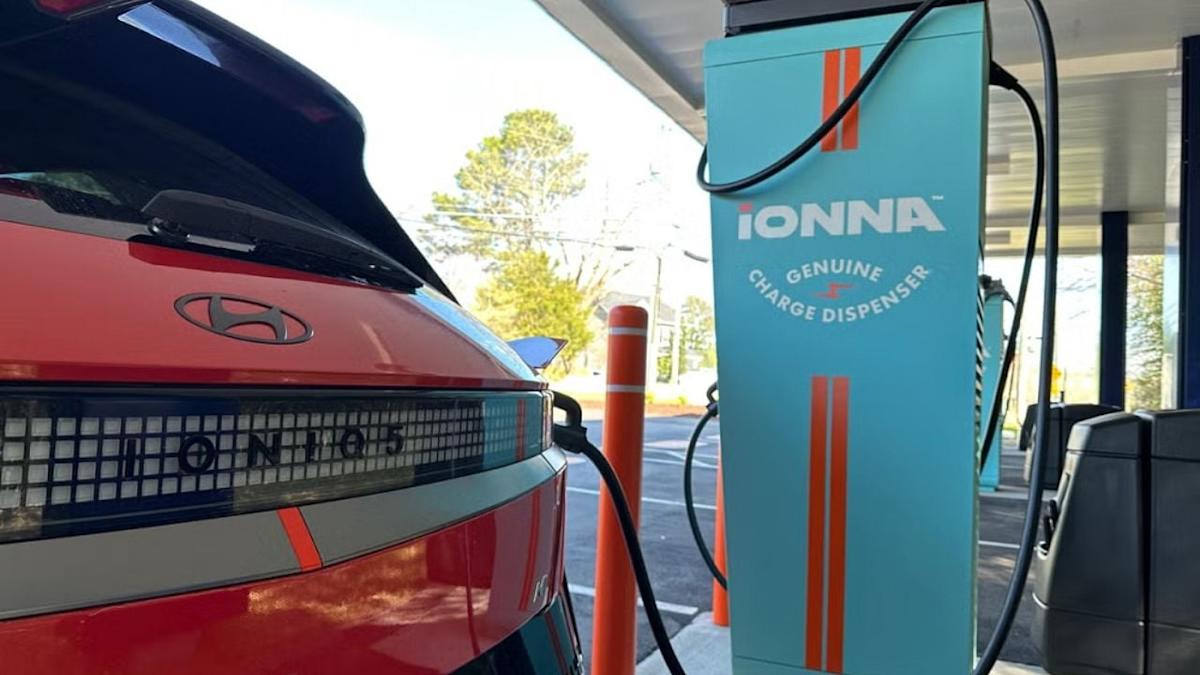
That is where Ionna enters the picture. The Durham, North Carolina-based network, led by CEO Seth Cutler, says it wants to build at least 30,000 fast charging bays across North America by 2030.
Its pitch is not just about adding more plugs. It is about building stations that work reliably and feel like places drivers would actually choose to stop.
And unlike a year ago, Ionna is no longer just selling a plan. In March 2026, the company said it had already passed 100 live sites and nearly 1,000 live charging bays nationwide.
Charging Is Still the Real Bottleneck
For all the progress in battery technology, charging confidence remains the weak link. JD Power reported that 16% of public charging station visitors in the first quarter of 2025 still failed to charge, even after a notable improvement from late 2024.
That helps explain why Ionna keeps talking more about dependability than sheer scale. In a March 2026 interview, Cutler said the company was seeing 99.5% uptime across its first 97 live sites, with systems in place to detect problems quickly and dispatch technicians fast.
That approach matters because public perception has not caught up with recent improvements. JD Power found that many shoppers still treat charging availability and charging confidence as major reasons to reject EVs, which means a network that simply works could carry as much weight as another jump in vehicle range.
Ionna Wants Charging To Feel Normal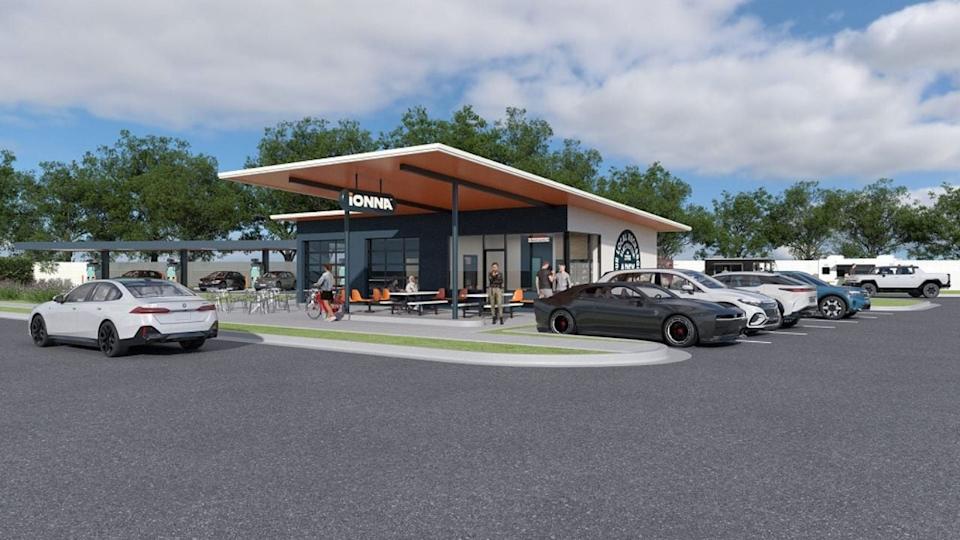
Photo Courtesy: Autorepublika.
Reliability is only part of the problem. Many public charging locations still feel like an afterthought, tucked into poorly lit or inconvenient corners that make the stop itself feel like a penalty instead of a routine part of travel.
One early example of Ionna’s answer sits in West Point, Georgia, near Kia’s plant. The site offers covered fast charging, 400 kW hardware, both NACS and CCS connectors, and on-site basics like restrooms and vending, which is much closer to the convenience drivers expect from a normal roadside stop.
The company’s Beacon concept goes even further. Ionna says those flagship sites are designed with 20 or more ultra-fast bays, canopies over every stall, restrooms, interior lounge space, retail, outdoor seating, and lighting meant to make the stop feel safer and more comfortable.
The network is expanding in several ways.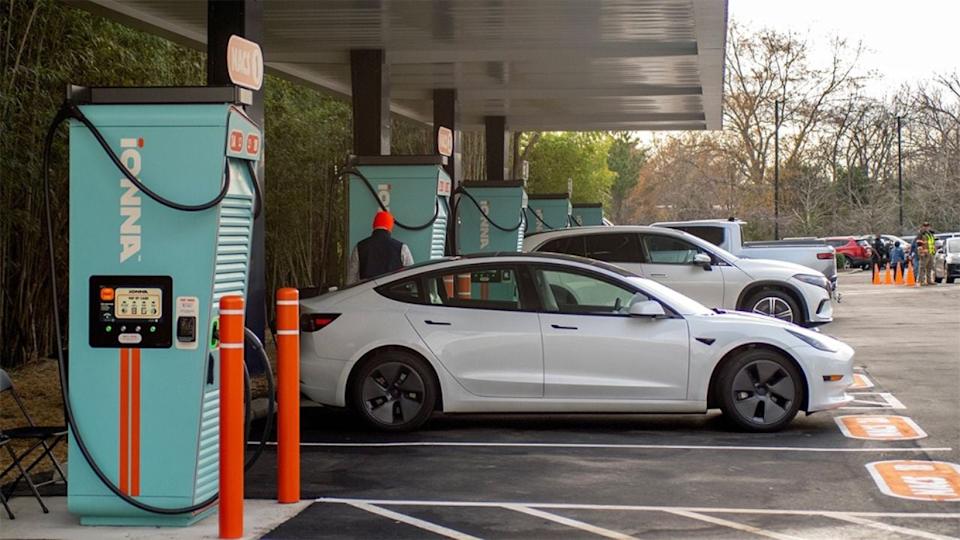
Photo Courtesy: Autorepublika.
Ionna is not building every site in exactly the same format. Its network now includes full Rechargery hubs, lighter Rechargery Relay stops, and co-branded Rechargery at partner locations, which gives the company more flexibility as it expands.
That strategy also helps explain the partnerships with familiar roadside names. Ionna has already announced deals with Sheetz and Wawa, using existing convenience and fuel locations to speed up growth while keeping the kind of amenities drivers already know how to use.
The scale of the rollout is getting harder to ignore. Ionna said in March 2026 that it had nearly 1,000 live bays across the country, while earlier company updates pointed to more than 3,000 contracted bays and a longer-term target of 30,000 by 2030.
Big Automakers Are Betting On Better Infrastructure
Image Credit: Halfpoint / Shutterstock
This was never a small standalone startup story. Ionna was created by BMW, General Motors, Honda, Hyundai, Kia, Mercedes-Benz, and Stellantis, with Toyota joining later, which gives the project unusual backing for a charging network still in its early years.
The timing is important because the EV market has grown more complicated. Federal clean vehicle credits ended for vehicles acquired after September 30, 2025, and Reuters reported that automakers have already adjusted product plans in response to that tougher environment.
That is why Ionna’s mission may matter beyond the chargers themselves. If EVs are entering a more demanding second phase, one shaped less by novelty and more by everyday practicality, then the quality of the charging stop may end up influencing adoption almost as much as the vehicles parked there.
This article originally appeared on Autorepublika.com and has been republished with permission by Guessing Headlights. AI-assisted translation was used, followed by human editing and review.
Read More
13 Muscle Cars So Overlooked Most People Forgot Them
15 Car Features That Should Have Never Been Phased Out