The EV market is getting more and more crowded every year. Every brand has a pitch on why its car is the car.
But one Hyundai salesman thinks he’s found the vehicle to beat out the rest of the competition.
Hyundai Ioniq 5: Is This The New ‘It’ Car?
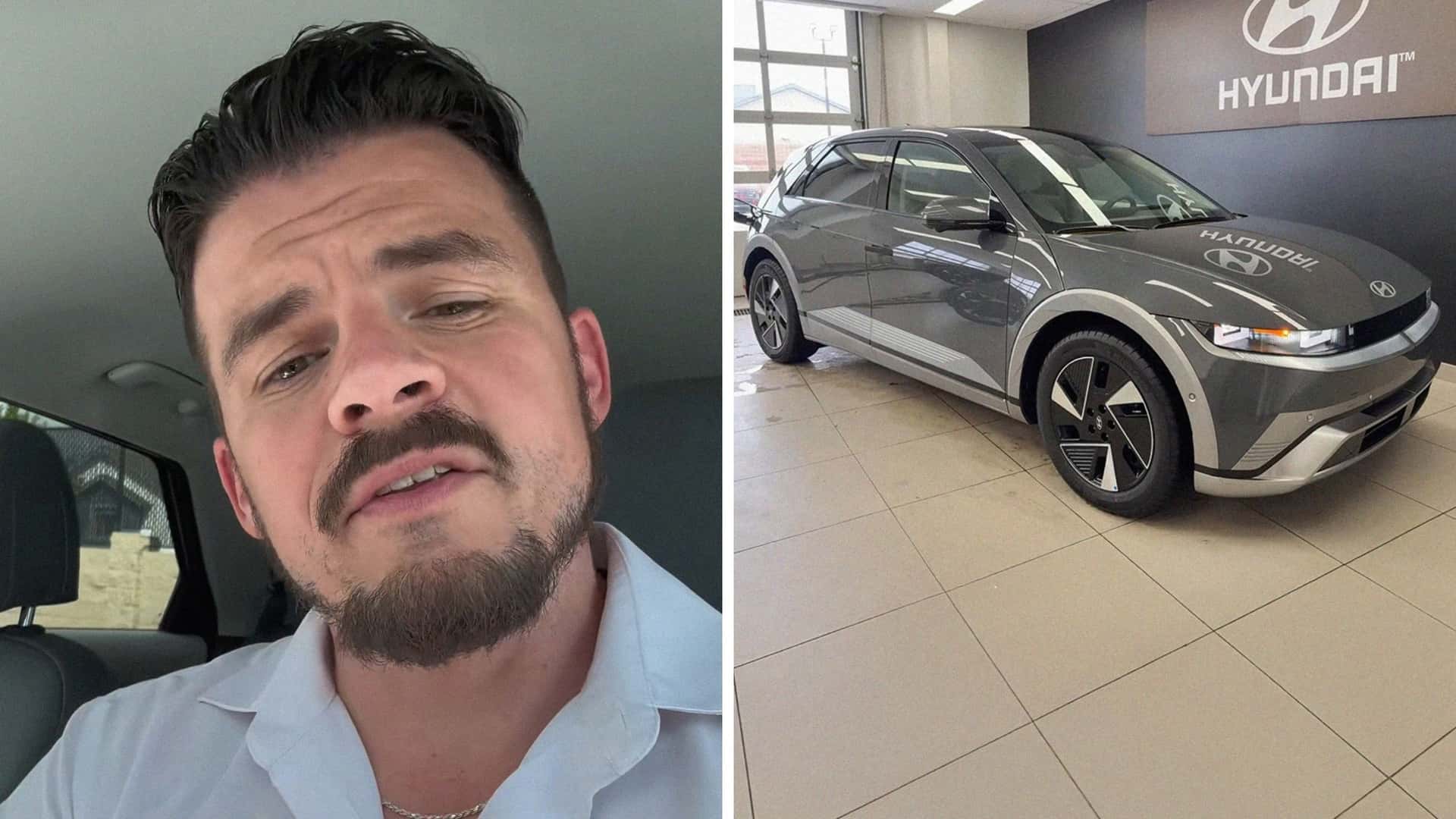
In a video with around 1,400 views, car salesman Cameron Alley (@ask4cameronalley) makes the case for the 2026 Ioniq 5.
“A lot of people don’t realize that Hyundai’s winning the EV war right now,” he says, “and I’m gonna show you exactly why.”
He runs through the highlights: available all-wheel drive, over 300 horsepower, a futuristic exterior with LED lighting, large digital screens, and a spacious, modern interior. The available range sits at around 300 miles, which he says makes it viable for both daily driving and road trips.
But the one stat he leans hardest on is charging speed.
“With ultra-fast charging, you can go from 10 to 80% battery in around 20 minutes,” he says, “which is quicker than every single competitor on the market.”
It’s a bold claim, but charging anxiety is the number one reason people hesitate on EVs, so if it holds up, that’s a solid selling point.
How The Ioniq 5 Stacks Up On Charging Speed
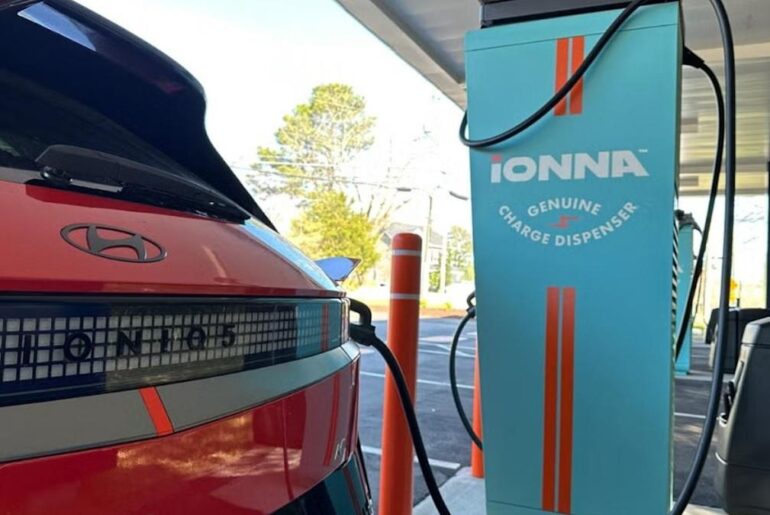
According to Consumer Reports, the Ioniq 5 is among a relatively short list of EVs that can add 10 or more miles of range per minute at a DC fast charger, putting it alongside the Kia EV6, Genesis GV60, Porsche Taycan, and Tesla models.
Most of the EVs on that list share the same 800-volt architecture that Hyundai, Kia, and Genesis use, which is a big part of why they charge so much faster than the competition. The Ioniq 5 specifically has a maximum acceptance rate of 240 kW, meaning it can take in power faster than most chargers can even dispense it.
Consumer Reports points out that automakers love to advertise percentage-based charging times—like “10 to 80% in 20 minutes”—but that number doesn’t mean much without knowing the car’s range. What actually matters is how many miles of range the car adds per minute, which is the more useful comparison when you’re sitting at a charging station trying to get back on the road.
Why EV Charging Is Slow In The First Place
The bigger context here is that most EVs still charge slowly compared to filling a gas tank, and there are real physical reasons for that. According to Midtronics, charging a lithium-ion battery quickly generates a lot of heat, and too much heat can permanently damage the battery.
To prevent that, charging speeds are deliberately throttled, especially once the battery gets above 80 percent. That last 20 percent can take as long as the first 80, which is why most EV owners are advised to charge to 80 and move on rather than waiting for a full charge.
Charging station congestion is another factor. A single fast-charging station has a fixed amount of power to distribute, and when multiple cars plug in simultaneously, that power gets split. Four cars at a 350 kW station could find themselves each getting 125 kW or less, depending on demand, regardless of what their cars are capable of handling.
Commenters React
“Wanted to buy one but you can’t change your own brakes,” a person said.
“For the price.. it needs more miles.. my bolt gets the same,” another wrote.
“Everyone trying to catch up to Tesla,” a commenter added.
Motor1 reached out to Cameron Alley (@ask4cameronalley) for comment via TikTok direct message and comment. We’ll be sure to update this if they respond.
We want your opinion!
What would you like to see on Motor1.com?
– The Motor1.com Team