
April 11, 2026
By Nehal Malik
Tesla is giving its original flagship duo a legendary send-off. After closing custom orders for the Model S and Model X at the end of March, the automaker is now inviting a select group of fans to purchase an ultra-limited “Signature Edition” run of the Plaid siblings.
According to IGN Senior Executive Editor Ryan McCaffrey, who broke the news on X, Tesla is producing just 250 units of the Model S Plaid and 100 units of the Model X Plaid (exclusively in the six-seat configuration) for this final series. The release is invite-only, meaning if you didn’t receive the specific email from Tesla, you likely won’t be able to get your hands on one.
A Premium Look for a Final Farewell
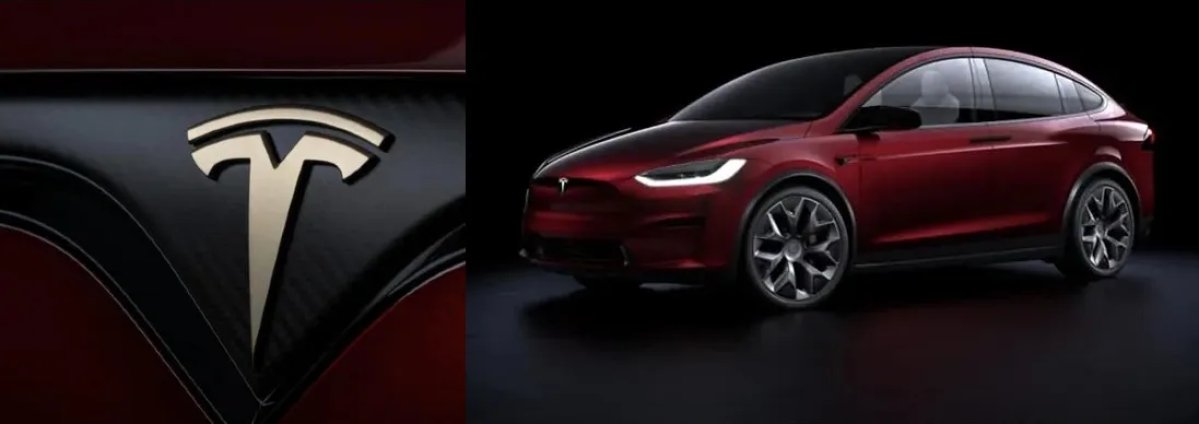
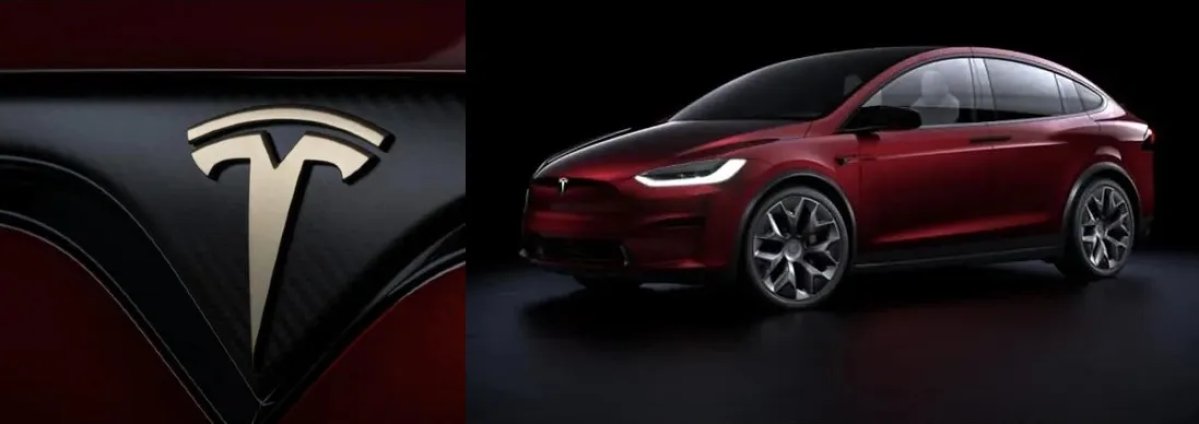
These Signature Edition units are designed to be immediate collector’s items, featuring aesthetic upgrades that aren’t available on any other Tesla. The exterior is finished in a new “Garnet Red” paint, accented by gold Tesla “T” badges on the front and a gold Plaid badge on the rear.
The interior is equally bespoke, featuring a white theme with Alcantara accents, gold piping, and a gold Plaid seat badge. To cement their status, each car will include signature-marked door sills and a dash badging plate with a unique numbering sequence (e.g., 1/250). Other unique touches include gold Plaid puddle lights, a special interior lighting sequence, and a Signature Edition key fob.
While the Model S version comes with carbon ceramic brakes and gold calipers, the Model X version keeps the regular red Plaid calipers but sits on massive 22-inch Machina wheels. Both vehicles include the “Luxe Package,” which bundles together Full Self-Driving (Supervised), Free Supercharging, four years of Premium Service, and Free Premium Connectivity for the life of the vehicle.
The Price of a Legend
Ownership of these final units comes with a heavy price tag. The order page for the Model X Signature Edition shows an estimated purchase price of $160,810 (including destination fees). This represents a massive jump from the current inventory pricing, where a standard Model X Plaid sits at $129,990 following a recent $15,000 price hike.
Tesla’s U.S. inventory has essentially been cleared of brand-new Model X units, leaving only a few demo cars behind. For those who want the absolute pinnacle of what these era-defining cars can offer before the discontinuation is complete, the $30,000 premium is the cost of admission.
A Sunset Celebration in May
To mark the end of this 14-year manufacturing journey, Tesla is planning a formal celebration event in May. Musk originally teased this “last call” event when orders closed, and McCaffrey noted it will fittingly take place at sunset. While the exact date and location haven’t been shared yet, we expect it to be a sentimental look back at the cars that proved electric vehicles could be both luxury status symbols and performance monsters.
As Tesla prepares to pivot its Fremont production lines to the Optimus humanoid robot and upcoming mass-market projects, the Model S and X will leave a massive hole in the high-end market. For the 350 people who manage to secure a Signature Edition, they’ll be driving the final exclamation point on the era that started it all.
Subscribe to our newsletter to stay up to date on the latest Tesla news, upcoming features and software updates.
April 11, 2026
By Karan Singh
“How much does it cost to charge a Tesla?” is one of the most common questions from prospective buyers. Answering it usually involves comparing a complete zero to 100 percent battery charge to filling a gas tank from empty to full. However, to determine the true cost, several regional and technical factors must be taken into account.
We’ll break that down into an easy-to-understand guide that shows exactly what it costs to charge your current or future EV and how it compares to a gas vehicle.
Regional Fuel Factors
Before doing any math, we need to consider the cost of fuel or electricity, which varies widely from region to region. For example, in North America, the average residential electricity rate sits around 12 to 18 cents per kilowatt-hour (kWh), while regular gasoline is currently at $4.00 to $4.40 at the time of writing. Even within the United States, those numbers can vary drastically. States like California pay premium rates for electricity and gasoline, while states like Washington pay significantly less for both.
In Europe, the landscape is very different. The average electricity price is roughly €0.29/kWh, and gasoline is significantly more expensive at roughly €1.61 per liter, which is equivalent to over $6.00 per gallon.
These prices can also vary immensely based on Time-of-Use, EV Charging Incentives, and other electricity rate plans that can bring your costs down to a static $40 a month in Texas, or to 5 cents in some states or Canadian provinces at ultra-low overnight rates.
Drawing the Comparison
To make a truly fair comparison, we need to evaluate similar vehicles so that the relative efficiency is grounded in reality. We also need to determine the cost based on a standard driving distance, such as a 300-mile road trip, or a per-mile rate, since battery pack capacities and physical fuel tanks vary widely in size.
The Tesla Model Y is currently the best-selling vehicle in the world, so let us use the Long Range variant to determine the baseline cost.
The Cost to Charge – Commuting
The Model Y Long Range features an approximately 80kWh battery. Most owners will do the vast majority of their charging overnight at home. The average individual in the United States drives roughly 40 miles per day. At the Model Y’s average efficiency, that daily commute requires about 10kWh of energy.
Using the North American average of 15 cents/kWh, replenishing that daily commute at home costs just $1.50 per day. Over a standard 30-day month, your entire commuting fuel bill sits at an incredibly low $45.00.
If you’re using overnight rates, that drops down even further to approximately $0.80 per day, with an average monthly cost of just $24.00.
Charging Scenario (Model Y)
Daily Energy Required
Cost per kWh
Daily Cost
Monthly Cost (30 Days)
Standard Average Rates
10 kWh
$0.15
$1.50
$45.00
Ultra-Low Overnight Rates
10 kWh
$0.08
$0.80
$24.00
The Cost to Charge – Road Tripping
When you take a road trip, you rely on public fast chargers like the Tesla Supercharger network. Because you are paying for high-speed convenience, commercial electricity rates are higher than residential rates. The average Supercharger currently costs between 35 and 40 cents per kWh
During a typical road trip, drivers rarely charge from 0% to 100%. Instead, they charge from 10 percent to roughly 80 percent, which takes about 56kWh of energy to fill. At 35 cents per kilowatt-hour, a standard Supercharger stop will cost around $19.60, providing you with over 200 miles of highway driving.
Road Trip Charging (Model Y)
Range Added
Energy Required
Supercharger Rate
Total Stop Cost
10% to 80% Battery Fill
~200 Miles
56 kWh
$0.35 / kWh
$19.60
The Cost to Fuel Up
To find the gas-station equivalent, we need to look at a similarly sized crossover vehicle, such as a Toyota RAV4 or a Honda CR-V. These popular SUVs typically achieve a combined efficiency of roughly 30 miles per gallon.
Using an average of $4.20 per gallon, that same 40-mile daily commute uses 1.33 gallons of fuel, costing roughly $5.58 a day. Over a 30-day month, commuting in a gas SUV costs $167.40, nearly four times the cost of home charging.
If you take that gas SUV on a road trip, driving the same 200 miles requires 6.6 gallons of fuel. At $4.20 per gallon, the gas station stop costs approximately $27.70, which is still noticeably more expensive than the Supercharger equivalent.
Gas SUV Equivalents (30 MPG)
Fuel Required
Average Gas Price
Total Cost
Daily Commute (40 Miles)
1.33 Gallons
$4.20 / gal
$5.58 (Daily) / $167.40 (Monthly)
Road Trip (200 Miles)
6.60 Gallons
$4.20 / gal
$27.70 (Per Stop)
Time is Money
Cost is only half the equation, and convenience is heavily factored into ownership. The speed at which you refill that energy will vary based on your routine and the specific charging hardware you use.
Charging at home takes essentially zero active time. You simply plug the vehicle in when you park for the night and wake up to a full “tank” every single morning, completely eliminating the weekly errand of visiting a gas station. It is just like plugging in your cellphone overnight, with no additional work or thought required.
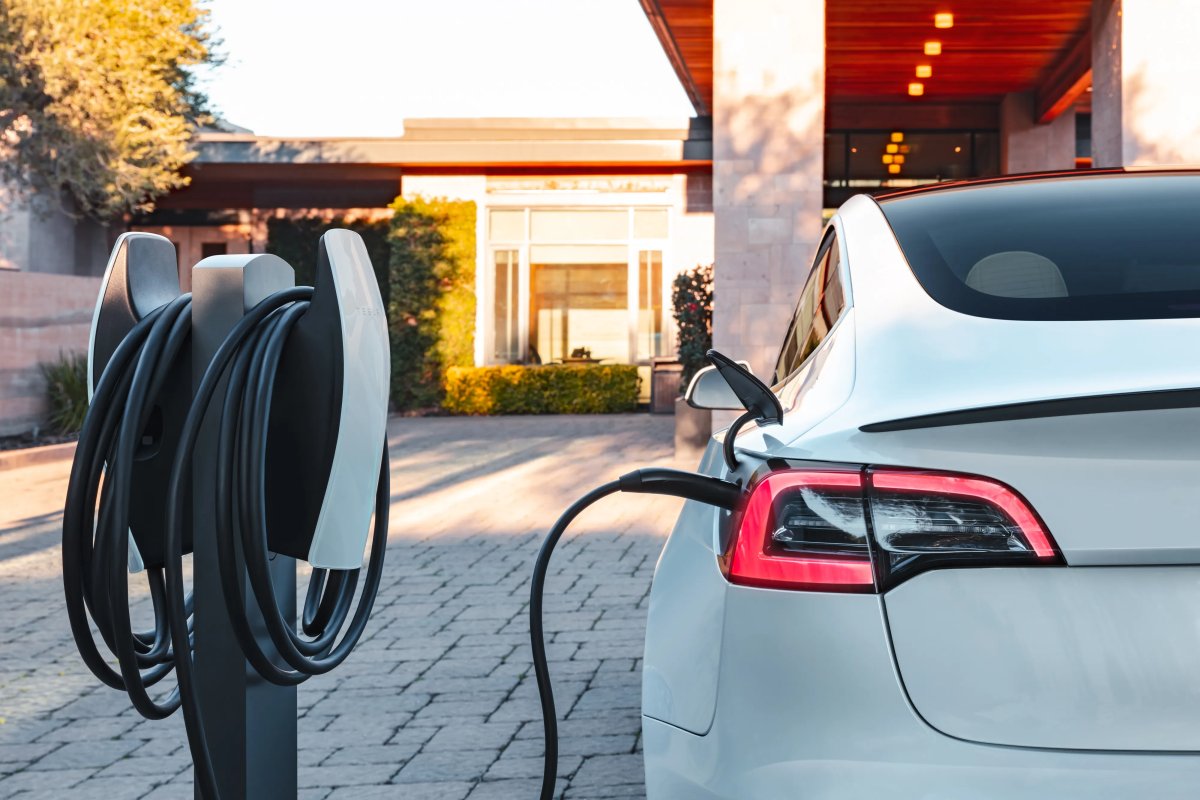
However, not all home charging setups are created equal. A dedicated Tesla Wall Connector is the ultimate standard for home charging, delivering up to 44 miles of range per hour of charge. If you do not want to hardwire a new unit, you can use a Mobile Connector plugged into a standard 240-volt outlet to regain roughly 21 miles per hour.
You can also plug that same Mobile Connector into a standard 120-volt household wall socket. This 12-amp draw will yield only about 3 or 4 miles of range per hour. This is often referred to as “trickle charging” and is generally best reserved for short-term use, such as in a vacation home or while waiting for your Wall Connector to be installed.
Charging Hardware
Circuit / Amperage
Estimated Speed (Model Y)
Best Use Case
Tesla Supercharger (V3/V4)
250kW (DC)
Up to 1,000 miles/hr (Peak)
Highway road trips
Wall Connector
240V / 48A
~44 miles per hour
The gold standard for daily home charging
Mobile Connector (Dryer Outlet)
240V / 24A
~21 miles per hour
A highly capable, affordable home alternative
Mobile Connector (Standard Outlet)
120V / 12A
~3 to 4 miles per hour
Short commutes.
While Supercharging on a road trip takes longer than a gas pump, requiring roughly 15 to 25 minutes to fill from 10 percent to 80 percent, this time is almost always paired with natural bathroom breaks or food stops. This makes the actual time delay completely negligible for most families on the road.
Cost Comparisons
Ultimately, charging an electric vehicle is significantly cheaper than filling a gas car, especially when taking advantage of cheap residential electricity rates. Because utility rates and gas prices vary so heavily by state and country, the best way to understand your personal savings is to crunch the numbers yourself.
Driving Scenario
Tesla Model Y Cost
Gas SUV Cost (30 MPG)
Total EV Savings
Monthly Commuting
$45.00
$167.40
$122.40 / month
200-Mile Road Trip
$19.60
$27.70
$8.10 / stop
Typically, the simplest way to get to this number is to find your price per kWh, which is listed on your electric bill, and divide it by the number of miles a Tesla Model Y can drive per kWh (3.57). For example, if your electricity rate is $0.20, you’ll divide $0.20 by 3.57, which gives you about 5.6 cents per mile.
Similarly, for gasoline, you’ll take the cost of gasoline per gallon, let’s say, $4.00, and divide that by the number of gallons your vehicle achieves per mile. If your vehicle gets 30 MPG, then you’ll divide $4 by 30, giving you a cost of 13.3 cents per mile.
You can then multiply these costs per mile by the number of miles you drive per month or year. The average person in the US drives about 12,000 miles per year, giving you a total cost of $672 for the Model Y and $1,596 for a similar gas car.
April 11, 2026
By Karan Singh

SpaceX is apparently taking matters into its own hands when it comes to the hardware required for its upcoming direct-to-cell satellite network. According to a recently discovered job posting, the aerospace company is actively preparing to develop its own custom radio frequency chip modules designed specifically for smartphones connecting to Starlink Mobile.
While SpaceX initially said it had no intentions to build a phone or provide hardware to phone OEMs in the past, this plan appears to have now begun to change in the wake of the purchase of additional spectrum. Slower phone OEMs cannot keep up with SpaceX’s rate of innovation, and providing chipsets directly to them will ensure that SpaceX can provide high-speed data alongside its current provision of texting and phone calls in remote locations.
The Multi-Chip Module Initiative
The new job listing reveals that SpaceX is looking to hire an engineer specializing in radio frequency front-end module design. In a standard smartphone, the RF front-end works alongside the primary modem to transmit and process wireless signals. It is an intricate cluster of antennas, signal tuners, and power amplifiers that filter out background noise and efficiently amplify the connection.
According to the posting, the engineer will be tasked with developing “cutting-edge RF modules for deployment into the Starlink Mobile network.” This includes designing highly integrated multi-chip modules that contain all the necessary RF front-end components for 5G, LTE, and Wi-Fi applications.
Perhaps most interestingly, this is not just a theoretical research position. The listing explicitly calls for the engineer to integrate these RF modules into Printed Circuit Board Assemblies and to perform yield analysis for high-volume production, signaling that SpaceX intends to manufacture these components at scale.
Optimizing for Space-Based Communications
The decision to develop RF modules in-house makes complete sense given the unique physics of satellite communication. Standard smartphone antennas are optimized to connect to terrestrial cell towers located just a few miles away. Connecting a standard, unmodified smartphone directly to a satellite moving thousands of miles per hour over 200 miles overhead is a massive engineering hurdle.
By designing the RF front-end module themselves, SpaceX can perfectly optimize the hardware to speak to its orbiting constellation, ensuring maximum signal amplification and minimal battery drain on the user’s device.
The Mid-2027 Upgrade Timeline
This hardware development push is closely tied to SpaceX’s ongoing efforts to drastically upgrade the capabilities of Starlink Mobile. The Starlink engineering team is currently working to harness valuable radio spectrum it recently acquired from EchoStar, the parent company of Boost Mobile.
SpaceX plans to utilize this new spectrum on its next-generation satellites, which are slated to launch in mid-2027. This next-generation architecture aims to boost the network’s speeds from the current 4 Mbps up to an impressive 150 Mbps, effectively bringing true 5G connectivity to the most remote corners of the globe.
Partnering with Phone Manufacturers
Earlier this year, Elon Musk noted that it would likely take a two-year timeframe for phone manufacturers to adopt the new chipsets required to support these specific EchoStar radio frequencies. Last month at the Mobile World Congress, a SpaceX executive confirmed the company is working closely with device and modem manufacturers, with rumors suggesting Samsung is already developing a compatible modem.
By manufacturing its own optimized RF front-end modules, SpaceX would likely supply these turnkey components directly to device manufacturers. This approach could accelerate the adoption timeline, ensuring that the next generation of smartphones is fully Starlink-ready right out of the box without requiring manufacturers to design space-optimized antennas from scratch.
As Starlink Mobile prepares for a wider rollout across T-Mobile, Boost Mobile, and US Mobile, this vertical integration strategy proves that SpaceX is not just building a network in the sky. The company is actively shaping the hardware in our pockets to ensure the service delivers on its massive promises.