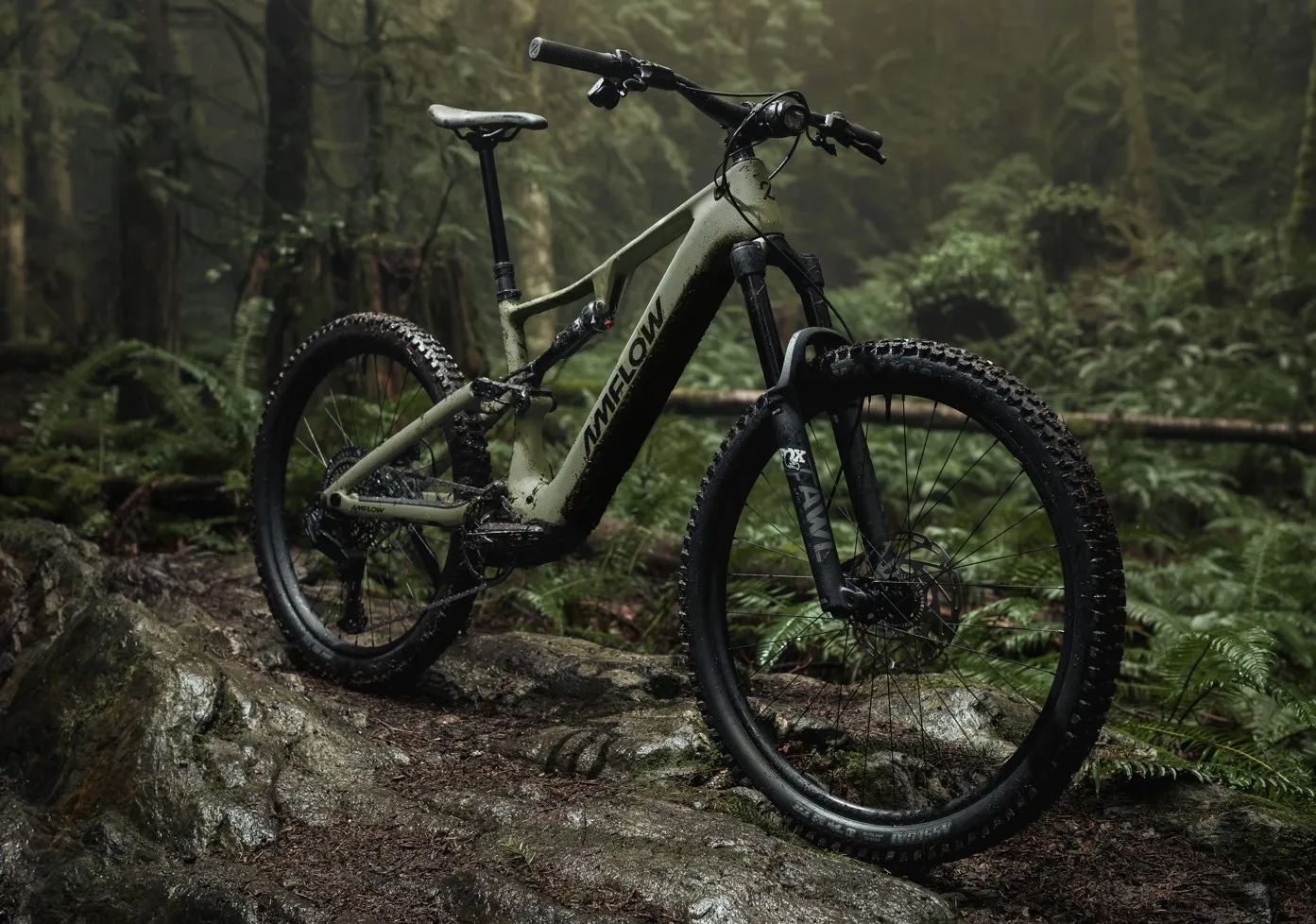
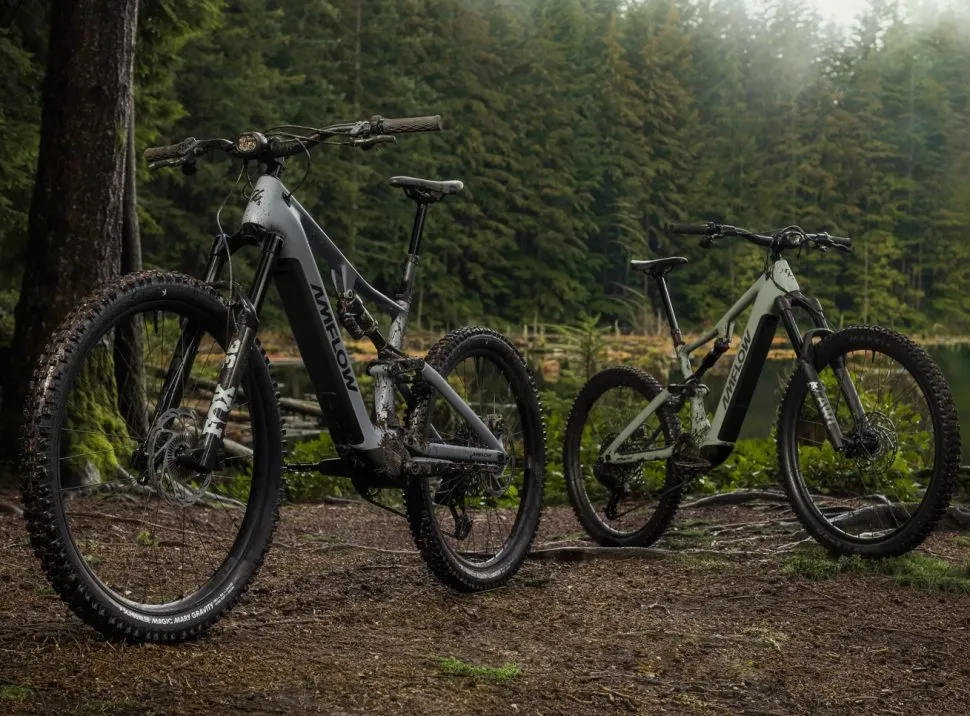
Yesterday was a big day in the e-MTB world. The press embargo on the new Avinox M2 motor ecosystem was lifted, leading to around 60 bike launches in a single day, one of which came from the sister company – Amflow – and its new PR series starting at an astonishingly low £3,999.
Now, almost all of the dialogue around yesterday’s launch centred on power, which is a topic for another day; actually, we’ll have a story on that soon enough. For now, our interest lies in just how disruptive a £3,999 price point is for a 2.9kg full carbon frame with one of the most hyped up e-bike motor systems in years.
The e-bike market is crying out for lower price points. This is a point we’ve argued for some time, but to be precise, this is something we have sought more of the urban market, which is generally more non-enthusiast, rather than the enthusiast mountain biking sector. Enthusiasts are generally more willing to shell out big bucks for a sought-after item than people buying out of necessity in the face of ever-increasing transport costs.
Don’t get us wrong, £3,999 is still a lot of money in a market where consumer confidence is at a low and luxury purchases are generally on hold, but it is low enough that we think it will cause significant alarm in the electric mountain bike space, perhaps even among the 59 or so other e-MTB brands that debuted more expensive bikes yesterday. And they will have been more expensive.
At the present moment, somehow, we are still talking about the knock-on effects of the Covid shock to the bike market. Discounted stock remains everywhere and there are even examples of what should be unusual discounts on 2026 models.
Geopolitics matters
That linked example above, you may notice, is discounted to Amflow’s entry retail price, does not have a full carbon frame and doesn’t come with the crowd marketing feedback loop that the (arguably dangerous) peak power conversation seems to be generating. Yes, the fork and shock are basic, but will a cash-strapped consumer think twice, given the hype both Avinox and Amflow have been able to build?
An all too evident component of this puzzle is that DJI is a business estimated to have annual revenues over $1.6 billion, which in bike industry terms makes it a behemoth. That means that it has both excellent economies of scale and, when encountering significant headwinds like regulatory challenges, it can adapt quickly and expertly. It has been speculated that this is why the DJI name has now been separated from the Avinox branding.
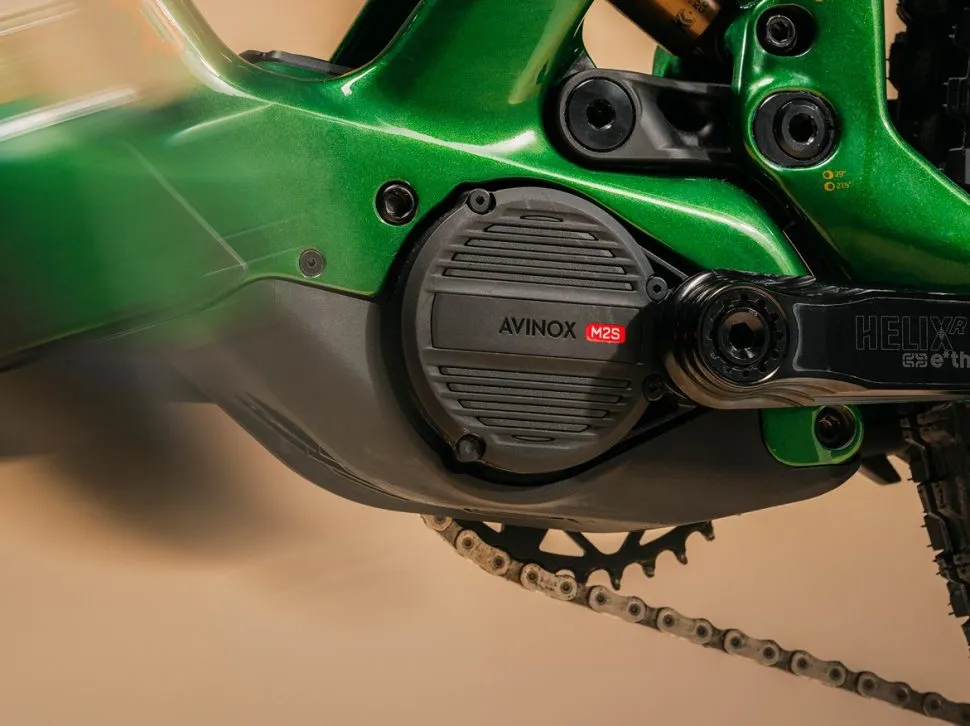
Economies of scale are one thing, having a command over the technology space like no other bike industry brand is another. It’s fair to say that no other label in the bike industry, even including Bosch, has the electronics advantages that DJI has. For starters, China has a near total dominance over the modern battery technology market by sheer luck of being planted on top of many of the world’s relevant minerals, plus investments it has made over many decades to be at the forefront of innovation in technology. A more focused point is that Avinox now seems to come with an ultra-fast 12A charger as standard, where many others are still shipping with 4A chargers. China is just ahead of the game on electronics, and, increasingly, it’s not even close.
This competitive advantage may also enable Amflow to put, as standard, an 800Wh battery in even its entry-level models, with greater room to hold a price point comparable to its competition. The battery is still the electric bike’s most heavily priced item, but for Avinox, sourcing a battery at highly competitive costs is unlikely to be the same challenge European assembled brands could face. China has recently announced export restrictions on lithium batteries, a further recent geopolitical factor in play.
In years gone by, bike industry insiders would always say of automotive brands trying to produce bikes that they just didn’t understand how bikes ride. Geometries were often off and ‘innovations’ have often been quirky and poorly thought through. This story doesn’t seem to be repeating quite as often as the tech industry makes inroads into e-bikes (though examples do exist). For starters, Amflow has now moved into making its own brand wheels, illustrating its commitment to building an infrastructure for the sector, rather than sourcing externally. This is not a move many brands can make only a few years into selling into a brand new market, again illustrating competitive advantages.
China’s advantages explained
Now it is widely known that the Chinese Government has in place manufacturing subsidies for leading technology firms, especially those operating in the green and battery technology spaces.
Avinox is no longer DJI, at least not in name, but both it and Amflow spun out of the DJI name and many people, including many brand press releases sent yesterday, still reference the drone maker when talking about these products. That is not to say that Amflow nor Avinox’s products are a beneficiary of funding from the Chinese state investment; we do not know, but the Washington Post is among those that have previously reported that DJI’s goods were partially funded by state investors.
Why the geopolitical take, you may ask? Well, it’s because £3,999 is an almost unbelievable price point for this level of bike, and that’s going to have knock-on effects for competitors’ e-MTBs; actually, you, the consumer, will probably benefit as the bike market wakes up to this new tier of low-price competition.
The price is, undoubtedly, helped by the fact that the UK has not followed the EU in maintaining its anti-dumping duties on Chinese electric bikes. Electric bikes shipped from China to the EU have duties of between 10.3% to 70.1% applied, as well as, in some circumstances, countervailing duties of between 3.9% to 17.2%. The UK no longer does, which is a heck of a chunk of wiggle room for Chinese manufacturers to lower prices, manage future discounts or add to their margins, comparable to EU sales. All this said, the pricing in Europe is €4,499, which at today’s exchange rate is actually closer to £3,920.
Amflow and economics
To quickly scan some of yesterday’s e-MTB launch headlines is to spot some pricing voids that almost guarantee Amflow will sell out (actually, the site says they already have). We are not comparing apples to apples here, but the cheapest Pivot with Avinox (M2S) is $9,499 (about £7,070) and the most expensive $14,499. The Mondraker Zendit starts at £7,399; the Megamo Reason ranges £4,999 to £11,999, but the very cheapest spec, still £1,000 above the base Amflow, is aluminium. Amflow’s highest-spec build, its PX Pro is £8,999.
Plenty of variables exist here, and these are certainly not review-depth judgements made on one bike’s worth over another, but rather a purely economical take on the effects of Amflow’s pricing abilities. It remains the case that you can easily pay more than £4,000 for a decent spec non-electric mountain bike, but increasingly, this imbalance presents the question – in this economy, if you can only choose one bike, why would you? For the electric mountain bike sector at large, the question may soon become, can we compete on a level playing field?
That, we at Cycling Electric would wager, is going to cause some extremely unwanted headaches for many established brands and retailers heavily stocked not just with this year’s e-MTB launches, but still with prior year’s stock too. If some normality in pricing was hoped to resume after years of brands struggling to turn a profit, that horizon may not be getting any closer. This may be all the more true as it seems that consumers in the enthusiast part of the e-bike market are increasingly searching for motor brands as much as the bike brand itself.
In the end, that is likely to mean less diversity in the market, which we would argue is not a good thing. One thing we can all agree on is that, for the e-MTB buyer, the level of value and performance on offer is truly unprecedented, though on the former point, the gap in competition may be widening irreversibly.