Sponsored
At Eurobike 2025, Joycube showcased their semi-solid battery solution that combines solid-state benefits with practical production. Joycube R&D manager Olivia Huang explains how it is designed to meet the needs of both the Chinese and European e-bike markets.
China’s new GB 43854-2024 regulation mandates nail penetration tests for e-bike batteries. Tests on common 18650 and 21700 cylindrical cells revealed that only lithium manganese iron phosphate and lithium iron phosphate systems pass, but they lag in energy density and cycle life compared to ternary alternatives.
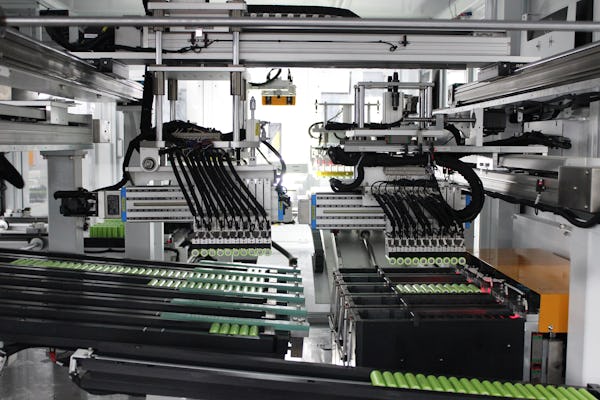
Joycube’s semi-solid batteries use just 5–10% liquid electrolyte via an oxide route, incorporating high-nickel ternary cathodes, solid electrolyte doping in electrodes, in-situ polymerisation technology, and graphite-silicon anodes. Pouch structures offer low internal resistance and excellent heat dissipation for higher rates. “This means that our semi-solid cells achieve 250-300 Wh/kg while passing nail tests,” said Huang. “This solution ensures e-bike battery pack requirements for energy density and long cycle life while improving safety performance.”
Subscribe to our Bike Europe newsletter
For markets outside of China, and without requiring nail penetration certification, Joycube increases cell energy density to 300-350 Wh/kg, significantly reducing existing battery pack weight, increasing capacity, extending riding range, and allowing consumers to benefit from safer semi-solid cell technology.
Why Joycube’s approach is different
While market trends demand high-energy batteries, liquid versions falter on safety. Full all-solid-state options struggle with costs, stability and interfaces. Joycube’s semi-solid route boasts good stability, strong solid-solid contacts and compatibility with existing lines.
“The semi-solid battery route we have chosen offers good stability, excellent interface contact, and high compatibility with existing liquid production lines,” Huang explains. “This makes it the preferred solution for improving energy density at present.”
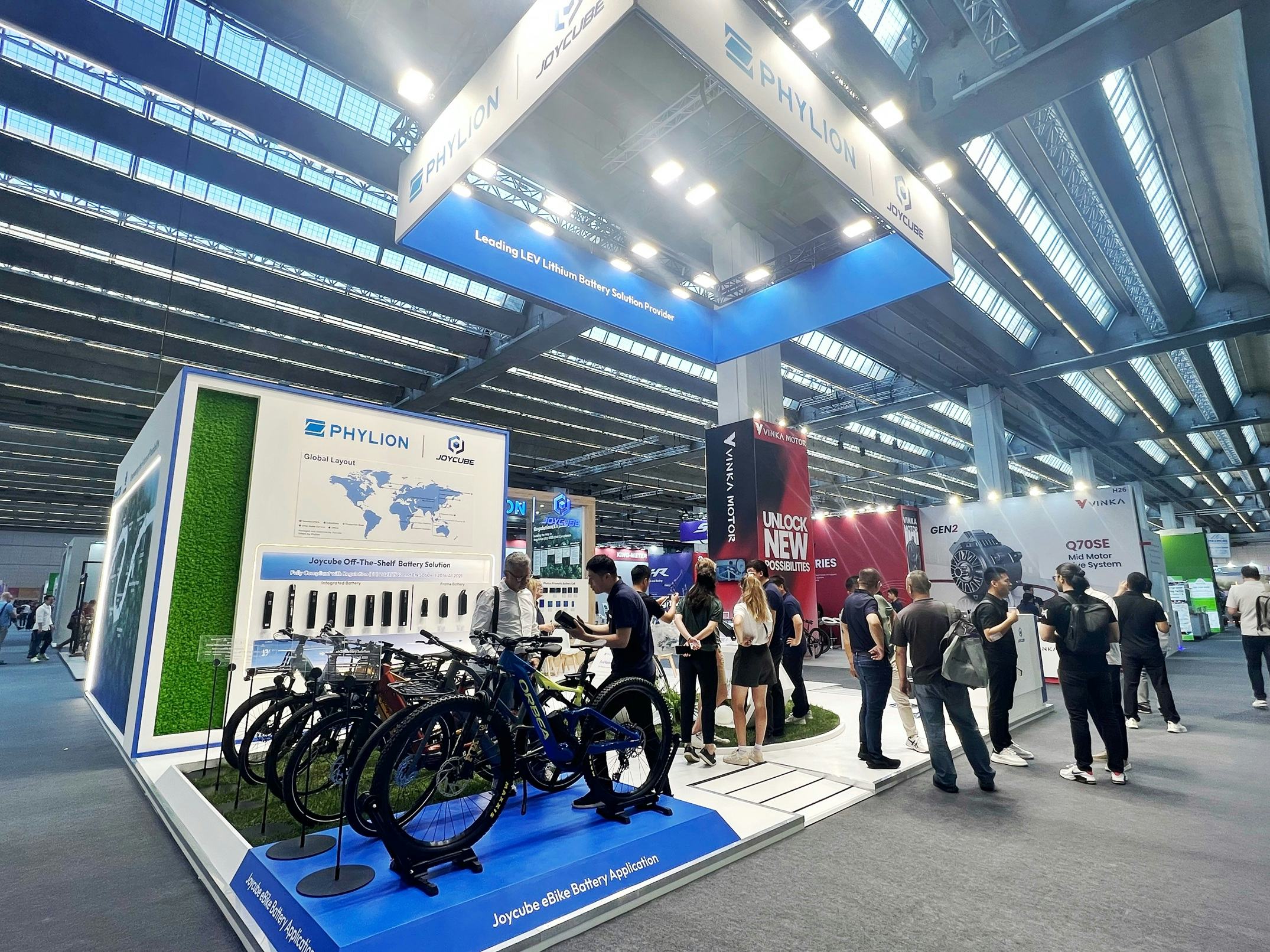 Joycube showcased its semi-solid battery solution at EuroBike 2025.
Directly solving top rider pain points
E-bike riders, fleet operators and manufacturers are all looking for batteries that are safer, last longer and charge more quickly, and as e-bikes are used for daily commuting, delivery work and longer leisure rides, the pressure on battery performance has grown — and so have concerns about safety risks, limited range, heat build-up during heavy use and long charging times.
“Our semi-solid technology demonstrates significantly improved safety, remaining non-flammable and non-explosive under extreme test conditions such as nail penetration and even cell cutting,” says Huang, adding that reduced gas generation and oxide electrolytes stable up to 120°C strengthen this performance.
The internal resistance of semi-solid cells is less than 3 mΩ, which is significantly lower than the 15 mΩ of current cylindrical cells, resulting in lower temperature rise during discharge. Furthermore, semi-solid cells also support 1C charging, enabling fast charging technology. Huang: “Consumers can now fully charge in less than 2 hours, compared to the previous 6-8 hours – a 4x reduction in charging time. And, thanks to improved energy density and fast charging technology, long-distance touring becomes more feasible and shared mobility services gain better economic efficiency.”
Joycube is currently developing a 10A fast charger and related supporting protocols, with cell cycle life reaching 1,500 cycles at 80% capacity retention.
Power on the go
Joycube’s technology incorporates a built-in bidirectional DC-DC module supporting both PD3.1 and PD3.0 protocols. This means the battery can be charged without purchasing an additional charger – consumers can use their existing Type-C adapters to charge the battery. The battery also serves as a large-capacity power bank, supplying power to mobile devices such as phones, laptops, tablets, and drones, solving the problem of running out of battery power on the go.
Thriving in cold climates and demanding rides
In winter, standard batteries can face performance challenges in very low temperatures, while Joycube’s semi-solid solution supports discharge at -40°C and charging at -10°C, making it well suited to European riders.
This viability extends to long-distance touring, cargo delivery and high-speed urban commutes. Low resistance handles high-power motors for powerful hill climbs; lightweight designs feel like regular bikes. Shared services benefit from fast charging economics.
Rollout plans and EU alignment
Small-scale production will begin in China in mid-2026 for validation, with samples sent to selected partners, including leading European brands, for performance evaluations and riding tests. Once the product has been proven, mass production will follow for international markets.
“I believe semi-solid technology can really bring something new for our e bike market,” Huang concludes. “The pouch cell design makes cells easier to disassemble, long cycle life enables second-life applications, high safety meets regulatory product requirements. Furthermore, pouch cell recycling is more convenient, disassembly requires no forceful crushing, material separation is purer, electrolyte recovery is more complete, and positive/negative electrode sheets can be removed intact. Joycube’s semi-solid batteries promise safer, farther and faster e-biking, with the company now one to watch as the technology moves into the market.”
This article is sponsored by Joycube.