Huawei has spent the past few years building a serious position inside China’s auto industry through a growing list of partnerships with domestic manufacturers.
One of the latest and most important examples is the Baojun Huajing S, a large six-seat crossover developed by SAIC GM Wuling with heavy Huawei involvement.
The model first appeared in Chinese regulatory filings late last year, and now it has been officially revealed with full exterior and interior images ahead of its market launch. More than just another new SUV, the Huajing S is being positioned as the most advanced and most ambitious passenger vehicle Baojun has produced so far.
Huawei Tech Takes Center Stage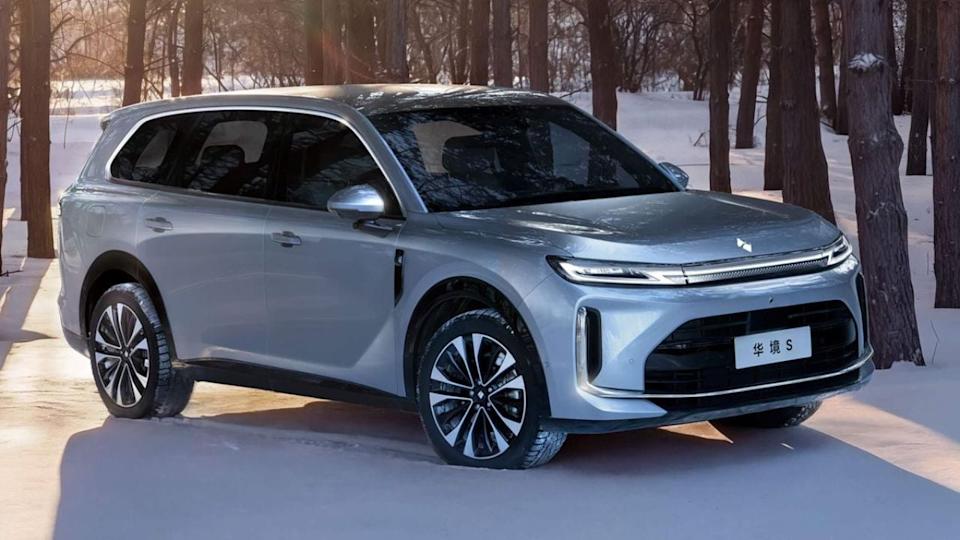
Photo Courtesy: Autorepublika.
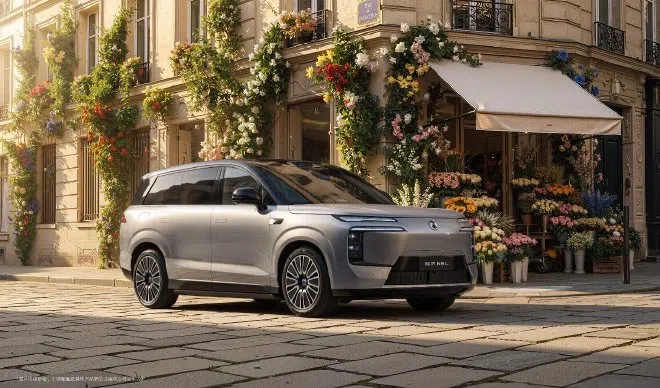
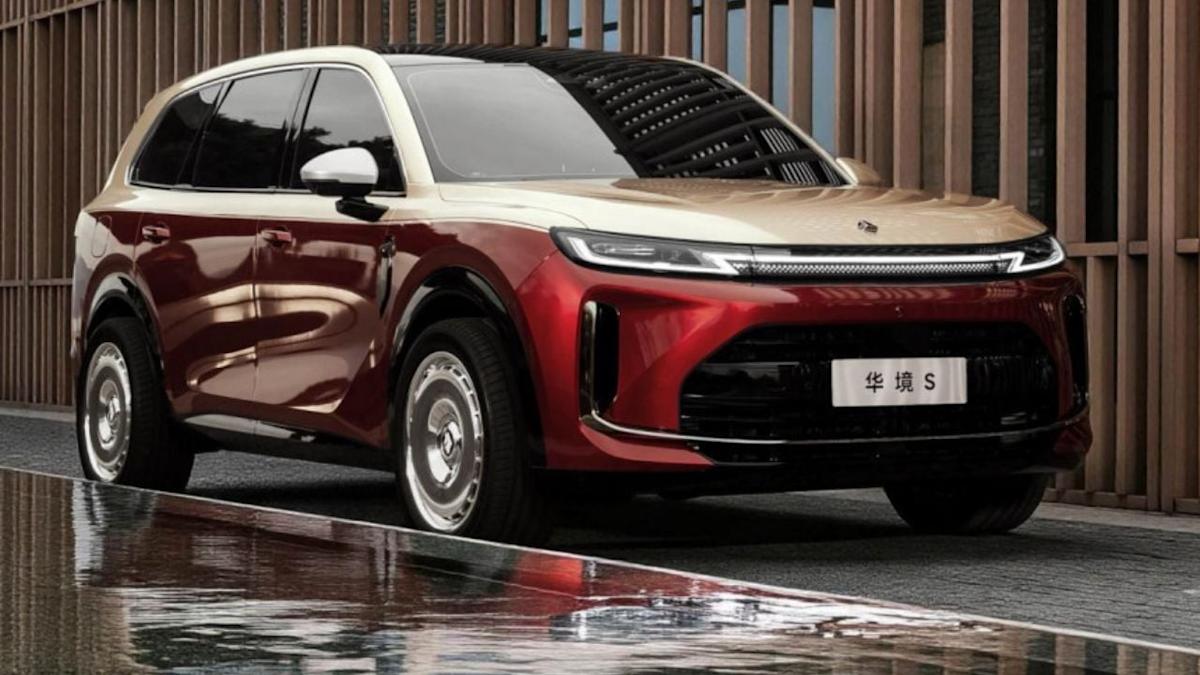
The Huajing S follows current Chinese design trends, but it also makes its technology story obvious from the outside. The front end uses a wide, full-width lighting theme with Z-shaped graphic elements, while the rear mirrors that look with a matching light bar. Traditional door handles remain in place, but the real focus is on the hardware for the assisted driving system.
The SUV uses Huawei ADS 4 Pro, with lidar mounted near the windshield and additional sensors integrated around the vehicle. Huawei’s HarmonySpace 5 cockpit system and Huawei IVCS cloud services are also built into the package, making this crossover one of the clearest examples yet of how deeply Huawei is embedding itself into Chinese vehicle development.
The dimensions are substantial even by Chinese market standards. The Huajing S measures about 206.1 inches long, 78.7 inches wide, and 70.9 inches tall, with a 122.2-inch wheelbase. That makes it the largest and most technologically advanced passenger vehicle yet produced by SAIC GM Wuling, and it places the model firmly in the large family and executive crossover class rather than the mainstream midsize SUV space.
A Cabin Built Around Space And Screens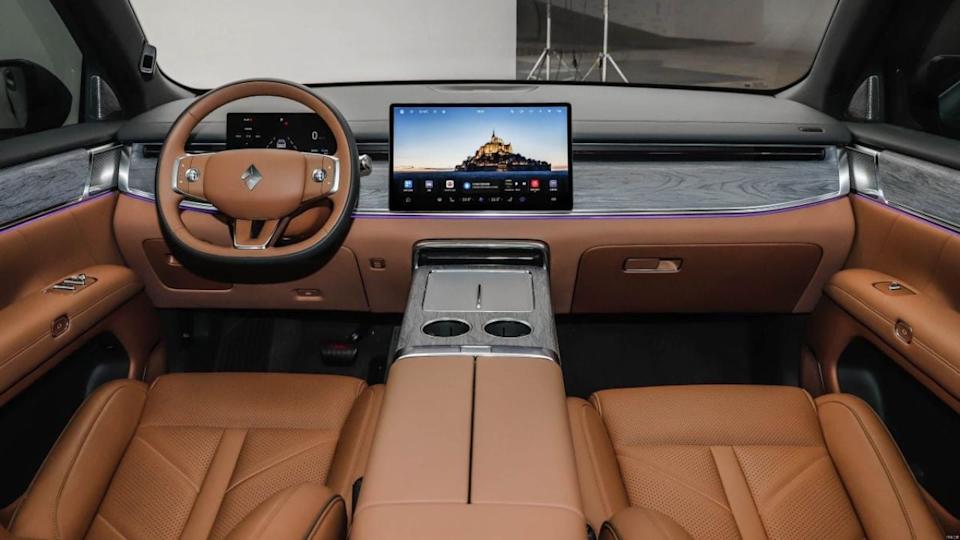
Photo Courtesy: Autorepublika.
Inside, the Huajing S uses a minimalist layout that leans heavily on screens and materials rather than physical controls. The dashboard keeps buttons to a minimum and combines a small digital driver display with a larger central infotainment screen. Huawei’s software plays a major role here too, with the HarmonySpace system forming the heart of the user interface.
Wood trim stretches across the dash and center console, while the lower console adds dual wireless charging pads and cupholders in a cleaner, more upscale presentation than Baojun buyers might have expected a few years ago.
The six seat layout is especially important. Second-row passengers get individual armrests, deep recline, and extending leg supports, while rear occupants also have access to a ceiling-mounted entertainment display and folding tray tables.
Buyers will be able to choose between brown and light beige interior themes, and the cargo area is practical too, offering 14.9 cubic feet behind the third row and 44.8 cubic feet with the third row folded, plus a small 2.1 cubic foot front trunk. In other words, this is not only a tech showcase. It is clearly meant to function as a true long-distance family hauler.
Plug-In Hybrid Power With A Luxury SUV Mission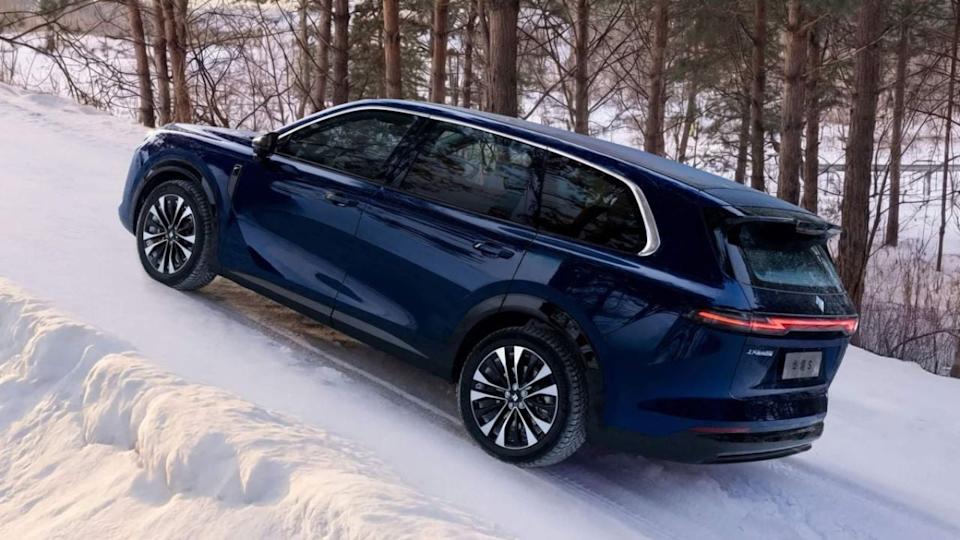
Photo Courtesy: Autorepublika.
Under the skin, the Huajing S rides on the Tianyu L architecture developed by SAIC GM Wuling and Huawei. Power comes from Wuling’s Lingxi plug-in hybrid system, built around a turbocharged 91-cubic-inch four-cylinder engine producing 141 hp.
Chinese launch information points to battery options of about 31 kWh and 41.9 kWh, delivering WLTC electric range figures of 81, 99, and up to 109 miles depending on version. SAIC GM Wuling has not yet published the full output breakdown for every trim, but the model is clearly being positioned around range, comfort, and intelligent driving rather than outright performance.
The bigger point is what the Huajing S represents for Baojun. This is a brand that once leaned more heavily on value and practicality, but now it is trying to move upmarket with a vehicle shaped as much by software and Huawei branding as by traditional mechanical hardware.
The Huajing S looks like a clear attempt to give Baojun a flagship that can compete not only in size and equipment but also in the kind of connected technology Chinese buyers increasingly expect. If it succeeds, it could become a major turning point for the brand’s future.
This article originally appeared on Autorepublika.com and has been republished with permission by Guessing Headlights. AI-assisted translation was used, followed by human editing and review.
Read More
13 Muscle Cars So Overlooked Most People Forgot Them
15 Car Features That Should Have Never Been Phased Out