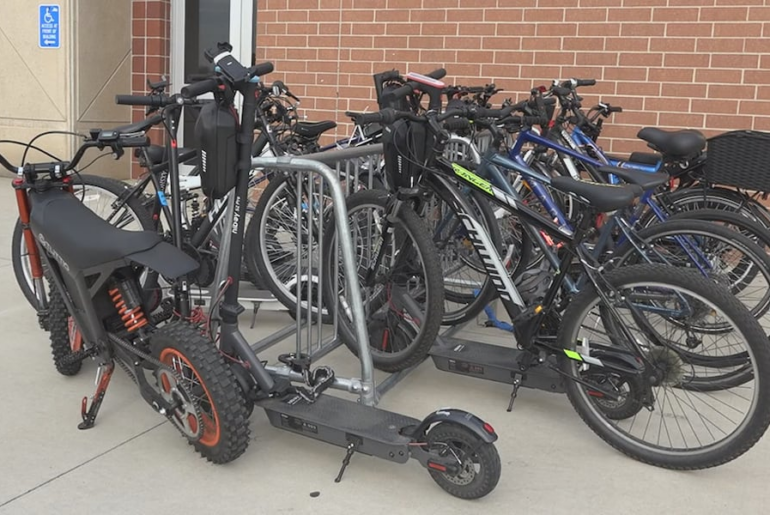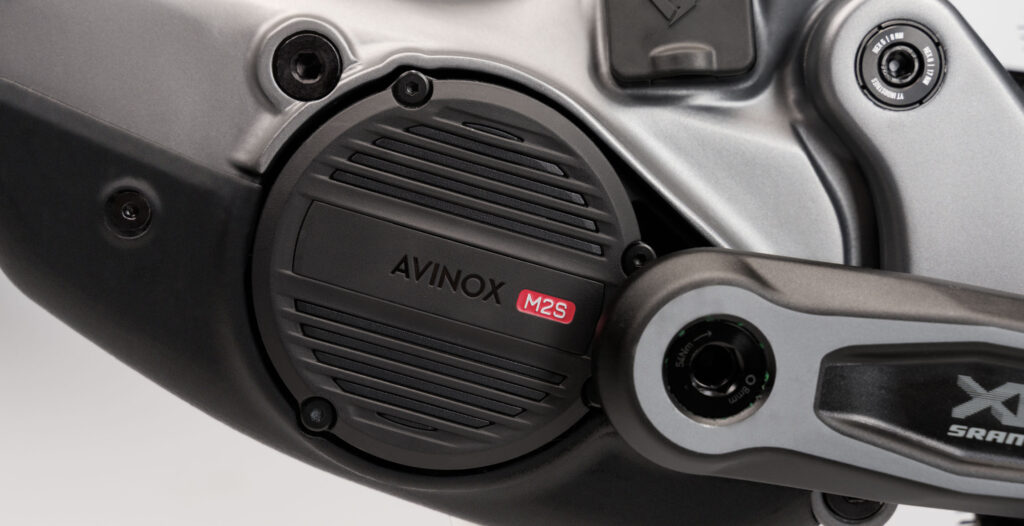
Let’s get this out there right away, because it feels like a requirement: I’m not some eMTB-hating retro luddite. I’ve ridden many eMTB while working here at CanadianMTB and have enjoyed doing so. While the early years were a bit awkward, the electric bikes have really hit their stride and are genuintely fun to ride.
But there has to be some kind of limit. Just because I think there’s a very real place for eMTB in mountain biking doesn’t mean that eMTB can be just anything. The word “assist” has to mean something, and that definition has to have limits.
The absurdity and willful incincerity of “assist”
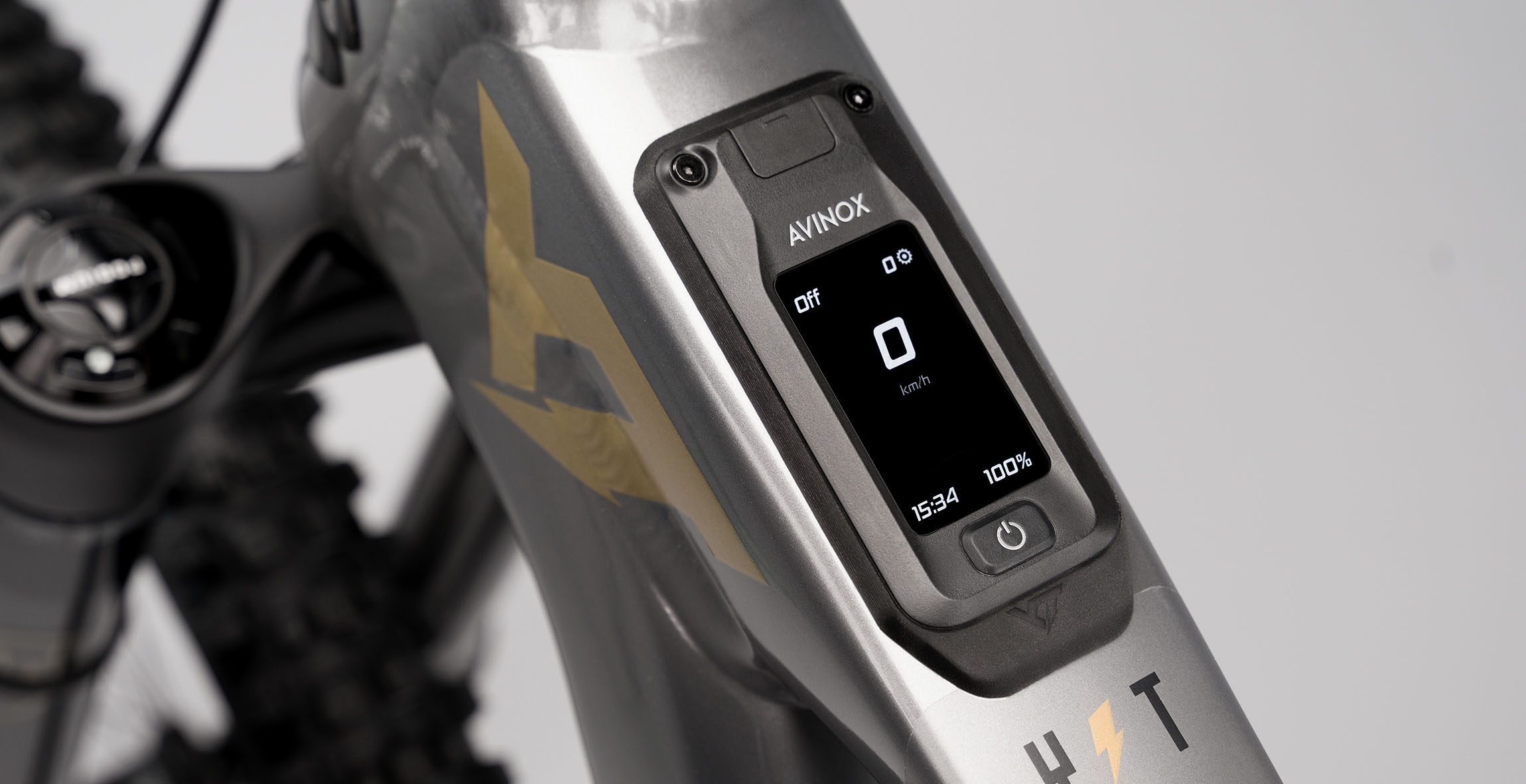
Today, Avinox released a motor with a peak power that is twice what the legal limit for “assist” is in most places. While I’ve sketched out this piece probably a dozen times over the last couple years, this feels like a breaking point. Calling 1,500 Watts, and the capacity for 800 per cent “assist” an assist, even if that staggering number is only available for 30 seconds, is absurd.
And this isn’t just an Avinox problem. As we saw with the release of its first motor, the M1, other motor brands are doing their best to catch up. Bike brands are falling over themselves to integrate the motor into their bikes. And consumers are rushing to buy these motorized machines.
The word “assist” is doing a lot of work here, though. And I think it’s time to look a bit more closely at that. Two of the commonly cited reasons for embracing and/or zealously promoting eMTB use is that they can increase access for riders who might otherwise by physically restricted from mountain biking (and that’s not just referrng ot the aging population of OG mountain bikers) and that it makes the sport more attractive to new riders by, again, lowering the physical barriers to entry. I.e. climbing steep hills.
Both of those arguments are valid. Neither hold up when talking about an 800 per cent assist. or 600 per cent. I don’t claim to know what the limit should be, but I know we’ve blown right past it.
That kind of powew is an unweildly, bordering on dangerous, for any rider new to the sport. One magazine showed the new M2S taking its rider from 0 to 20 mph (32 km/h) in three seconds. No new rider can safely handle that kind of acceleration.
And no experienced rider facing physical limitations to continuing in the sport needs that kind of power to continue riding. Quite simply because none of us had that kind of power before. Arguing you need 1,000 W of “assist,” more than any pro rider can create, to continue to enjoy riding bikes is absurd at best or just dishonest. If you’re loking at a bike offering an extra 200 W and saying “what’s the point?” you need to admit you don’t want a mountain bike, you want a motor bike. I have nothing againt motor bikes. They’re fun. But if you ran into me riding a motorbike on your local mountain bike trails I’m sure you wouldn’t be happy.
Marketing or defending excessively powered eMTB’s as offing “assist” is more than insencere. It is a hiding of intentions under the presentation of good will.
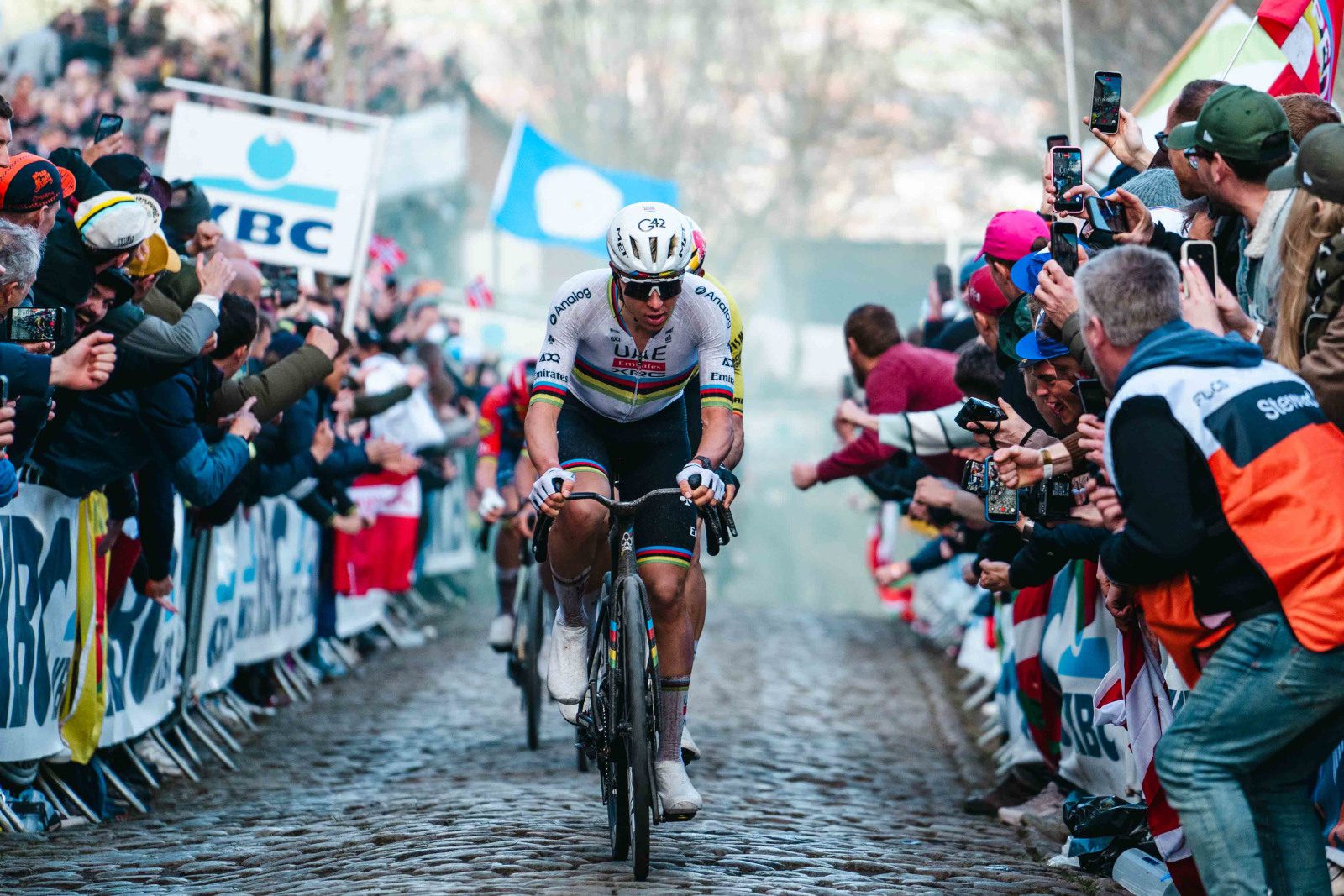 If you don’t follow road cycling, the rainbow bands on Pogačar’s chest mean he’s fast. Photo: Sirotti.
Defining “assist” with some context from the pros
Looking at the slow, but accellerating creep of power numbers on their own hides just how much of an “assist” we are talking about. What’s 1,300 Watts when the last motor had 1,000 and the one before that 750? In relation to each other, motor power numbers don’t seem that absurd. But in relation to the human’s they’re assisting? We’ve jumped the shark.
At this point, this isn’t an electric assist. These motors deliver power that goes beyond the outer limits of human potential. It is an electric motor. A motorised vehicle. But one with a crank you have to spin with your feet, not twist with your hand. Those two actions require roughly the same effort at this point.
What are the limits of human potential? Well, luckily we have a whole bunch of very recent examples.
Tadej Pogačar is widely recognized as the greatest cyclist alive and potentially the greatest cyclist of all time. To drop Mathieu van der Poel during the 2026 Tour of Flanders, Pogačar averaged 480 W for 3:02 up Oude Kwaremont and 630 W for 50 seconds up the Paterberg.
To drop van der Poel (but not Tom Pidcock) on his way to winning Milan-San Remo a few weeks earlier, Pogačar averaged 620 W for 1:10 while climbing the Poggio
Mathieu van der Poel’s power numbers are also earning headlines. On his way to winning E3 Saxo Classic, the Dutch phenom shared he averaged 449 W for 90 minutes. Those numbers are so incredible they inspired awe, and some disbelief.
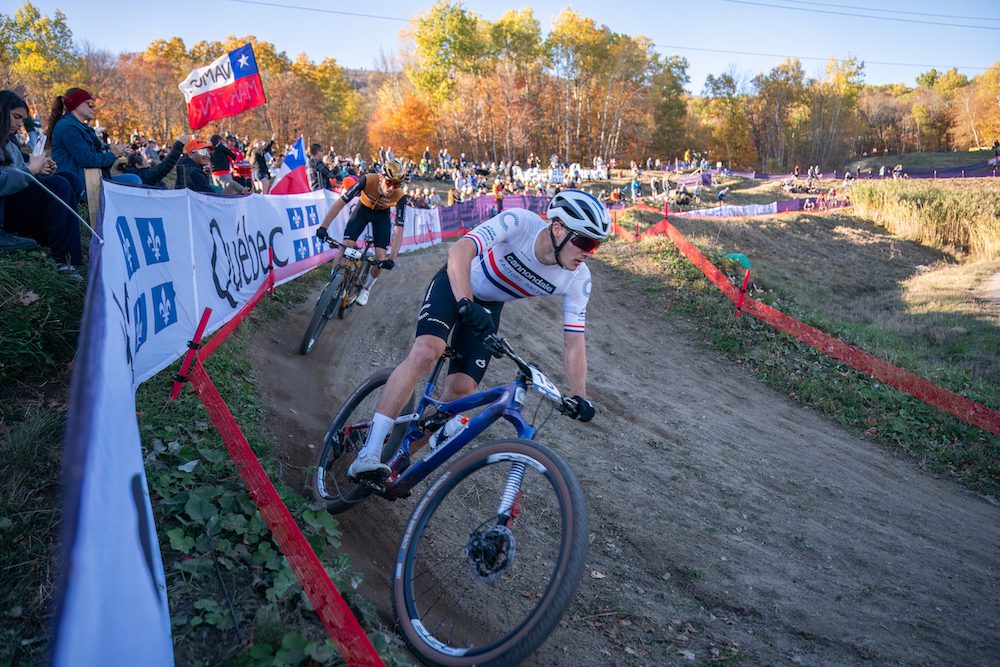 Aldridge on his way to a World Cup win in Mont-Sainte-Anne last fall. Photo: Colin Field
To get back to mountain biking, World Cup winner Charlie Aldridge recently talked to GMBN about power. The Mont-Sainte-Anne World Cup winning Cannondale rider shared his max power output is 1,790 Watts, so we haven’t quite reached the point where a eMTB alone can match a pro sprint (but if you put in 290 Watts of your own, a rider and eMTB can).
But Aldridge’s 60 second max power? “Just” 915 W. And Aldridge is, at 90kg, one of the most powerful riders on the World Cup circuit these days. These new motors blow him out of the water, and will contine above that pace until the battery dies. Aldrige shared his peak 20 min power drops down to 456W, or 450 Normalized Watts for a World Cup short track.
Now, van der Poel and Pogačar may have had a higher speed than the limits of an eMTB, on the Poggio and in E3 certainly. But that is a regulatory limitation of e-bikes that is increasingly easy to work around as more people figure out how to, and share how to jailbreak their motor systems.
If you’re looking at bikes offering those kind of power numbers and thinking its not nearly enough well, first, you’re not alone and second, you don’t want a mountain bike. You want a motorised bike.
There is no world in which something that produces three times Mathieu van der Poel’s unbelievable power numbers should be called an “assist.” There is no world in which a machine that eclipses a World Cup winner’s 60-second power record is called an “assist.”
It is, plain and simply, doing the work for you. These are not motorbikes, no. But they are no longer just mountain bikes either. (for what its worth, riding an eMTB is way easier than riding a moto. There’s been a good bit of chatter about phsyiology lately in the world of moto and the top riders there are claiming some WorldTour-level Vo2 Max numbers. I am in no way opposed to moto.)
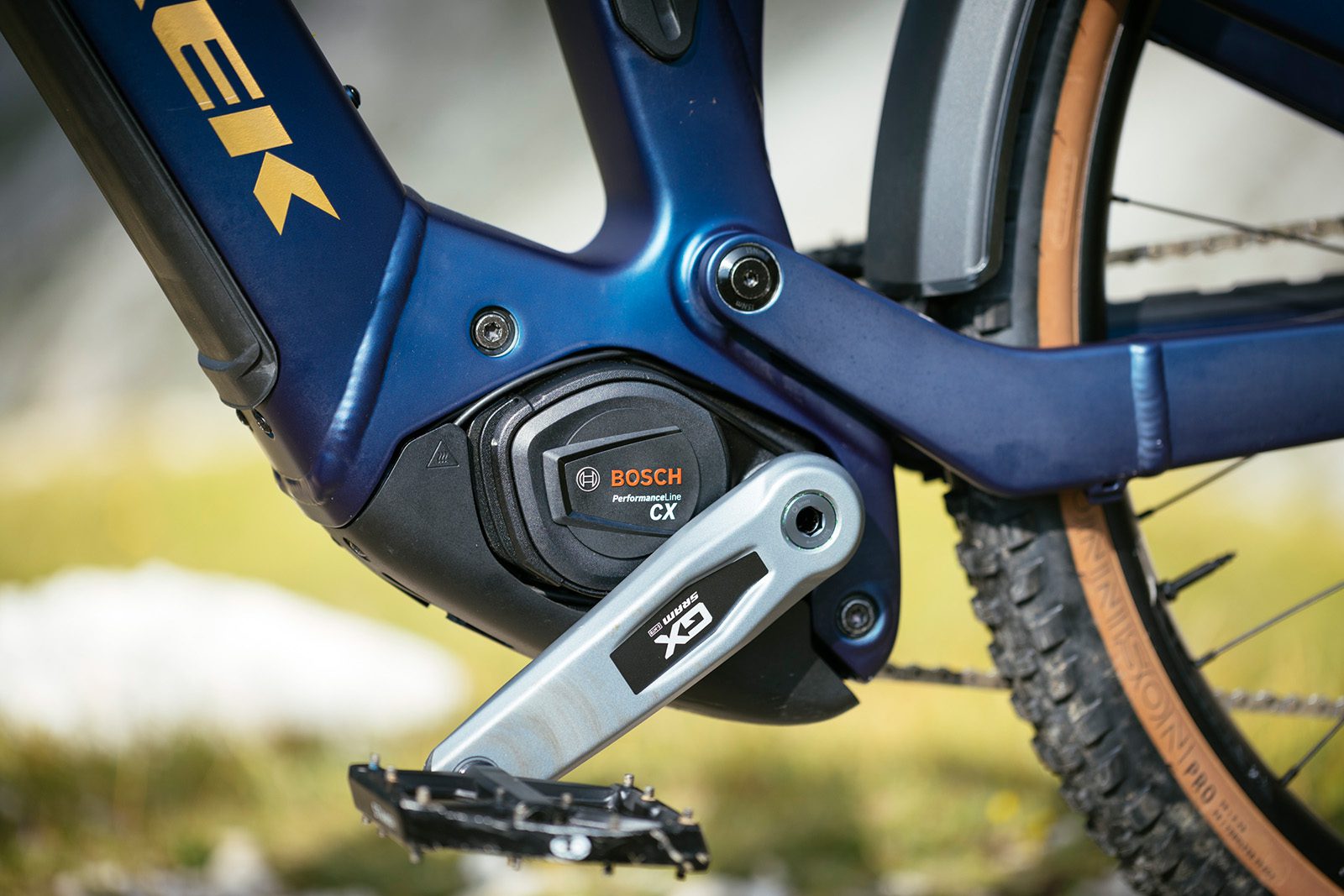 The Powerfly. Powered by the Bosch Performance Line CX motor.
Marketing vs community: Leaning in to the power wars
While Avinox is the first to supply this kind of power, it’s not alone in fault. Other motor brands and bicycle brands are enthusiastically following the drone maker’s lead.
Bike companies are leaning in. YT ditched the subtleties, launching the Avinox-powered Decoy X with the ad pitch that it “feels illegal.” A certain pink website chose “With great power comes great marketability” as their tag line, in a little-too-on-point twist of the classic saying. Because this system is arguably choosing marketing over responsibility.
Even the first Avinox motor system, which had much less power, inspired a eMountainbike Magazine crisis forum simply titled “Are We Dumb.” The fact that a group of media and industry insiders not only asked that question but came up with a resounding “yes.” as the answer should be chilling. Or at least have had a chilling effect on the “more power” hype train.
It hasn’t, obviously. Hans No Way Rey, a vocal advocate for eMTB, is one of the few riders so far that’s spoken out about the excesses of current eMTBs.
Again, Avinox shouldn’t take all the blame. To the brand’s credit, it created a system that is leagues better than the competition, not just in power. The M1 emerged as a mature product, with nearly every aspect is arguably better than the bumbling toddler efforts the industry had put forward before that. It felt better, looked better, had more power for its size, was easier to use. And yes, had oodles more power.
The response? Every other brand that could, immediately offered higher power versions of their systems or running updates that unlocked more power.
And consumers? They flocked to any bike that could get its hands on an Avinox motor. With those bikes selling out, its no surprise that a struggling industry is clamouring to grab onto any product that looks like a lifeboat of guaranteed sales.
What comes next?
As the “Are we dumb?” forum concluded, this isn’t a theoretical debate. This could have very real consequences. And not just for eMTBers, but the broader mountain bike community. And, eventually, the broader world of e-bikes (becuase Avinox is already expanding into gravel).
E-bikes are just going to get lighter and more powerful. That will reach a tipping point in the broader public perception where other trail users are no longer willing to put up with this crap. We are frogs boiling ourselves in a fantasy of regulatory evasion. Every generation of eeb is incrementally more powerful while also looking more like an actual pedal bike. We’re just starting down this road and we’ve already reached a point of 1,500 W absurdity. Avinox bikes look like bikes, but I can accelerate uphill with the speed of Tadej Pogacar (but for hours, not 90 seconds). TQ bikes are basically indistinguishable from bikes, especially in motion.
If you rolled out an Avinox-powered bikes in the early days of eMTB, it would have killed the entire project. No one would have accepted this as a bike. No one outside the bike industry does accept this as a bike.
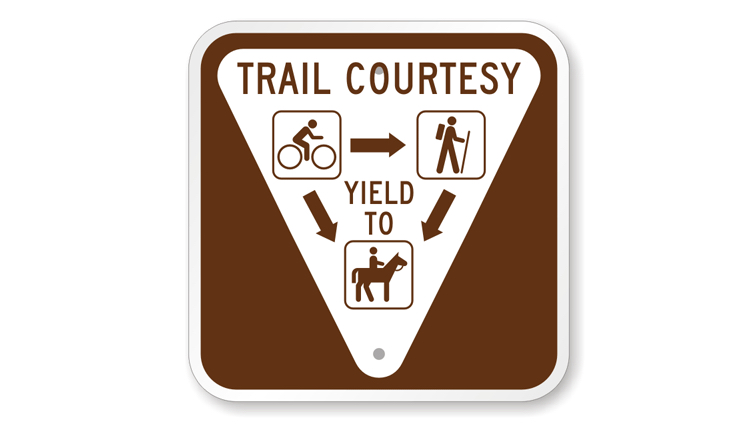
So, what happens next? Who knows, but I’m going to guess it involves regulations and changes to land access. There seems to be a collective amnesia for just how long and how hard we had to fight to establish consistent access to trails in so many communities across Canada. Or some sense that this access is in any way permanent. I’m not so sure that’s true.