(Yicai) April 10 — China’s retail sales of passenger cars declined more than 17 percent in the first quarter of the year, as new energy vehicle sales fell following adjustments to the NEV purchase tax breaks.
Nearly 4.23 million autos were sold in China in the three months ended March 31, down 17 percent from a year earlier, with NEV sales plunging 21 percent to almost 1.91 million units, according to data released by the China Passenger Car Association yesterday.
The overall performance in the first quarter was better than expected, with declining sales mainly driven by the combined effect of the late Chinese New Year holiday and adjustments following the reduction in the NEV purchase tax exemption, said Cui Dongshu, secretary-general of the CPCA.
In March, China’s retail car sales dropped 15 percent to nearly 1.65 million autos from a year earlier, CPCA data also showed. NEV sales fell over 14 percent to about 848,000 units in the period, with the NEV penetration rate up to 51.5 percent from 51.2 percent.
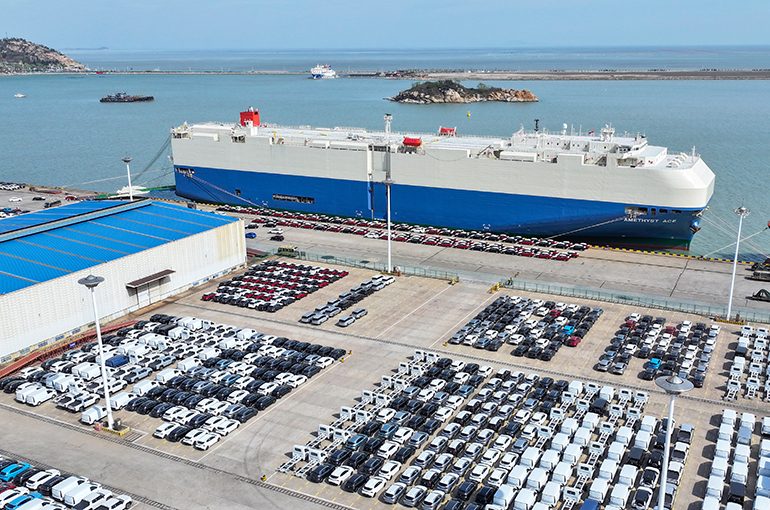
“Both NEV and fuel vehicle exports hit all-time monthly highs in March,” Cui noted.
China’s passenger car exports rose 74 percent to 695,000 units last month from a year earlier, with NEV exports surging 140 percent to around 349,000 units in the period, accounting for over 50 percent of the total, up from 36 percent in the same period last year, according to CPCA data.
BYD was China’s top exporter in March with 116,882 NEVs shipped, followed by Geely Automobile Holdings with 52,186 units, Chery Automobile with 40,837 units, and Tesla China with 29,563 units.
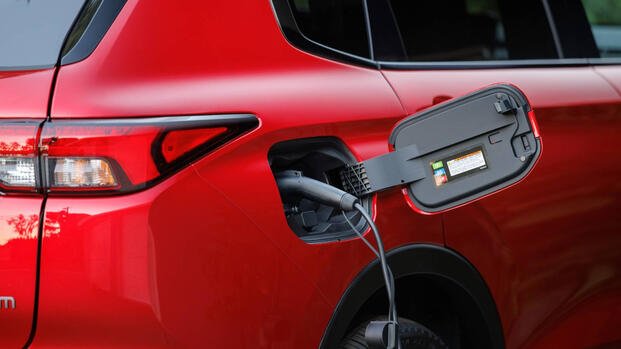
Rising international oil prices have driven strong demand for Chinese plug-in hybrid models overseas, according to Cui. Plug-in hybrids accounted for 44 percent of NEV exports in March, up from 35 percent a year earlier.
In the Chinese auto industry, profits are concentrated upstream, as carmakers face severe financial pressure, Cui said. In January and February, the industry’s profit margin was just 2.9 percent, well below the 5.8 percent average for downstream suppliers. Automakers’ profits fell 30 percent from a year earlier.
“Surging prices for memory chips, semiconductors, and non-ferrous metals driven by the US artificial intelligence revolution, combined with the spike in international oil prices due to the Middle East crisis, have pushed up the cost of vehicle-grade components and end-user ownership costs, suppressing the release of consumer potential,” the CPCA said.
Looking ahead, the CPCA expects the auto industry to continue a gradual recovery in April. There may still be a decline in the second quarter, but the market is expected to stabilize and return to growth in the second half of the year, Cui predicted. The upcoming Beijing International Automotive Exhibition will likely boost consumer interest.
Editor: Futura Costaglione