Electric cars are often framed as a technology race, but a new study suggests something simpler is holding them back: price.
Researchers found that cutting costs by just 20 percent could dramatically accelerate adoption worldwide, turning electric vehicles into the dominant choice in many markets after 2035.

The findings shift the focus away from consumer hesitation and toward policy, infrastructure, and affordability as the real drivers of the transition.
Costs are shaping EV growth
Across the world’s passenger car market, the breakthrough appeared wherever electric vehicles moved close enough to conventional prices for buyers to switch.
Shuai Pan, formerly a postdoctoral researcher at Cornell University, tracked the cost pattern across major regions. The research shows that subsidies and manufacturing scale can drive the change.
The effect ran fastest in China, Europe, and the United States, where policy, factories, and charging networks already gave electric cars a running start.
In poorer markets, the same price cuts met thinner infrastructure and weaker purchasing power, a limit that explains why the transition still splits sharply by region.
EV rollout isn’t equal
Wealthier economies moved first on electric cars because they built the rules, incentives, and charging networks that made adoption feel normal.
China, Europe, and the United States now dominate sales, as clear targets and manufacturing scale reinforce each other over time. In those markets, early investment created momentum that continues to build.
Elsewhere, the picture looks very different. India, Southeast Asia, and West Africa still face thinner charging networks, weaker grids, and far less consumer purchasing power.
That combination makes the transition harder to start and even harder to sustain. High upfront electric vehicle costs collide with limited infrastructure, while financing and local manufacturing often lag behind.
Support from richer markets could help close that gap before it widens further. Some countries may even leapfrog directly to cleaner transport without building large gasoline systems first – but only if factories, financing, and technical support arrive together.
Without that alignment, the shift to electric mobility risks looking global on paper while its real benefits remain concentrated in wealthier regions.
Price still stands in the way
For most electric vehicle buyers, the decision still comes down to cost. Much of the challenge sits outside fuel savings, in what researchers call non-energy costs – purchase price, maintenance, and insurance. Among those, the upfront price carries the most weight.
“Cost remains the most powerful lever,” said Pan. Policies can bring electric vehicle costs down through purchase incentives, larger factory runs, and designs that use fewer materials per unit.
When prices fall, adoption can move quickly enough to shift national fuel demand – not just dealership trends.
But price is only part of the equation. Even willing buyers hesitate when charging access feels uncertain, especially in regions where public infrastructure is still sparse.
Access to charging is still limited
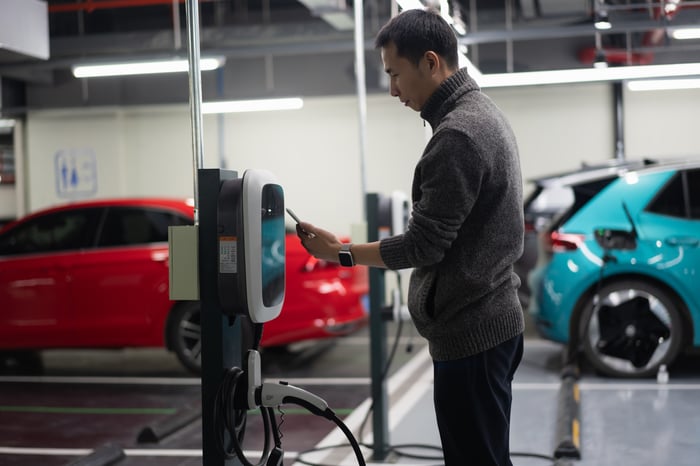
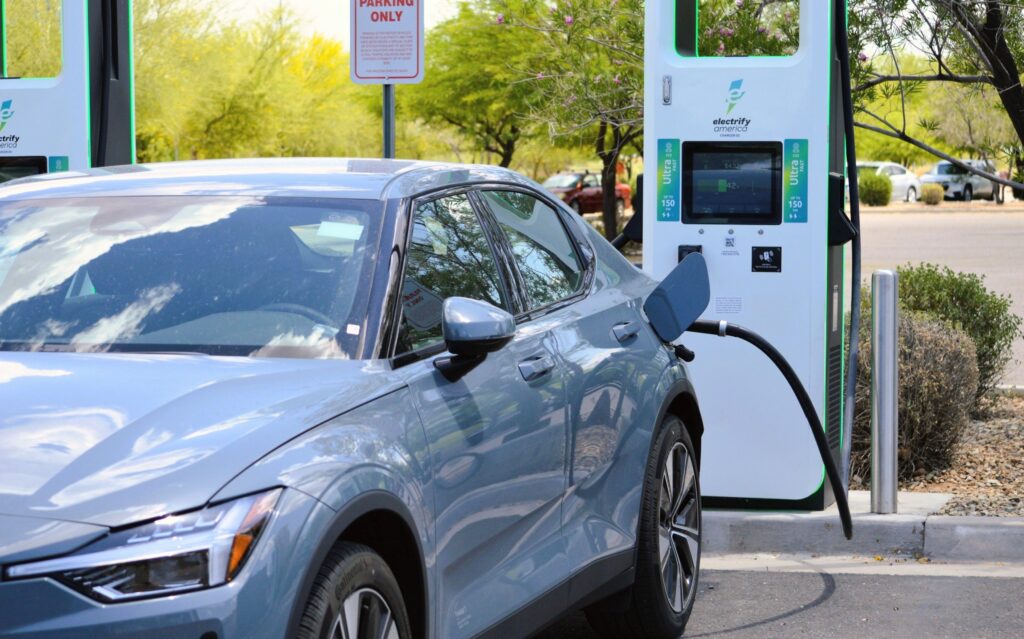
Keeping up with rising sales means building charging networks at an enormous scale. In the United States alone, estimates suggest between 13 and 30 million chargers may be needed by 2030.
The investment required could reach as high as $97 billion, a scale that helps explain why lower-income regions struggle to keep pace.
Europe has begun to formalize that buildout, with rules calling for public fast-charging stations every 37 miles along major routes and hydrogen stations every 124 miles.
Infrastructure does more than serve existing drivers – it shapes future demand. Reliable access reduces the perceived risk of switching, turning electric cars from a gamble into a practical choice.
Where that access is missing, adoption slows, no matter how strong the technology or policy support may be.
Cleaner cars, complicated emissions
As electric vehicles gain ground, their impact on emissions becomes clear – but also more complicated.
In the United States, Europe, and China, rising EV adoption has already pushed down gasoline use and tailpipe carbon emissions. Those gains have come fastest in markets that combined strong policy support with early infrastructure.
In other regions, growing populations and rising travel demand have continued to push emissions higher, even as electric vehicles begin to spread.
At the same time, EVs increase demand on the power grid – but not as sharply as some critics feared.
In a high-adoption U.S. scenario, electric cars account for about 13.5 percent of total electricity use, a level researchers consider manageable. Still, the shift introduces a new challenge.
“While EVs reduce emissions from transportation, they can shift emissions to other sectors, particularly electricity generation and hydrogen production, if those systems remain reliant on fossil fuels,” said H. Oliver Gao, a civil and environmental engineering professor at Cornell University.
Without cleaner electricity, some of the climate benefits simply move upstream. That makes power generation – not just transportation – the next critical battleground.
Hydrogen stays dirty
Hydrogen-powered vehicles face a different kind of bottleneck. While they produce no tailpipe emissions, the hydrogen supply chain today still depends heavily on fossil fuels.
That means growing demand can unintentionally reinforce the very emissions the technology aims to reduce.
The alternative is green hydrogen, produced by splitting water using clean electricity – but scaling that process remains costly and complex.
“Scaling up low-carbon, green hydrogen will be critical to realizing the full emissions benefits of fuel cell vehicles,” Gao said.
In the United States, current roadmaps focus on high-impact uses, cost reductions, and regional production networks. Even so, the path forward remains challenging, highlighting how much work still lies beyond the vehicle itself.
The EV transition still faces limits
Not every climate cost appears in this model, because battery minerals, manufacturing, and end-of-life treatment sit mostly outside its frame.
It also treats its high-adoption futures as policy tests rather than crystal-ball predictions, especially for hydrogen vehicles that still face weak markets.
Real-world forces could slow progress before 2030. Trade disputes, lower oil prices, and shifting subsidies may all delay adoption, even if long-term economics continue to improve.
These limits don’t erase the overall message, but they do caution against assuming electrification will happen automatically or evenly.
Instead, the broader lesson is about coordination. Electric vehicles deliver the strongest climate impact when cheaper vehicles, cleaner power, stronger charging networks, and targeted support all advance together.
That mix turns electric mobility into a meaningful climate strategy – while also revealing the cost, infrastructure, and equity gaps that still shape how fast it moves.
The study is published in the journal Resources, Environment and Sustainability.
—–
Like what you read? Subscribe to our newsletter for engaging articles, exclusive content, and the latest updates.
Check us out on EarthSnap, a free app brought to you by Eric Ralls and Earth.com.
—–