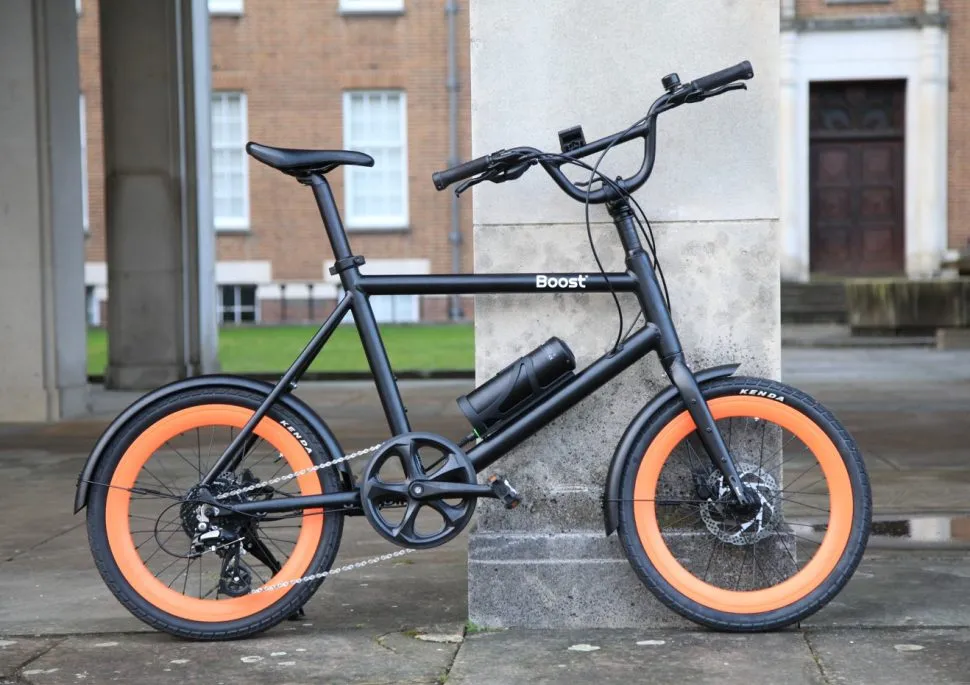
Access to electric bikes for everyone. That’s a message we can get behind here at Cycling Electric, so when electric bike conversion kit specialist Boost offered us a review of its debut e-bike, sold at only £1,245, it felt timely.
The cost of living crisis, it seems, isn’t going away anytime soon, making bikes like this extra relevant to those looking to beat down their transport costs. So with that in mind, this one will immediately be joining our buyer’s guide to electric bikes under £1,500.
So, before we get into it, who is Boost and why have they pivoted into complete bikes, having made a name for themselves as electric bike conversion kit makers, which they still sell plenty of?
In short, Boost is made up of a small band of UK-based engineers and e-bike systems specialists who have created not one, not two, but three business arms around their expertise – the conversion kits, the Boost Bike on review here and finally, BatteryIQ, a specialist battery management software business that has come to market in response to the quite troubling and misplaced trend of e-bike bans in some commercial or residential buildings. With the BatteryIQ dashboard, the team is able to show in real time the health and status of each battery’s cells, validating them as safe to store. This, arguably, shouldn’t be necessary, but a series of knee-jerk reactions to lesser quality direct-to-market conversion kit fires has prompted the safety drive.
So, the Boost Bike is a bit more than the sum of its parts. It is backed up by the expertise of engineers, software developers and people who care about the future of the e-bike market. Full disclosure, we’ll give extra credit for that, because not every e-bike brand shows the same consideration for the long-term health of the market in the face of quite unrelenting and often inaccurate press headlines conflating e-bikes and other sub-standard ‘E’ imports.
By the way, you can try electric bikes just like this one, and many more, at our Cycling Electric Demo Days, starting on April 19th and running through June. To find out about our live test ride dates and locations, head here after you read this Boost Bike review.
The Boost Bike: Some headline details
£1,245 | View offer
Pros
Compact and easy to store
Agile and upright geometry
Accessible price
Reasonable accessory deck
Light (16kg)
USB port on removable battery (good for a digital nomad)
UK backup and support
Batteries come with BatteryIQ monitoring technology
Cons
Basic software
Range per charge requires planning charges
Must be on the gears to get the most out of the motor
No lights, nor pannier rack as standard
Specifications
Stated weight: 16kg
Stated range: Up to 50km
Frame material: Aluminium (tested to ISO 4210 Mountain & EN15194 standards)
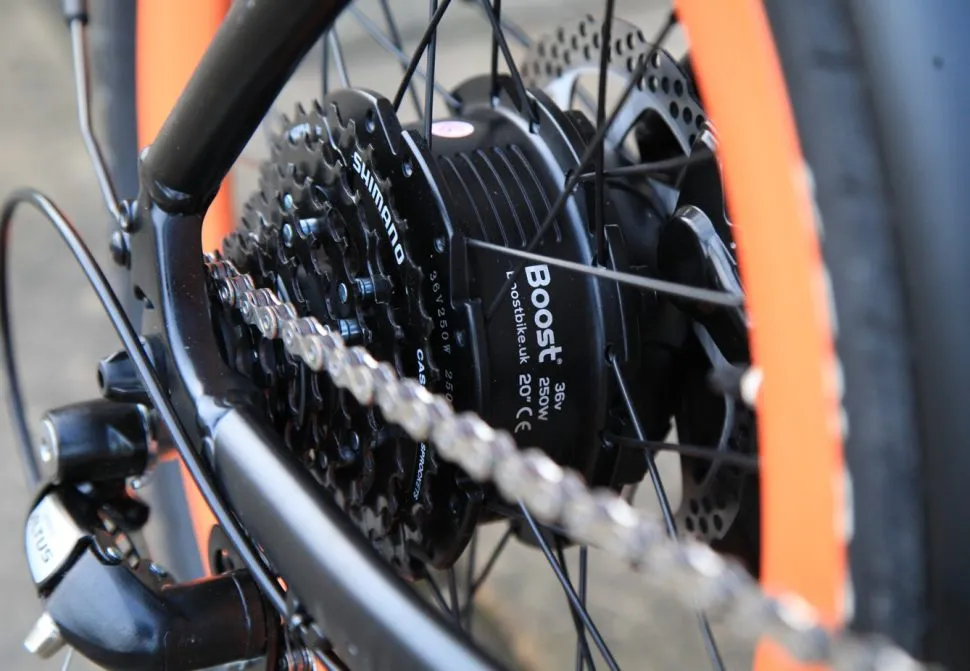
Motor: Boost own label hub motor
Battery: Boost removable battery, 252Wh
Drivetrain: Shimano Altus 11-32t 8-speed
Brakes: Clarks Clout hydraulic discs
Saddle: Boost Velo
Tyres: Kenda Khan 1.75″
Suspension: None
Included accessories: Kickstand, folding pedal, mudguards, folding 90-degree stem for flat storage
Who is this bike built for?
In conversation with Boost I’ve come to see this as a bike built for the moment. The Founder of the business is deeply embedded in the UK e-bike scene and is credited with a largely from-the-ground-up, UK-designed approach to his products. More than that, I get the impression that they recognise an economic reality; and that is that many people in the UK still perceive electric bikes as expensive.
Now, I’ll argue until I’m blue in the face that value is what you make of and take from a product, as well as what alternative it replaces. If you buy this bike on the cycle to work scheme, then you’ll get it for well under £1,000 all in, which is about a third of what an annual train fare into London would cost me, and about seven full tanks of diesel. And I outright own the near-enough free-to-use asset afterwards. It still costs only a fraction of a penny per mile in electricity cost to ride an electric bike, plus occasional maintenance costs (also associated with motoring, and markedly higher).
Outside of price, this is an urban only e-bike. The Kenda tyres are only 1.75″ thick, so they offer a great resistance free glide on the tarmac and are designed to be run at high pressure. Put them anywhere else and this e-bike will struggle; by its very nature it’s built for weaving in and around traffic – beating it all, of course.
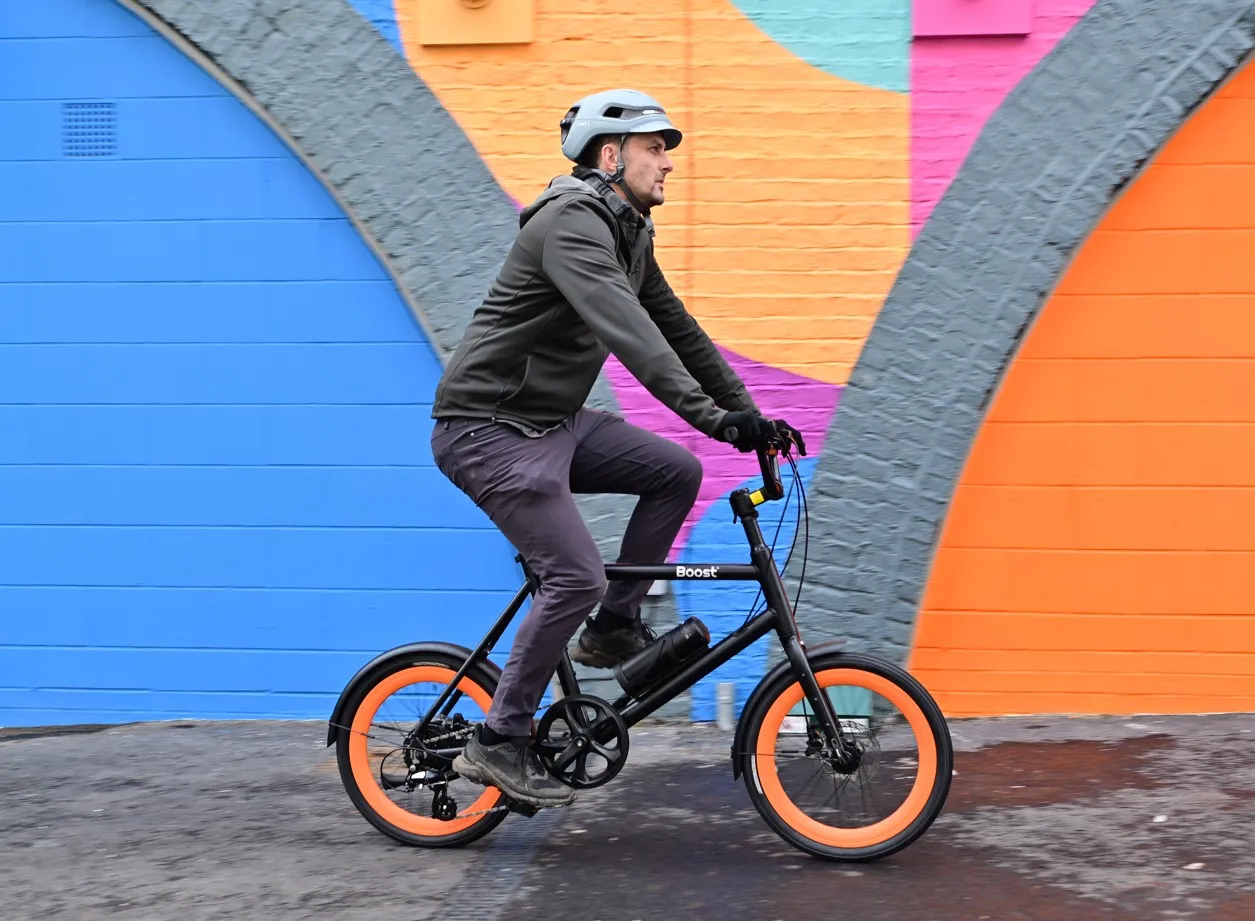
Finally, because this bike has a compact wheelbase, it sits comfortably within our compact electric bikes buyer’s guide. Better still, there are a pair of folding elements on this e-bike that make the Boost electric bike a perfect partner for the apartment or smaller living space where hallways are narrow. The pedals fold in with a quick release mechanism that was deliberate enough that it couldn’t accidentally be flipped, plus a rotating handlebar that is actuated by a quick release lever at the base of the handlebar. These features combined put the width of this e-bike at a slimline sub 30cm when folded.
Naturally, this is not an electric bike for everyone. It’s got 20-inch wheels, so you can feel bumps more than a larger-wheeled bike, plus it’s fully rigid, with nothing to explicitly take the edge off road noise. The geometry is more comfortable than I was expecting and it’s not a harsh ride, so long as you avoid the potholes.
Boost Bike review: Value for money?
It’s no easy task bringing to market an electric bike at this price, especially considering the UK assembly and groundwork behind the electric elements. Make no mistake, this is a no frills bike, but one that has a respectable chunk of selling points that have hidden value. As mentioned above, these are primarily the battery system quality and the ability to store the bike more or less anywhere without taking up much space. Outside of these things, Boost has kept firmly to the brief and budget.
The motor has a consistent pedal assist with a slight overrun after pedalling stops. It offers sufficient torque for help on the flats and mild inclines, and the slick tires minimise rolling resistance so that you don’t lose much momentum to drag.
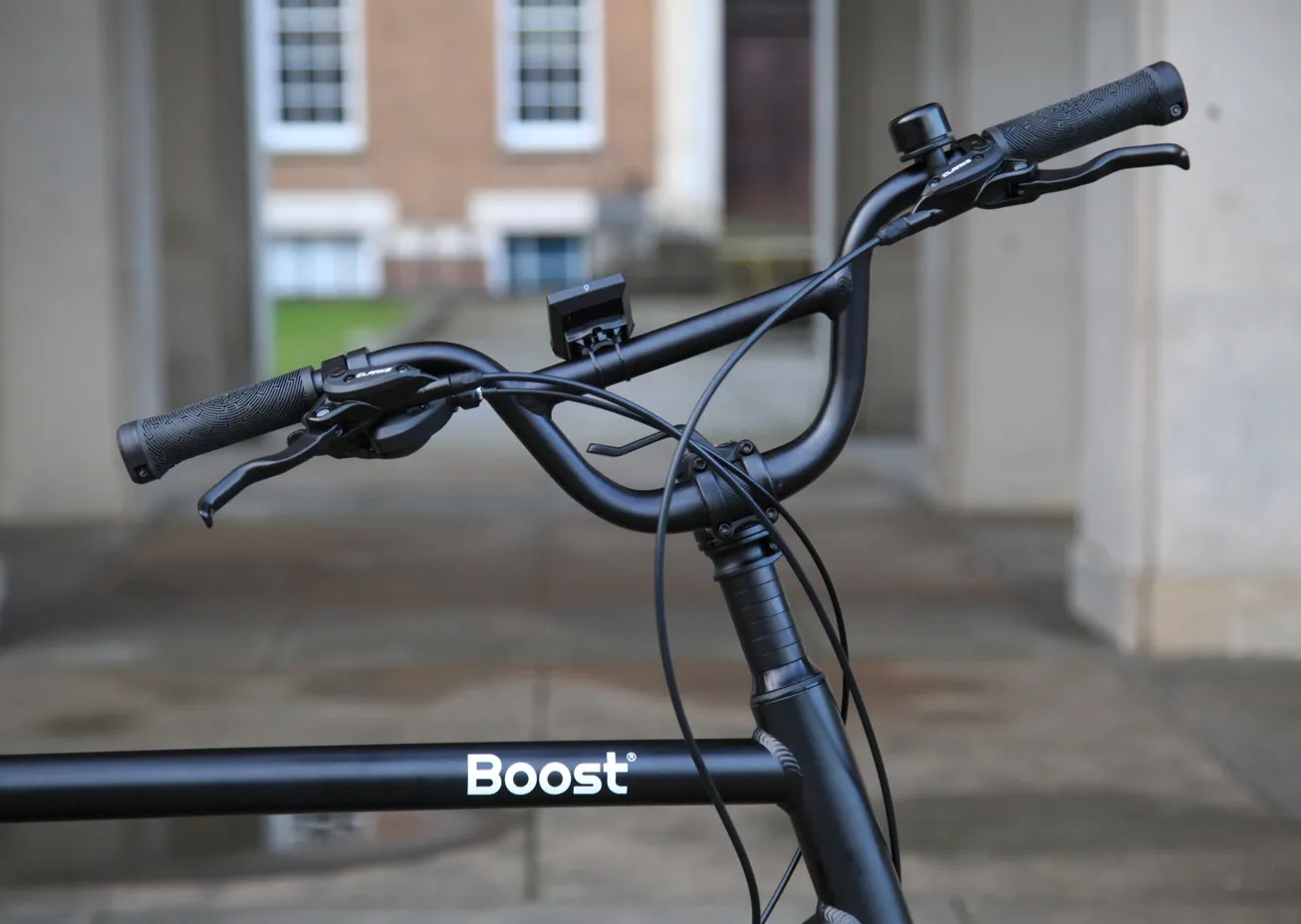
There are only two assist settings – eco and boost – and these are set within the mobile app, that is unless you opt for the handlebar computer add-on. Truth be told, I’d be just as happy relying only on the mobile setting because the display doesn’t add much in the way of value other than toggling the assist and seeing how fast you’re going. Simplicity if the formula here.
I tended to pop the bike in Boost mode, feeling it a better idea to have the necessary power available when I arrived at the hills, rather than have to go into my pocket to dial things up ahead of time.
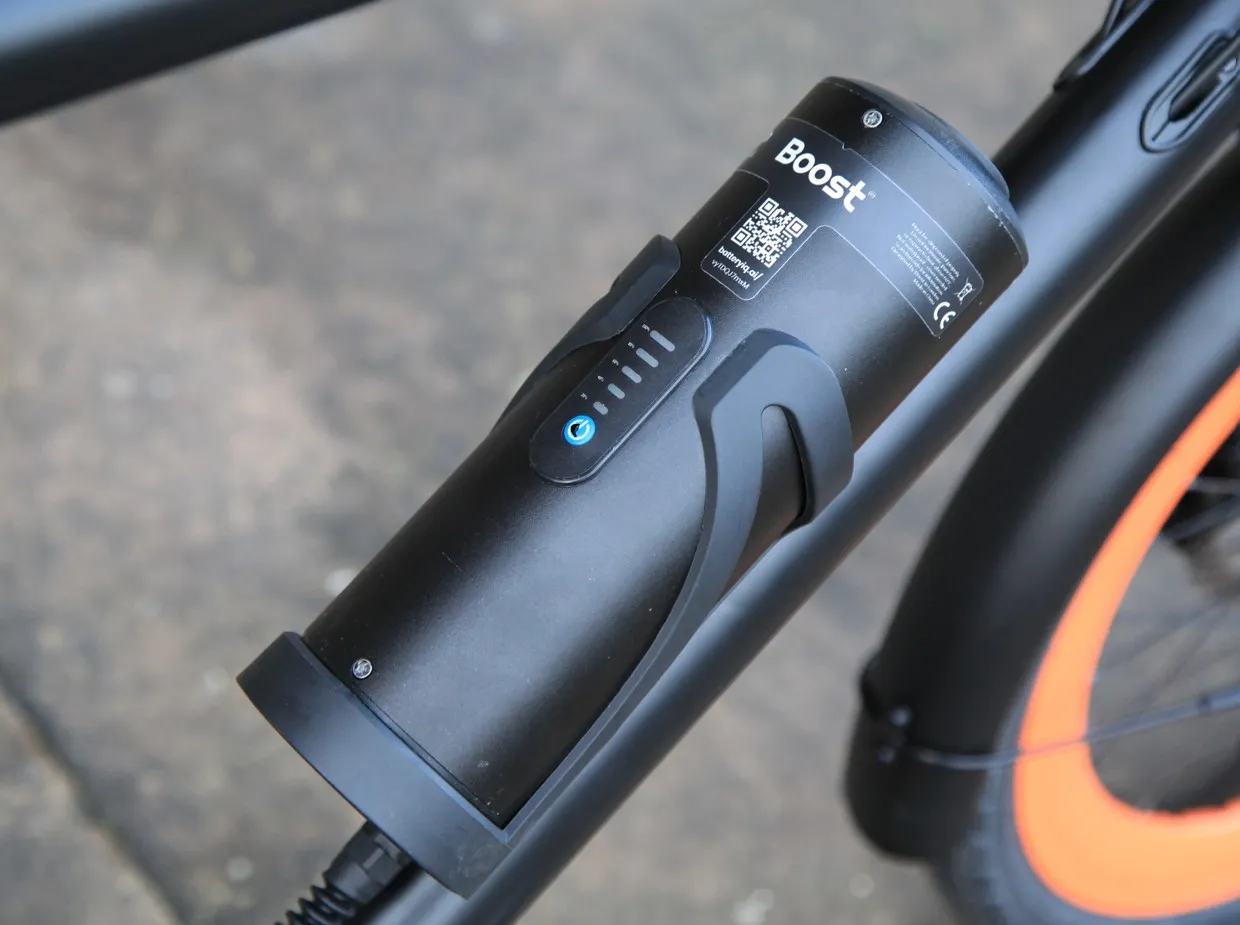
This means that the battery, which has a 252Wh capacity, is one minor challenge this bike has to overcome. During my Boost Bike review, I was taking on all of those short journeys that people tend to drive. Around 70% of journeys under five miles are driven in the UK, which is why we have traffic, so with a bike like this, you have the means to beat the congestion. Yet you have to plan your rides to a degree on account of the available capacity.
Boost claims an up to 30-mile range, but that would be most likely only achievable using Eco mode and riding flat tarmac. If you know your commute is 10 to 15 miles round trip, you’re fine to ride in the higher assist mode as I did, but daily charging is advised. On the plus side, that’s super convenient to do, because the battery is housed in a bottle cage and easily removed, which has an anti-theft upside. The battery also has a USB port, should you need an emergency phone charge (cable not included!).
As you might expect, the Boost Bike has an air of a converted bike about it, rather than how many e-bikes are designed as one item. The cabling from the battery wires externally down the chainstay, with an exposed connector. It’s not the end of the world; this is how the Boost conversion kit works too, and that works perfectly fine, but it is not as elegant as many pieces of modern e-bike design. Other cabling, like the brakes and gearing, is routed inside the frame, which is a nice touch, though the feed-ins did look a little open to water ingress.
Do I think it’s great value for money? It’s about right for what’s underneath the skin, as well as the design notes on the surface and accounting for a three-year frame and fork warranty. Boost says they test the frame and fork to mountain bike standards to be sure of its strength. The electrics, meanwhile, only have a one-year warranty, which I would have expected to be longer given Boost’s confidence in this area. I would like to see a bit more elegance in the design in future, and an obvious enhancement would be to somehow accommodate lighting in the price as most now do, but it’s tricky on account of this bike’s somewhat converted nature to add more cables without spoiling the aesthetic. That said, there are mounts for accessories, including some smart mounts on the fork leg to add brackets for small bags.
Boost Bike review: How does it ride?
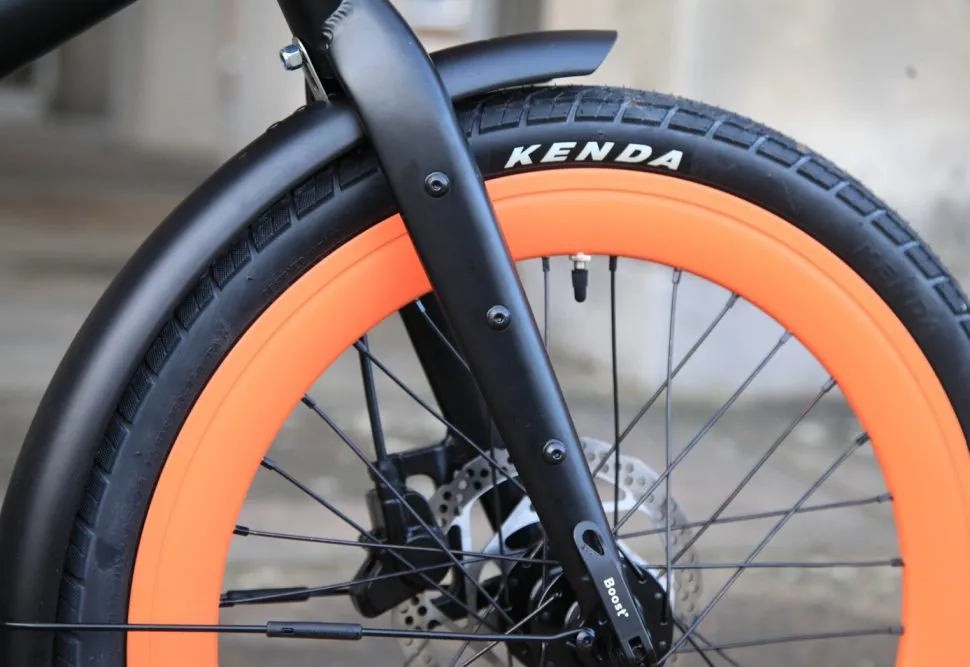
Used as intended, the Boost Bike is a pleasing ride. It’s got a character all of its own, with the colourful deep dish rims making it standout, but on the flip side, this isn’t as much of a theft risk as many e-bikes, you’d think, so that’s arguably an advantage.
On the motor, it does have a distinct and noisier sound than most, but not so much that you really pick up on it over traffic noise. This is Boost’s own motor, designed here in the UK and with all the backup and spares available out of its London base. That’s a plus point for me and not always a given, especially at this price point.
It’s agile, builds momentum well from a standstill, yet doesn’t have the strongest motor. The claim is of 42Nm, which is about average for many budget-friendly hub motors, but my sense was that I needed to put in a bit more pedal pressure than usual compared to similar systems to drive up hills and most certainly (as you should) using the gears effectively is a must. That means being quick on the trigger shifters, cycling down the range to a low gear well ahead of a climb.
For purely sentimental reasons, I rather like the high-rise BMX handlebar and 20-inch wheels and I was a fan of the Clarks hydraulic brakes too, which felt like they had really firm and predictable stopping power from the touchdown on the 160mm rotors.
As for the range that this bike covers in who fits – Boost say anyone ranging 4’11” to 6’2” will be comfortable, albeit some toggling of the saddle height and the many spacers on the steerer tube may be required. The reach to the handlebar is not long, given the bike’s compact nature, so it’s fair to say that sizing diversity is achievable, making this a very shareable bike within your household.
How about the competition?
Having written up this Boost Bike review, the question now is simple. Would I buy this bike if my budget were set at south of £1,500? That all depends on one’s living circumstances. For me, the standout thing about this bike is the compact storage, which arguably you could achieve with a folding bike too. Certainly, this is a good option if you are both unable to spend more and have space limitations. If you do not have a strict space limit, then some others that we have reviewed lately may appeal:
Tenways CGO600 / Plus – £1,099 / £1,279
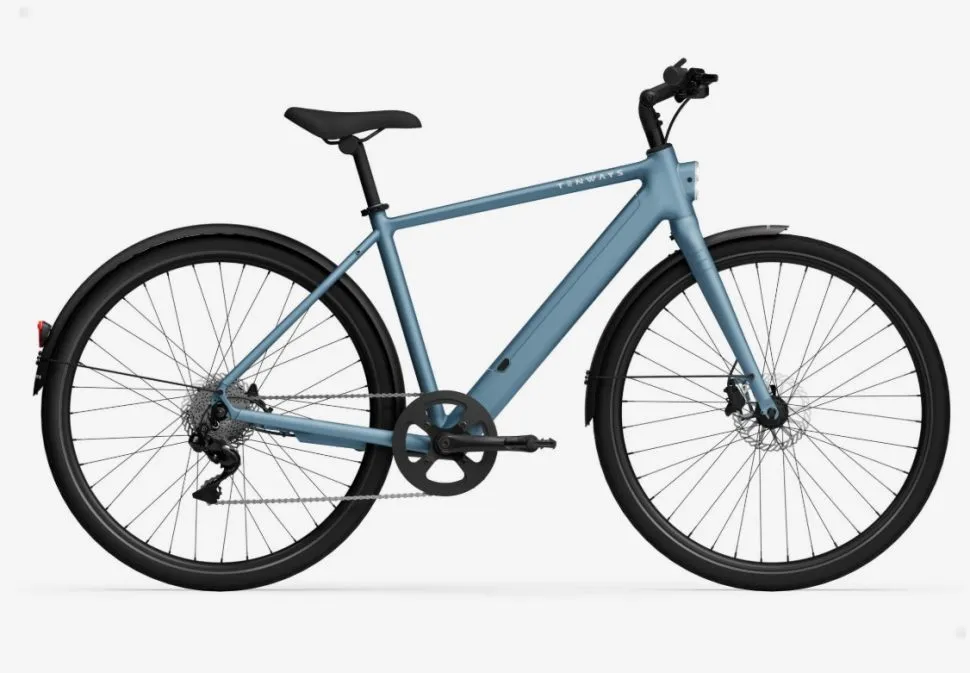
Tenways has a commuter bike for every budget and the CGO series, both in its singlespeed and geared Plus versions, are good urban alternatives with neat internal battery and wired-in lighting as standard. If you have a little more storage space, this e-bike may be better for longer distance urban excursions.
Pinnacle Momentum – £1,250
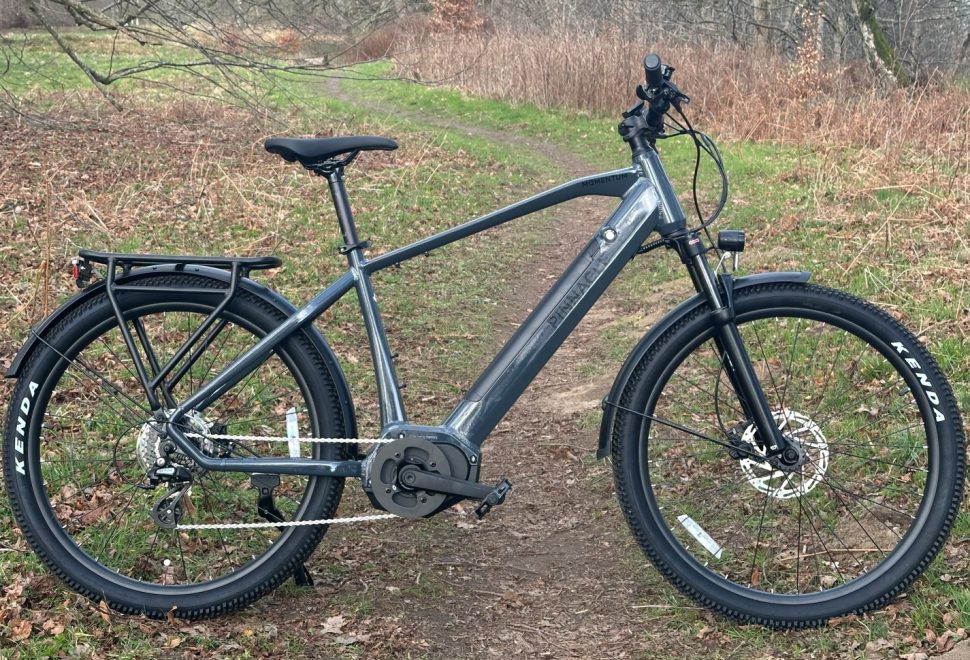
Sold for as good as the same price, the Pinnacle Momentum was the last bike we had for review and it’d be hard to argue in favour of not plumping for this mid-motor driven, well-equipped all rounder, if you have the space to host what is essentially a hardtail mountain bike with utility elements.
ADO Air One Pro – £1,499
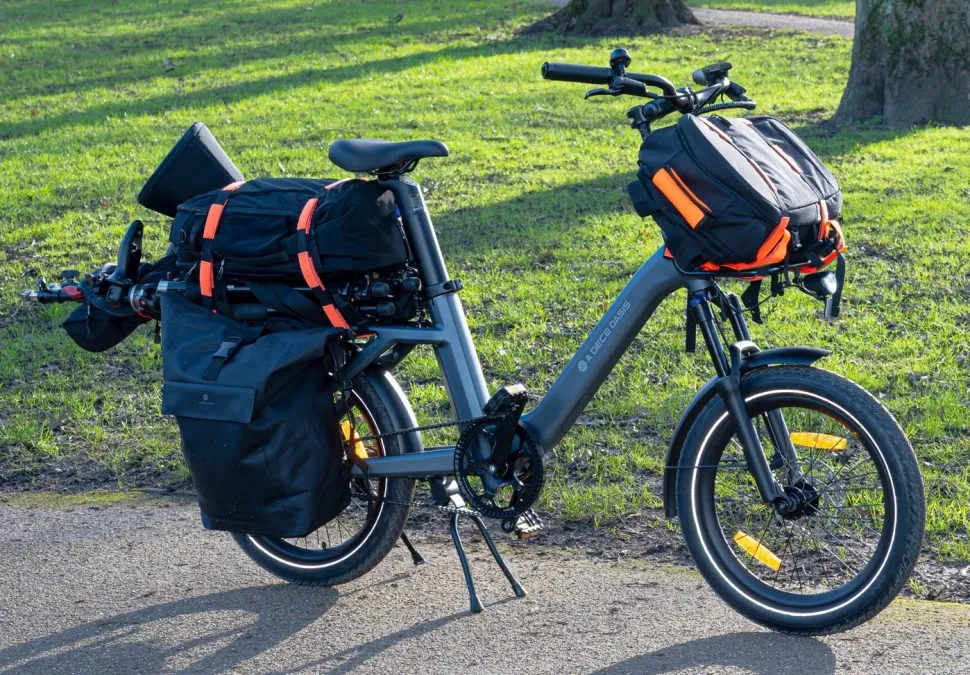
Surprisingly capable as an urban utility vehicle, the ADO Air One Pro has both a rear tail to load bags galore and a front rack too, all within a compact wheelbase. There’s a suspension fork, wired in lighting and the same store flat functionality in the stem too. The only thing you will lose is five of the seven gears on the Boost, but you do gain a clean and silent belt drive.