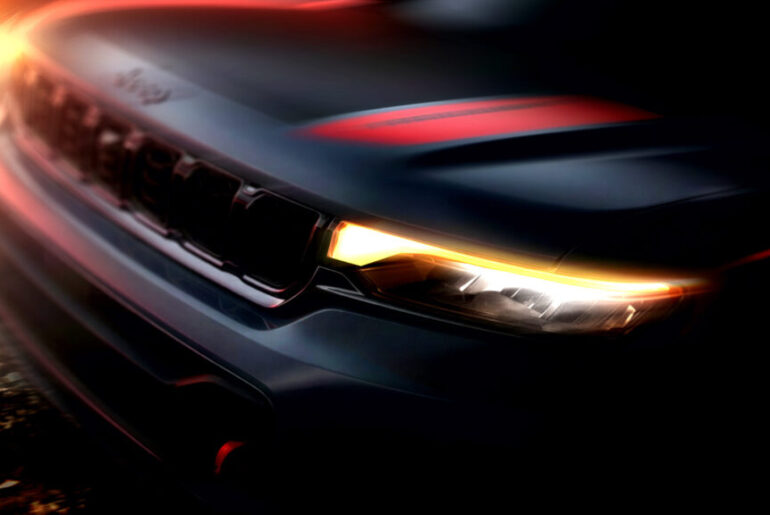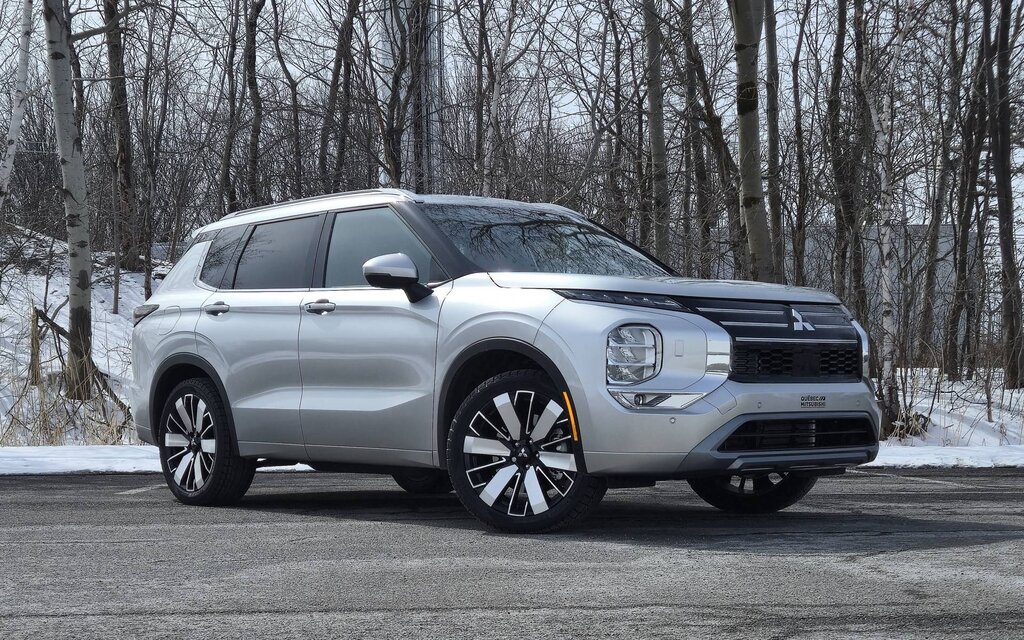
Significantly updated last year, the gas-powered Mitsubishi Outlander adds a dark-looking, top-of-the-line NOIR model for 2026. However, the most significant change lies under the hood.
The vehicle has been on sale since last fall, and we put it to the test in recent days. As we wrote in a previous story, the Outlander’s new powertrain isn’t exactly an improvement. Read on for our full driving impressions.
Read also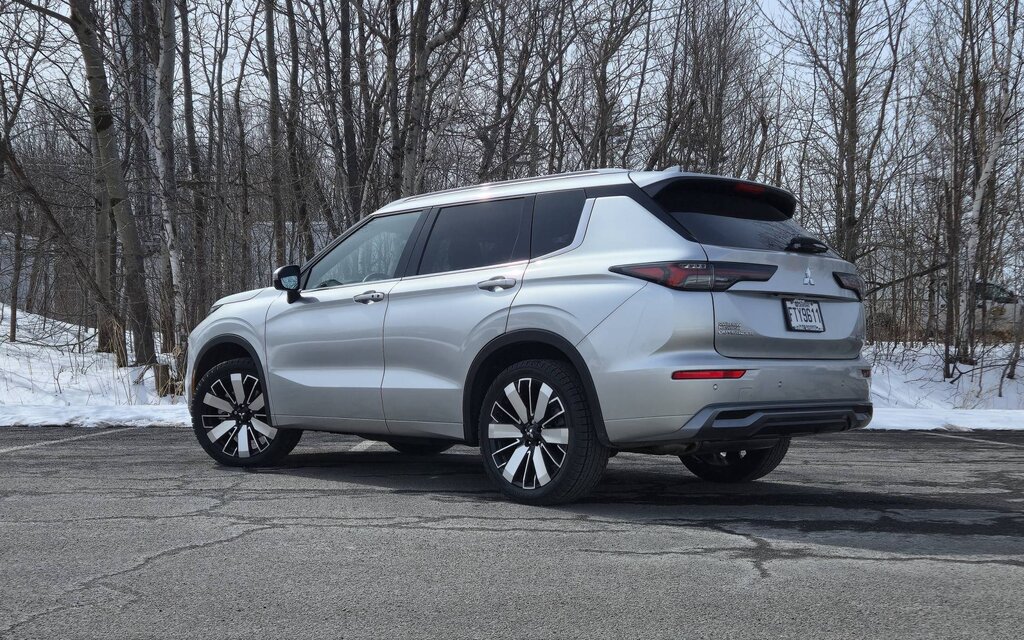 Photo: Guillaume Rivard
Following the Rogue’s Lead
The Mitsubishi Outlander was developed together with the current Nissan Rogue, as you probably know. While the latter takes a page from its cousin by adding a plug-in hybrid variant this year (an Outlander PHEV clone, to be correct), the former follows the example of the other: gone is the naturally aspirated 2.5-litre four-cylinder engine that generated a decent 181 horsepower and 181 lb-ft torque, replaced by a smaller turbocharged 1.5-litre engine.
However, it’s not the same three-cylinder unit as the Rogue, which produces 201 horsepower and 225 lb-ft of torque. Similar to the Mitsubishi Eclipse Cross, the Outlander retains four cylinders. Another difference is the addition of a 48V mild-hybrid system—a first for the brand. Alas, output drops to 174 horsepower, and while the tiny bit of electrification helps with acceleration, peak torque increases to just 206 lb-ft, and you have to reach roughly the same engine speed (3,000-4,000 rpm) to access it. Maximum towing capacity is still rated at 2,000 lbs.
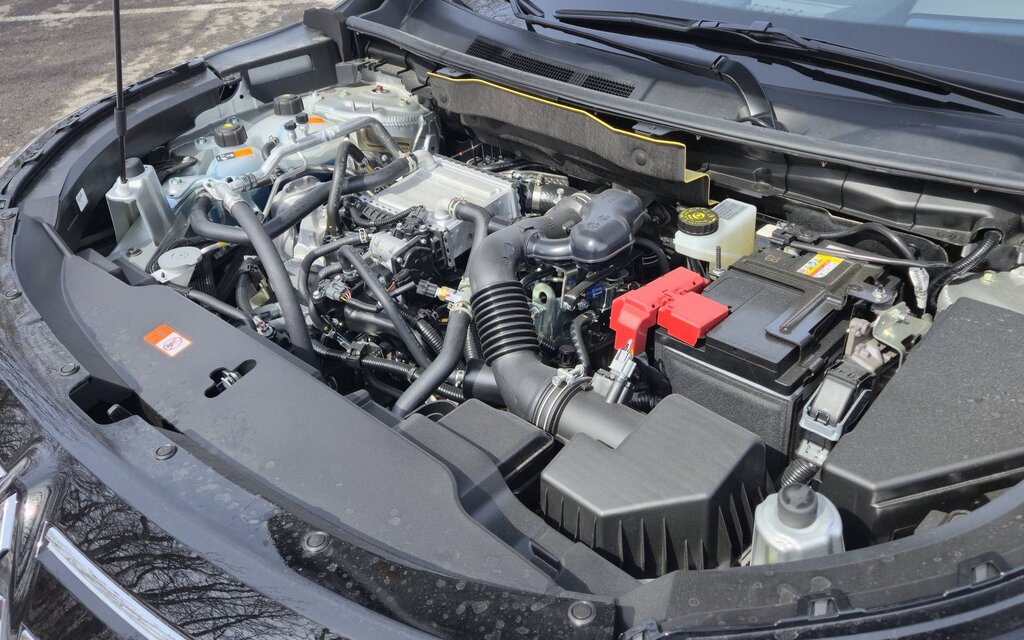 Photo: Guillaume Rivard
As we found out, the new turbo engine is often noisy (especially when cold), a tad more so than its naturally aspirated predecessor. Furthermore, it suffers from turbo lag under acceleration, and the continuously variable transmission could definitely use some fine-tuning. The resulting drone can be pretty irritating at low and medium revs, less so at higher revs thanks to simulated gear shifts.
What about the Outlander’s fuel consumption? It merely improves from 8.9 to 8.7 L/100 km according to Natural Resources Canada, representing a saving of 2.2%. Several competitors do better including the more powerful Rogue, which theoretically achieves a combined 7.6 L/100 km (worse than that in reality). At the end of our weeklong test, driving mostly around town and in temperatures ranging from -8 to 4 degrees Celsius, our Outlander (fitted with winter tires but free from passengers or cargo) posted a score of 9.9 L/100 km. Nothing to write home about.
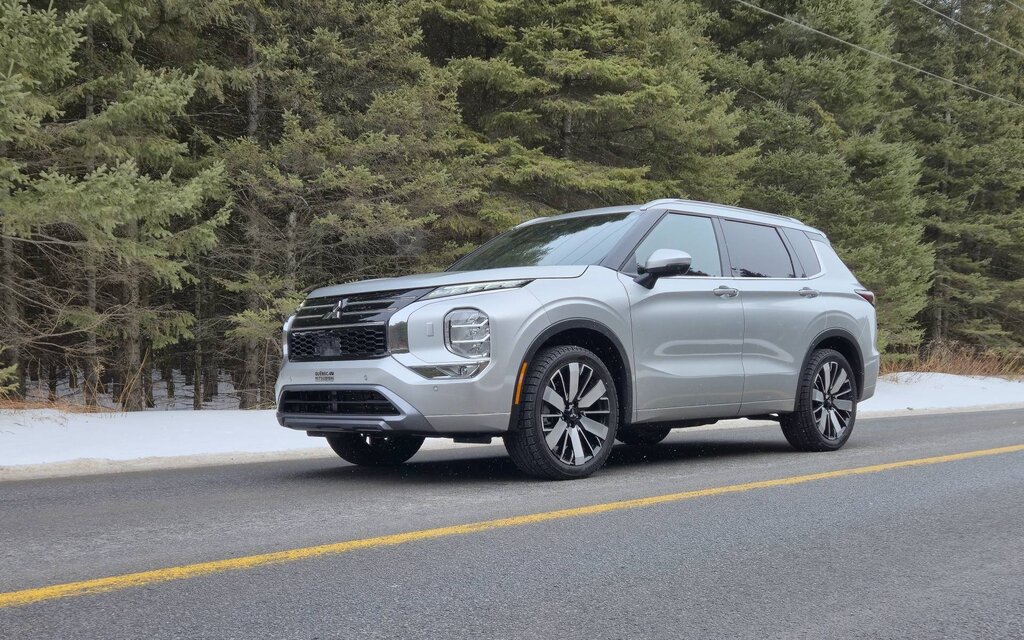 Photo: Guillaume Rivard
Decent Handler With Persisting Compromises
Granted, Mitsubishi’s compact SUV is larger and heavier than most, what with standard three-row seating and all. Nevertheless, it displays surprising agility and poise on the road thanks to firm and precise steering, a suspension that isn’t too soft and sophisticated all-wheel drive that does an excellent job in cornering manoeuvres, whether on dry or wet surfaces. Although drivers have easy access to as many as six different modes through the rotary selector on the centre console, we bet pretty much all of you will only use one or two.
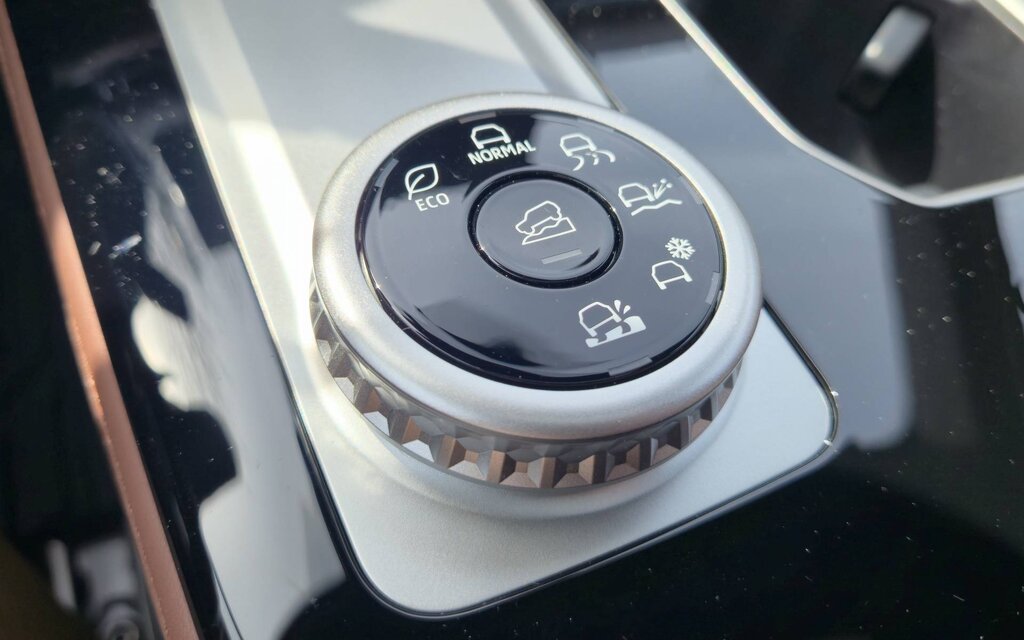 Photo: Guillaume Rivard
These attributes don’t make the Outlander the most enjoyable to drive in its class. Braking leaves something to be desired—despite good initial bite, the brakes seem to be in no rush to slow things down as you press the pedal harder. With a fully loaded vehicle, caution is advised. And assuming that most families prioritize comfort, they’ll find a smoother ride elsewhere.
The cabin is nicely insulated from wind and road noise, visibility is adequate, and quilted brown leather surfaces in GT Premium trim add a serious touch of class. A heated steering wheel isn’t standard, unfortunately, but there is a 12.3-inch touchscreen (powered by a multimedia system that’s far from the most modern out there) and a very good Yamaha sound system. There’s plenty of room in the front seats, as well, while legroom in the second row is just adequate.
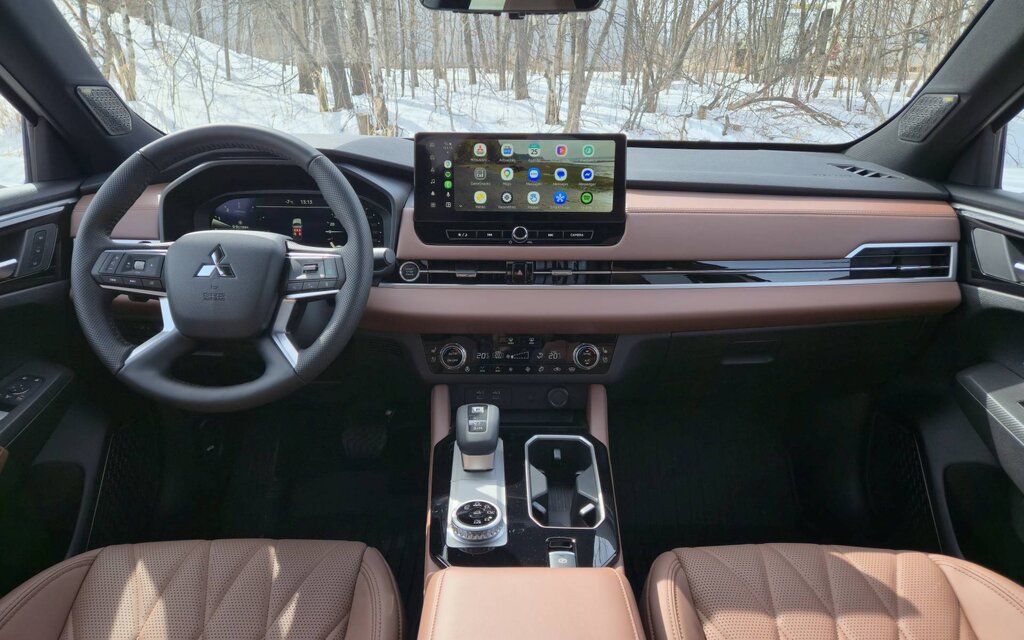 Photo: Guillaume Rivard
The third row, it bears repeating, is largely useless. Access is a major challenge, and even children will feel cramped. It also means sacrificing some comfort for those in the middle row. Clearly, it’s best to use the Outlander as a five-passenger SUV and take advantage of its 866-litre cargo area. The latter, by the way, ranks just below average. The same goes for total cargo capacity at 1,822 litres. On a positive note, the 40/20/40 split-folding second-row seats come in handy.
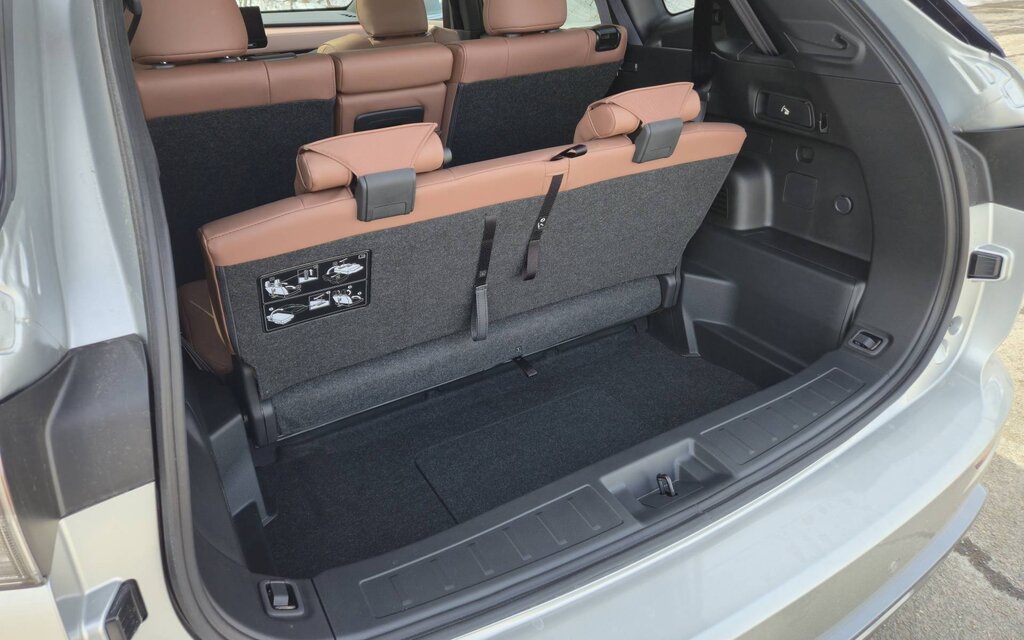 Photo: Guillaume Rivard
Our Verdict
The 2026 Mitsubishi Outlander enjoys a solid reputation for durability and reliability. If you’re set on buying rather than leasing, the new mild-hybrid system becomes a question mark, although one that is mitigated by the generous 10-year/160,000-km powertrain warranty. Furthermore, it lacks power, refinement and fuel economy when compared with many other compact SUVs, especially considering the price range of $36,398-$49,748 before fees and taxes.
Sticking with a mid-range SE or LE model seems like the smarter thing to do. Alternatively, you should check out the Outlander PHEV, which has just received a mid-cycle update including increased power (from 248 to 297 hp) and a higher-capacity battery with longer range in electric mode (72 km instead of 61 km).